
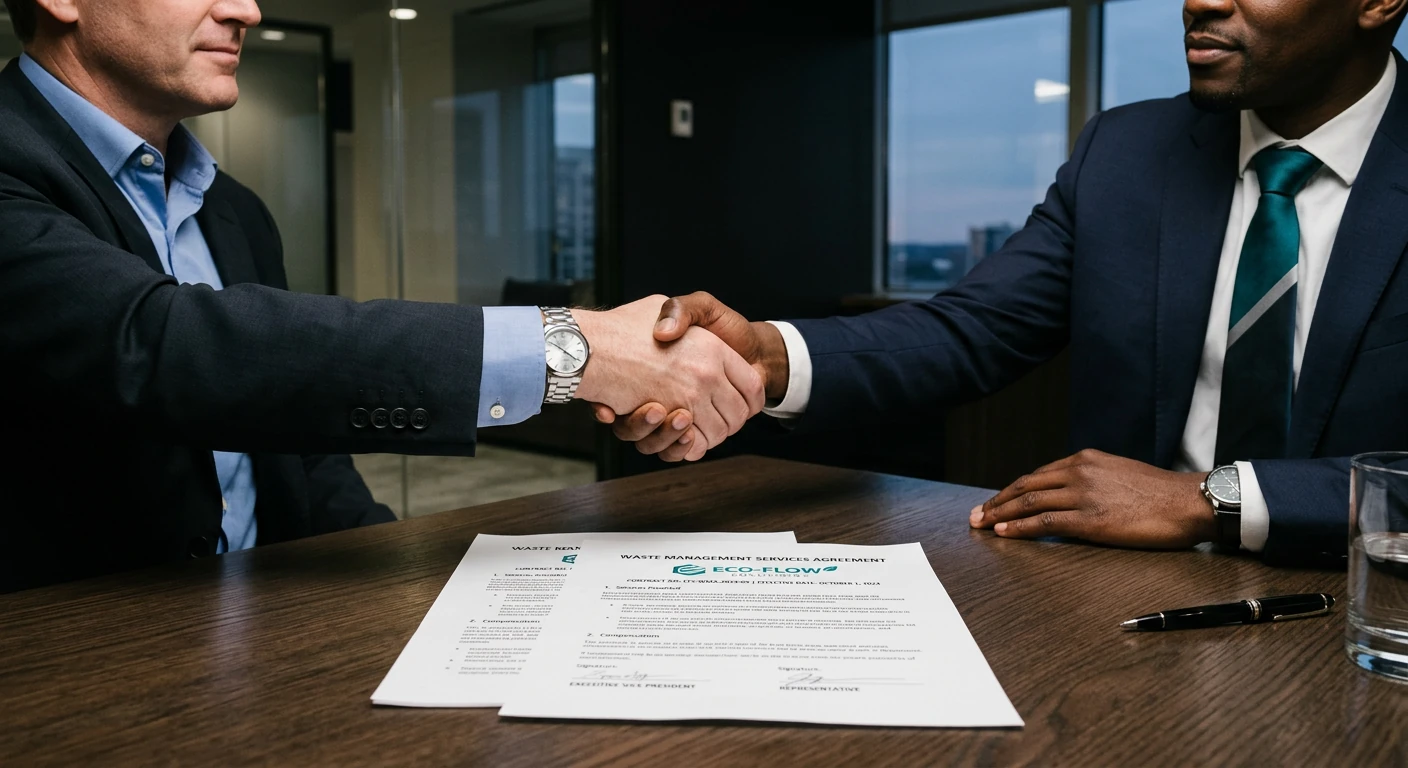
Most businesses sign a waste management contract once and forget about it for years. That's exactly what waste companies count on. Contracts auto-renew, prices creep up with vague CPI adjustments, and fees appear that weren't in the original agreement. By the time you notice, you're locked in for another term — and paying 20-40% more than you should be.
Whether you're negotiating a new waste contract or renegotiating an existing one, this guide covers the key clauses, tactics, and traps you need to know.
Before You Negotiate: Do Your Homework
Understand Your Waste Profile
You cannot negotiate effectively if you don't know what you're buying. Before entering any negotiation, conduct a waste audit to establish your baseline: how many bins, what sizes, how often collected, what waste streams, and what volumes. Knowing your actual waste generation — not what your current provider tells you — is essential leverage.
Benchmark Your Current Costs
What are you paying per lift, per tonne, per bin? How does that compare to market rates? If you've been with the same provider for years, there's a strong chance your rates have drifted above market. Understanding your waste invoice line by line is the first step to identifying overpayment.
Get Competing Quotes
Never negotiate with only one option. Approach at least three waste management providers for quotes based on your actual waste profile. This gives you real market pricing data and creates genuine competitive pressure. If your current provider knows you have alternatives, they're far more likely to offer meaningful concessions.
Key Contract Clauses to Watch
Price Escalation Clauses
Almost every waste contract includes a price escalation clause — a mechanism for annual price increases. The most common formulations are:
- CPI-linked: Prices increase by the Consumer Price Index annually. This is the most transparent and predictable model.
- "CPI or X%, whichever is greater": This clause guarantees the provider a minimum increase regardless of actual inflation. Push back on this — if CPI is the benchmark, it should work in both directions.
- "At the provider's discretion": This gives the provider carte blanche to increase prices by any amount. Never accept this clause. It's the single most expensive term in any waste contract.
- Landfill levy pass-through: Legitimate — the landfill levy does increase annually and providers do need to pass this through. But ensure the pass-through is limited to the actual levy increase, not a percentage markup on top of the levy.
Lock-In Periods
Contract terms typically range from one to five years. Longer terms can deliver lower rates, but they also lock you in — and the waste market changes. A three-year contract signed in 2022 may have been competitive then, but market rates may have dropped since. Aim for two to three years maximum, with a break clause at the 12-month mark if service levels aren't met.
Auto-Renewal Clauses
This is one of the most common waste contract red flags. Many contracts auto-renew for the same term unless you provide written notice 60-90 days before expiry. Miss the notice window and you're locked in for another full term at whatever rates the provider sets. Set a calendar reminder at least 120 days before contract expiry — earlier is better.
Termination Clauses
What happens if you want to leave? Early termination fees can be substantial — sometimes the full remaining contract value. Negotiate these down: a reasonable termination fee might be two to three months' invoice value, not the full remaining term. Also ensure you have termination rights for cause (service failures, repeated missed collections, billing errors).
Service Level Agreements
A good contract specifies exactly what you're getting: collection days and times, response times for missed collections, bin replacement timelines, and customer service standards. Without an SLA, you have no contractual basis for complaint when service deteriorates — and in the waste industry, service levels tend to slip once the contract is signed.
Negotiation Tactics That Work
Negotiate at the Right Time
Timing matters. The best time to negotiate is 90-120 days before your current contract expires — early enough to run a competitive process, but close enough that your current provider feels the urgency. End of financial year (June) and end of calendar year are also good times, as sales teams have targets to hit.
Bundle Waste Streams
If you have multiple waste streams — general waste, recycling, organics, document destruction — bundling them with a single provider (or threatening to) gives you more negotiating leverage than negotiating each stream separately. Providers value larger, multi-stream accounts because they're more profitable and harder for competitors to win.
Ask for Itemised Pricing
Don't accept a single "per lift" price. Ask for a breakdown: collection fee, disposal fee, landfill levy, environmental levy, fuel levy, admin fee. This transparency lets you identify hidden fees and challenge individual components. Some fees — like "environmental levies" charged on top of the actual landfill levy — are pure margin dressed up as costs.
Request a Trial Period
If switching providers, negotiate a three-month trial period with reduced or no early termination fees. This gives you a low-risk way to test service quality before committing to a full term. Many providers will agree to this because they're confident in their service — and those that won't may be telling you something.
Don't Negotiate Only on Price
Price is important, but it's not the only variable. Also negotiate on:
- Payment terms: Net 30 vs net 14 makes a cash flow difference
- Reporting: Monthly waste data reports help you track diversion rates and identify further savings
- Bin maintenance: Who pays for bin repairs and replacements?
- Collection flexibility: Can you adjust collection frequency seasonally without penalty?
- Account management: A dedicated account manager vs a call centre
Common Traps to Avoid
The "Low Ball and Escalate" Trap
A provider offers an aggressively low rate to win the contract, then applies above-CPI increases year on year. By year three, you're paying more than you were with your previous provider. Protect yourself with a capped escalation clause tied to CPI only.
The "Contamination Surcharge" Trap
Some contracts include vague contamination clauses that let the provider charge premium disposal rates if your recycling bins contain contamination above a threshold. The threshold is often undefined or unreasonably low (e.g., 5%). Negotiate a clear, reasonable contamination threshold (15-20% is industry standard) and require photographic evidence before any surcharge is applied.
The "We'll Match Any Price" Trap
Your current provider says they'll match any competitor's quote. Sounds great — but matching on price alone doesn't address contract terms, service levels, or hidden fees. A provider matching a competitor's headline rate while keeping unfavourable escalation clauses and hidden fees is not a genuine match.
The "Rollover Without Notice" Trap
You forget the notice period, the contract auto-renews, and you're locked in at whatever rate the provider chooses. This is the most common and most expensive trap in waste contracts. Use a contract management system or simple calendar reminders to track every waste contract expiry date.
When to Walk Away
Not every negotiation succeeds. Walk away if:
- The provider won't provide itemised pricing — they're hiding something
- The contract includes discretionary price escalation with no cap
- Early termination fees exceed six months' invoice value
- The provider won't agree to any service level commitments in writing
- Auto-renewal clauses have short notice windows (less than 60 days) and can't be removed
- The provider is unwilling to negotiate any terms — a sign of how they'll treat you as a customer
Walking away is not failure. It's leverage. A provider who sees you're willing to leave is far more likely to come back with meaningful concessions.
Why a Waste Partner Makes Sense
Most businesses negotiate waste contracts once every few years. Waste partners do it every day. A partner like Bundle Waste knows current market rates, understands contract language, has relationships with multiple providers, and can run a competitive tender process on your behalf. Our clients typically achieve significant savings on their waste costs — and the partner's fee is paid from those savings, not from your budget.
Contact us for a free contract review — we'll tell you whether you're overpaying and by how much, with no obligation.