
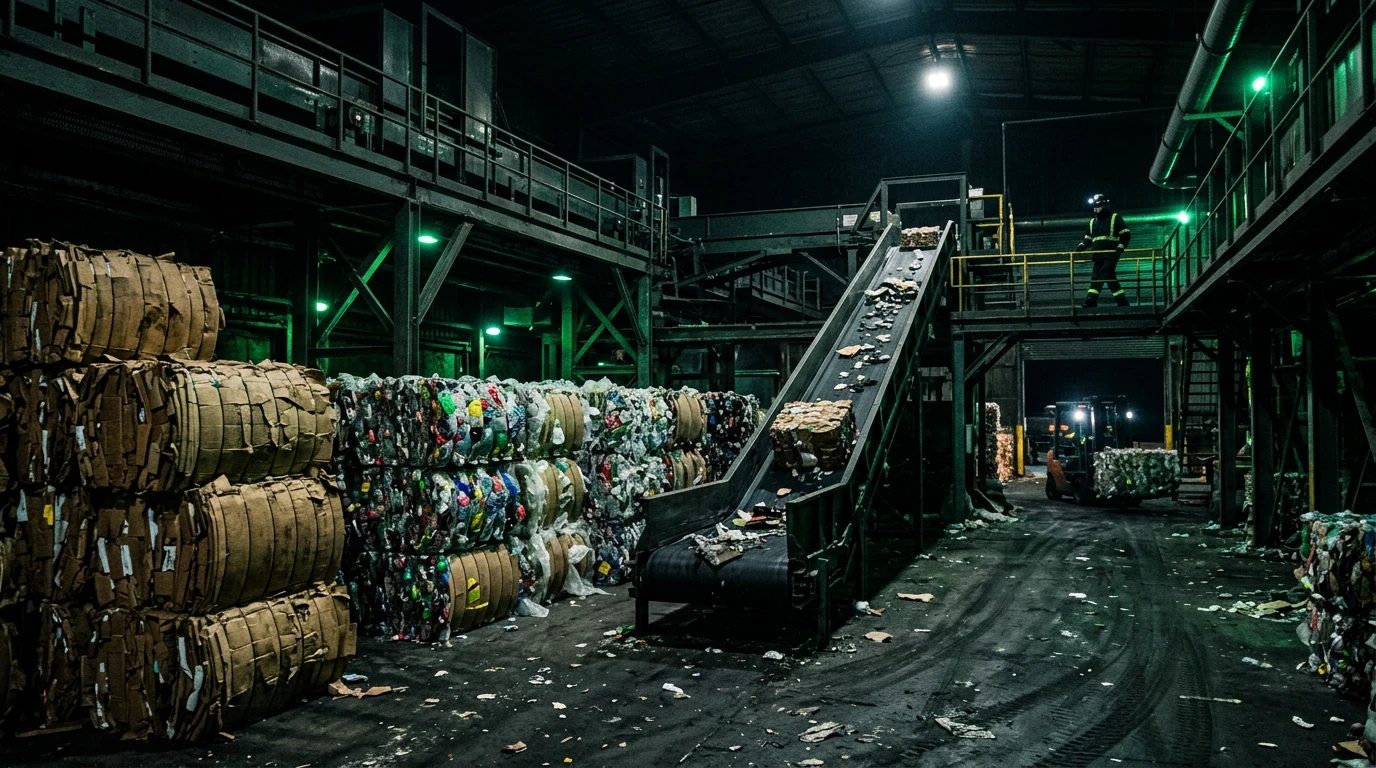
Commercial recycling in Melbourne is both an environmental responsibility and a financial opportunity. With Victoria's landfill levy sitting at $125.08 per tonne, every kilogram of material you divert from general waste into recycling reduces your costs. Yet many businesses either do not recycle at all, or recycle so poorly that their efforts are wasted through contamination.
This guide covers what Melbourne businesses can and cannot recycle, how contamination works, and practical steps to set up a recycling system that actually saves money.
Why Commercial Recycling Matters Financially
The cost difference between general waste and recycling is significant. A typical 1,100L general waste collection in Melbourne costs between $90 and $140 per lift, depending on your provider and location. A comparable recycling collection costs between $40 and $80 per lift. That is a 30 to 50 per cent saving for every bin you can shift from general waste to recycling.
For a business generating four bins of waste per week, converting two of those to recycling could save $200 to $400 per month, or $2,400 to $4,800 per year. The maths is straightforward, and the implementation is simpler than most businesses expect.
What Melbourne Businesses Can Recycle
Commingled Recycling (Mixed Recyclables)
Commingled recycling bins accept a range of hard, rigid materials. These are processed at Materials Recovery Facilities (MRFs) in Melbourne's western and northern suburbs.
Accepted materials:
- Plastic bottles and containers (types 1, 2, and 5 are most commonly accepted)
- Glass bottles and jars (all colours)
- Aluminium cans and steel tins
- Aerosol cans (empty)
- Rigid plastic containers (takeaway containers, if clean)
- Milk and juice cartons (Tetra Pak)
Not accepted in commingled recycling:
- Soft plastics (bags, wrappers, cling film, bubble wrap)
- Polystyrene (foam cups, packaging, meat trays)
- Ceramics, pyrex, or drinking glasses
- Nappies or sanitary products
- Food waste or liquids
- Textiles or clothing
Cardboard and Paper
Cardboard is the single most valuable recyclable material for most businesses. It is also the material most commonly found in general waste bins where it should not be.
Accepted:
- Corrugated cardboard boxes (flattened)
- Office paper and printer paper
- Newspapers and magazines
- Paper bags
- Envelopes (including windowed)
Not accepted:
- Waxed cardboard (common in produce packaging)
- Cardboard contaminated with food or grease (pizza boxes with grease stains)
- Paper towels or tissues
- Shredded paper (unless bagged separately, as it jams sorting machinery)
A dedicated cardboard bin is often the most cost-effective recycling investment a business can make. Retail businesses, warehouses, and offices that receive regular deliveries can typically fill a cardboard-only bin faster than they expect.
Organic Waste
If your business generates significant food or organic waste, a separate organics collection can save money and reduce your landfill impact. Organic waste in landfill produces methane, a greenhouse gas 25 times more potent than carbon dioxide, so diversion has genuine environmental benefits.
Accepted in commercial organics bins:
- All food scraps (cooked and uncooked)
- Coffee grounds and tea bags
- Paper towels and napkins
- Compostable packaging (only if your provider's facility accepts it)
- Garden waste (leaves, grass clippings, prunings)
Organics collection is particularly relevant for hospitality businesses. A Melbourne restaurant generating 200 kilograms of food waste per week pays approximately $50 to $80 less per month with a dedicated organics bin compared to sending that material to landfill through general waste.
The Contamination Problem
Contamination is the biggest risk to any business recycling programme. When non-recyclable items end up in a recycling bin, the consequences are real:
- Load rejection - if contamination exceeds the threshold (typically 10 to 15 per cent), the entire bin load may be sent to landfill instead of being recycled
- Contamination surcharges - many providers charge $50 to $200 per contaminated load, on top of the regular collection fee
- Downgrades - persistent contamination can result in your recycling bin being reclassified as general waste, with general waste pricing applied
The most common contaminants in commercial recycling bins are:
- Soft plastics (bags, wrappers, film)
- Food waste and liquids
- Polystyrene packaging
- General rubbish mixed in with recyclables
Setting Up Effective Recycling
Step 1: Audit Your Waste
Before adding recycling bins, understand what is in your general waste. If 30 per cent of your general waste is cardboard, a dedicated cardboard bin will make immediate impact. If you run a cafe and half your waste is food scraps, an organics bin is the priority. Our waste audit checklist can guide you through this process.
Step 2: Choose the Right Streams
Do not try to implement five recycling streams at once. Start with the one or two that will make the biggest difference based on your audit. For most businesses, this means cardboard first, then commingled recycling or organics.
Step 3: Position Bins Strategically
Recycling only works if it is easy for your staff. Place recycling bins where waste is generated, not tucked away in a corner of the car park. A recycling bin next to every general waste bin in high-traffic areas will capture far more recyclable material than a single recycling bin at the back dock.
Step 4: Label Everything Clearly
Use large, visual labels with pictures of accepted and rejected items. Text-only labels are less effective, particularly in workplaces with staff who speak English as a second language. Most waste providers will supply standard bin signage at no cost.
Step 5: Brief Your Team
A five-minute briefing during a team meeting is enough to explain the basics. Focus on the three or four items that cause the most contamination in your specific business. Repeat the message quarterly, particularly when new staff join.
Step 6: Monitor and Adjust
Check your recycling bins before collection for the first month. If contamination is high, identify the source and address it. Often, a single staff member putting the wrong items in a bin is responsible for most contamination events.
Specialist Recycling Streams
Beyond standard recycling, Melbourne businesses may benefit from specialist streams:
- E-waste - computers, printers, phones. Must be collected by a licensed e-waste recycler under Victoria's e-waste ban from landfill
- Confidential paper - secure destruction with recycling, typically via locked console bins
- Soft plastics - collected separately by specialist services or commercial soft plastic recyclers
- Pallets - reusable pallets can be sold back to pallet companies or recycled
- Textiles - clothing and fabric waste can be diverted through textile recycling services
Getting Started
The best recycling programme is one that actually gets implemented. Start small, focus on the highest-impact stream for your business, and build from there. If you want help determining which recycling streams will save your business the most money, Bundle Waste offers a free waste audit that includes recycling recommendations tailored to your specific waste profile.