
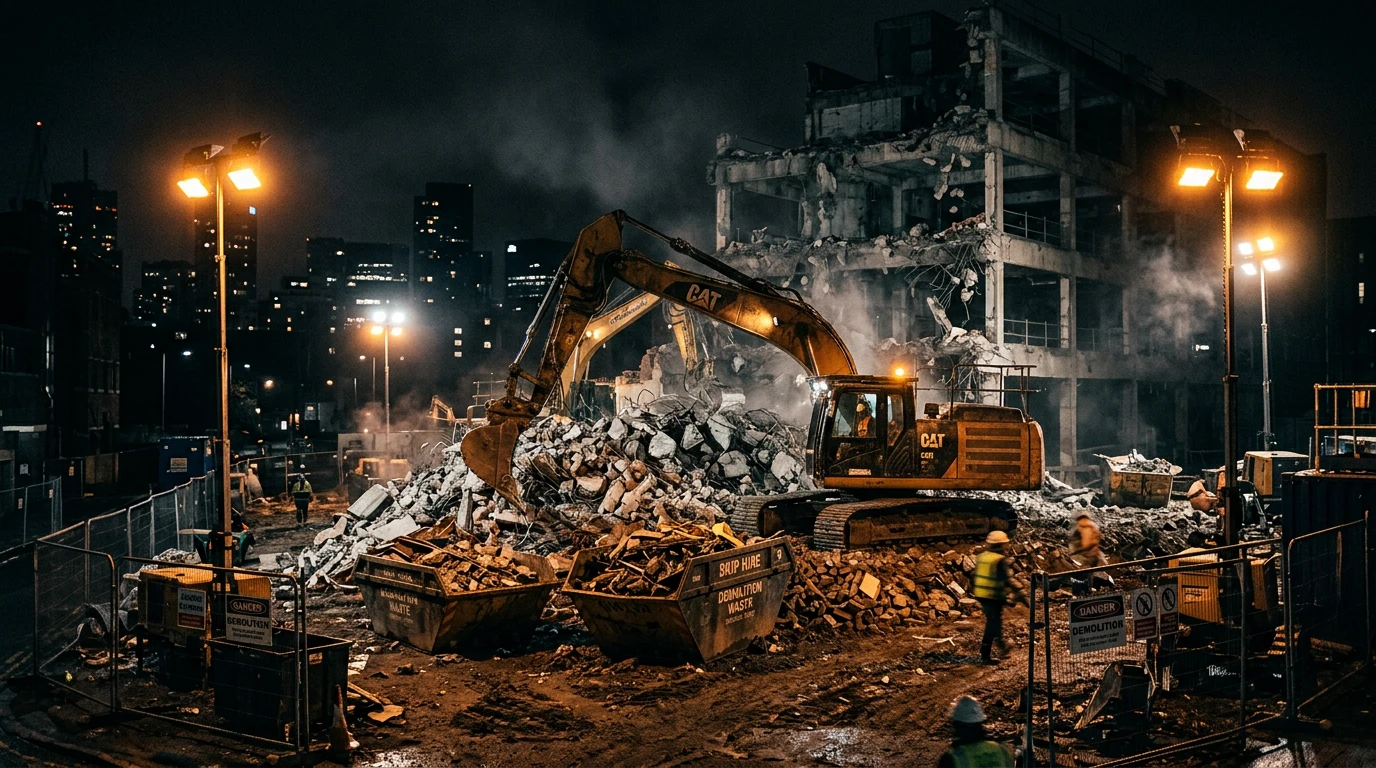
Construction and demolition (C&D) waste accounts for roughly 44 per cent of all waste generated in Victoria. For builders and developers, waste is one of the top five project costs, yet it is often one of the least managed. A well-structured waste management plan (WMP) does more than tick a compliance box: it directly reduces disposal costs, improves site safety, and keeps your project on the right side of EPA Victoria.
This guide covers what Victorian construction projects need in a WMP, the main C&D waste categories, skip bin strategies, and practical ways to control costs across the life of a build.
When Do You Need a Waste Management Plan?
In Victoria, a WMP is required for most planning permit applications involving construction, demolition, or significant renovation. Local councils across Melbourne, including the City of Melbourne, Yarra, Stonnington, and Moreland, require a WMP as a standard condition of permit approval for projects above a certain threshold.
Typically, a WMP is required when:
- The project involves demolition of an existing structure
- The development includes three or more dwellings
- The project is a commercial or industrial build
- The total project value exceeds $1 million
- The council's planning scheme specifically requires one
Even when not formally required, having a WMP makes commercial sense. Projects without a waste plan tend to overspend on skip bins, send recyclable material to landfill, and face delays from poorly managed waste on site.
What a WMP Must Include
A compliant WMP for a Victorian construction project should cover the following elements:
Waste Estimation
Estimate the types and volumes of waste your project will generate at each phase: demolition, excavation, construction, and fit-out. For a typical residential build in Melbourne, expect roughly 13 to 20 tonnes of C&D waste. Commercial projects can generate 50 to 200 tonnes depending on scale.
Waste Minimisation Targets
Most councils expect a minimum 70 per cent diversion rate from landfill for C&D waste. Some, like the City of Melbourne, push for 80 per cent. Your WMP should set specific diversion targets for each waste category: concrete, timber, metals, plasterboard, cardboard, and soil.
On-Site Management Procedures
Detail how waste will be sorted, stored, and collected on site. This includes bin placement, signage, contamination prevention measures, and responsibilities for waste management among site staff and subcontractors.
Disposal and Recycling Destinations
Identify where each waste stream will go. Name the licensed facilities for recycling concrete and brick, timber recycling or reprocessing, metal recycling, soil disposal or reuse, and general waste landfill. Councils want to see that you have confirmed arrangements with specific facilities, not vague statements about "recycling where possible."
C&D Waste Categories and How to Handle Them
Concrete, Brick, and Masonry
This is typically the heaviest waste stream on a construction or demolition site. Clean concrete and brick can be crushed and reused as road base, drainage aggregate, or fill material. Many Melbourne recycling facilities accept clean concrete at $15 to $30 per tonne, compared to $180 or more per tonne for landfill disposal. The key word is "clean," meaning free of timber, plastic, plasterboard, and other contaminants.
Timber
Timber waste includes formwork, offcuts, pallets, and demolition timber. Clean, untreated timber can be mulched or recycled. Treated timber (CCA-treated pine, for example) is classified as prescribed waste and must be disposed of at licensed facilities. Separating treated from untreated timber on site is straightforward with clear labelling and designated bins.
Metals
Steel, aluminium, copper, and other metals are the most valuable C&D waste stream. Scrap metal recyclers will often collect from site at no charge, and may pay for large volumes. Even small quantities of rebar, steel framing, and copper pipe have value. Keeping a dedicated metal skip or cage on site ensures this material does not end up mixed with general waste.
Soil and Excavation Material
Clean fill (natural soil free of contaminants) can often be reused on site or transferred to other projects. Contaminated soil, including soil from former industrial sites or areas near fuel storage, requires testing and disposal at EPA-licensed facilities. Soil disposal costs range from $25 per tonne for clean fill to $300 or more per tonne for contaminated material. Getting soil tested early in the project avoids expensive surprises during excavation.
Plasterboard
Plasterboard cannot be sent to landfill with general C&D waste in Victoria because it generates hydrogen sulphide gas as it decomposes. It must be separated and sent to a dedicated plasterboard recycling facility. Several facilities in Melbourne accept clean plasterboard at competitive rates. The biggest cost risk is contamination: plasterboard mixed with other waste streams gets rejected and redirected to landfill at premium rates.
Prescribed (Hazardous) Waste
Asbestos, lead paint, contaminated soil, and chemical residues are classified as prescribed waste under Victorian regulations. These materials require handling by licensed operators, transport in approved vehicles, and disposal at licensed facilities. Hazardous waste costs are significantly higher than standard C&D waste, making early identification and proper management planning essential.
Skip Bin Strategy: Sizing and Placement
Construction waste collection typically relies on skip bins and hook-lift bins. Getting the sizing right has a direct impact on costs.
Common Skip Bin Sizes for Construction
- 2-3 cubic metre mini skips: Suitable for small renovations, bathroom or kitchen strip-outs. Cost: $250 to $400 per swap.
- 4-6 cubic metre skips: The standard size for residential builds. Handles a week's worth of waste for most sites. Cost: $350 to $550 per swap.
- 8-10 cubic metre skips: Used for larger residential or small commercial projects. Cost: $500 to $750 per swap.
- 15-30 cubic metre hook-lift bins: For demolition phases and large commercial projects. Cost: $700 to $1,500 per swap depending on waste type and weight.
Reducing Skip Bin Costs
The most effective way to reduce skip costs is to separate waste on site rather than sending mixed C&D waste in a single bin. Mixed C&D waste costs $180 to $250 per tonne to dispose of, while separated streams cost significantly less. A site that separates concrete, metals, clean timber, and general waste into four bins instead of one mixed skip can reduce total disposal costs by 30 to 50 per cent.
Other strategies include:
- Scheduling skip swaps to match project phases rather than on a fixed calendar
- Avoiding overfilling, as overweight or overloaded bins attract surcharges
- Positioning bins to minimise double-handling of waste across the site
- Negotiating rates for the full project rather than on a per-swap basis
Cost Control Across the Project Lifecycle
Waste costs on a construction project are not fixed. They can be managed, negotiated, and reduced at every stage.
Pre-Construction
Commission a pre-demolition audit to identify reusable and recyclable materials before the wrecking ball arrives. Architectural salvage of items like doors, windows, fixtures, and heritage materials can offset demolition costs and reduce disposal volumes.
During Construction
Monitor bin fill rates and waste volumes weekly. Adjust skip sizes and swap frequencies as the project moves through different phases. Concrete-heavy excavation phases need different bin setups than fit-out phases that generate mostly cardboard and packaging waste.
Project Completion
Final clean-up often generates a disproportionate amount of waste as packaging, protective coverings, and defect rectification materials accumulate. Plan for this with a dedicated final-phase waste budget rather than absorbing it into general project contingency.
How a Waste Partner Benefits Builders
Managing waste across a construction project involves coordinating multiple providers, tracking skip swaps, monitoring costs, and ensuring compliance documentation is in order. A waste partner handles this for you.
Bundle Waste works with builders and developers across Melbourne to set up project-specific waste plans, negotiate competitive skip bin rates, and manage provider coordination throughout the build. Our free waste audit for construction projects includes a cost estimate, provider recommendations, and a compliance-ready WMP template.
For builders running multiple projects, we provide consolidated reporting across all sites, making it simple to track total waste costs, diversion rates, and provider performance in one place.
The cheapest skip bin is not always the best value. What matters is total disposal cost per tonne, and that comes down to how well you separate waste on site.