
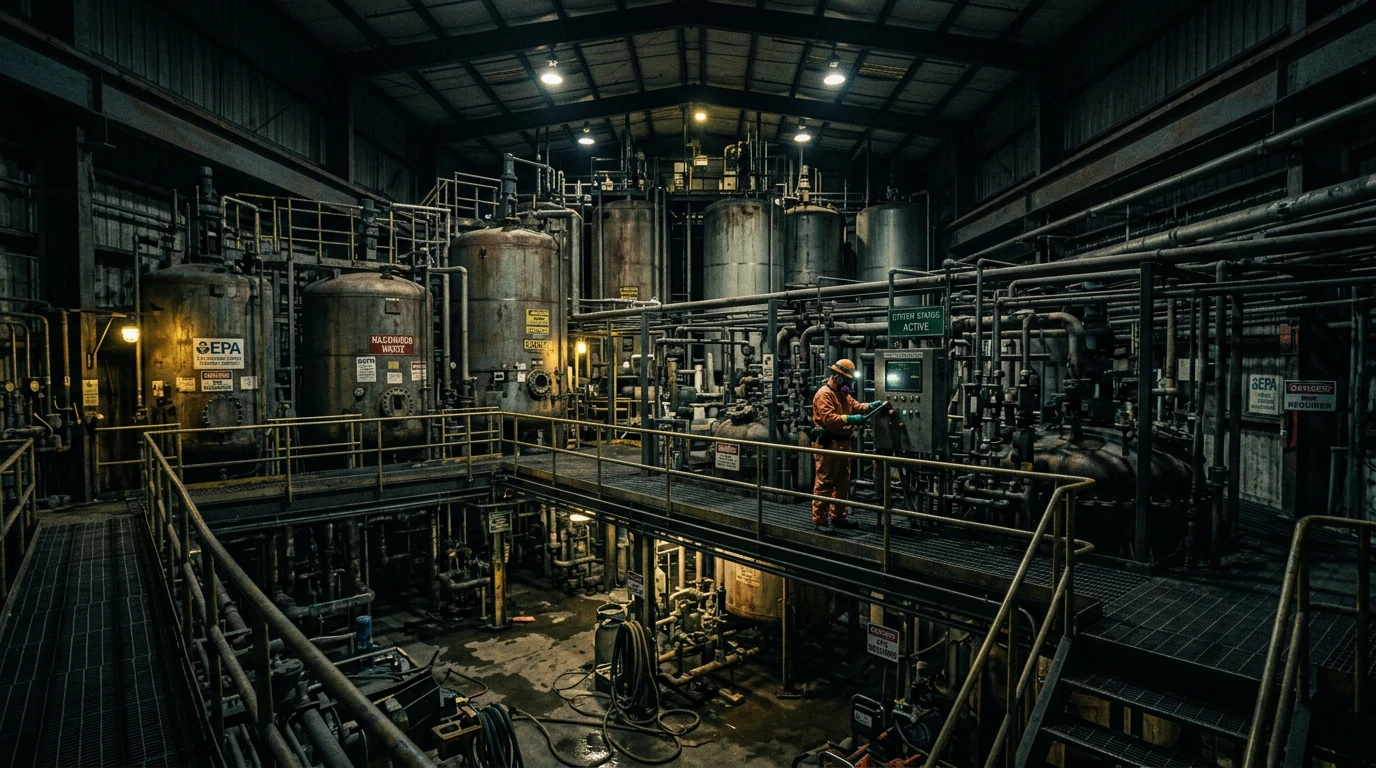
EPA Victoria is the state's environmental regulator, and its powers over waste management have expanded considerably since the Environment Protection Act 2017 came into full effect on 1 July 2021. The new framework replaced the 1970 Act and fundamentally changed how businesses must approach waste. Where the old legislation was largely reactive, the current framework places proactive obligations on every business that generates waste, not just those in the waste industry.
This guide covers the key EPA Victoria regulations that affect commercial and industrial businesses operating in Victoria, with a focus on practical compliance requirements.
The General Environmental Duty
The General Environmental Duty (GED) is the cornerstone of the Environment Protection Act 2017. It applies to every person and every business engaged in an activity that may give rise to risks of harm to human health or the environment from pollution or waste.
In practical terms, the GED requires you to minimise risks of harm so far as reasonably practicable. This standard considers the likelihood of harm occurring, the severity of potential harm, what the person knew or ought reasonably to have known, the availability of suitable measures to minimise risk, and the cost of those measures relative to the risk.
For waste generators, the GED means you cannot simply hand your waste to a collector and forget about it. Your obligations include:
- Properly classifying and segregating your waste streams before collection
- Storing waste on your premises in a way that prevents contamination, odour, and pest issues
- Engaging only appropriately licenced waste transporters and facilities
- Maintaining records that demonstrate your due diligence
- Responding appropriately to any incidents, spills, or contamination events
The GED is not a prescriptive list of rules. It is a principles-based duty, which means EPA Victoria assesses compliance based on whether your actions were reasonable in the circumstances. A large manufacturer generating tonnes of industrial waste each week will be held to a higher standard than a small retail shop producing a few bags of general waste.
Waste Classification System
Victoria classifies waste into several categories under the Environment Protection Regulations 2021. Understanding which categories apply to your business is essential for meeting your regulatory obligations.
Industrial Waste
Industrial waste is waste arising from commercial, industrial, or trade activities. This is distinct from municipal waste (household waste collected by councils). Most business waste falls into this category, and it is further divided into general industrial waste and prescribed industrial waste.
Prescribed Industrial Waste (PIW)
Prescribed industrial waste is waste that has the potential to cause harm to human health or the environment. PIW is classified into four categories:
- Category A - highest risk, includes certain chemical wastes, polychlorinated biphenyls (PCBs), and highly toxic materials
- Category B - includes acids, alkalis, heavy metal-bearing wastes, and waste oils containing contaminants
- Category C - lower-risk prescribed wastes such as some types of contaminated soil, certain industrial sludges, and waste paints
- Category D - lowest prescribed category, includes asbestos in certain forms and some low-contamination soils
Common PIW types encountered by Melbourne businesses include solvents, paints, acids, used oil filters, batteries containing heavy metals, asbestos, contaminated soil, and clinical waste from healthcare operations.
Reportable Priority Waste
The 2021 Regulations introduced the concept of reportable priority waste, which includes certain high-volume or high-risk waste streams that require additional tracking and reporting. This category captures e-waste, tyres, and certain types of plastic waste. Businesses generating reportable priority waste must report to EPA Victoria through designated channels.
Waste Transport Certificates
All movements of prescribed industrial waste in Victoria must be accompanied by an EPA transport certificate. This applies whether the waste is being taken to a treatment facility, a licenced landfill, or an interstate destination.
The transport certificate system records:
- The waste generator (your business details)
- The waste type and quantity
- The transporter's details and EPA registration
- The receiving facility and its licence details
- Date and time of collection and delivery
As the waste generator, you are responsible for ensuring a transport certificate is completed for every movement of PIW from your premises. Your waste provider should manage this process, but it is your obligation to verify that certificates are being generated and that you retain copies. Records must be kept for a minimum of three years.
EPA Licensing Requirements
Waste management facilities in Victoria require an EPA licence to operate. The licensing system covers activities including waste reception, storage, treatment, reprocessing, and disposal. As a waste generator, you do not typically need your own EPA licence unless you are operating a waste facility on your premises.
However, your duty of care requires you to verify that:
- Your waste transporter holds a current EPA registration for the waste types they carry
- The facilities receiving your waste hold appropriate EPA licences
- Those licences are current and cover the specific waste types you are sending
You can check licence status on the EPA Victoria public register. If you discover that your provider's licence has lapsed or been revoked, you must stop sending waste to that provider immediately and find a licenced alternative.
Penalties for Non-Compliance
The penalties under the Environment Protection Act 2017 are substantial and designed to ensure that non-compliance is never cheaper than doing the right thing.
Key penalty thresholds include:
- Breaching the General Environmental Duty - up to $907,200 for individuals and up to $1,814,400 for companies per offence
- Operating without a required licence - significant fines plus potential imprisonment for individuals
- Failing to notify a pollution incident - separate penalties apply for failing to report incidents to EPA Victoria promptly
- Illegal disposal of prescribed industrial waste - the most serious category, with fines exceeding $1.6 million for companies and potential criminal prosecution
Beyond financial penalties, EPA Victoria can issue prohibition notices (stopping your operations), improvement notices (requiring specific remedial actions), and clean-up notices (making you responsible for remediating contaminated sites). The reputational damage from an EPA enforcement action can be equally costly for businesses that depend on public trust.
Pollution Incident Notification
Under section 32 of the Environment Protection Act 2017, any person in management or control of an activity that results in a notifiable incident must notify EPA Victoria as soon as practicable. A notifiable incident includes any contamination, pollution, or waste event that causes or threatens serious harm to human health or the environment.
For waste generators, notifiable situations include:
- Chemical spills on your premises that reach stormwater drains or soil
- Fire in waste storage areas that releases smoke or contaminated runoff
- Discovery that your waste has been illegally dumped by a contractor
- Leaking bins or containers that contaminate groundwater or neighbouring properties
The notification obligation exists alongside your duty to take immediate action to contain the incident and minimise harm. Failing to notify is a separate offence from the incident itself.
EPA Victoria vs Local Councils
Understanding the division of responsibilities between EPA Victoria and local councils is important for businesses. Local councils primarily manage municipal (household) waste collection and recycling services. They also manage local amenity issues such as litter, illegal dumping on public land, and noise from commercial bin collections.
EPA Victoria handles the regulation of industrial and prescribed waste, licensing of waste facilities, investigation of pollution incidents, enforcement of the General Environmental Duty, and oversight of the landfill levy system.
If you receive a complaint about waste management practices, the response will come from your local council for amenity issues (bin placement, collection times, odour from bins) or from EPA Victoria for regulatory compliance issues (waste classification, transport, disposal). In some cases, both may be involved.
How the GED Applies to Waste Generators
A common misconception is that the GED primarily targets waste processors and facility operators. In reality, the duty applies with equal force to businesses that generate waste. The Act makes no distinction between producers and processors of waste when it comes to the core obligation to minimise risks.
For a typical Melbourne business, this means taking practical steps that many organisations overlook. Conducting a waste assessment to understand what waste types you produce. Ensuring your waste storage area is bunded, covered, and secure. Verifying your provider's credentials before signing a contract, not after a problem arises. Training staff on correct waste segregation so that hazardous materials do not end up in general waste bins.
Bundle Waste includes a compliance review as part of every free waste audit. We check your provider's licencing status, review your waste streams against EPA classification requirements, and identify any gaps in your record-keeping. Getting your compliance right does not need to be a burden, but it does need to be done properly.
The GED is not about perfection. It is about demonstrating that you took reasonable steps to manage your waste responsibly. Documentation is your best evidence.