
Most Melbourne offices have a paper recycling bin next to the printer and a general waste bin under each desk. That is where waste management thinking usually stops. But offices generate several waste streams that need specific handling, and the standard "recycling bin plus general waste" setup is often both incomplete and more expensive than it needs to be.
A typical office of 50 people generates between 100 and 250 kilograms of waste per week. With the right systems in place, 70 to 80 per cent of that can be diverted from landfill, and total waste costs can drop by 20 to 35 per cent.
The Real Waste Streams in a Modern Office
Paper and Cardboard
Despite the push toward digital, paper remains a significant office waste stream. Printing has decreased over the past decade, but deliveries of office supplies, equipment, and furniture generate substantial cardboard. Most offices have paper recycling in place, but cardboard from deliveries often ends up in general waste because there is no separate collection point for it.
Setting up a cardboard recycling area in your loading dock or mail room takes minimal effort and can reduce general waste volumes by 15 to 25 per cent. Flatten boxes before binning and ensure the area is clearly labelled to avoid contamination with food waste or soft plastics.
Confidential Document Destruction
Any document containing personal information, financial data, client details, or internal business information requires secure destruction. Under the Privacy Act 1988 and the Australian Privacy Principles, organisations must take reasonable steps to destroy personal information they no longer need.
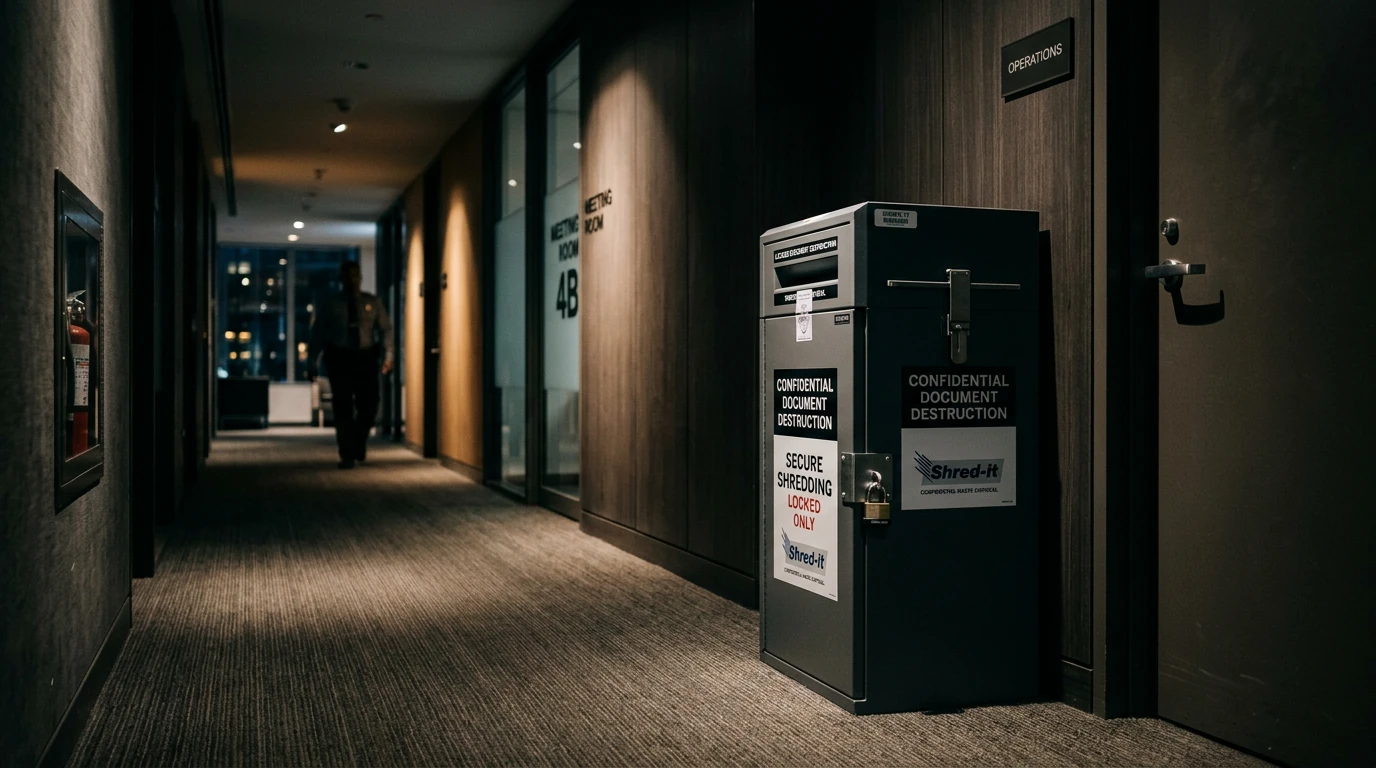
A confidential document destruction service provides locked collection consoles that sit in your office, regular scheduled collections, and certified destruction with a certificate of destruction for your records. Costs range from $30 to $80 per console per collection, depending on volume and frequency. Shredded paper is recycled after destruction, so this stream has zero landfill impact.
The alternative, staff shredding documents individually, is time-consuming, inconsistent, and creates compliance risk if documents are left unshredded or placed in standard recycling where they can be accessed.
E-Waste
Computers, monitors, keyboards, phones, cables, printers, and other electronic equipment cannot be placed in general waste. Under Victorian regulations, e-waste has been banned from landfill since 2019. Offices must arrange for e-waste to be collected by a licensed e-waste recycler.
Most Melbourne e-waste recyclers offer free collection for large volumes (ten items or more). For smaller volumes, drop-off points are available at transfer stations and dedicated e-waste centres across Melbourne. If you are doing an office fitout or equipment refresh, coordinate with your IT team to arrange bulk e-waste collection in advance rather than dealing with individual items over months.
Kitchen and Breakroom Waste
Office kitchens generate food and organic waste from lunches, coffee grounds, tea bags, and fruit peels. For offices with 30 or more staff, a dedicated organics bin in the kitchen makes financial sense. Organic waste collection costs less per kilogram than general waste, and diverting food scraps and coffee grounds from your general waste bin can reduce its volume enough to downsize the bin or reduce collection frequency.
Coffee grounds alone can be significant. An office with two coffee machines serving 50 people generates roughly 10 to 15 kilograms of coffee grounds per week. That is weight you are paying landfill rates for if it goes into general waste.
Cleaning Chemical Containers
Cleaning products used by your facilities team or cleaning contractor generate chemical containers that may require special handling. Most standard cleaning product containers (spray bottles, detergent containers) can go into commingled recycling once empty and rinsed. Concentrated chemical containers and any hazardous cleaning products need separate collection through your cleaning contractor or a chemical waste service.
Right-Sizing Bins for Office Environments
Office waste services are frequently oversized. A common setup for a 50-person office might include a 1,100-litre general waste bin collected twice per week and a 1,100-litre recycling bin collected weekly. If the general waste bin is consistently less than half full at collection, you are paying for capacity you do not use.
Here are typical benchmarks for Melbourne offices:
- Small office (10-25 people): 240L general waste (weekly), 240L recycling (weekly). Monthly cost: $120 to $200.
- Medium office (25-75 people): 660L general waste (weekly or twice weekly), 660L recycling (weekly), plus confidential destruction. Monthly cost: $250 to $500.
- Large office (75-200 people): 1,100L general waste (twice weekly), 1,100L recycling (twice weekly), organics, confidential destruction, e-waste. Monthly cost: $500 to $1,200.
If your current costs exceed these benchmarks significantly, it is worth reviewing your setup. Monitor bin fill levels over two weeks before each collection. The data will tell you whether you can downsize, reduce frequency, or both.
The Hidden Cost of Contamination
Contamination is the quiet cost driver in office waste. When food waste, coffee cups, or non-recyclable items end up in the recycling bin, the entire load can be rejected and sent to landfill. Your waste provider may also apply contamination surcharges, typically $30 to $80 per incident.
The most common office recycling contaminants are:
- Takeaway coffee cups (the plastic lining makes them non-recyclable in standard streams)
- Food-soiled paper and cardboard (pizza boxes, food wrappers)
- Soft plastics (cling wrap, chip packets, plastic bags)
- Organics (banana peels, apple cores, lunch scraps)
Clear signage at each bin point, showing what goes where with photos rather than just text, reduces contamination rates by 30 to 50 per cent. A five-minute waste briefing during team meetings once a quarter keeps the message fresh without being overbearing.
Cost Benchmarks and Savings Opportunities
Melbourne office waste costs vary widely based on location, building type, and how well the waste is managed. CBD offices in multi-tenancy buildings often pay higher rates because waste services are bundled into outgoings and managed by the building owner with limited visibility for tenants.
If you have control over your own waste contract, the biggest savings opportunities are:
- Separating recyclable streams from general waste to reduce landfill levy exposure
- Downsizing bins to match actual waste volumes rather than estimated volumes
- Reducing collection frequency based on actual fill rates
- Benchmarking rates against market prices, since many office waste contracts have not been reviewed in years
Bundle Waste offers a free waste audit for Melbourne offices. We review your current services, benchmark your rates, and identify where you can reduce costs. For multi-site businesses and office portfolios, we provide consolidated waste management across all locations with a single point of contact.
An office that only has general waste and recycling bins is leaving money on the table. Every stream you separate from general waste reduces your landfill levy exposure.