
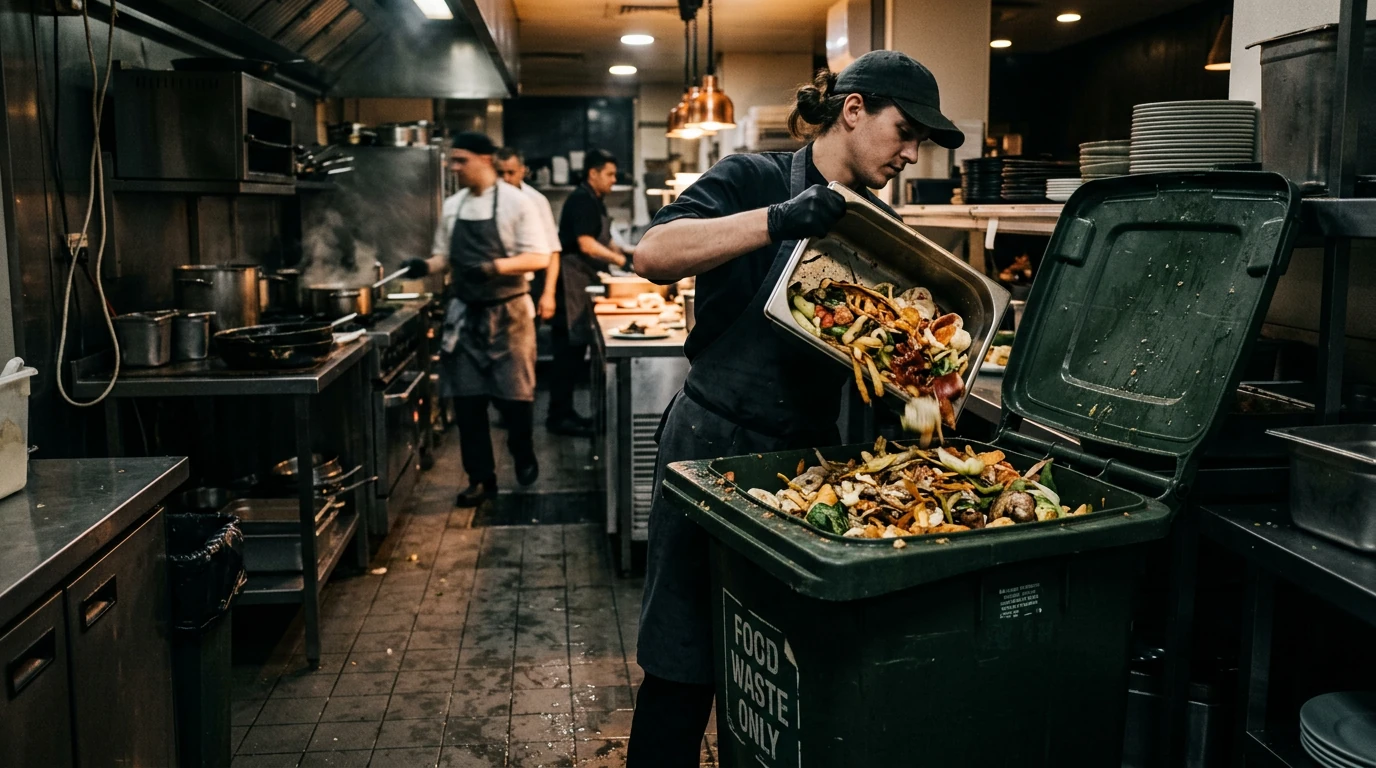
Running a restaurant in Melbourne means managing multiple waste streams every single day. Between food scraps, cooking oil, cardboard from suppliers, glass bottles, and general rubbish, the average restaurant generates between 25 and 80 kilograms of waste per trading day. Most of that waste is recyclable or compostable, yet the majority still ends up in general waste bins at full landfill rates.
For a typical Melbourne restaurant spending $1,500 to $3,500 per month on waste, that is a significant cost that can be reduced with better stream separation and smarter contracts. This guide covers the main waste categories, EPA requirements, and practical steps to bring your waste costs under control.
The Main Waste Streams in a Restaurant
Every restaurant produces a predictable mix of waste. Understanding what you generate, and in what volumes, is the first step toward managing it properly.
Food Waste
Food and organic waste is typically the heaviest stream, accounting for 40 to 60 per cent of a restaurant's total waste by weight. This includes preparation scraps, plate waste, spoiled ingredients, and expired stock. In Melbourne, food waste sent to landfill attracts the full Victorian landfill levy of $125.08 per tonne on top of collection and disposal charges.
The alternative is a dedicated organics collection. Commercial food waste composting services in Melbourne typically cost 30 to 40 per cent less per tonne than general waste because the material is diverted from landfill and processed at composting or anaerobic digestion facilities. A busy restaurant diverting just 60 per cent of its food waste from general bins can save $200 to $400 per month.
Cooking Oil and Grease Trap Waste
Used cooking oil must be collected separately. Most Melbourne restaurants use a licensed oil collection service, which is often provided free of charge because the oil has resale value for biodiesel production. If you are paying for cooking oil collection, you are likely overpaying or using the wrong service.
Grease trap waste is a different matter. Melbourne Water requires all food businesses with a grease trap to have it serviced at prescribed intervals, typically every four to twelve weeks depending on the trap size and your trade waste agreement. Grease trap pump-outs cost between $180 and $450 per service. Failing to maintain your grease trap can result in trade waste non-compliance notices and fines of up to $9,000.
Cardboard and Packaging
Cardboard is the largest recyclable stream by volume for most restaurants. Every delivery brings boxes, cartons, and packaging that quickly fills bins. A dedicated cardboard recycling bin, collected two to three times per week, is significantly cheaper than sending cardboard to landfill in your general waste. Most providers charge 30 to 50 per cent less for cardboard recycling versus general waste on a per-lift basis.
The key is breaking down boxes flat before placing them in the bin. A 1,100-litre bin holds roughly three times as much cardboard when boxes are flattened compared to when they are thrown in whole. This directly reduces the number of collections you need.
Glass
Bars and restaurants that serve alcohol generate substantial glass waste. Glass is heavy, which means it adds significant weight to your general waste bins if not separated. A separate glass collection is available from most Melbourne waste providers. Glass recycling rates are typically lower than general waste, and the weight reduction in your general bins can allow you to downsize or reduce collection frequency.
EPA Victoria Requirements for Restaurant Waste
The Environment Protection Authority (EPA) Victoria sets clear obligations for businesses that generate waste. As a restaurant operator, you need to be aware of several requirements.
General Environmental Duty
Under the Environment Protection Act 2017, all Victorian businesses have a general environmental duty to minimise risks of harm to human health and the environment from waste. For restaurants, this means you must take reasonable steps to separate recyclable and organic waste from general waste, store waste properly to prevent odour and pest issues, and ensure your waste is collected by licensed operators.
Food Waste Regulations
Victoria's circular economy policy is progressively targeting food waste diversion from landfill. While there is no blanket mandate requiring all restaurants to separate food waste yet, the direction is clear. Businesses generating large volumes of organic waste are expected to have diversion plans in place. Getting ahead of this now means you will not face rushed compliance costs when mandatory requirements arrive.
Trade Waste Agreements
Any restaurant discharging liquid waste to the sewer system needs a trade waste agreement with their local water authority, typically Melbourne Water, Yarra Valley Water, South East Water, or Western Water. This covers grease trap maintenance, discharge quality, and monitoring requirements. Non-compliance can result in additional charges, restrictions, or disconnection.
Setting Up an Efficient Kitchen Waste System
The best waste system is one your kitchen staff will actually use during a busy service. Complicated sorting requirements that work in theory but get ignored during a Friday night rush are worthless.
A practical restaurant waste setup includes:
- Prep station bins: Small food waste caddies at each prep station for scraps, peelings, and trimmings. These get emptied into the main organics bin throughout service.
- Floor bins in the kitchen: One general waste bin, one food waste bin, and one cardboard/recycling bin positioned near the pass and dishwashing area.
- Back-of-house bins: Larger 240L or 660L bins for each stream outside the kitchen, where floor bins are emptied at the end of each service.
- External bins: Your main collection bins, sized appropriately for your volume. Most restaurants need a 660L or 1,100L general waste bin, a 1,100L cardboard bin, and a 240L organics bin as a minimum.
Label everything clearly with both words and colour coding. Green for organics, yellow for recycling, red for general waste. Train every new staff member on the system during their induction, not as an afterthought.
Common Cost-Saving Strategies for Hospitality Waste
Beyond separating streams, there are several specific strategies that reduce costs for restaurants.
Right-Size Your Bins and Collections
Many restaurants have bins that were set up when the business opened and have never been adjusted. Monitor your bin levels before each collection for two weeks. If bins are consistently less than half full, you are paying for capacity you do not use. A restaurant in Fitzroy we reviewed was paying for daily 1,100L general waste collection. After introducing food waste and cardboard separation, they dropped to a 660L bin collected three times per week, saving $680 per month.
Negotiate Bundled Services
If you use separate providers for general waste, recycling, organics, and grease trap services, you are likely paying more than necessary. Many providers offer discounts for bundling multiple waste streams. Consolidating to one or two providers can reduce administrative overhead and unlock volume pricing.
Review Collection Schedules Seasonally
Restaurant waste volumes fluctuate with seasons, events, and trading patterns. A venue in Southbank may need daily collections during summer but can drop to three times per week in winter. Ask your provider about seasonal schedule adjustments rather than paying peak-season rates year round.
Check for Hidden Charges
Waste invoices for restaurants frequently include charges that were never discussed upfront. Contamination fees, fuel surcharges, environmental levies, and bin rental fees can add 15 to 25 per cent on top of your quoted rates. Review your invoices against your contract and challenge anything that was not agreed. Our guide on hidden fees on waste invoices covers the most common charges to watch for.
How a Waste Partner Helps Restaurants
Restaurant owners and managers have enough to deal with without becoming waste management experts. A waste partner handles the commercial side of your waste, negotiating rates, benchmarking your costs against market prices, and managing provider relationships on your behalf.
Bundle Waste works with dozens of hospitality businesses across Melbourne. We typically find significant savings on total waste costs, often by restructuring bin sizes and collection frequencies, introducing separated streams, and renegotiating rates with providers. Our free waste audit takes the guesswork out of the process: we review your current setup, identify where you are overspending, and present clear recommendations with projected savings.
For most restaurants, the changes are straightforward and can be implemented within two to four weeks without disrupting daily operations.
A well-managed waste system does not just save money. It keeps your kitchen cleaner, your back-of-house tidier, and your EPA obligations covered.