
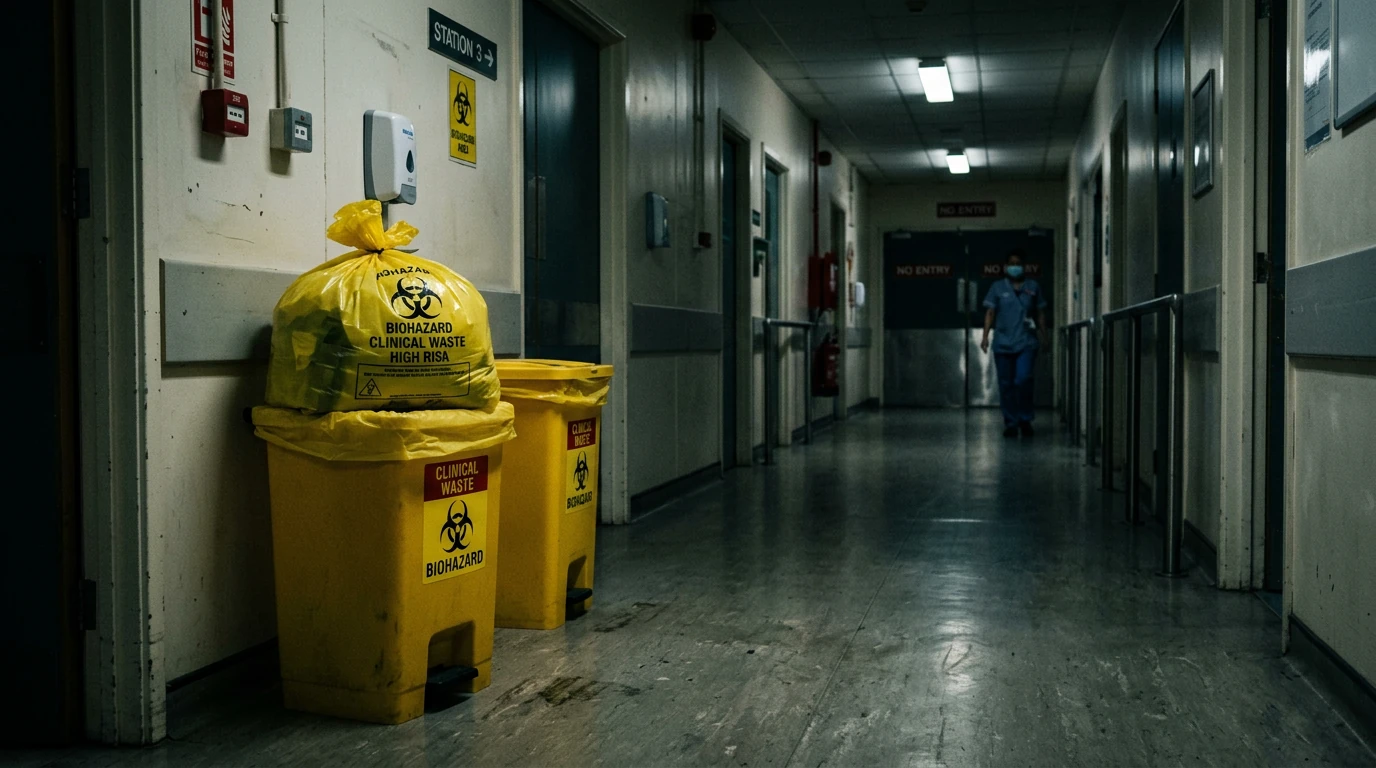
Medical and dental clinics generate some of the most regulated waste in Australia. From sharps containers and clinical waste bags to pharmaceutical waste and dental amalgam, every waste stream has specific handling, storage, transport, and disposal requirements. Getting it wrong does not just attract EPA fines — it creates genuine risks to staff, patients, and the community.
Yet waste management is rarely a priority for practice owners and managers. Clinics are busy places, and waste is often managed on autopilot — using whatever provider was set up when the practice opened, at whatever cost was quoted, with whatever frequency was suggested. The result is that many clinics overpay for waste services while simultaneously having compliance gaps they are not aware of.
Clinical Waste Categories
Australian Standard AS/NZS 3816 defines clinical waste categories that apply to medical and dental clinics:
Clinical Waste (Yellow Bag/Bin)
Waste that has the potential to cause disease or injury, including materials contaminated with blood or body fluids. In a medical clinic, this includes dressings, swabs, PPE contaminated with blood, specimen containers, and any material that has been in contact with infectious patients. In dental clinics, this includes blood-soaked gauze, extracted teeth (with amalgam removed), and contaminated PPE.
Sharps (Yellow Sharps Container)
Needles, syringes, scalpel blades, lancets, dental burrs, and any item that could cause a puncture wound and is potentially contaminated. Sharps must be placed in Australian Standard-compliant sharps containers immediately after use — never recapped, bent, or transferred between containers.
Pharmaceutical Waste
Expired or unused medications, vaccines, cytotoxic drugs, and controlled substances. Different categories require different disposal methods. Cytotoxic waste (used in cancer treatment) requires specialised hazardous waste handling. Controlled substances must be disposed of under witness in accordance with state drug and poisons legislation.
Dental-Specific Waste
Dental amalgam (containing mercury) requires separate collection and recycling — it must never enter the general waste or sewer system. Dental amalgam separators are mandatory in Victoria for any practice still using amalgam. Lead foil from X-ray film packaging, if still used, requires separate collection as hazardous waste.
General Waste
Non-clinical waste from reception areas, waiting rooms, and staff areas — paper, food packaging, drink containers. This is standard commercial general waste and should be managed separately from clinical waste streams.
Compliance Requirements in Victoria
- Segregation at source: Clinical waste must be separated from general waste at the point of generation — in the treatment room, not in a back room later
- Colour coding: Yellow bags/bins for clinical waste, yellow sharps containers for sharps, purple/cytotoxic markings for cytotoxic waste
- Storage: Clinical waste must be stored securely, away from public access, in a cool area (not in direct sunlight), for no longer than the timeframes specified in AS/NZS 3816
- Transport: Clinical waste must be collected by EPA-licensed clinical waste transporters and tracked through the prescribed waste tracking system
- Treatment: Clinical waste must be treated (typically by autoclaving or incineration) at a licensed facility before disposal
- Records: Maintain records of all clinical waste collections, including transporter details, quantities, and destination facilities
Typical Costs for Clinic Waste
Clinical waste collection is significantly more expensive than general waste due to the specialised handling, transport, and treatment required:
- Clinical waste bins (120L): $35-$65 per collection
- Sharps containers (various sizes): $8-$25 per container swap
- Pharmaceutical waste (small clinic): $150-$400 per collection
- Amalgam recycling: Variable — some recyclers collect free due to mercury recovery value
- General waste (240L): $12-$22 per lift (same as any commercial business)
A typical GP clinic spends $3,000-$8,000 per year on all waste streams combined. A dental practice with amalgam handling may spend $4,000-$10,000. Multi-practitioner clinics and specialist practices spend more depending on procedure volumes.
Common Mistakes in Clinic Waste Management
Over-classifying waste as clinical. The most expensive mistake in clinic waste management is putting general waste into clinical waste bins. Staff who are unsure about classification default to the "safe" option — yellow bin — which can double or triple waste costs. Regular training on what is and is not clinical waste is essential.
Undersized sharps containers. Using small sharps containers that need frequent replacement increases per-unit costs. For clinics generating moderate sharps volumes, larger containers with less frequent collection are more cost-effective.
Not reviewing contracts. Clinical waste is a specialised market with fewer providers than general waste, which means less natural competitive pressure. If you have not reviewed your clinical waste contract in the last two years, you are likely overpaying.
How Bundle Waste Can Help
We help medical and dental clinics across Melbourne audit their waste streams, ensure compliance with Victorian requirements, and negotiate competitive rates with licensed clinical waste providers. Whether you run a single GP practice or a multi-site medical group, we can reduce your waste costs while maintaining full compliance. Contact us for a free assessment.