
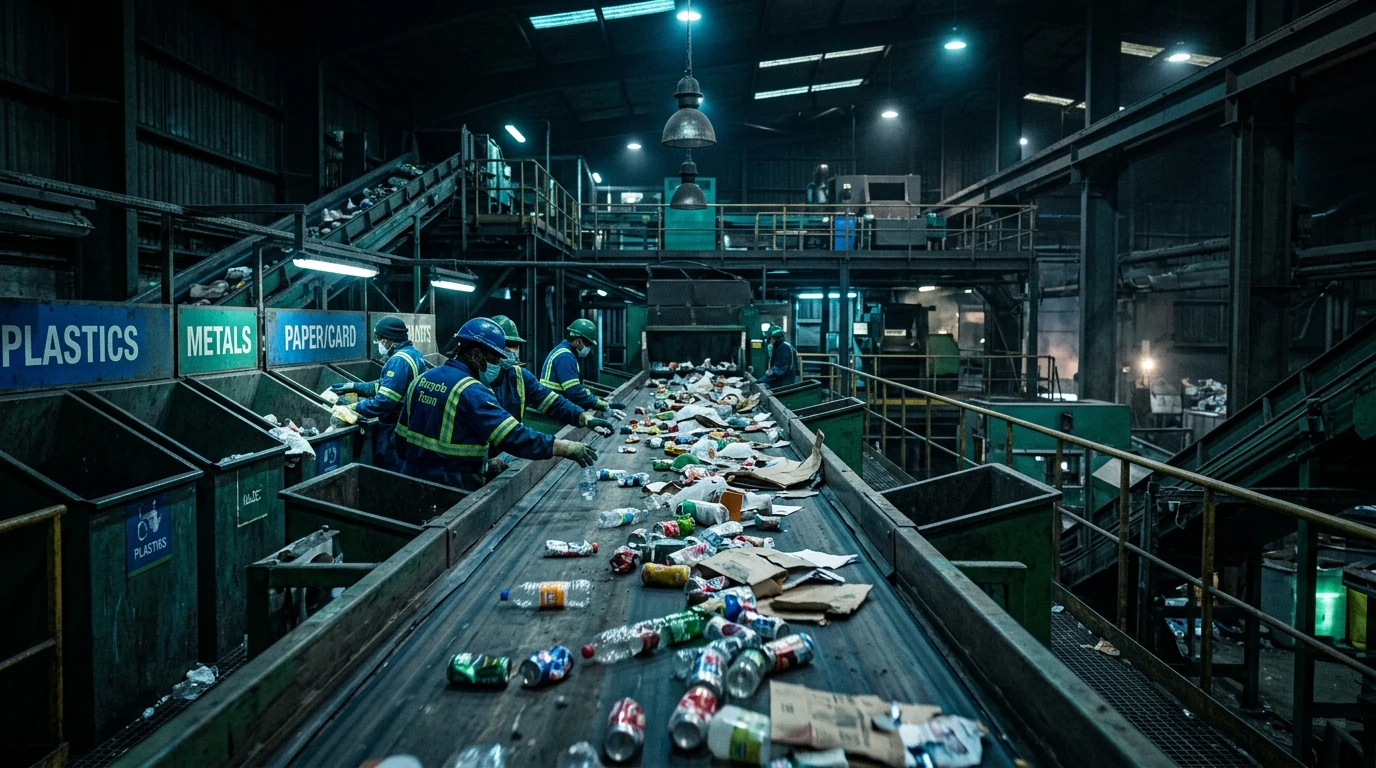
Victoria was the last state in Australia to introduce a container deposit scheme. CDS Vic launched on 1 November 2023, joining schemes already operating in South Australia (since 1977), the Northern Territory, Queensland, New South Wales, Western Australia, the ACT, and Tasmania. The scheme places a 10-cent refund on eligible beverage containers, creating a financial incentive for collection and recycling.
For businesses, CDS Vic is more than an environmental initiative — it has direct implications for waste costs, recycling revenue, and operational processes. Whether you run a cafe generating hundreds of bottles a week, an office with staff drink containers, or a venue producing thousands, understanding how to work with the scheme can save your business money.
Which Containers Are Eligible?
CDS Vic covers most beverage containers between 150ml and 3 litres, including:
- Aluminium and steel cans — soft drinks, beer, energy drinks
- Glass bottles — beer, wine (under 1L), spirits, soft drinks
- PET plastic bottles — water, soft drinks, juice
- HDPE plastic bottles — milk (flavoured milk only), juice
- Liquid paperboard cartons — juice boxes, flavoured milk
Containers that are NOT eligible include plain milk containers (any size), wine and spirit bottles over 1 litre, cordial and concentrated juice containers, and containers for health tonics or registered medicines. Eligible containers are marked with the 10c refund symbol.
How the Scheme Works for Businesses
Businesses can return eligible containers and claim the 10-cent refund just like consumers. However, the practicalities differ depending on your volume:
Low Volume (Under 500 Containers per Week)
For offices, small cafes, and businesses generating modest quantities, the simplest approach is to designate a collection bin for eligible containers and have staff drop bags at a nearby refund point. Victoria has over 600 return points including reverse vending machines, over-the-counter depots, and pop-up collection points. The refunds can be claimed as cash, donated to charity, or deposited to a bank account.
Medium Volume (500-5,000 Containers per Week)
For pubs, restaurants, cafes, and mid-sized businesses, manually returning containers becomes impractical. Commercial collection services operate in this space — they place collection bins or bags at your premises, collect on a schedule, and either pay you the refund (minus a handling fee) or offset the refund against your waste collection costs.
High Volume (5,000+ Containers per Week)
For venues, events, large hospitality groups, and institutions, dedicated commercial arrangements make the most sense. High-volume generators can negotiate directly with CDS Vic network operators or work through a waste partner to set up bulk collection with maximum refund recovery.
The Financial Impact on Waste Costs
CDS Vic affects your waste costs in two ways. First, the obvious: every eligible container you recover is worth 10 cents. A pub generating 3,000 eligible containers per week is looking at $15,600 per year in refunds. Even an office with 200 containers per week generates $1,040 annually — enough to offset a chunk of your waste bill.
Second, and less obvious: removing eligible containers from your general waste and recycling streams reduces bin weight and volume. If your waste contract is weight-based (as many are), diverting containers out of your general waste bin reduces your waste disposal costs and potentially allows you to downsize bins or reduce collection frequency.
A Melbourne hospitality group we work with recovered over $42,000 in CDS refunds in their first year, while simultaneously reducing their general waste collection frequency from five times per week to three. The combined saving exceeded $60,000.
Setting Up CDS Collection at Your Business
The practical steps to capture CDS value in your business:
- Audit your container volumes. Spend a week tracking how many eligible containers your business generates. A waste audit will give you the data you need to choose the right collection method
- Choose your collection method. Self-return for low volumes, commercial collection service for medium to high volumes
- Set up internal collection. Place clearly labelled bins at container generation points (bar areas, kitchens, break rooms). Make it easier to put a container in the CDS bin than in the general waste
- Train staff. Brief all staff on which containers are eligible and where they go. The biggest loss of refund revenue comes from eligible containers being thrown into general waste or contaminated recycling
- Track and optimise. Monitor container recovery rates monthly. If you are recovering less than 80% of eligible containers, investigate where the leakage is occurring
Common Business Questions
Can I claim refunds on containers from my customers? Yes. If customers leave eligible containers at your premises (at a cafe, restaurant, venue, etc.), you can collect and claim the refund on those containers. There is no requirement to prove who purchased the beverage.
Do I need to wash or sort containers? Containers do not need to be washed, but they do need to be empty. Most refund points and commercial collectors accept containers loose or in bags without sorting by material type.
What about broken glass? Broken glass bottles are not eligible for the 10-cent refund through CDS Vic, as they cannot be scanned. They should continue to go in your glass recycling stream.
Does this affect my existing recycling contract? It can. If you have a co-mingled recycling service, removing high-value CDS containers (particularly aluminium) from your recycling bin may affect any rebates or reduced rates tied to material value. Review your recycling contract terms before making changes.
The Bigger Picture
CDS Vic is part of a broader shift in Australian waste policy towards circular economy principles and producer responsibility. Container deposit schemes across all states have collectively achieved return rates above 70%, significantly higher than kerbside recycling capture rates for the same materials. The scheme also supports Victoria's target to divert 80% of waste from landfill by 2030.
For businesses, the key takeaway is that what was previously a cost (disposing of containers as waste) is now a revenue opportunity. The businesses that benefit most are those that set up simple, effective internal collection systems and track their recovery rates.
How Bundle Waste Can Help
We help Melbourne businesses integrate CDS Vic into their broader waste management strategy. This includes auditing container volumes, connecting you with commercial collection services, renegotiating existing waste contracts to account for changed recycling volumes, and ensuring you are capturing the maximum refund revenue. Contact us for a free assessment.