
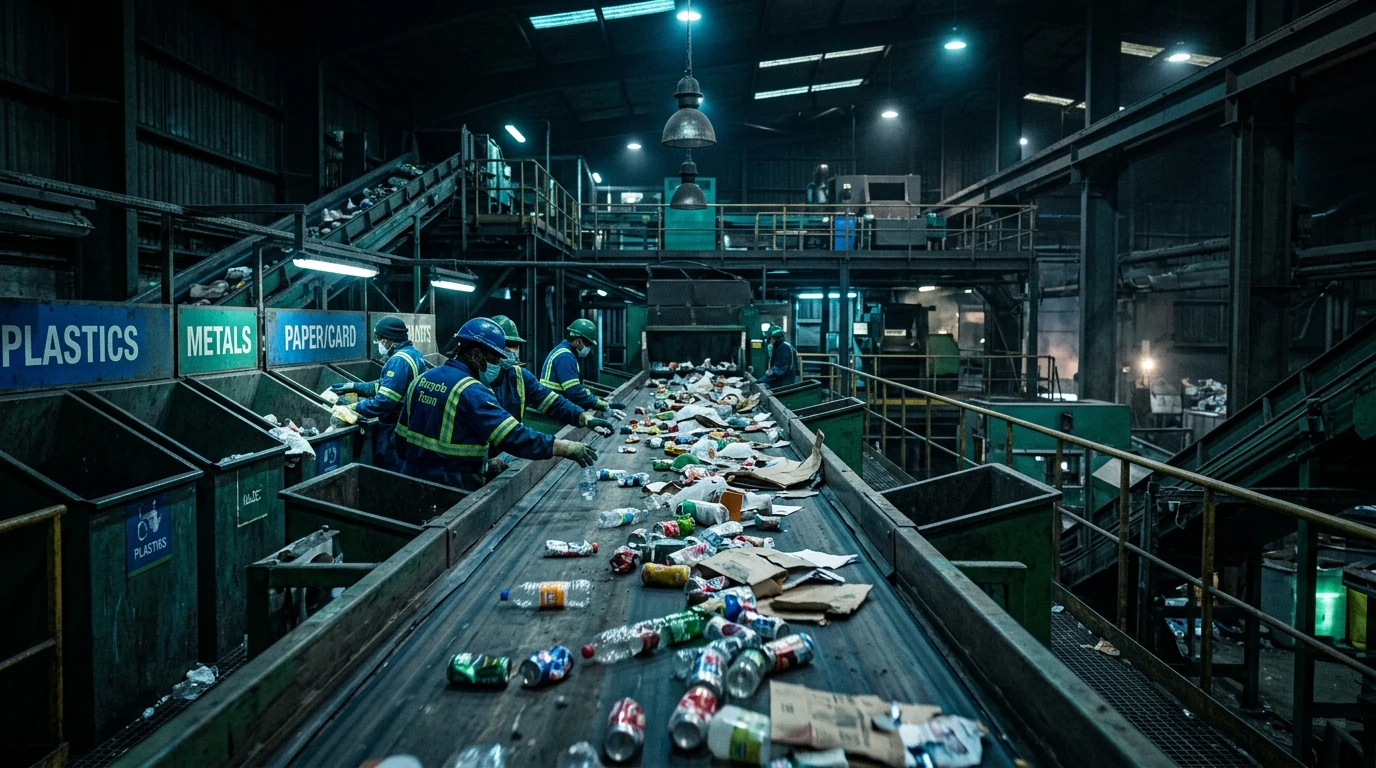
Victoria is progressively rolling out a four-stream waste collection system across all councils. The system separates household waste into four bins: general waste (red lid), co-mingled recycling (yellow lid), glass (purple lid), and food organics and garden organics or FOGO (green lid). While the rollout is primarily aimed at residential kerbside collection, it signals a significant shift in Victoria's waste infrastructure — one that directly affects how commercial waste is managed and priced.
The Four Streams Explained
General Waste (Red Lid)
Non-recyclable, non-organic waste: soiled packaging, nappies, broken crockery, textiles, polystyrene. This stream goes to landfill and attracts the full landfill levy. The strategic goal is for this to become the smallest bin — residual waste only after all recyclable and organic material has been separated.
Co-Mingled Recycling (Yellow Lid)
Paper, cardboard, plastic containers (1-7), aluminium and steel cans, aerosol cans. Notably, glass is no longer included in co-mingled recycling in the four-stream system — it moves to its own stream.
Glass (Purple Lid)
All glass bottles and jars. Separating glass from other recyclables solves one of the biggest quality problems in Australian recycling: glass contamination. When glass breaks in co-mingled bins, it contaminates paper and cardboard, reducing the value and recyclability of all materials. Separate glass collection produces higher-quality recycled glass and significantly improves the quality of the remaining co-mingled stream.
FOGO — Food Organics and Garden Organics (Green Lid)
All food waste (cooked and raw), coffee grounds, paper towels, garden clippings, and compostable packaging (where accepted). This material is processed through industrial composting or anaerobic digestion, producing compost or energy rather than generating methane in landfill.
How This Affects Commercial Waste
The four-stream system is a household program, and commercial waste contracts are separate from council kerbside services. However, the four-stream rollout affects businesses in several important ways:
Infrastructure investment. The new processing infrastructure being built to handle four-stream residential waste — glass processing plants, FOGO composting facilities, upgraded MRFs (material recovery facilities) — also creates capacity for commercial waste streams. This means more options and potentially lower costs for businesses wanting to separate glass or organic waste.
Staff expectations. As four-stream becomes standard at home, employees increasingly expect the same separation at work. Businesses that still have a single general waste bin will face questions about why they are not sorting waste the way staff do at home.
Regulatory direction. The four-stream rollout is part of Victoria's Recycling Victoria policy, which explicitly targets commercial waste alongside residential. Mandatory commercial waste separation requirements are expected within the next 3-5 years, following the path already taken by the ACT and parts of Europe.
What Businesses Should Do Now
Implement Three or Four Streams
Most Melbourne businesses currently operate a two-stream system: general waste and co-mingled recycling. Adding an organic waste stream is the single most impactful change you can make — food and organic waste typically accounts for 30-50% of a food business's general waste volume, and organic waste collection costs less per kilogram than general waste because it avoids the landfill levy.
Separating glass is the logical next step, particularly for hospitality businesses. A dedicated glass collection is usually cheaper per lift than co-mingled recycling and dramatically improves the quality (and reduces contamination charges) of your remaining recycling stream.
Educate Staff
The biggest barrier to effective waste separation in commercial settings is staff behaviour, not infrastructure. Clear, visual signage at every bin station — showing what goes in each bin with pictures, not just text — is the most effective intervention. Regular briefings during team meetings reinforce the message.
Right-Size for the New Configuration
Adding new waste streams does not mean adding bins on top of your current setup. As material moves from general waste to recycling, organic, and glass streams, your general waste volume should decrease. A waste audit before and after implementing new streams ensures your bins are sized correctly and you are not paying for excess capacity.
Cost Implications
Transitioning to more waste streams sounds like it should cost more — more bins, more collections. In practice, businesses that implement three or four streams properly usually spend less overall because:
- General waste (the most expensive stream) decreases significantly
- Organic waste avoids the $106.19/tonne landfill levy
- Clean recycling streams attract better rates than contaminated co-mingled
- Glass separation reduces contamination charges on your recycling
- CDS Vic refunds on eligible containers provide additional revenue
We typically see total waste cost reductions of 10-20% when businesses transition from two streams to three or four, even accounting for the additional collection services.
How Bundle Waste Can Help
We help Melbourne businesses transition to multi-stream waste systems — auditing your current waste, recommending the right bin configuration, sourcing competitive collection services for each stream, and training your staff. Contact us for a free assessment.