Gym & Fitness Centre Waste Management Guide

Water bottles, towels, packaging, and hygiene products — gyms produce more waste than most operators realise. Here's how to manage it better.

Australia's fitness industry includes over 7,000 registered gyms, studios, and fitness centres. From boutique Pilates studios to 24-hour gym chains, every facility generates waste — and most are paying more than they need to for collection and disposal. Gyms have unique waste characteristics: high volumes of recyclable plastic bottles, towel and textile waste, cleaning product containers, and packaging from supplements and merchandise.

Key Waste Streams in Gyms

Plastic Bottles and Drink Containers

The largest recyclable waste stream in most gyms. Members and staff go through hundreds of plastic water bottles, protein shake containers, and energy drink cans per week. With Victoria's container deposit scheme now in place, these containers are worth 10 cents each. A gym with 2,000 members can generate $2,000-$5,000 per year in CDS refunds from containers left on-site — revenue most gyms currently send to landfill.

Towels and Textile Waste

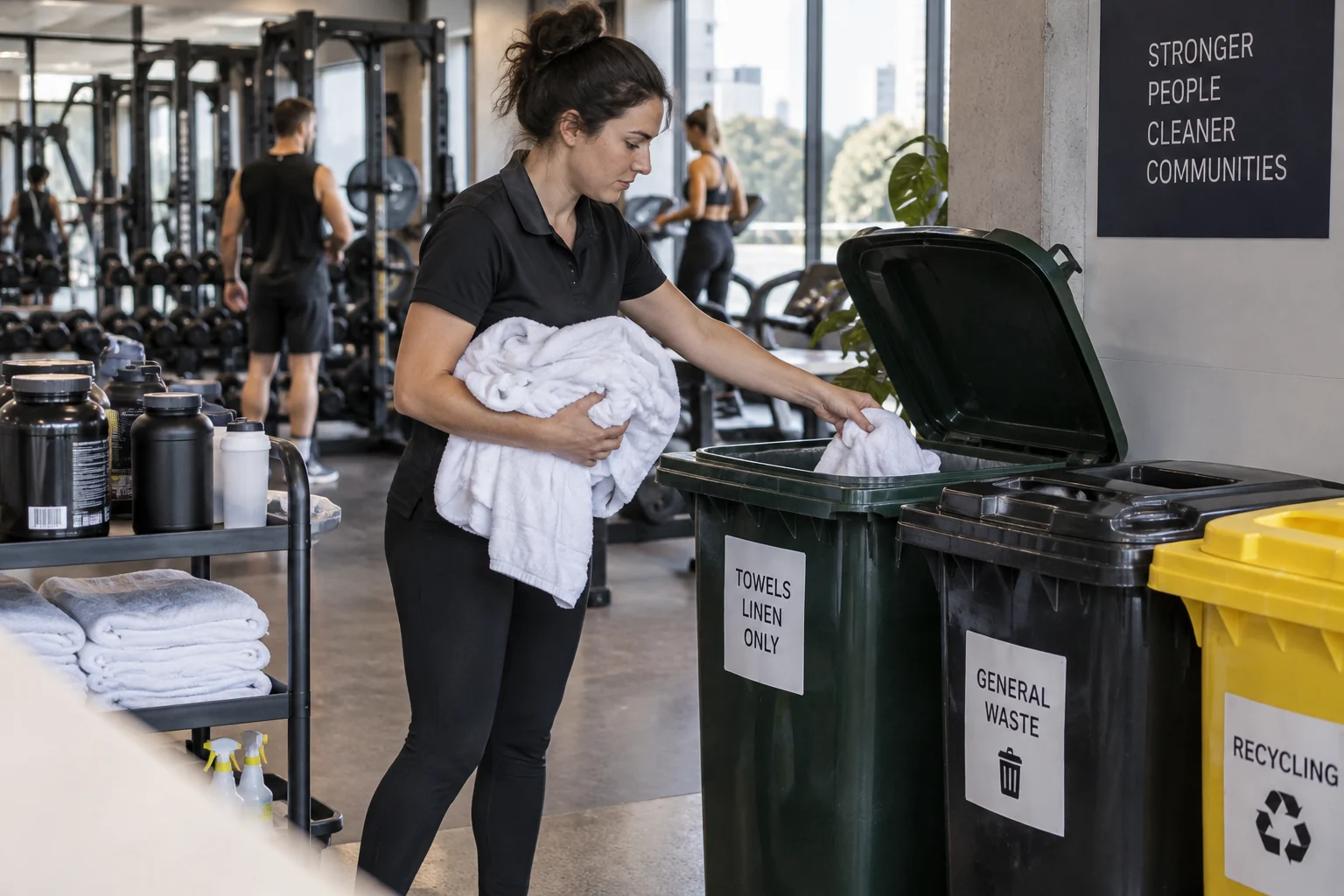
Gyms that provide towels eventually retire them — worn, stained, or damaged towels that are no longer presentable. Rather than sending these to landfill, worn towels can be donated (many charities accept worn towels for animal shelters), sent to textile recycling, or repurposed as cleaning rags. Some gyms with laundering operations also generate lint waste from dryers, which goes to general waste.

Cleaning and Hygiene Products

Gyms are intensive users of cleaning products — surface sprays, disinfectants, hand sanitiser, and bathroom supplies. The containers are recyclable (most are HDPE plastic), but in practice they often end up in general waste. Switching to bulk concentrate systems (diluting cleaning concentrate on-site rather than buying pre-mixed sprays) reduces both cost and packaging waste significantly.

Supplement and Retail Packaging

Gyms that sell supplements, merchandise, or snacks generate cardboard boxes, plastic tubs, shrink wrap, and other packaging waste. Most of this is recyclable if separated correctly.

General Waste

Food scraps from cafes or vending machines, used paper towels from bathrooms, broken equipment parts, and non-recyclable packaging. In gyms without proper separation, general waste bins often contain 30-40% recyclable material.

Cost Reduction Strategies for Gyms

Capture CDS Refunds

Set up dedicated container collection bins on the gym floor, near drinking fountains, and in change rooms. Partner with a commercial CDS collection service or have staff drop bags at a local refund point. The refunds offset waste costs or can be donated to a charity chosen by members.

Install Water Refill Stations

The most effective way to reduce plastic bottle waste is to reduce plastic bottle use. High-quality water refill stations with filtered, chilled water encourage members to bring reusable bottles. Many gyms find that refill stations reduce plastic bottle waste by 50-70% while positioning the gym as environmentally conscious — a selling point for sustainability-minded members.

Right-Size Bins and Collection Frequency

Gym waste volumes are not constant — they peak during January, Monday evenings, and before summer. A bin configuration set for peak periods overpays during quieter times. Review your bin sizes and collection frequency quarterly to match actual demand. A waste audit provides the baseline data you need.

Multi-Site Consolidation

If you operate a gym chain or franchise group, consolidating waste contracts across all locations delivers volume-based discounts and simplified administration. We typically see 20-30% savings when gym groups move from site-by-site contracts to a consolidated arrangement.

Sustainability as a Membership Selling Point

Gym members — particularly younger demographics — increasingly care about environmental practices. Visible waste separation, refill stations, towel recycling programs, and sustainability communications can differentiate your gym from competitors. Some gym operators feature their waste diversion statistics on digital screens in the gym, turning waste management into member engagement.

How Bundle Waste Can Help

We work with gym operators across Melbourne — single locations and multi-site groups — to audit waste, set up CDS recovery, right-size bin configurations, and negotiate competitive collection rates. Contact us for a free waste assessment.

Industry Guide — FAQ

What waste streams does a Melbourne gym actually produce?

Gyms generate more than general rubbish. The main streams are plastic water and protein-shake bottles, retired towels and textile waste, cleaning and hygiene product containers, supplement and merchandise packaging, plus general waste from cafes and bathrooms. In gyms without proper separation, general bins often hold 30-40% recyclable material that could be diverted and is needlessly inflating disposal costs.

How much can a gym earn back from drink containers under Victoria's CDS?

Container Deposit Scheme Vic pays 10c for each eligible container, which covers most water bottles, shake containers and drink cans found in gyms (wine and pure-spirit glass are excluded). A facility with around 2,000 members can typically generate $2,000-$5,000 a year in refunds from on-site containers, money many gyms currently send to landfill instead of recovering.

Why are gym waste costs often higher than they should be?

Gym volumes spike in January, on Monday evenings and before summer, then fall away. A bin and collection schedule set for peak periods means you overpay during the quieter months. Reviewing bin sizes and collection frequency quarterly against actual demand, ideally off a waste audit baseline, is the simplest way to stop paying for capacity you are not using.

How can a fitness centre cut its plastic bottle waste?

The most effective step is reducing bottle use, not just recycling. Installing filtered, chilled water refill stations encourages members to bring reusable bottles, and many gyms find this cuts plastic bottle waste by 50-70%. Pairing this with dedicated CDS collection bins near fountains and change rooms captures the remaining containers. Both moves also read as genuine sustainability credentials for members.

Can a waste broker help a multi-site gym group cut costs?

Yes. As an independent broker, Bundle Waste compares and negotiates provider rates on your behalf, often on a no-win, no-fee basis, so you keep the same bins and service for less. We typically see 20-30% savings when gym groups consolidate site-by-site contracts into one arrangement, and we can also set up CDS recovery and right-size bins per location.

Related Articles

Running a gym or fitness chain?

We help fitness operators reduce waste costs and capture CDS refunds. Free assessment for single sites and multi-site groups.

Get Your Free Audit →