 Bundle Waste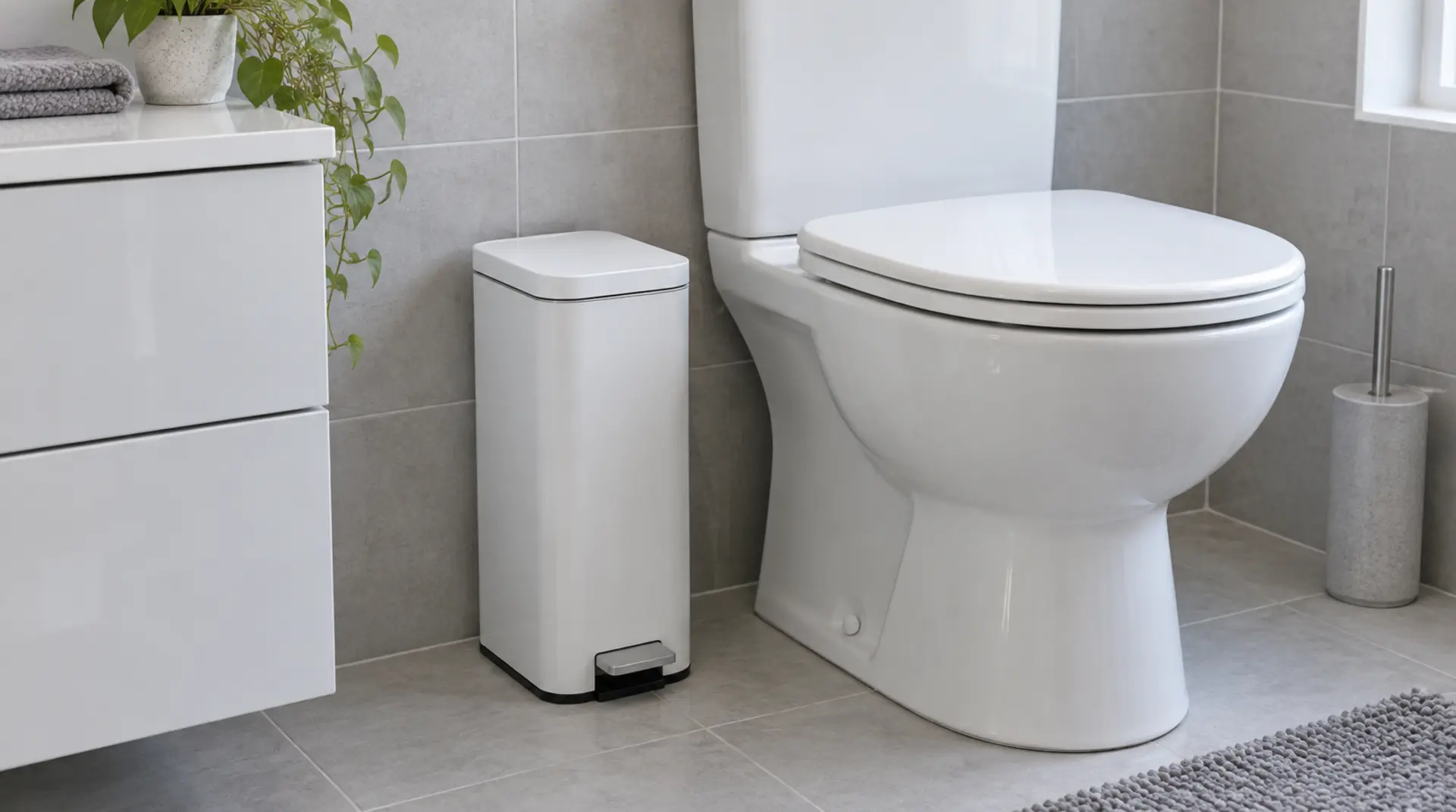
Images are illustrative.
Feminine hygiene units
Sanitary units for female, all-genders and accessible toilets in offices, shops, venues, schools and public facilities, compared on units, visit schedule and every charge.
Sanitary, nappy and incontinence units for offices, venues, schools, clinics and care sites. Bundle Waste is a broker: we compare hygiene providers' quotes on the same units, visits and charges, then help arrange the service you choose.
Compare my sanitary service ↗
A useful quote sets out the number and size of units, the servicing schedule and the full cost. Check whether rental, installation, exchanges and other charges are included before comparing providers.
Images are illustrative.
Sanitary units for female, all-genders and accessible toilets in offices, shops, venues, schools and public facilities, compared on units, visit schedule and every charge.

Images are illustrative.
Nappy and incontinence units for childcare, aged care, disability services and parent rooms, sized and scheduled around how each washroom is actually used.

Sanitary waste from patient areas can be clinical waste. We keep it out of ordinary washroom servicing and arrange it through a healthcare waste service.

Images are illustrative.
Several sites quoted on one specification, so you can weigh a single agreement against separate local arrangements.
A serviced sanitary arrangement has three parts: the units, the visits and the waste. The provider installs units in the washrooms that need them, then returns on an agreed schedule to empty or exchange each unit, clean it and replace liners or other consumables, and takes the waste away.
Ask each provider for the capacity and dimensions of every unit, what may be placed in it, and what happens at a visit: whether units are emptied on site or exchanged, how they are cleaned and which consumables are replaced. Ask, too, which facility receives the waste and how it is classified.
In Victoria, WorkSafe's compliance code Workplace facilities and the working environment (edition 1, December 2023) gives practical guidance on the facilities employers provide under the Occupational Health and Safety Act 2004 and Regulations 2017. The code is not mandatory, but a duty holder who complies with it is taken to have complied with the duties it deals with.
In practice, assess each cubicle by who uses it, including female, all-genders and accessible toilets, rather than by the sign on the door, and confirm the arrangement with the person responsible for the workplace. Outside Victoria, check the code your own work health and safety regulator has adopted.
Source: WorkSafe Victoria — Compliance code: Workplace facilities and the working environment.
In Victoria, ordinary washroom sanitary waste generally is not. EPA Victoria's classification of clinical and related industrial waste excludes “sanitary napkins from non-patient areas or from commercial premises, if the area uses an appropriate disposal system”.
EPA pre-classifies clinical and related industrial waste as reportable priority waste. If your site includes patient areas, such as a clinic, a medical suite or a care setting where clinical procedures happen, agree how each stream is classified before comparing prices, and do not assume an ordinary washroom quote covers clinical disposal. Our healthcare waste service covers that separation.
Source: EPA Victoria — Classification of clinical and related industrial waste.
A useful comparison starts with your actual operation.

Which cubicles need a unit, and who uses each washroom.
How full units are at each visit, including in busy periods.
When technicians can reach each washroom, and who lets them in.
Menstrual, nappy, incontinence or patient-area waste, each on the right service.
We do not publish a market price range for sanitary services. We have not verified one, and a price only means something next to the units, visits and terms it buys. What we can show is how to put two quotes on the same footing.
| Item | What to confirm in writing |
|---|---|
| Units | Number and type of units in each washroom, with capacity. |
| Visits | Chargeable visits per unit per year, including holiday periods. |
| Price | AUD price per unit per visit or per month, and whether GST is included. |
| Rental | Whether unit rental is charged separately from the service visit. |
| One-off charges | Installation, exchange and removal fees. |
| Other charges | Minimum account fees, extra or missed visits, consumables and per-invoice fees. |
| Terms | Contract term, renewal, notice period and price-adjustment clause. |
Annual total = number of units × chargeable visits per unit per year × price per visit, plus any rental, fees and minimum charges over the same 12 months. Check the visit count: a four-weekly schedule is 13 visits a year (52 weeks ÷ 4), not the 12 a monthly schedule gives.
A lower annual figure reached by removing units or stretching the interval is a different service, not a saving on the same one, so check capacity and hygiene first. Our quote comparison tool totals two quotes from your own figures, and the contract red-flags guide covers the clauses to check before signing.
Bundle Waste is a waste broker. We do not supply or service sanitary units ourselves; the hygiene provider you choose does. Our part is the comparison, the negotiation and the coordination around it.
Timing depends on provider availability, your current agreement and the changes required. A review does not guarantee a lower price.
Confirm the units, the visit schedule and what may be placed in each unit with your provider. Acceptance depends on the service arranged for your site.
This page summarises Victorian guidance. It is general information, not legal advice for your site.
Send the invoice and agreement, or tell us what your washrooms need, and we will compare the options with you.