Industry Guide
10 min read
By Pedro Carreira
Updated 16 June 2026
$1,500-5,000
Typical Monthly Spend
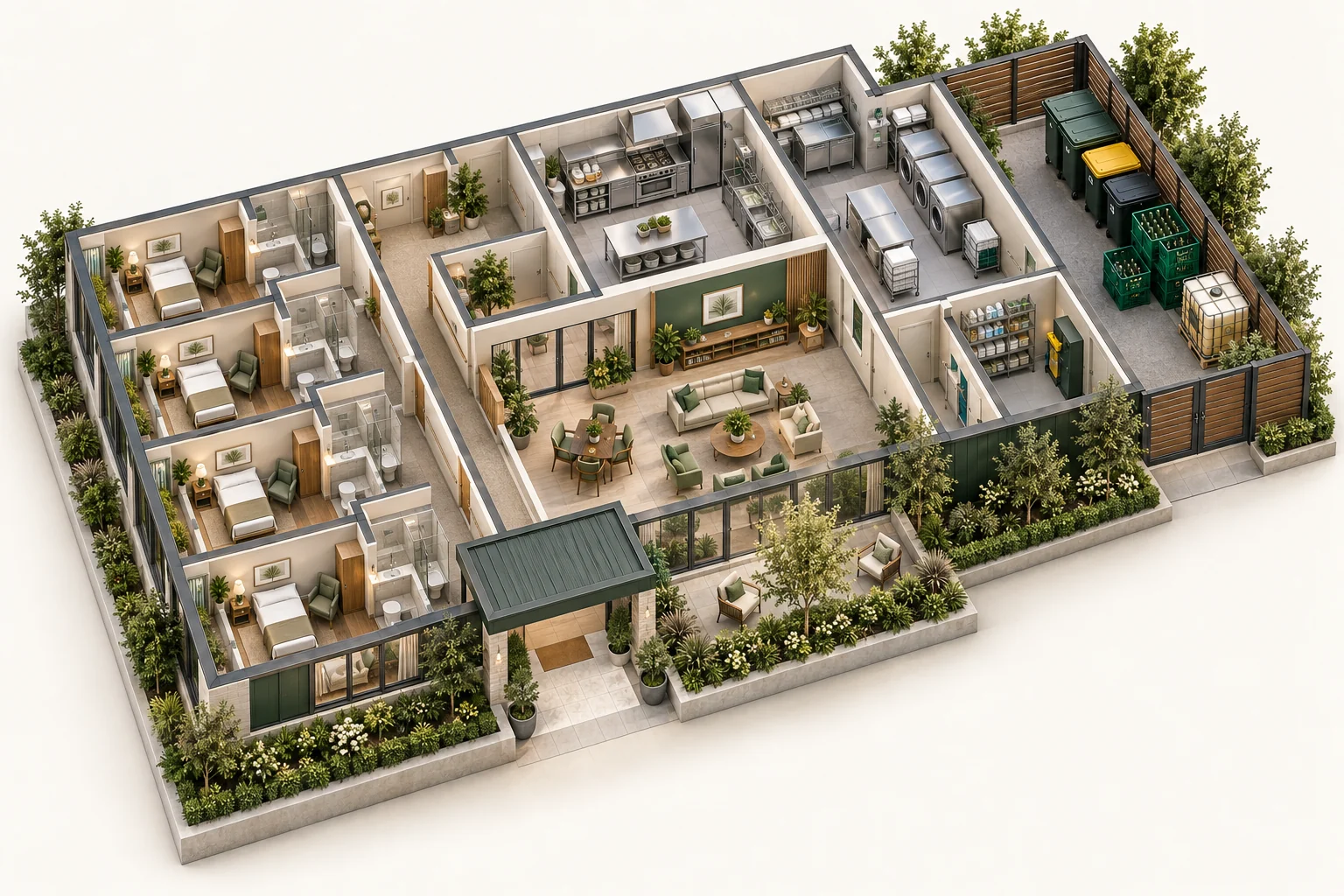
Managing waste in the aged care facilities sector requires understanding specific waste streams, compliance requirements, and cost-effective disposal options. Aged care facilities generate significant volumes of incontinence and clinical waste requiring specialist disposal. Sharps containers and pharmaceutical waste must be tracked and documented. Infection control protocols dictate strict segregation. Many facilities struggle with staff training on correct bin usage, leading to contamination. Food waste volumes are high due to large-scale catering, and organic diversion can deliver meaningful savings. Bundle Waste specialises in helping aged care facilities businesses across Melbourne find the best waste management rates.
Common Waste Streams in Aged Care Facilities
- clinical waste
- incontinence waste
- sharps
- pharmaceutical waste
- food waste
- general waste
- recycling
Compliance Requirements
- EPA Victoria clinical waste tracking (EPA Publication 1828)
- Aged Care Quality Standards — infection control waste protocols
- Sharps disposal compliance with AS/NZS 4031
- Pharmaceutical waste segregation under Therapeutic Goods Act
- WorkSafe Victoria manual handling for waste bins
Unique Waste Challenges
Aged care facilities generate significant volumes of incontinence and clinical waste requiring specialist disposal. Sharps containers and pharmaceutical waste must be tracked and documented. Infection control protocols dictate strict segregation. Many facilities struggle with staff training on correct bin usage, leading to contamination. Food waste volumes are high due to large-scale catering, and organic diversion can deliver meaningful savings.
Recommended Waste Services
Waste Management Costs for Aged Care Facilities
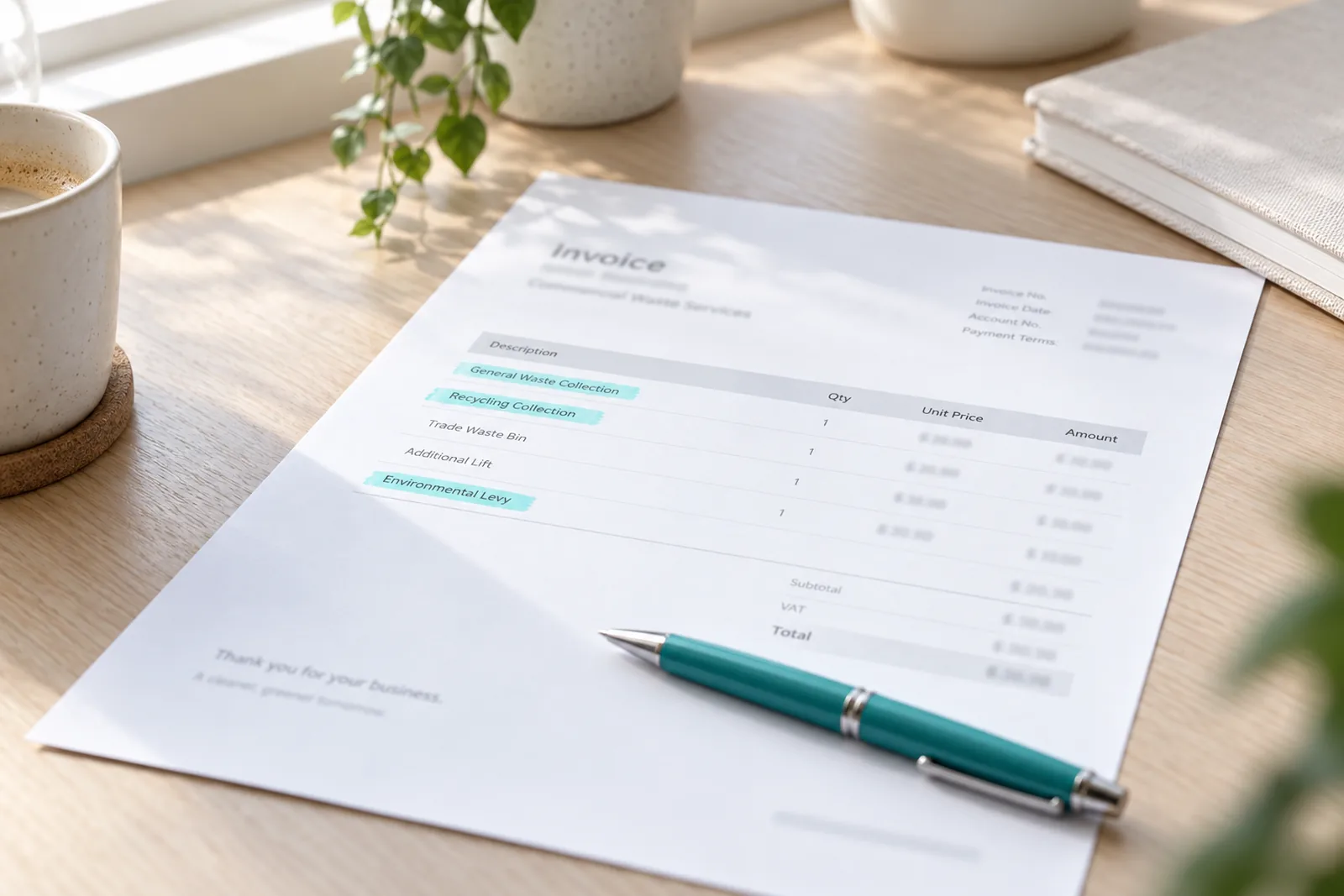
Typical monthly waste management spend for aged care facilities businesses is $1,500-5,000. This covers all waste streams including general waste, recycling, and any specialist disposal. Bundle Waste typically negotiates up to 30% savings for aged care facilities clients.
Aged Care Facilities Waste Management by Location
Related Resources
Frequently Asked Questions
How much does aged care waste management cost in Melbourne?+
Aged care waste management in Melbourne typically costs $1,500-5,000 per month depending on facility size and bed count. General waste runs $300-800/month, clinical waste $400-1,500/month, incontinence waste $200-600/month, food organics $150-400/month, and recycling $100-300/month. Facilities with 80+ beds sit at the higher end. A waste broker can often reduce these costs by 15-30% through competitive tendering and right-sizing bin frequencies.
What are the clinical waste requirements for aged care in Victoria?+
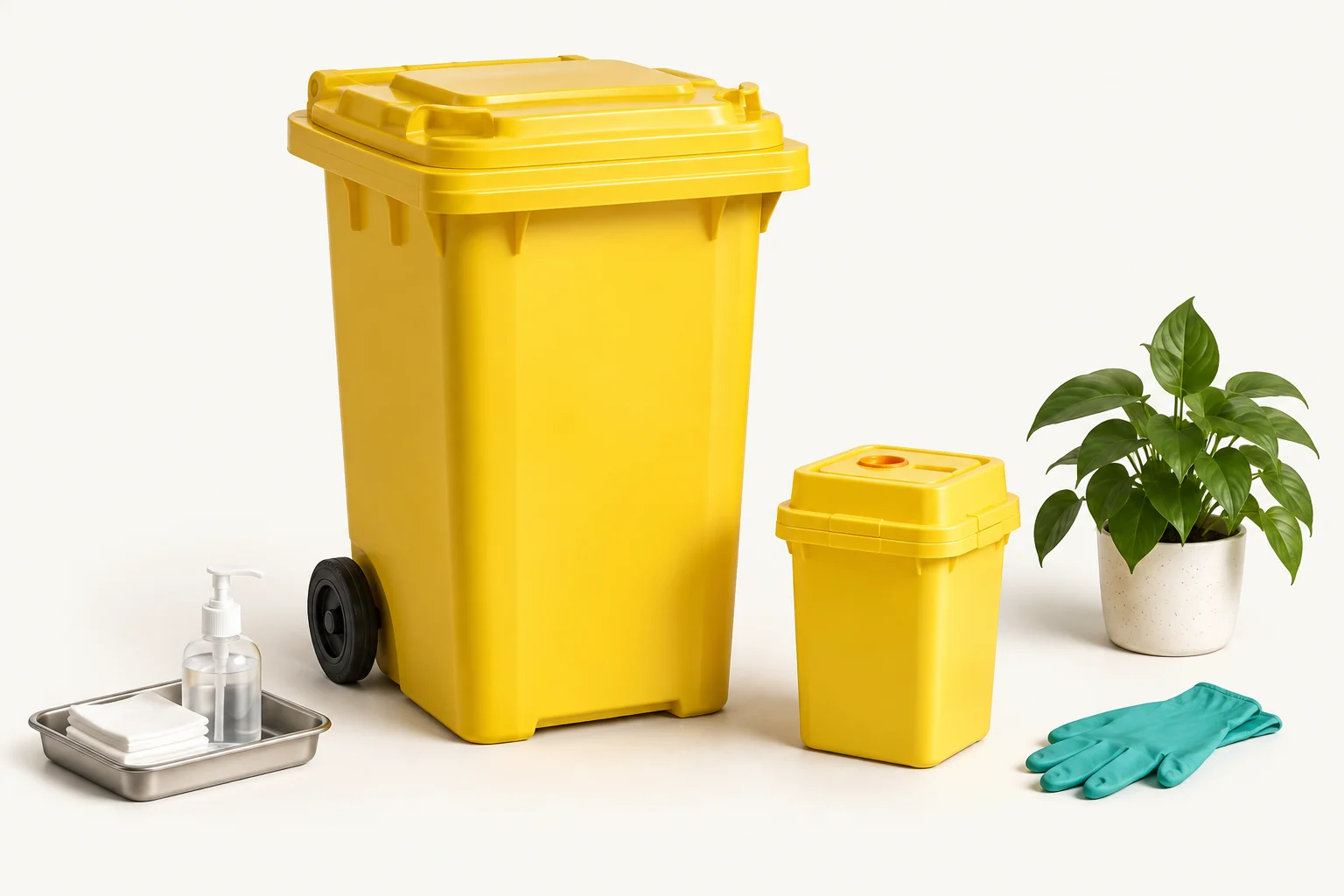
Victorian aged care facilities must comply with EPA Publication 1828 for clinical waste management. All clinical waste must be segregated into yellow bins or bags, tracked from generation to disposal, and handled by licensed transporters. Sharps must go into AS/NZS 4031-compliant containers. Facilities need a waste management plan, staff training records, and must keep transport certificates for at least three years. Non-compliance can result in EPA fines exceeding $9,000.
How should incontinence waste be managed in aged care facilities?+
Incontinence waste in aged care should be double-bagged in heavy-duty bags and placed in general waste bins — it is not classified as clinical waste unless contaminated with blood. However, many facilities over-classify incontinence waste as clinical, paying 3-5x more than necessary. Correct segregation alone can save $200-500/month. Bins should be lined, sealed daily, and stored in covered areas away from resident access. Some providers offer dedicated incontinence waste streams at reduced rates.
Do aged care facilities need a waste management plan in Victoria?+
Yes. Under the Aged Care Quality Standards (Standard 3 — Personal Care and Clinical Care), facilities must demonstrate infection prevention and control, which includes documented waste management procedures. The EPA also requires any facility generating clinical or prescribed industrial waste to have a waste management plan. This plan should cover waste streams, segregation procedures, bin placement, collection schedules, staff training, emergency spill procedures, and compliance monitoring.
How can aged care facilities reduce waste costs in Melbourne?+
Aged care facilities can reduce waste costs by: 1) Correctly classifying incontinence waste as general waste (saves $200-500/month), 2) Right-sizing bins and collection frequencies based on actual fill rates, 3) Diverting food waste to organics (saves $100-300/month in landfill levies), 4) Improving recycling to reduce general waste volume, 5) Consolidating contracts with fewer providers, 6) Using a waste broker to benchmark pricing against market rates. Most facilities achieve 15-25% savings through these measures.
What are hazardous waste disposal costs in Melbourne?+
Hazardous waste disposal in Melbourne ranges from $2–15/kg depending on waste type. Chemical waste costs $3–8/kg, asbestos removal $50–80/m², and liquid chemical disposal $300–800 per 200L drum. All hazardous waste must be handled by EPA-licensed transporters under the Environment Protection Act 2017.
How much does clinical waste disposal cost in Melbourne?+
Clinical waste disposal in Melbourne costs $0.80–2.50/litre depending on waste category. Sharps containers (5L) cost $8–15 each, cytotoxic waste $4–8/kg, and anatomical waste $5–12/kg. Healthcare facilities typically spend $300–1,200/month. All clinical waste must comply with EPA Victoria Publication 1669.
How much does grease trap servicing cost in Melbourne?+
Grease trap servicing in Melbourne costs $150–400 per service depending on trap size. A standard 1,000L trap costs $150–250, a 2,000L trap $250–400. Most food businesses need monthly or quarterly servicing. Failure to maintain grease traps can result in EPA fines up to $48,198 for corporations.
What are the medical waste disposal requirements for aged care?+
Sharps in AS 4031 containers, saturated wound dressings as clinical waste ($0.80–2.50/L), unsaturated as general waste, incontinence aids in general waste. A 100-bed facility generates 20–50kg clinical waste/month costing $200–500/month.
What is the difference between clinical and general waste in healthcare?+
Clinical waste causes infection or injury (sharps, cytotoxic, anatomical, infectious). General is non-hazardous (paper, food, packaging). Clinical costs $0.80–2.50/L vs $0.15–0.25/L general. Studies show 20–40% of clinical bins contain general waste.
Free Waste Audit for Aged Care Facilities
We specialise in Aged Care Facilities waste management. Get a free audit and find out how much you could save.
Get Your Free Audit →
Updated 16 June 2026