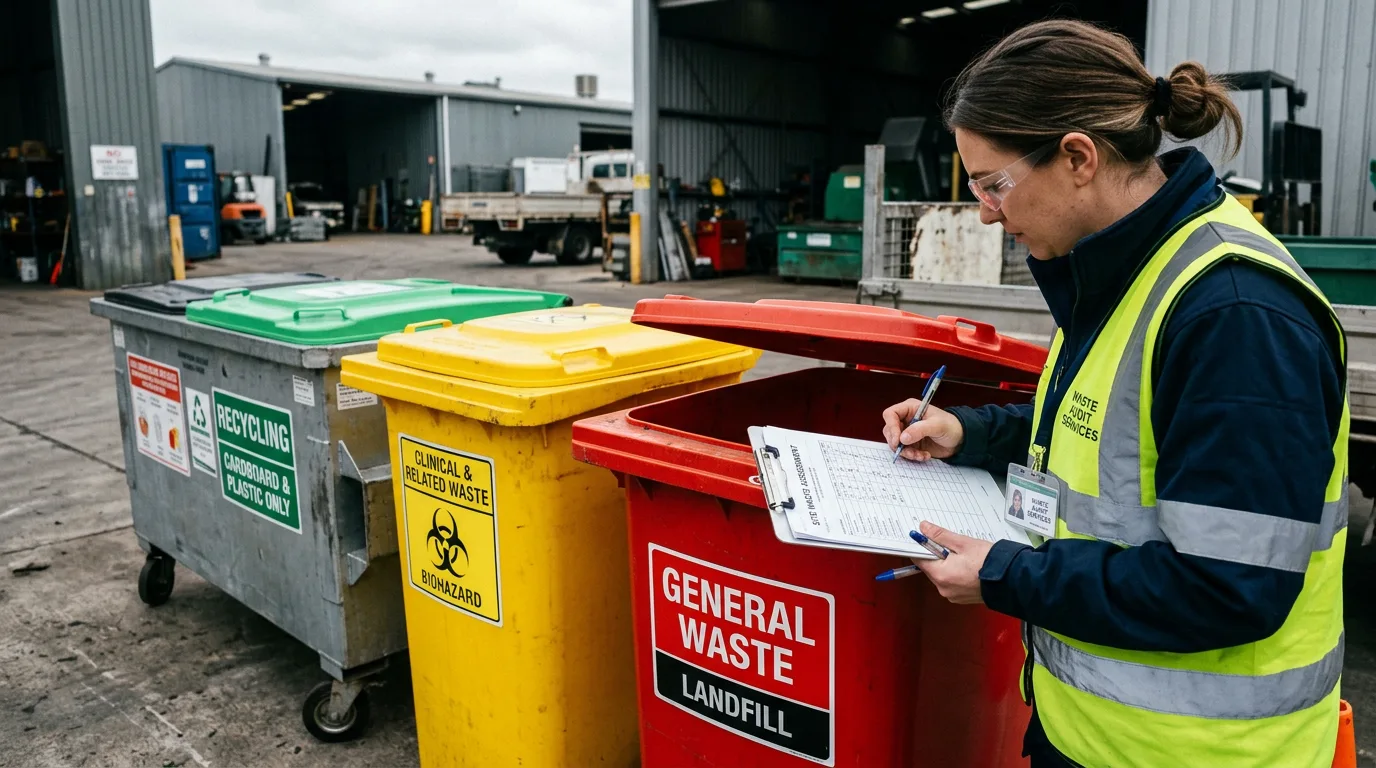
Get a free audit

General Waste
without the guesswork.

Front-lift, rear-lift, skip bins and compactors — the category where most overspending hides and where we find the biggest savings.

Review my setup ↗
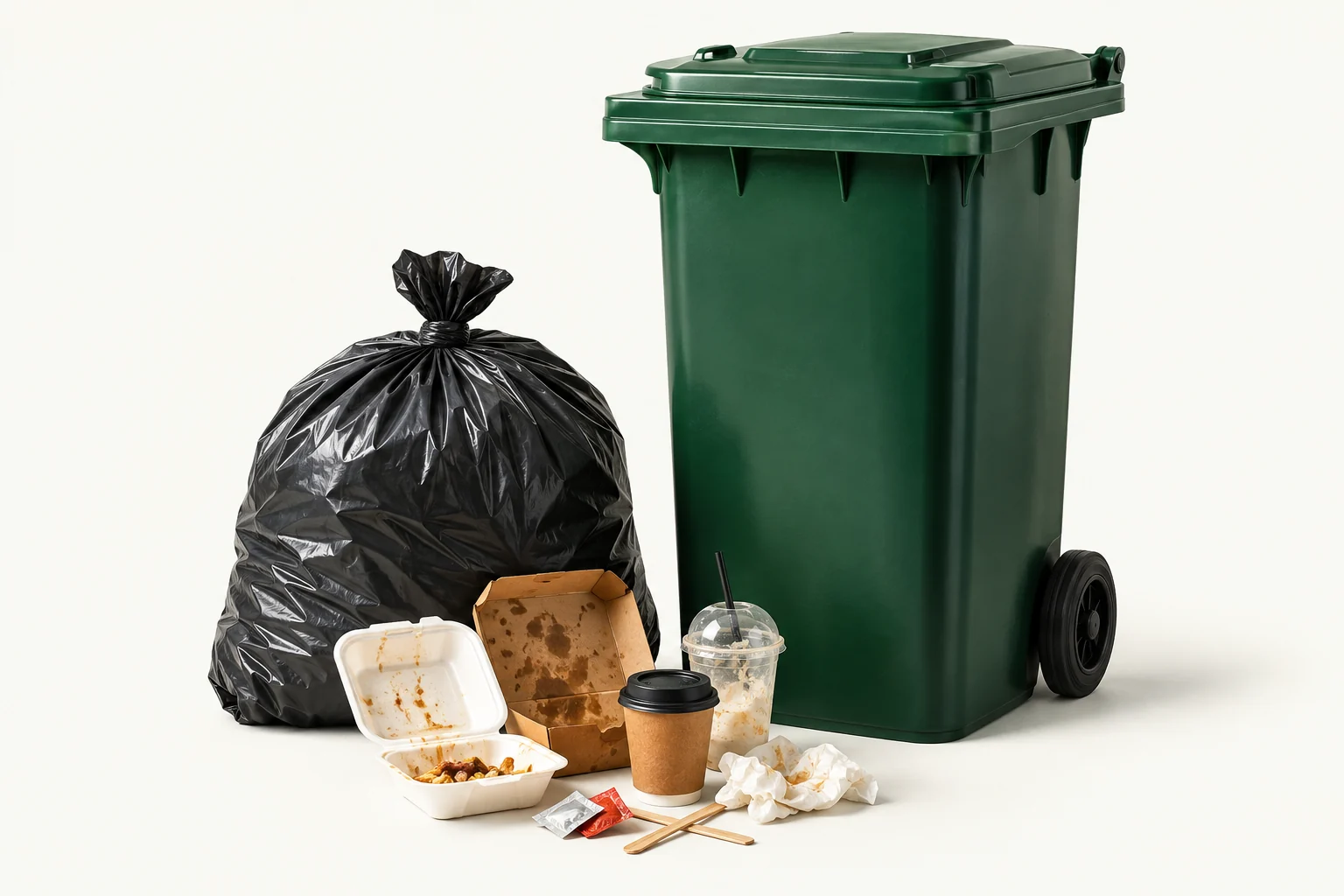
Illustration of General Waste collection equipment and materials
What we cover

Find the right setup.

Commercial waste bins

Bin Audits

We analyse your bin sizes, collection frequencies, and fill rates to identify inefficiencies. Many businesses are paying for bins that are collected half-empty — or too infrequently, causing overflow charges.
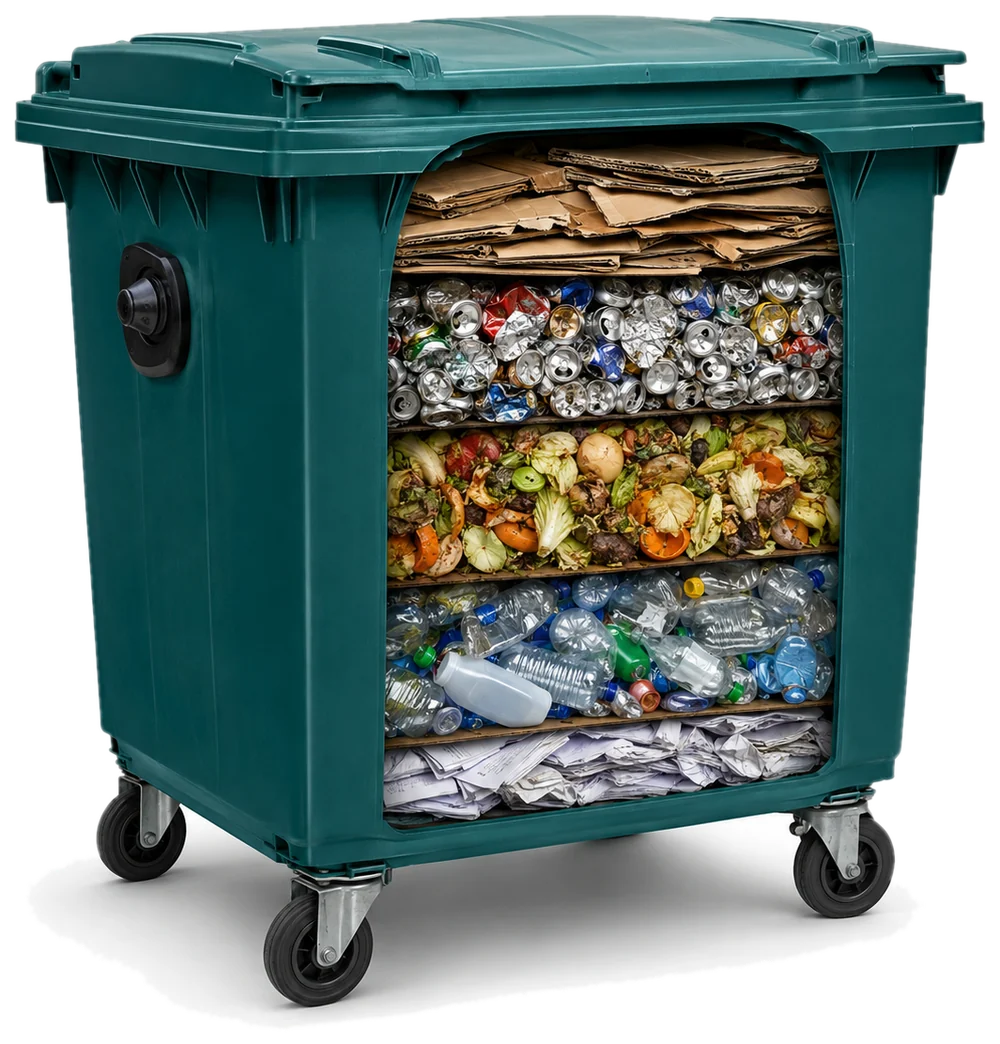
Illustration of a commercial bin with its contents shown in cross-section

Rate Negotiation

Armed with market data from hundreds of waste contracts, we negotiate your per-lift rates, rental fees, and surcharges down to what providers actually charge their best customers.

Waste compactor equipment

Provider Comparison

We run your requirements across our network of providers to find the best combination of price, reliability, and service quality. You get the benefit of competitive tension without doing the legwork.
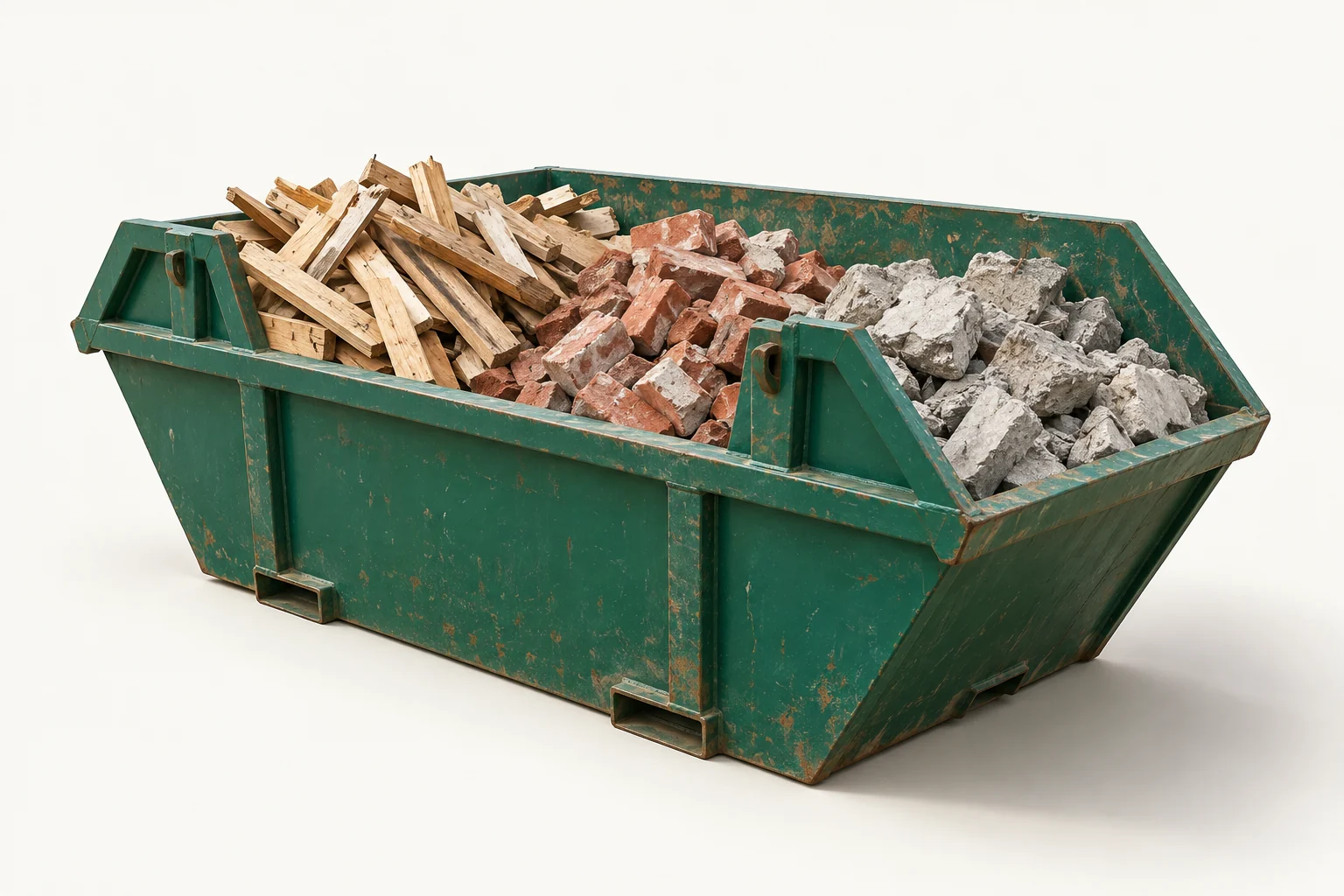
Skip bin waste collection

Contract Management

We track contract terms, renewal dates, and annual increase clauses so you're never caught off guard. When it's time to renew, we renegotiate to ensure your rates stay competitive year after year.

The practical details

What shapes
the plan?

A useful comparison starts with your actual operation.
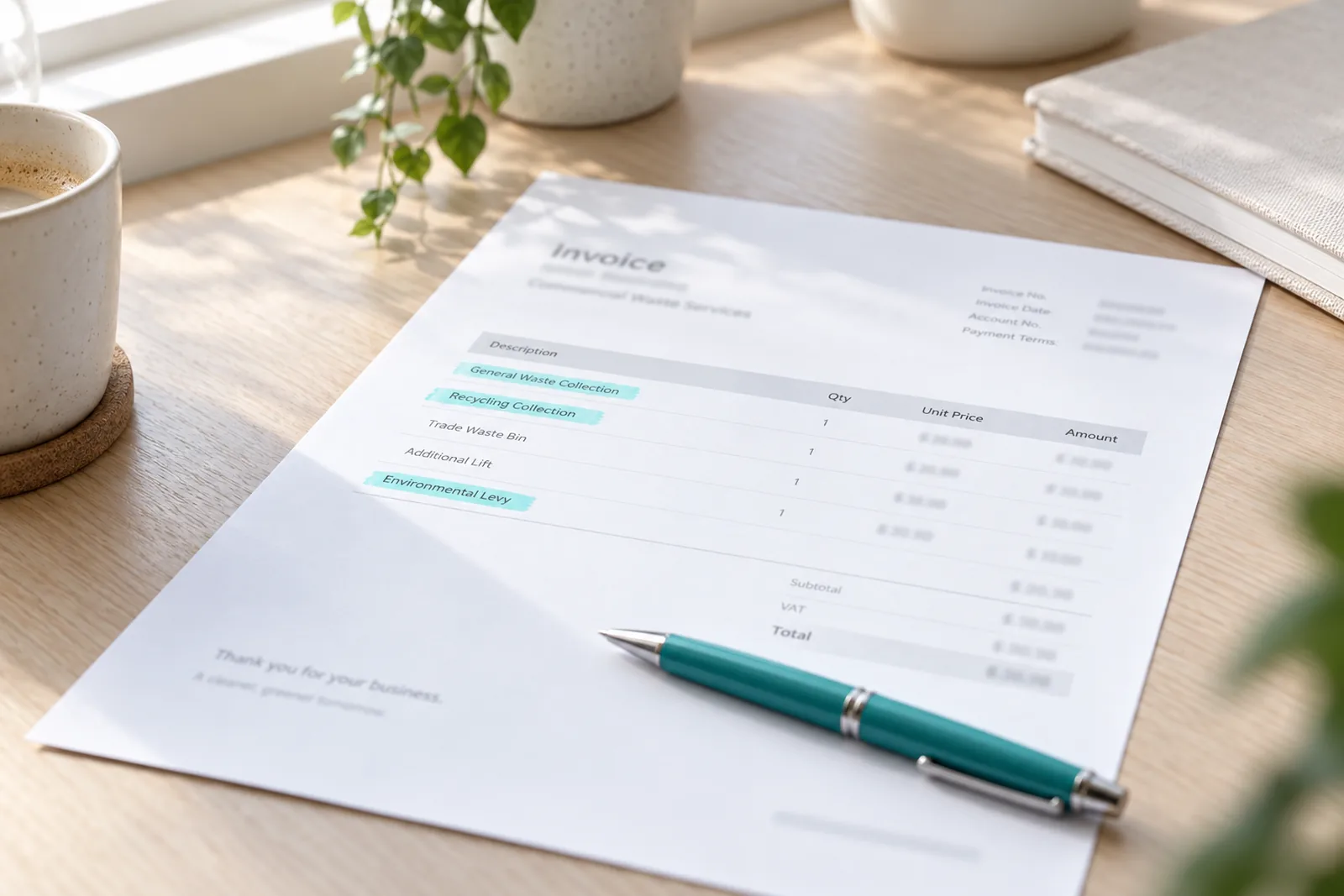
Illustrated invoice to review
01

Volume

The amount produced and the bin or storage arrangement required.

02

Collection frequency

How quickly material builds up between collections.

03

Site access

Loading areas, vehicle access and restrictions at your premises.

04

Material separation

What the stream contains and how it is kept apart from other waste.

Waste types we negotiate
  • general commercial waste
  • office waste
  • mixed waste
  • non-recyclable packaging
  • food-contaminated packaging
Bin & container types
  • 240L wheelie bin
  • 660L front-lift
  • 1100L front-lift
  • 1.5m³ skip
  • 3m³ skip
  • 4.5m³ skip
  • compactor
Same service, less cost

Same bins. Same frequency. Lower invoice.

We don't change your waste operations — we change what you pay for them. If we can't save you money, you owe us nothing.

Where most businesses overpay without knowing it

General waste is the single largest line item on most businesses' waste invoices — and it's where providers make their highest margins. Between front-lift bins, rear-lift services, skip bins, and compactors, the pricing structures are deliberately complex.

Bundle Waste changes that. As an independent partner with visibility across a network of waste providers in Melbourne and Australia, we know exactly what general waste services cost at scale. We audit your current arrangements, compare them against real market rates, and negotiate dramatically lower pricing.

Same bins. Same frequency. Lower invoice.

We don't change your waste operations — we change what you pay for them. Same bins, same collection schedule, same service quality. The only difference is a significantly lower invoice at the end of each month.

If we can't save you money, you owe us nothing. Zero upfront costs, no hidden fees, no risk.

Commercial bin collection rates in Melbourne

Commercial waste collection in Melbourne is priced per bin per collection and quoted as a monthly figure. These are Bundle Waste's 2026 benchmark ranges for weekly collection across the metro regions; the low end is the west, the high end the CBD.

Bin, collected weeklyMelbourne range 2026Access
240L wheelie bin$40–85 per monthRear-lift truck; fits any doorway
660L wheelie bin$75–175 per monthRear-lift; passes a 900 mm door end-on
1100L wheelie bin$110–245 per monthRear-lift; needs a double door or dock
3 m³ front-lift bin$230–450 per monthFront-lift truck; 4–5 m clear height
4.5 m³ front-lift bin$320–580 per monthFront-lift; loading dock or yard

How commercial waste collection works

Your bin type decides the truck, the truck decides the access you need, and the collection frequency decides most of the bill. A rear-lift truck empties wheelie bins from the kerb or a bin room; a front-lift truck lifts bulk bins over its cab and needs a straight approach and 4–5 metres of clearance. Collections are scheduled on fixed days; most providers offer weekly, twice-weekly or fortnightly with a minimum term of 12–36 months. See bin sizes and dimensions and wheelie versus front-lift for the physical side.

What is actually on the invoice

  • Lift or service fee per collection, the core price.
  • Bin rental, monthly, sometimes hidden inside the lift fee.
  • Weight or levy component: the Victorian landfill levy is $177.19 per tonne from 1 July 2026 and is passed through, either as a per-tonne line or built into the lift price.
  • Fuel, environmental and administration surcharges, the lines most often padded. Our invoice guide shows what each one should be.

Choosing the right frequency

The cheapest configuration is the largest bin you have room for on the lowest frequency that never overflows. A 660L bin overflowing every week costs more to fix with a second weekly lift than by moving to an 1100L bin; an 1100L bin half-empty on collection day is paying for air. A free waste audit checks fill levels against three months of invoices before recommending a change.

Before collection

Keep the details
clear.

Confirm the materials, containers and preparation requirements with your collection provider. Acceptance depends on the service arranged for your site.


Illustration of general commercial waste
General commercial waste
Illustration of a commercial bin with its contents shown in cross-section
Office waste
Illustration of non-recyclable packaging
Non-recyclable packaging
Common questions

General Waste FAQ.

How much does commercial waste collection cost in Melbourne?
In 2026 a weekly-collected 240L bin costs $40–85 a month, a 660L bin $75–175, an 1100L bin $110–245, a 3 m³ front-lift bin $230–450 and a 4.5 m³ front-lift bin $320–580 a month, with the western suburbs at the low end and the CBD at the high end.
What bin sizes are used for commercial waste collection?
Wheelie bins of 240L, 660L and 1100L for rear-lift trucks, and front-lift bulk bins of 1.5, 3 and 4.5 cubic metres (up to 6 m³ from some suppliers). Skip and hook-lift bins cover construction and one-off volumes.
How often is commercial waste collected?
Weekly is standard for general waste. Hospitality and food businesses often need twice-weekly or more in summer; offices with good recycling can drop to fortnightly. Frequency is set in the contract and changes are usually allowed with notice.
What is the difference between front-lift and rear-lift collection?
Rear-lift trucks empty wheelie bins tipped in at the back and need only kerb or bin-room access. Front-lift trucks lift bulk bins over the cab with two forks and need a straight approach and 4–5 metres of overhead clearance, but move far more waste per lift.
Can a business get waste collection without a long contract?
Yes, from some providers, usually at a higher per-lift price. Most Melbourne agreements run 12–36 months; the terms to check are automatic rollover, price-increase clauses and exit fees, all covered in our contract red-flags guide.
How much of my commercial waste bill is the landfill levy?
The Victorian levy is $177.19 per tonne in metropolitan Melbourne from 1 July 2026. A weekly 1100L bin producing roughly 150–250 kg a week carries about $27–44 of levy per collection before handling, transport, rental and GST.
How much can I save on general waste in Melbourne?
Most Melbourne businesses overpay by 20-35% on general waste. A standard 1,100L front-lift bin collected twice weekly costs $80–$120/month at market rate, but many businesses pay $350–$450. We audit your invoices and negotiate with a network of providers to bring costs in line with true market rates — typically delivering up to 30% savings.
Do I need to change my waste provider?
Not necessarily. In about 60% of cases, we negotiate better rates with your existing provider first. If they cannot match market rates, we find a provider that can and handle the entire transition so there is no disruption to your operations. The average changeover takes 5-7 business days.
What types of general waste bins do you cover?
We negotiate rates across all general waste bin types: 240L and 660L rear-lift bins, 1,100L and 3,000L front-lift bins, 2-30 cubic metre skip bins, and stationary or portable compactors. Whether you have a single bin or a fleet across multiple sites, we secure the best available rates.
Is there any cost for a waste audit?
No. Our waste audit is completely free with no obligation. We review your invoices, contracts, and collection schedules to identify where you are overpaying. If we cannot save you money, you owe us nothing — zero upfront costs, no hidden fees.
How long does the audit process take?
A typical general waste audit takes 3-5 business days from receiving your invoices. We analyse bin sizes, collection frequencies, fill rates, and contract terms against current market rates for your area. You will receive a detailed savings report showing exactly where costs can be reduced.
What is the Victorian landfill levy for general waste?
The Victorian landfill levy for municipal solid waste is $169.79 per tonne as of 2025–26, increasing annually by CPI plus 10%. This levy is passed through on your invoice — we ensure it is calculated correctly and that you are not paying inflated levy charges, which is a common hidden cost.
Can you help reduce contamination in general waste bins?
Yes. Contamination in general waste bins means recyclable materials going to landfill, which costs more due to levy charges. We help implement simple bin signage and staff training that typically reduces contamination by 15-25%, diverting recyclables to cheaper comingle streams and lowering your total waste spend.
Ready when you are

Already have a collection contract?

Start with the invoice and the way your service works today.

Review my setup