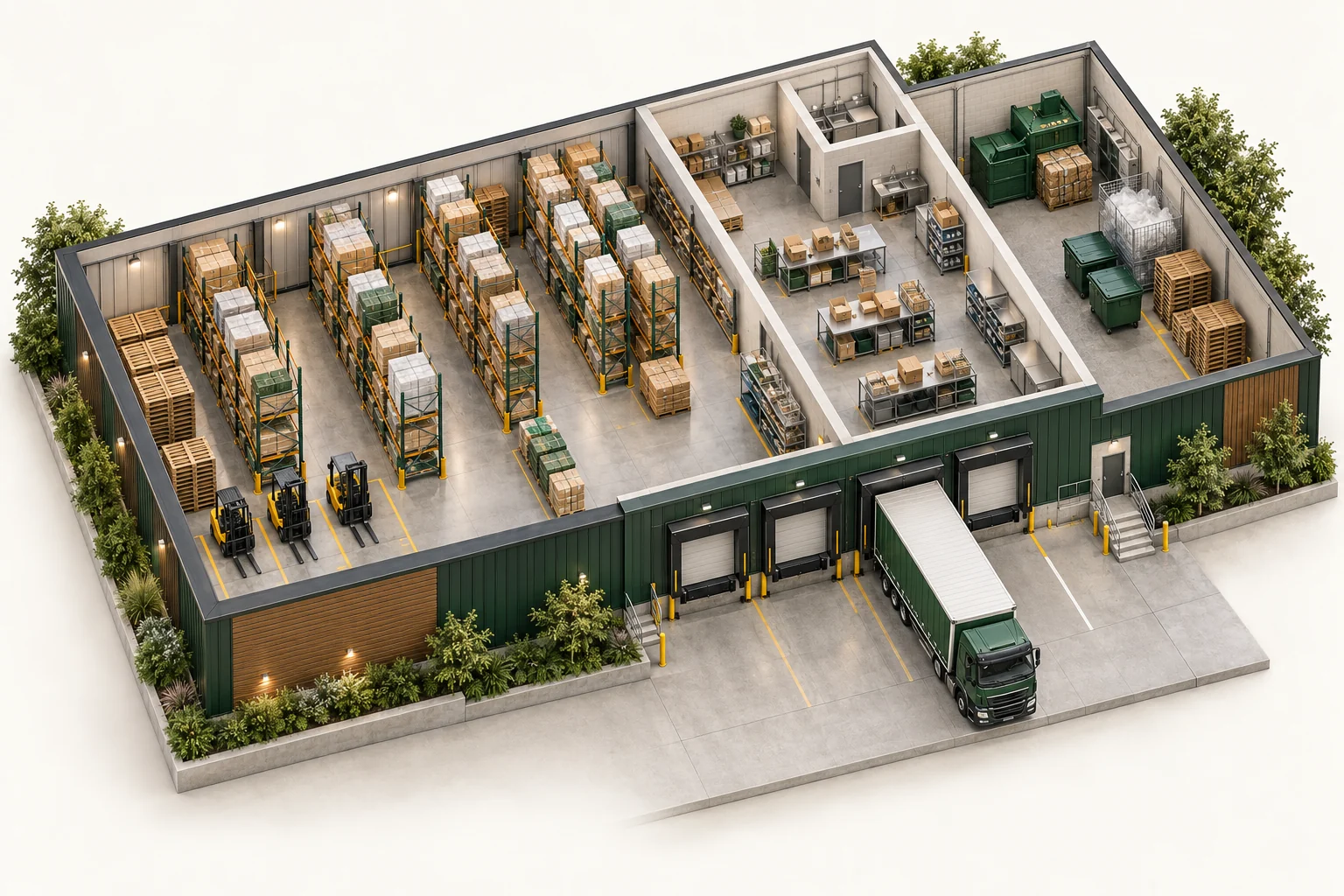
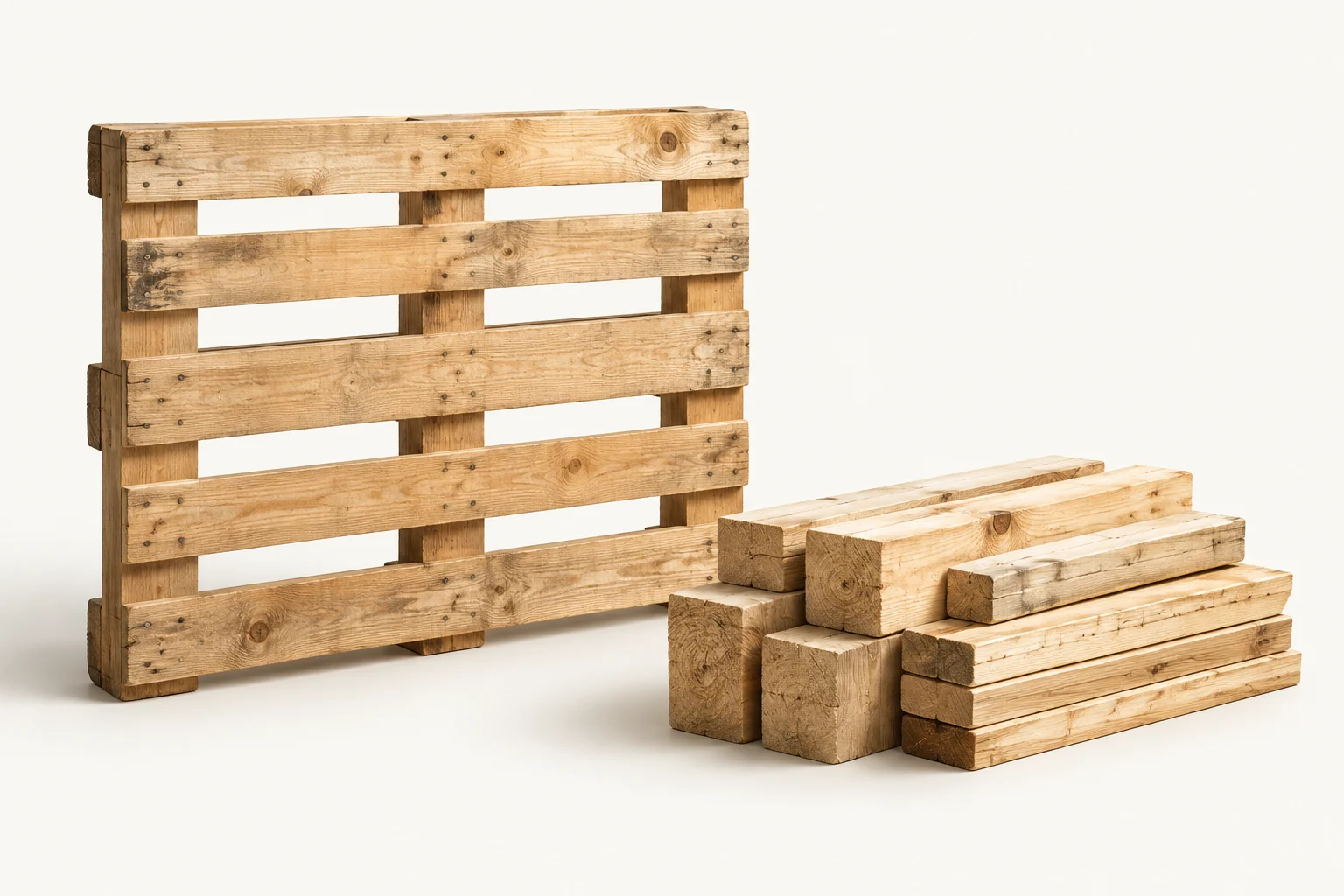
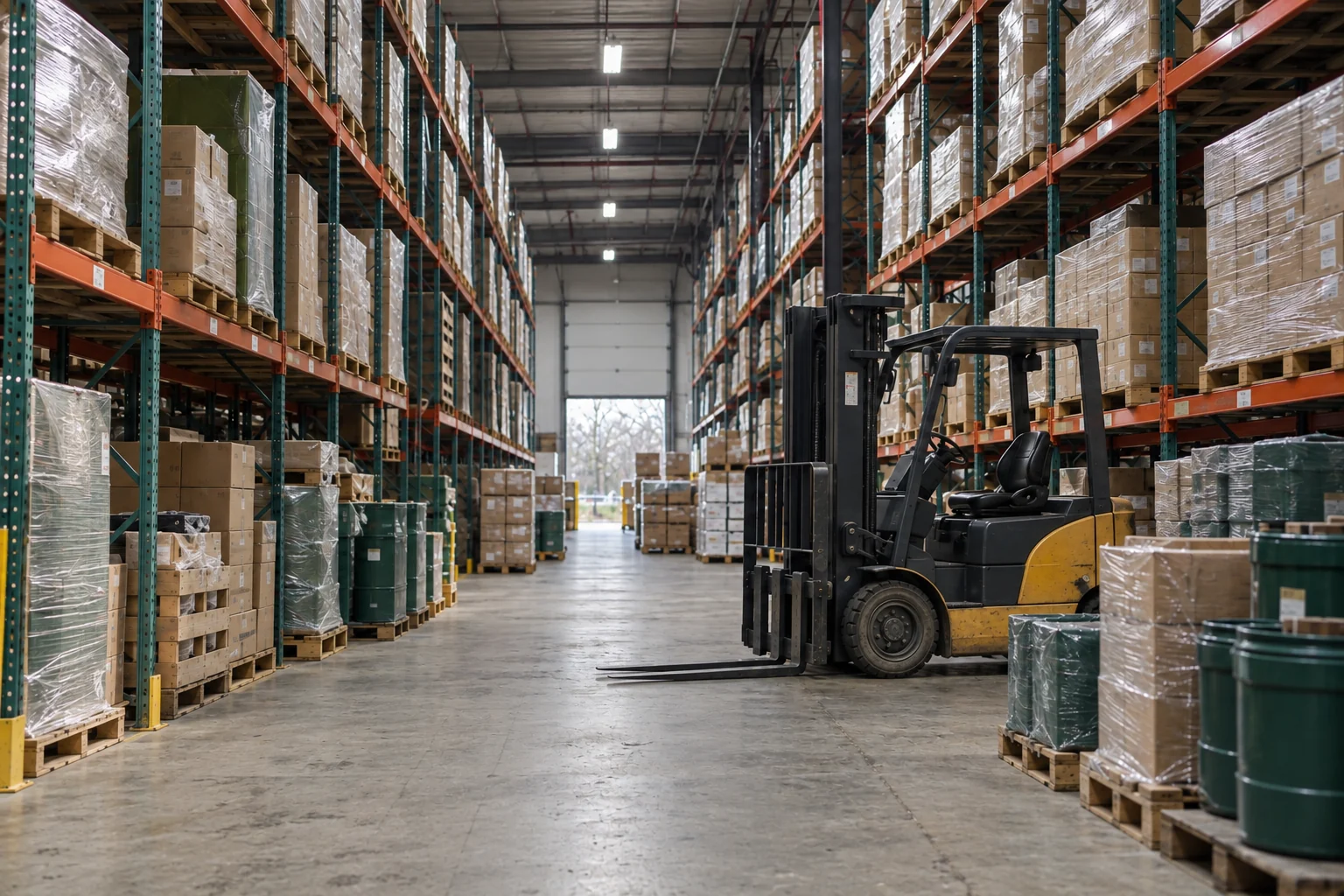
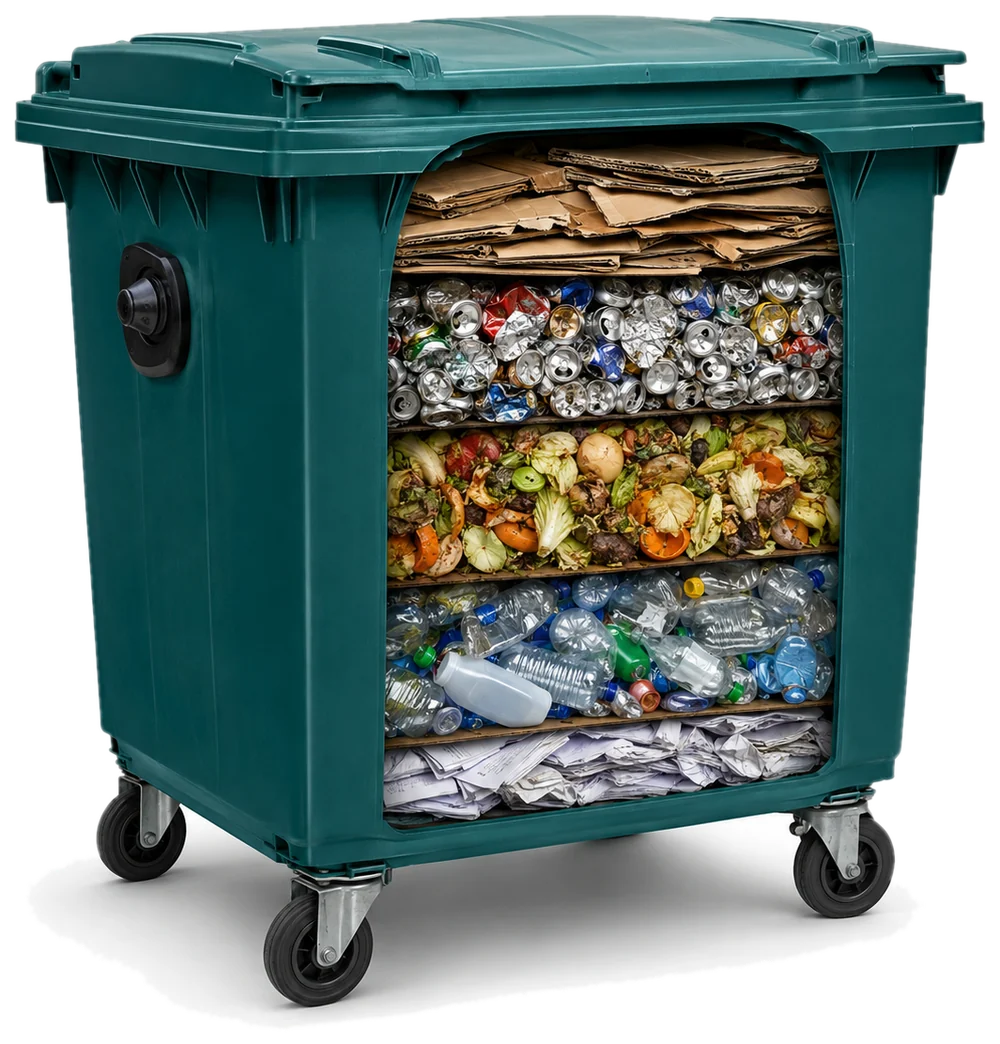
Managing waste in the warehouses & distribution sector requires understanding specific waste streams, compliance requirements, and cost-effective disposal options. Warehouses generate enormous volumes of packaging waste — cardboard, pallet wrap, polystyrene, and shrink film — from receiving and dispatching stock. Pallet management is a major cost centre. Damaged and expired stock requires documented disposal. Warehouse waste is highly recyclable but often goes to landfill due to poor segregation. Large sites need skip bins or compactors rather than wheelie bins. Seasonal demand fluctuations create variable waste volumes. Bundle Waste specialises in helping warehouses & distribution businesses across Melbourne find the best waste management rates.
Warehouses generate enormous volumes of packaging waste — cardboard, pallet wrap, polystyrene, and shrink film — from receiving and dispatching stock. Pallet management is a major cost centre. Damaged and expired stock requires documented disposal. Warehouse waste is highly recyclable but often goes to landfill due to poor segregation. Large sites need skip bins or compactors rather than wheelie bins. Seasonal demand fluctuations create variable waste volumes.
Typical monthly waste management spend for warehouses & distribution businesses is $1,000-6,000. This covers all waste streams including general waste, recycling, and any specialist disposal. Bundle Waste typically negotiates up to 30% savings for warehouses & distribution clients.
How much does warehouse waste management cost in Melbourne?+
Warehouse waste management in Melbourne typically costs $1,000-6,000 per month depending on size and throughput. A small warehouse (500-1,000m²) pays $1,000-2,000/month, medium (2,000-5,000m²) pays $2,000-4,000/month, and large distribution centres (10,000m²+) pay $4,000-6,000+/month. However, recycling rebates can be significant: clean cardboard ($50-100/tonne), pallets ($3-8 each), scrap metal ($150-400/tonne). Well-managed warehouses reduce net waste costs by up to 50% through recycling revenue.
How should warehouses manage cardboard waste?+
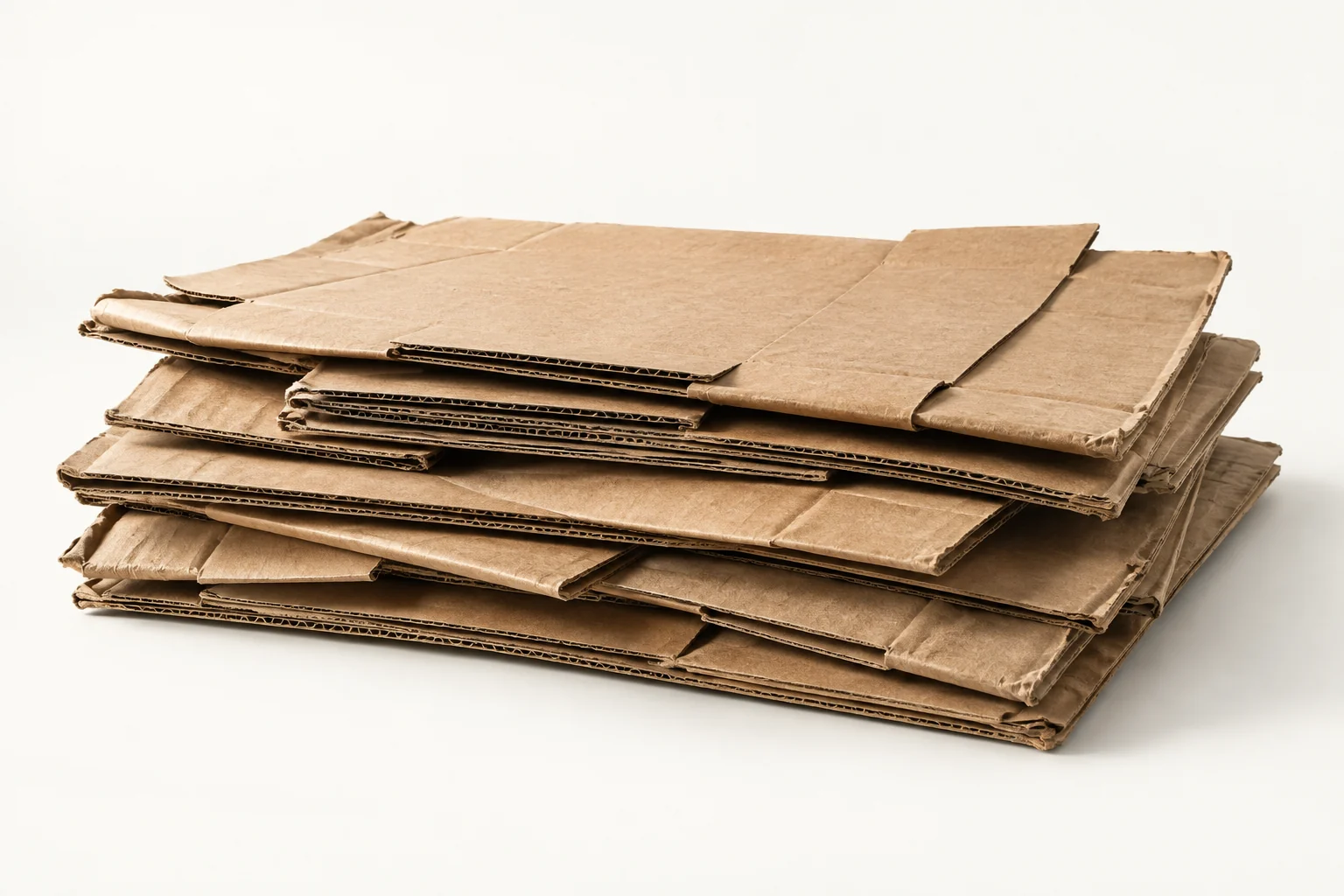
Cardboard is typically a warehouse's largest waste stream by volume. Best practices: flatten all boxes immediately upon unpacking (saves 70% space), keep cardboard dry and free of contamination (tape and labels are fine, food contamination is not), use a cardboard baler for high-volume sites ($3,000-8,000 purchase, or $200-400/month lease) to create saleable bales. Warehouses generating 1+ tonne per week should receive free collection or payment of $50-100/tonne. If you're paying to dispose of clean cardboard, you're overpaying.
What are the options for pallet wrap recycling?+
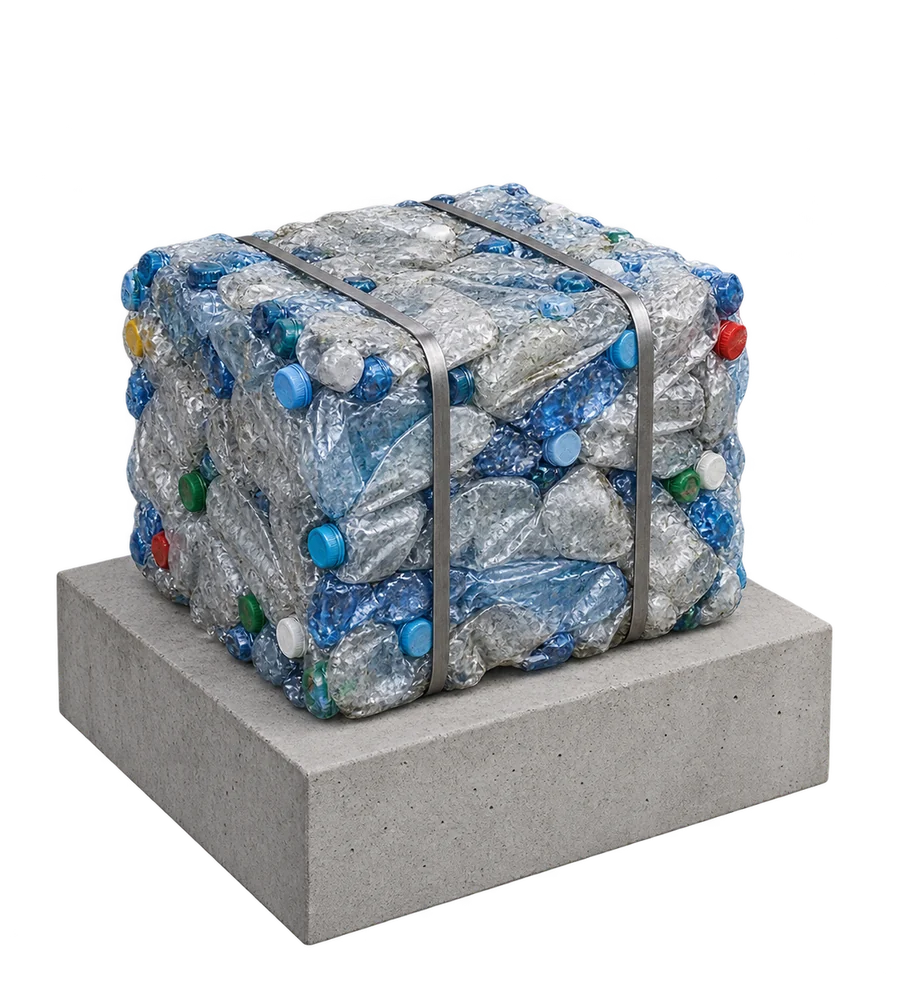
Pallet wrap (stretch film) is highly recyclable LDPE plastic. Options: dedicated pallet wrap collection bins with specialist recycler pickup (often free for sufficient volumes), baling pallet wrap with a dedicated baler for sale ($100-300/tonne), or combined soft plastics collection. Key requirement: pallet wrap must be clean and separated from other waste — contaminated wrap is worthless. Warehouses processing 50+ pallets weekly generate enough wrap to justify dedicated collection. This diverts significant volume from general waste.
How should damaged and expired stock be disposed of?+
Damaged or expired stock disposal depends on the product: food products may need documented destruction for insurance or brand protection ($200-600 per collection), electronics must go to licensed e-waste recyclers, hazardous goods (chemicals, batteries) require PIW disposal, and general merchandise can be recycled where possible. For brand-sensitive items, secure destruction with certificates prevents grey market issues. Some charities accept near-expiry food and undamaged goods, providing tax deductions and goodwill.
Should warehouses invest in compactors or balers?+
Almost always yes for medium to large warehouses. A cardboard baler ($3,000-8,000) pays for itself in 6-12 months through reduced collection costs and recycling revenue. A waste compactor ($5,000-15,000) reduces general waste volume by 75%, cutting skip bin collections from weekly to fortnightly. Pallet wrap balers ($2,000-5,000) enable lucrative soft plastics recycling. Lease options ($200-500/month) avoid capital outlay. The ROI calculation is simple: compare current collection costs versus reduced collections plus recycling revenue.
What are hazardous waste disposal costs in Melbourne?+
Hazardous waste disposal in Melbourne ranges from $2–15/kg depending on waste type. Chemical waste costs $3–8/kg, asbestos removal $50–80/m², and liquid chemical disposal $300–800 per 200L drum. All hazardous waste must be handled by EPA-licensed transporters under the Environment Protection Act 2017.
How much does clinical waste disposal cost in Melbourne?+
Clinical waste disposal in Melbourne costs $0.80–2.50/litre depending on waste category. Sharps containers (5L) cost $8–15 each, cytotoxic waste $4–8/kg, and anatomical waste $5–12/kg. Healthcare facilities typically spend $300–1,200/month. All clinical waste must comply with EPA Victoria Publication 1669.
How much does grease trap servicing cost in Melbourne?+
Grease trap servicing in Melbourne costs $150–400 per service depending on trap size. A standard 1,000L trap costs $150–250, a 2,000L trap $250–400. Most food businesses need monthly or quarterly servicing. Failure to maintain grease traps can breach your trade-waste agreement, leading to penalties or suspension of your discharge consent by your water authority (such as South East Water or Yarra Valley Water).
What does waste management cost for a warehouse in Melbourne?+
Melbourne warehouses spend $300–800/month on waste. The primary streams are cardboard/packaging (40–60%), shrink wrap (15–25%), pallets (10–20%), and general waste (10–20%). A cardboard baler saves up to 70% on cardboard collections. Clean cardboard can earn rebates at high volumes.
What is the difference between clinical and general waste in healthcare?+
Clinical waste causes infection or injury (sharps, cytotoxic, anatomical, infectious). General is non-hazardous (paper, food, packaging). Clinical costs $0.80–2.50/L vs $0.15–0.25/L general. A large share of clinical bins typically contain general waste that could be segregated.
 Bundle Waste