 Bundle Waste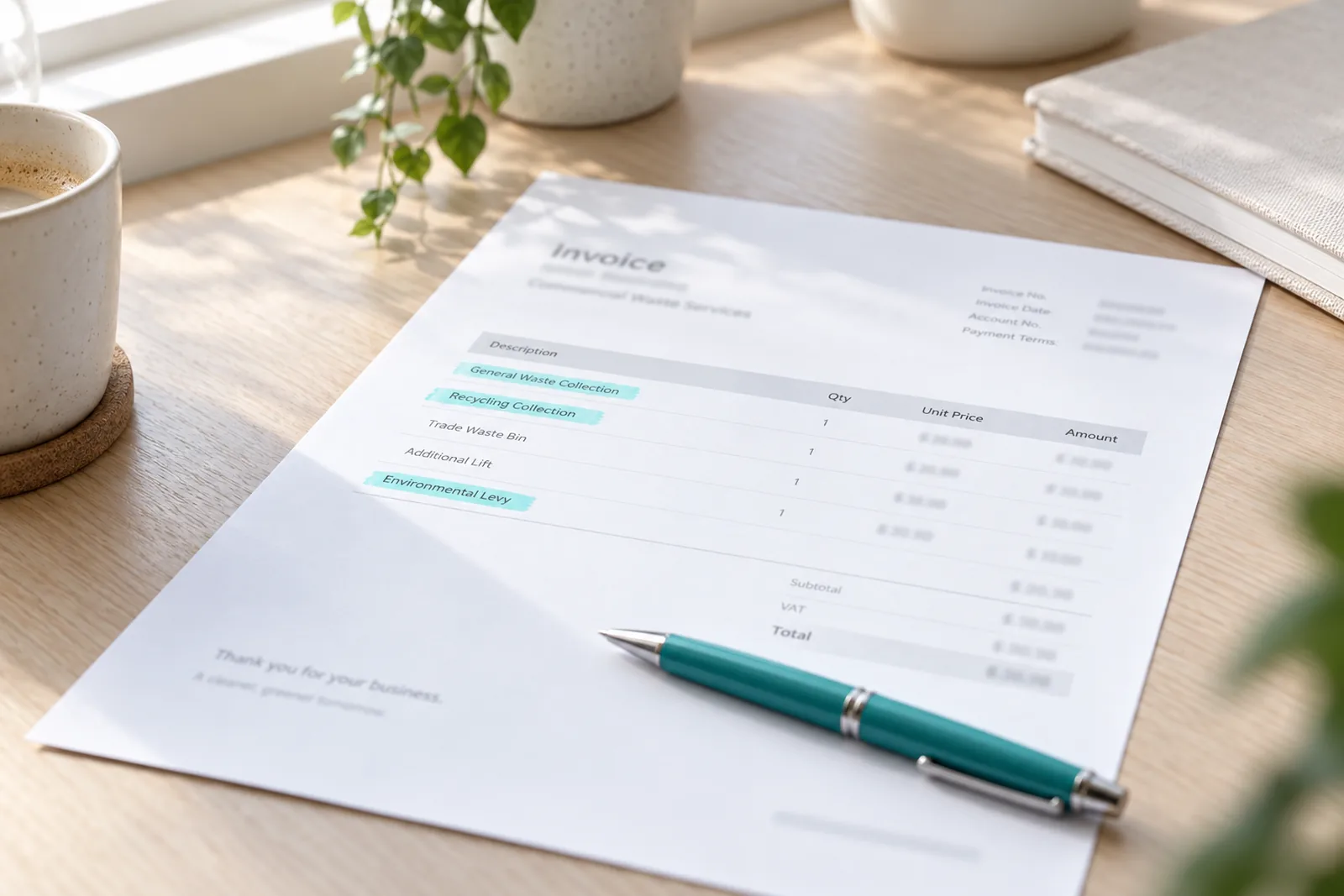
Sources checked 18 September 2026, rates rechecked 21 September 2026. Scope: Victoria, with Australian schemes identified where relevant.
From 1 July 2026 to 30 June 2027, EPA lists $177.19 per tonne for municipal and industrial waste at prescribed municipal (metro) landfill premises. This is a statutory levy, not a collection quote. Source: EPA Victoria — Waste levy.
What applies
Non-prescribed municipal (rural) rates are $88.42 per tonne for municipal waste and $155.95 for industrial waste. Category B is $296.18; Categories C and D are $177.19. Packaged waste asbestos and soil containing asbestos are $35.58. Category A cannot be received at landfill. Match the classification and premises category. Source: EPA Victoria — Waste levy.
Two things decide which figure applies to a load: the waste disposal category it is classified as, and the category of the landfill premises that receives it. Neither is decided by where your business is located, and neither is something a collection quote can settle on its own.
2026–27 rates by category
EPA Victoria’s published rates for 1 July 2026 to 30 June 2027:
| Waste and premises category | Rate per tonne (2026–27) |
|---|---|
| Municipal waste — prescribed (metropolitan) premises | $177.19 |
| Industrial waste — prescribed (metropolitan) premises | $177.19 |
| Municipal waste — non-prescribed (rural) premises | $88.42 |
| Industrial waste — non-prescribed (rural) premises | $155.95 |
| Priority waste — Category A | Landfill prohibited; no levy applies |
| Priority waste — Category B | $296.18 |
| Priority waste — Category C | $177.19 |
| Priority waste — Category D | $177.19 |
| Packaged waste asbestos | $35.58 |
| Soil containing asbestos | $35.58 |
The metropolitan rate is up from $169.79 per tonne in 2025-26. EPA states that rates are indexed annually based on Victoria’s fee unit indexation, so a rate quoted in a multi-year contract should name the schedule and the effective date rather than a fixed figure. Source: EPA Victoria — Waste levy.
Who pays it and how it reaches your invoice
EPA states that “a waste levy must be paid for all waste received at a landfill”, and that landfill operators submit a waste levy statement quarterly which declares the amount of waste received and determines the levy amount owed. The operator is the payer; the charge reaches a business indirectly, inside what the collection or disposal service costs.
How it appears on a commercial invoice varies. Some providers show a separate levy or environmental line; others fold it into the per-lift or per-tonne rate, where it cannot be identified at all. If you cannot find it, ask for a rate breakdown showing which statutory rate and which waste category the charge assumes, and on what weight or contractual allocation it was calculated.
Many contracts also include a pass-through clause allowing the provider to adjust the rate when the statutory rate changes, separately from any CPI adjustment. Check that the clause names the correct schedule and effective date for the destination your waste actually goes to.
What does not attract the levy
Because the levy is charged on waste received at a landfill, the tonnage that goes somewhere else is the only part of the bill it does not reach. In practice that means:
- Material delivered to a recycling or recovery facility is not landfill tonnage, so the landfill levy does not apply to it. It still carries the collection, transport and processing charges for that service.
- Food and organic material accepted by a composting or organics processing facility is treated the same way — it is not received at a landfill.
- Category A priority waste cannot be received at landfill at all, so no levy applies; it has its own management requirements instead.
Acceptance is the condition, not intention. A separated load that is rejected on arrival and redirected to landfill is landfill tonnage. Ask the provider what evidence of destination you receive, and do not describe collected tonnage as recycled tonnage without it.
Practical checks for your business
These suggested planning steps help organise site information; they are not an exhaustive legal compliance checklist.
- Ask which destination and classification the quoted levy assumes.
- Request separate collection, transport, disposal and levy-related charges, with GST treatment, minimums and quote period confirmed.
- Compare total service charges using equivalent weight assumptions. Do not multiply the levy by bin volume without supported weight.
- Check whether the contract contains a levy pass-through clause, and which schedule and effective date it names.
Confirm the requirement for your site
For a disputed requirement or enforcement issue, ask the relevant authority or qualified adviser to identify the current provision and how it applies. Do not rely on an old penalty amount or general website summary.
Keep a usable decision record
Keep assessments, acceptance conditions, responsible contacts and supporting records together. Note what needs confirmation before changing the service or starting work.
Frequently asked questions
What is the Victorian landfill levy?
What is the landfill levy rate in Victoria for 2026-27?
Who pays the landfill levy?
Why does the levy on my invoice look different from the published rate?
Does recycling or composting attract the landfill levy?
Do the rural rates apply to my site?
Related waste services
Related guidance
- Waste levy rates by state
- Waste soil classification and disposal in Victoria
- Priority and reportable priority waste in Victoria
Discuss your collection requirements
Contact Bundle Waste with the waste type, site and collection requirements. Keep specialist legal, environmental or safety assessment separate from the collection request.
Sources
Primary guidance checked 18 September 2026, rates rechecked 21 September 2026. Review due 21 October 2026, or sooner if requirements change.
- EPA Victoria — Waste levy. Waste levy rates 2026-27, Tables 1 and 3; previous-year rate; calculation and quarterly waste levy statement; fee unit indexation.