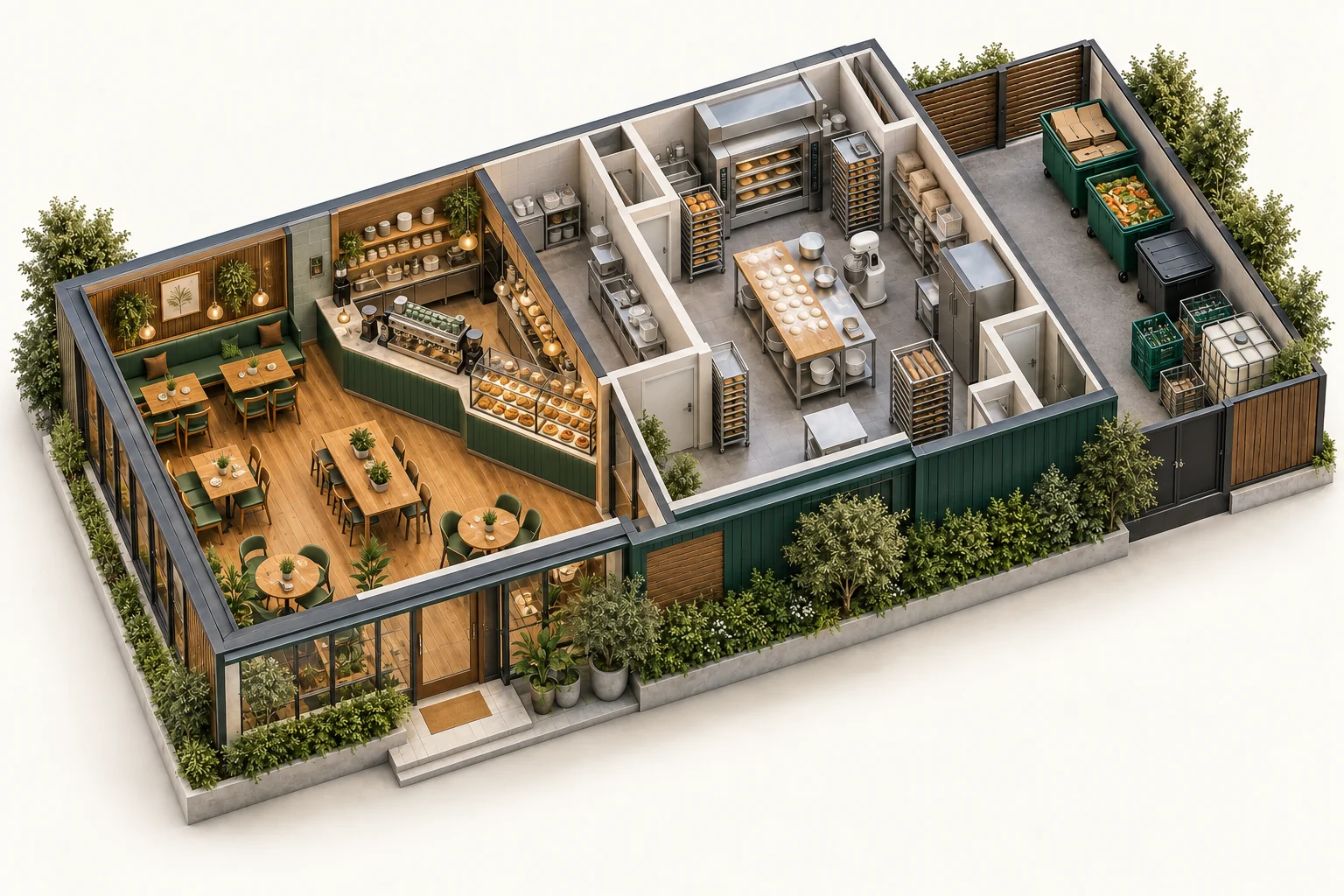
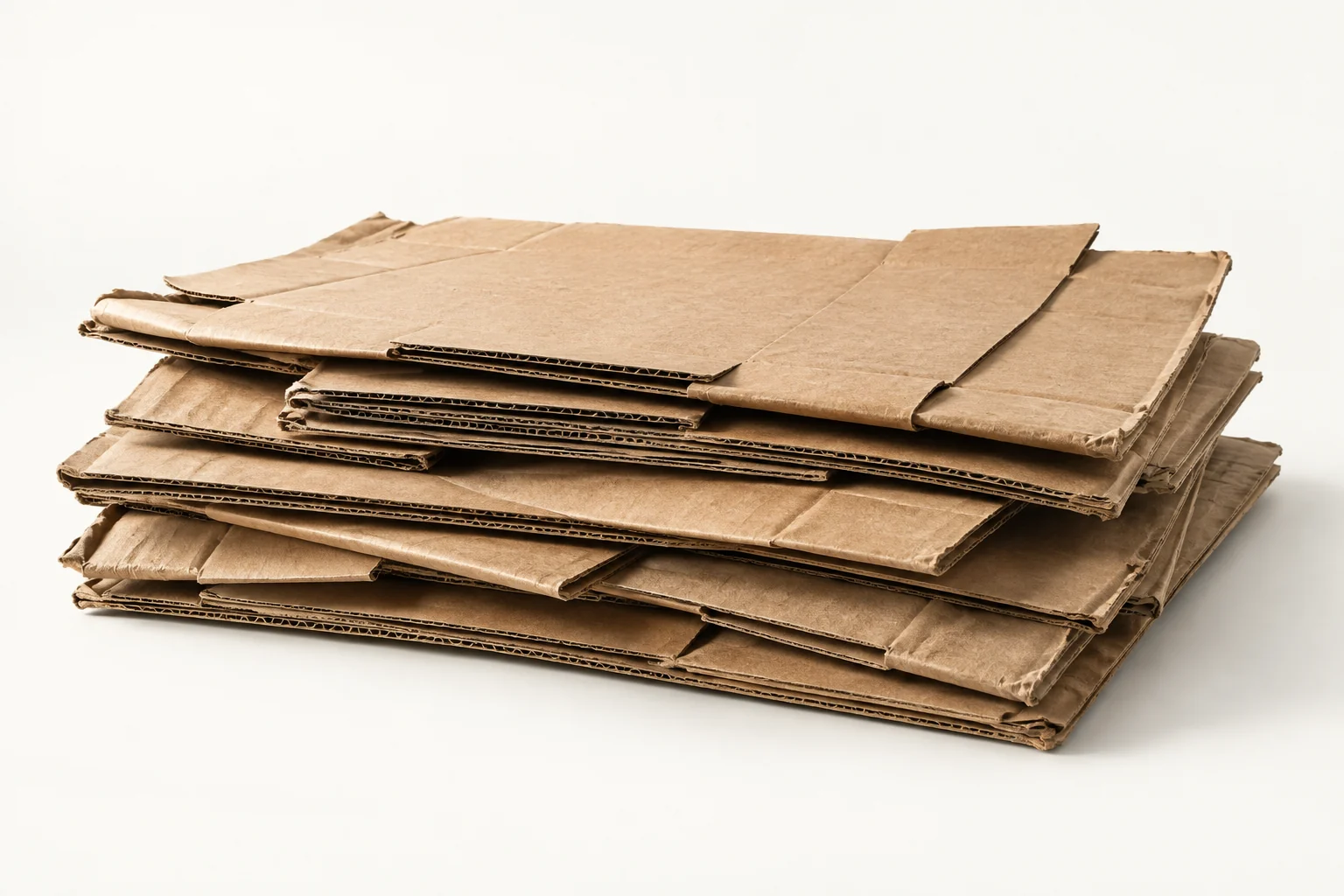
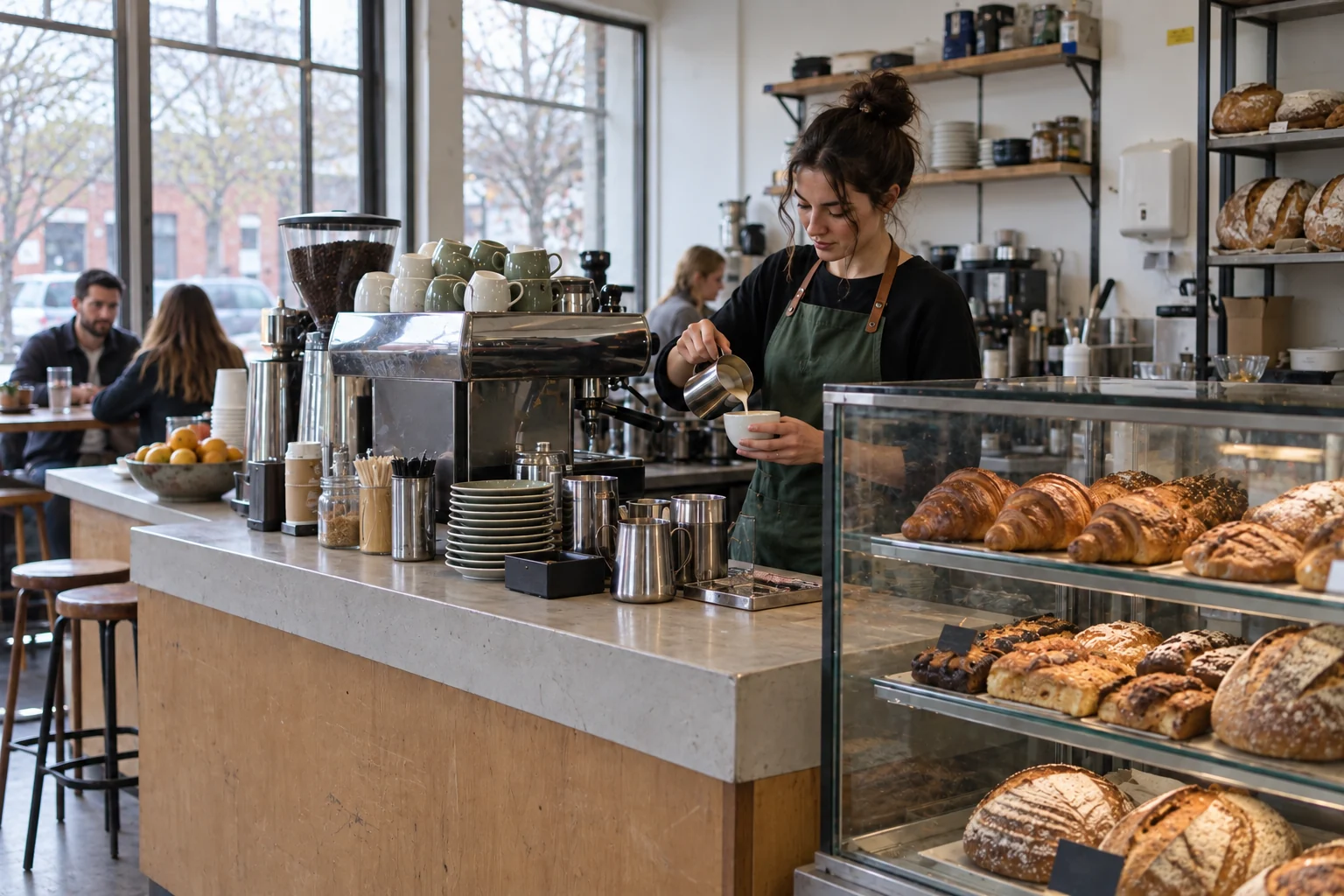
Managing waste in the cafes & bakeries sector requires understanding specific waste streams, compliance requirements, and cost-effective disposal options. Melbourne's cafe culture means intense competition — sustainability credentials matter to customers. Coffee grounds are the single largest waste stream by weight and have excellent diversion potential. Single-use cup waste is controversial and costly. Milk carton recycling is challenging due to mixed materials. Small premises have limited bin storage. Early morning operations create collection scheduling constraints. Bakeries generate significant food waste from unsold products at end of day. Bundle Waste specialises in helping cafes & bakeries businesses across Melbourne find the best waste management rates.
Melbourne's cafe culture means intense competition — sustainability credentials matter to customers. Coffee grounds are the single largest waste stream by weight and have excellent diversion potential. Single-use cup waste is controversial and costly. Milk carton recycling is challenging due to mixed materials. Small premises have limited bin storage. Early morning operations create collection scheduling constraints. Bakeries generate significant food waste from unsold products at end of day.
How much does cafe waste management cost in Melbourne?+
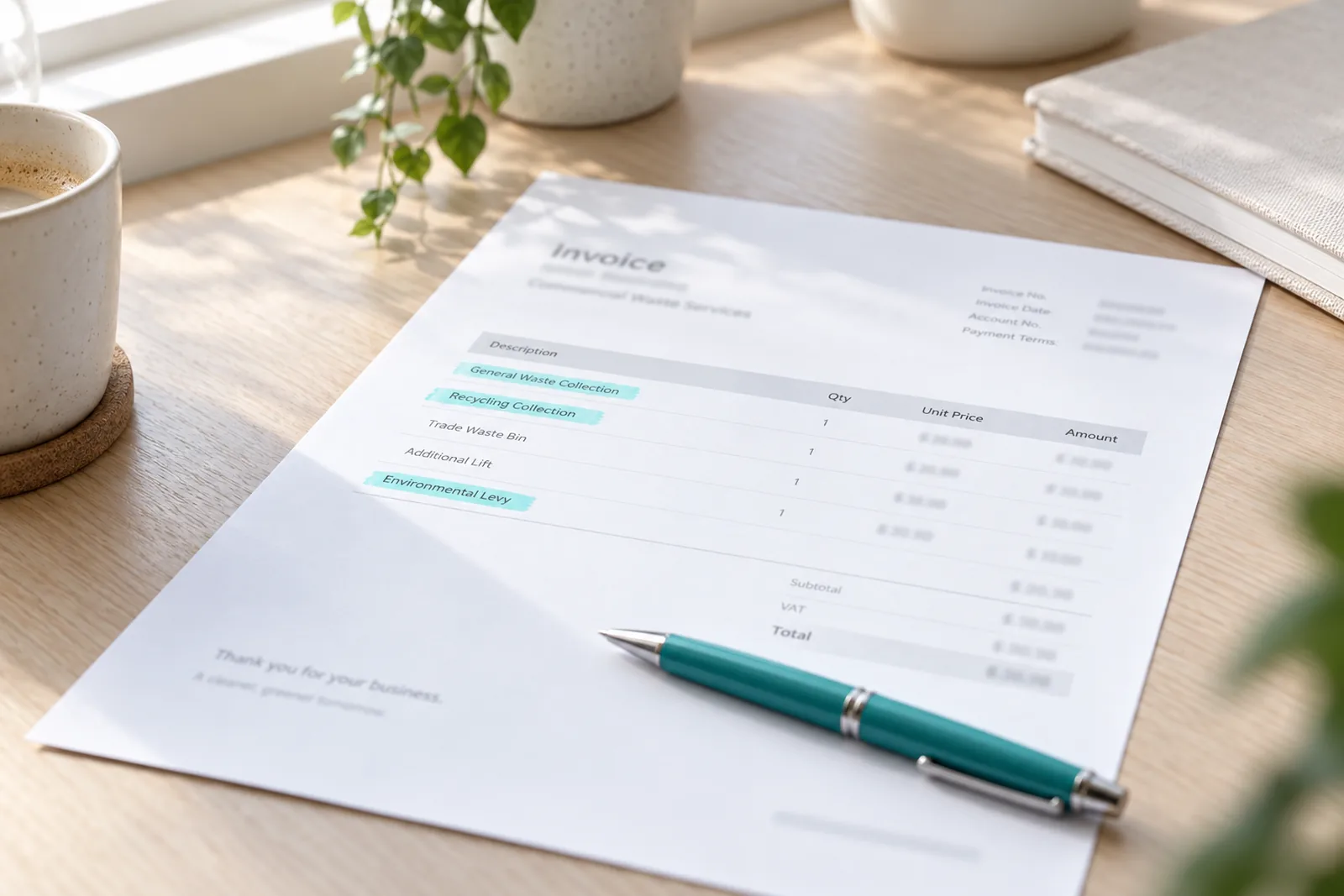
Cafe waste management in Melbourne typically costs $300-1,500 per month depending on size and food offering. A small takeaway cafe pays $300-500/month, a medium cafe with full kitchen $500-900/month, and a large cafe-bakery $900-1,500/month. General waste accounts for $150-400/month, food organics $80-250/month, recycling $50-150/month, and grease trap services $100-300/quarter (if applicable). Coffee grounds collection may be free through community composting or garden supply programs.
What should cafes do with coffee grounds?+
Coffee grounds are Melbourne cafes' most abundant waste stream — a busy cafe produces 15-30kg daily. Options: free collection by community composting groups (Reground, ShareWaste), supply to local gardens and urban farms, add to food organics bin for commercial composting, offer to customers in bags for home gardens, or arrange commercial collection for mushroom farming substrate. Never put grounds in general waste — they decompose anaerobically in landfill, producing methane. Diverting grounds alone can reduce general waste by up to 30%.
How can cafes reduce single-use cup waste?+
Victoria doesn't yet ban disposable coffee cups, but waste reduction strategies include: offering BYO cup discounts ($0.30-0.50 off), stocking compostable cups that go in food organics (ensure they meet AS4736 certification), implementing dine-in ceramic cups as default, joining reusable cup schemes (Huskee Cup swap, Green Caffeen), and reducing takeaway cup sizes to match actual demand. A busy cafe serves 300+ cups daily — switching to BYO or reusable schemes can divert 1,000+ cups from landfill weekly and save $50-100/month on cup purchases.
Do cafes need a trade waste agreement?+
Cafes with commercial kitchens discharging wastewater to sewer typically need a trade waste agreement. Small cafes with only espresso machines and basic food prep may be exempt — check with your water authority. Cafes with deep fryers, combi ovens, dishwashers processing greasy dishes, or floor drains near cooking areas almost certainly need one. A grease trap may be required depending on kitchen equipment and discharge volume. Trade waste agreements cost $200-600/year plus volumetric charges.
How should bakeries manage unsold product waste?+
End-of-day unsold bread, pastries, and cakes represent significant waste and lost revenue. Strategies: donate to food rescue organisations (OzHarvest, SecondBite — free pickup, tax-deductible, great PR), discount end-of-day items in final hours, use Too Good To Go or similar apps to sell surprise bags at discount, repurpose day-old bread into breadcrumbs or bread-and-butter pudding, feed unsold product into food organics for composting. Many Melbourne bakeries reduce food waste by up to 60% through a combination of donation and repurposing.
What are hazardous waste disposal costs in Melbourne?+
Hazardous waste disposal in Melbourne ranges from $2–15/kg depending on waste type. Chemical waste costs $3–8/kg, asbestos removal $50–80/m², and liquid chemical disposal $300–800 per 200L drum. All hazardous waste must be handled by EPA-licensed transporters under the Environment Protection Act 2017.
How much does clinical waste disposal cost in Melbourne?+
Clinical waste disposal in Melbourne costs $0.80–2.50/litre depending on waste category. Sharps containers (5L) cost $8–15 each, cytotoxic waste $4–8/kg, and anatomical waste $5–12/kg. Healthcare facilities typically spend $300–1,200/month. All clinical waste must comply with EPA Victoria Publication 1669.
How much does grease trap servicing cost in Melbourne?+
Grease trap servicing in Melbourne costs $150–400 per service depending on trap size. A standard 1,000L trap costs $150–250, a 2,000L trap $250–400. Most food businesses need monthly or quarterly servicing. Failure to maintain grease traps can breach your trade-waste agreement, leading to penalties or suspension of your discharge consent by your water authority (such as South East Water or Yarra Valley Water).
What is the difference between clinical and general waste in healthcare?+
Clinical waste causes infection or injury (sharps, cytotoxic, anatomical, infectious). General is non-hazardous (paper, food, packaging). Clinical costs $0.80–2.50/L vs $0.15–0.25/L general. A large share of clinical bins typically contain general waste that could be segregated.
How should a Melbourne hospital manage its waste?+
Hospitals generate 5–10kg/bed/day across: general waste (40–50%), clinical waste (15–25%), recycling (10–15%), food waste (10–15%), pharmaceutical waste (5%), and confidential waste (5%). A 300-bed hospital spends $10,000–50,000/month. Clinical waste separation training is critical — misclassification costs $50,000–200,000/year in unnecessary clinical waste charges.
 Bundle Waste