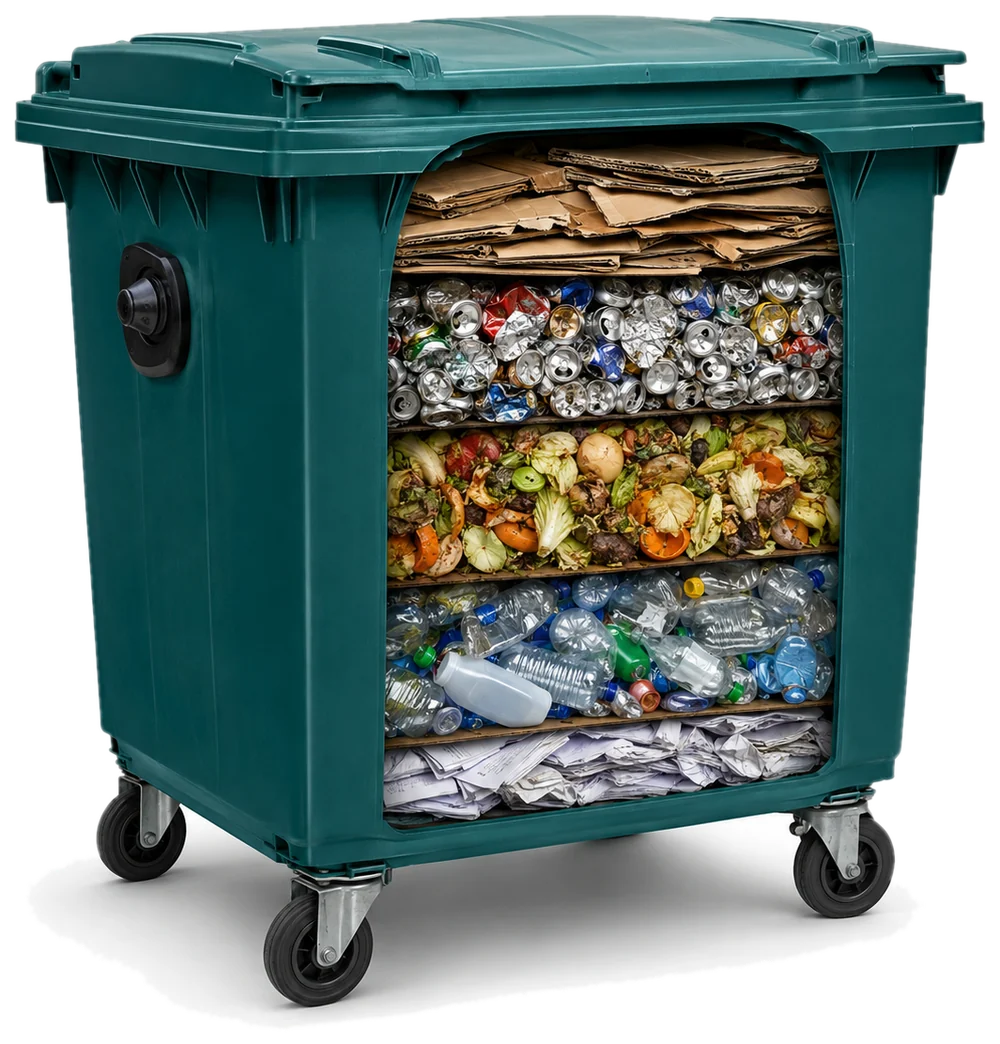
Managing waste in the shopping centres sector requires understanding specific waste streams, compliance requirements, and cost-effective disposal options. Shopping centres are complex multi-tenant environments generating massive waste volumes. Food courts produce the majority of waste but costs are allocated across all tenants. Loading dock scheduling for waste collection alongside deliveries is logistically challenging. Tenant compliance with waste sorting is inconsistent. Public area waste bins need frequent servicing. Large centres require compactors and dedicated waste rooms. Sustainability reporting is increasingly demanded by investors and stakeholders. Bundle Waste specialises in helping shopping centres businesses across Melbourne find the best waste management rates.
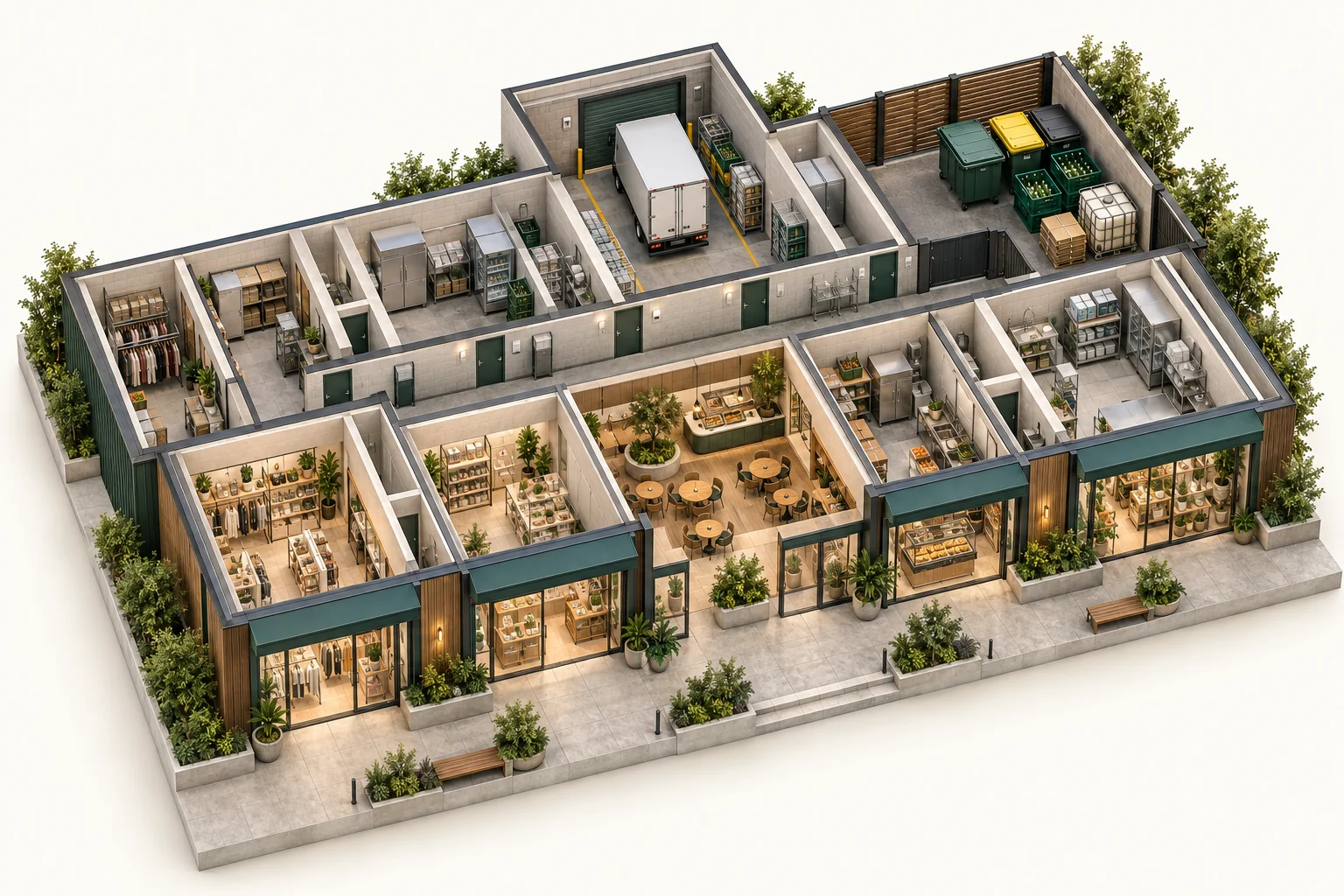
Shopping centres are complex multi-tenant environments generating massive waste volumes. Food courts produce the majority of waste but costs are allocated across all tenants. Loading dock scheduling for waste collection alongside deliveries is logistically challenging. Tenant compliance with waste sorting is inconsistent. Public area waste bins need frequent servicing. Large centres require compactors and dedicated waste rooms. Sustainability reporting is increasingly demanded by investors and stakeholders.
How much does shopping centre waste management cost in Melbourne?+
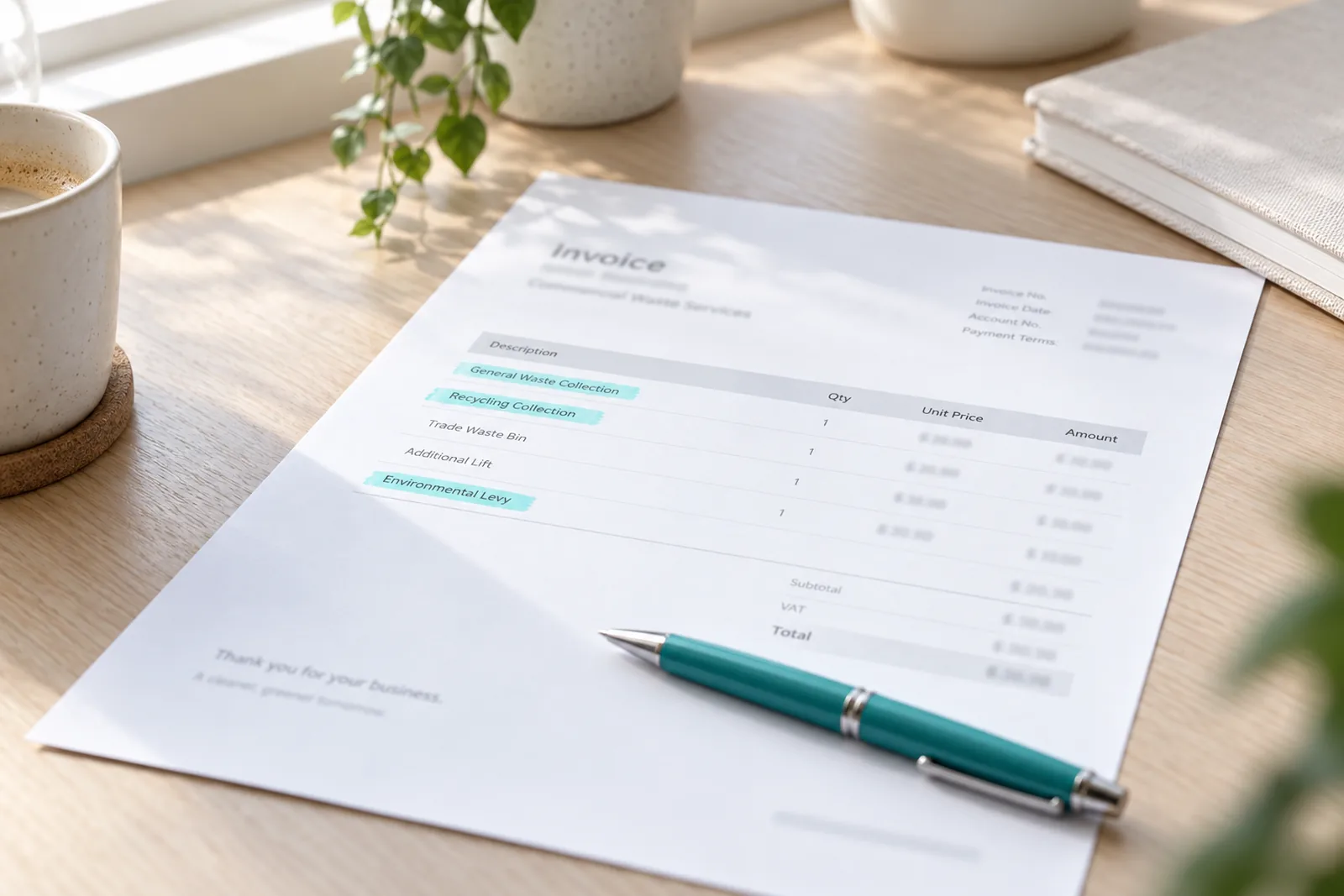
Shopping centre waste management in Melbourne typically costs $5,000-25,000 per month depending on size and tenant mix. A neighbourhood centre (5,000-15,000m² GLA) pays $5,000-10,000/month, a sub-regional centre (15,000-40,000m²) pays $10,000-15,000/month, and a regional centre (40,000m²+) pays $15,000-25,000+/month. Food court waste accounts for 40-50% of costs. Compactor rental ($500-1,500/month), recycling ($1,000-3,000/month), and grease trap services ($500-1,500/quarter) are significant line items.
How should shopping centres manage food court waste?+
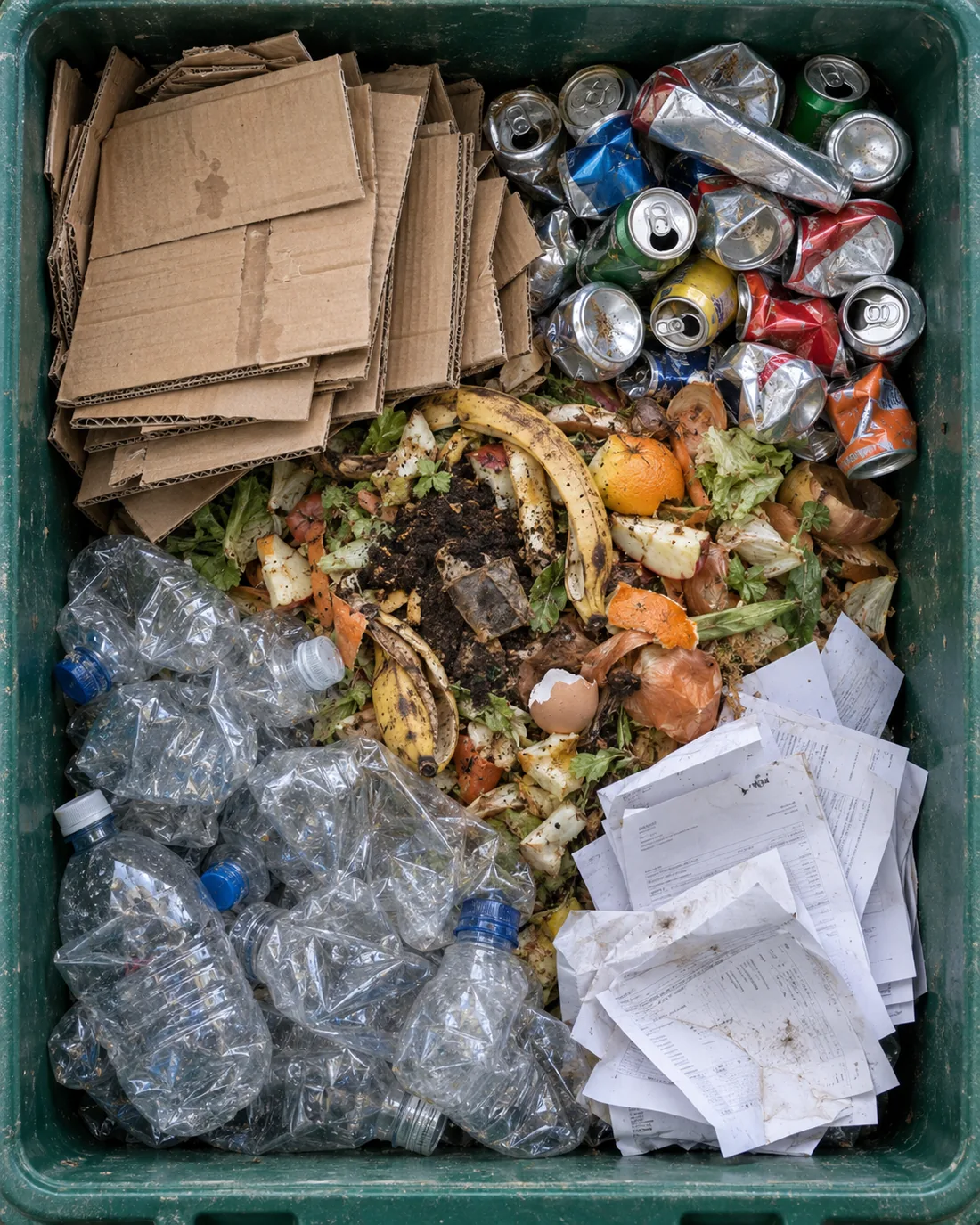
Food courts generate the highest waste intensity per square metre of any retail category. Key strategies: centralised food court waste stations with clear signage (general waste, recycling, food organics), food court-specific compactors to handle volume, dedicated grease trap servicing for food court drainage, tenant education programs (new tenant induction should cover waste procedures), and food organics diversion to reduce landfill costs. Well-managed food courts achieve 30-40% diversion rates. Contamination at public sorting stations remains the biggest challenge.
How should waste costs be allocated to shopping centre tenants?+
Common allocation methods: gross lettable area (GLA) pro-rata (simplest, but unfair to non-food tenants), waste generation by category (fairest, requires monitoring), fixed plus variable charges (base charge per tenancy plus volumetric for heavy generators), and direct charging for food tenants with shared costs for remainder. Best practice: food tenants should pay a waste surcharge reflecting their disproportionate generation. Include waste management obligations and cost allocation methodology clearly in lease terms.
What compaction and waste equipment do shopping centres need?+
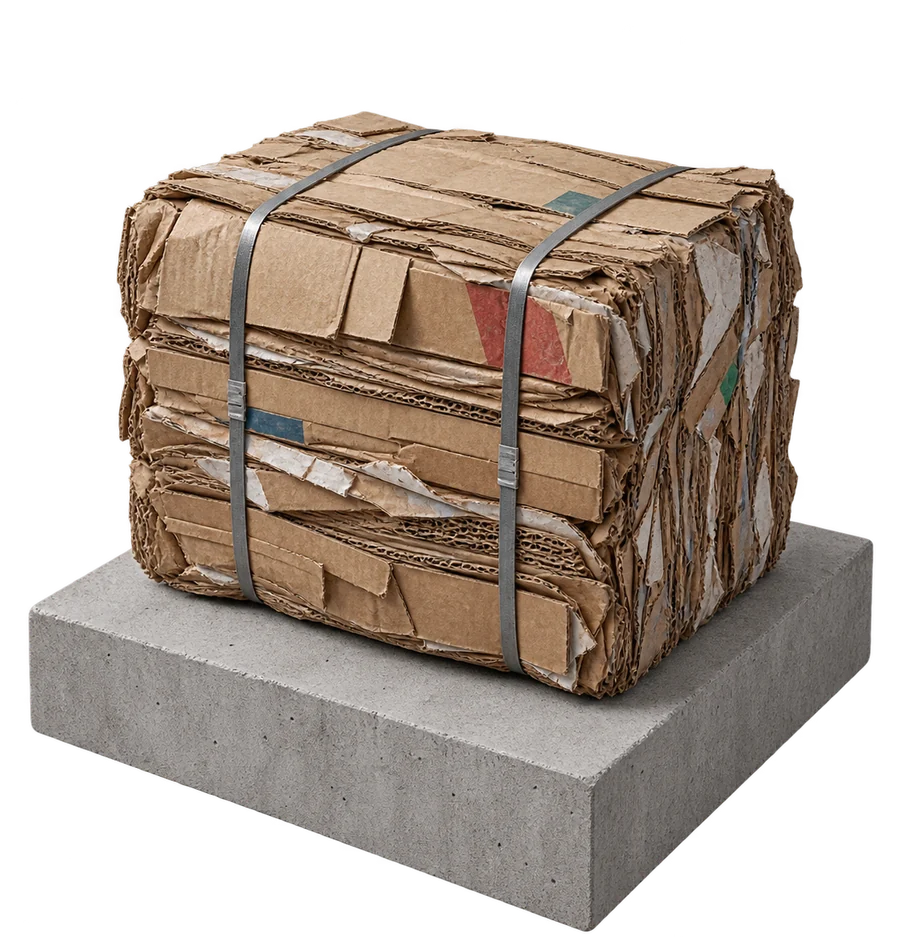
Essential equipment: general waste compactor ($15,000-30,000 or $500-1,500/month lease) reduces waste volume 75%, cardboard baler ($5,000-12,000) generates recycling revenue, food waste dehydrator ($10,000-30,000 — optional, reduces volume 80%), dock leveller for waste truck access, bin wash-down area with drainage to sewer, and dedicated waste storage rooms on each level. ROI on compactors is typically 12-18 months through reduced collection frequency. Smart fill-level sensors ($50-100/bin/month) optimise collection scheduling.
How can shopping centres achieve better NABERS waste ratings?+
NABERS waste ratings measure waste management performance on a 1-6 star scale. To achieve 4+ stars: implement comprehensive waste sorting (general, recycling, organics, soft plastics), achieve 50%+ diversion from landfill, track waste by stream with monthly tonnage data, conduct annual waste audits, set and monitor reduction targets, engage tenants in waste reduction programs, and report on waste intensity metrics (kg per m² GLA). Higher NABERS ratings attract quality tenants and demonstrate ESG performance to investors and stakeholders.
What are hazardous waste disposal costs in Melbourne?+
Hazardous waste disposal in Melbourne ranges from $2–15/kg depending on waste type. Chemical waste costs $3–8/kg, asbestos removal $50–80/m², and liquid chemical disposal $300–800 per 200L drum. All hazardous waste must be handled by EPA-licensed transporters under the Environment Protection Act 2017.
How much does clinical waste disposal cost in Melbourne?+
Clinical waste disposal in Melbourne costs $0.80–2.50/litre depending on waste category. Sharps containers (5L) cost $8–15 each, cytotoxic waste $4–8/kg, and anatomical waste $5–12/kg. Healthcare facilities typically spend $300–1,200/month. All clinical waste must comply with EPA Victoria Publication 1669.
How much does grease trap servicing cost in Melbourne?+
Grease trap servicing in Melbourne costs $150–400 per service depending on trap size. A standard 1,000L trap costs $150–250, a 2,000L trap $250–400. Most food businesses need monthly or quarterly servicing. Failure to maintain grease traps can breach your trade-waste agreement, leading to penalties or suspension of your discharge consent by your water authority (such as South East Water or Yarra Valley Water).
What is the difference between clinical and general waste in healthcare?+
Clinical waste causes infection or injury (sharps, cytotoxic, anatomical, infectious). General is non-hazardous (paper, food, packaging). Clinical costs $0.80–2.50/L vs $0.15–0.25/L general. A large share of clinical bins typically contain general waste that could be segregated.
How should a Melbourne hospital manage its waste?+
Hospitals generate 5–10kg/bed/day across: general waste (40–50%), clinical waste (15–25%), recycling (10–15%), food waste (10–15%), pharmaceutical waste (5%), and confidential waste (5%). A 300-bed hospital spends $10,000–50,000/month. Clinical waste separation training is critical — misclassification costs $50,000–200,000/year in unnecessary clinical waste charges.
 Bundle Waste