What waste does a Melbourne surf shop generate? What waste does a Melbourne surf shop generate?

What waste does a Melbourne surf shop generate?

Expert answer from Melbourne's waste management specialists

Surf shops generate: packaging (cardboard, plastic — 40–50%), damaged wetsuit returns (neoprene — limited recycling options), surfboard packaging (polystyrene — specialist recycling), and general waste.

Monthly waste: $80–200 for a small shop. Wetsuit recycling is emerging through brands like Patagonia.

Encourage customers to return old wetsuits. Polystyrene surfboard packaging should go to EPS recyclers.

Key Numbers

  • Packaging share of waste: 40–50%
  • Monthly waste (small shop): $80–200
  • Metro landfill levy (2025–26): $169.79/tonne
  • Recycling Victoria diversion target: 80% by 2030

What You Need to Know

For a surf shop, packaging is 40–50% of the bin, so the single biggest lever is keeping clean cardboard and EPS out of general waste — both are landfill-levy-bearing at $169.79/tonne when they should be free or rebated recyclate.

  • Cardboard and plastic — flatten and stream separately; the largest fraction by far.
  • Polystyrene surfboard packaging — route to EPS recyclers rather than crushing it into general waste.
  • Damaged wetsuit returns — neoprene has limited options; a take-back bin keeps it out of the costed stream.
  • General waste — what genuinely remains once the above are diverted.

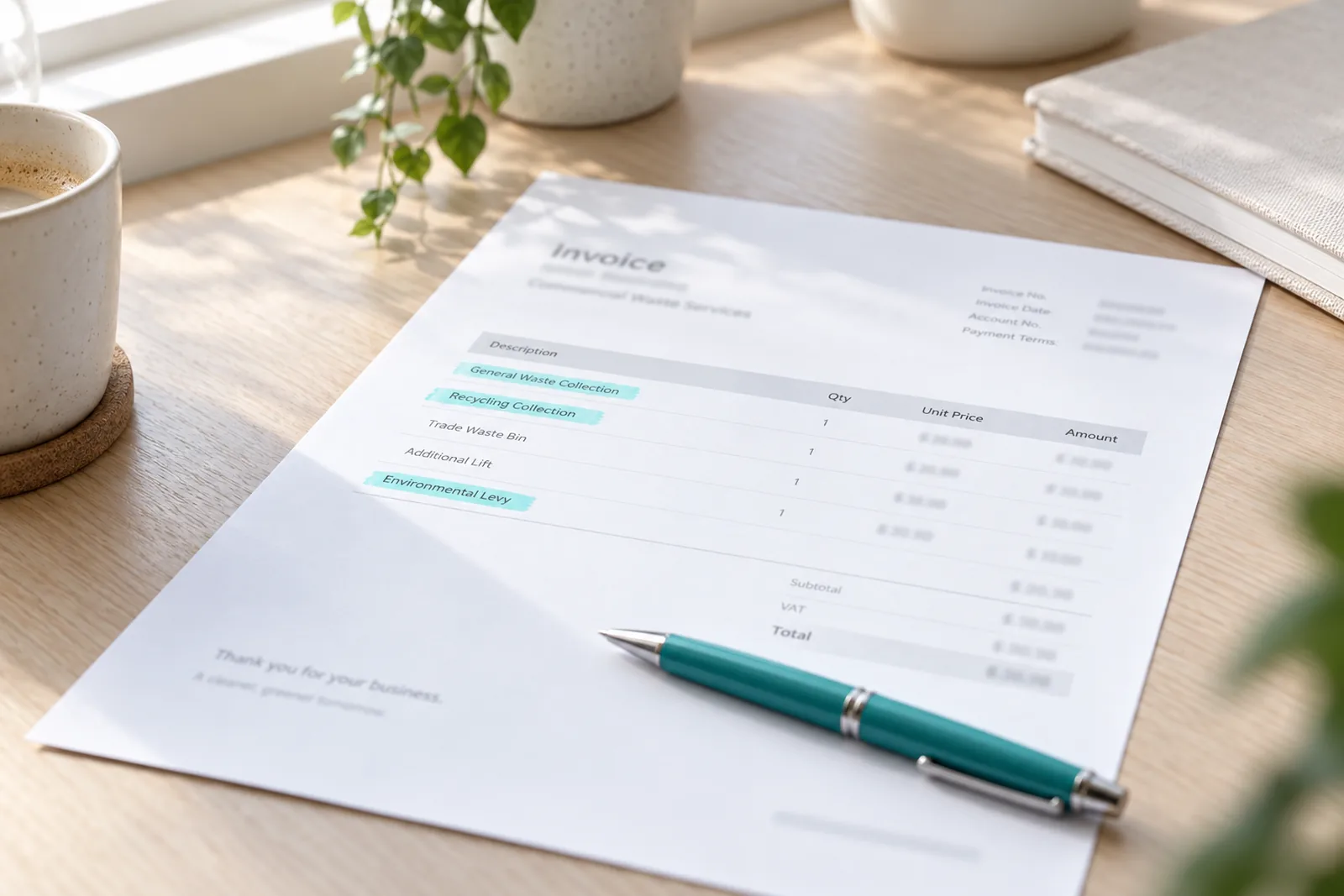
Steering recoverables out of landfill aligns with Recycling Victoria — A New Economy and its 80% diversion by 2030 goal. As an independent broker, Bundle Waste audits your invoice for free, right-sizes the bin to a shop generating $80–200 a month, compares a network of providers, and is paid only from the savings we find.

Related Resources

Related Questions

How should retail stores manage packaging waste?+
Retail stores should: compact cardboard (saves up to 60% on collections), separate soft from rigid plastics, return pallets, recycle polystyrene through specialists, and minimise point-of-sale packaging. Mid-size store: $100–300/month.
How should supermarkets manage food waste?+
Supermarkets waste 3–8% of stock. Best practice: donate edible food (tax deductible), separate organics for composting, animal feed partnerships, cardboard baler. Monthly waste cost: $1,000–3,000 for mid-size store.
How should florists manage waste?+
Florists generate: green waste (40–60%), cardboard (20–30%), plastic wrapping (10–15%), floral foam (not recyclable), ties. Green waste composting: $60–100/tonne vs $180–280 for general waste. Monthly cost: $150–350.
How should commercial bakeries with retail manage waste?+
Dual streams: Production — flour bags, ingredients, food waste, oil. Retail — customer packaging, display waste. Separate systems prevent cross-contamination. Donate unsold product to OzHarvest (free, tax deductible). Monthly cost: $300–700.
How can I reduce packaging waste from suppliers?+
Strategies: request minimal packaging, switch to reusable crates (IFCO, Tosca), return packaging for reuse, consolidate deliveries, specify recyclable packaging in contracts, join APCO. Packaging is 30–50% of commercial waste for retail and hospitality.

See exactly what you are overpaying

Bundle Waste reviews your current waste invoices and benchmarks them against a network of Melbourne providers — free, with a written report in 5 business days. You will see what you pay now, where the hidden charges are, and the rate we can negotiate. You only pay from the savings we find: no savings, no fee.

Get my free waste audit →

Updated 25 June 2026