Managing waste in the medical & dental clinics sector requires understanding specific waste streams, compliance requirements, and cost-effective disposal options. Medical and dental clinics generate regulated clinical waste streams requiring strict segregation, licensed transport, and documented chain of custody. Sharps containers must meet Australian Standards. Pharmaceutical waste, including Schedule 8 drugs, needs secure disposal. Dental clinics must manage amalgam waste separately due to mercury content. Many small practices overpay because they over-classify general waste as clinical, dramatically increasing costs. Bundle Waste specialises in helping medical & dental clinics businesses across Melbourne find the best waste management rates.
Medical and dental clinics generate regulated clinical waste streams requiring strict segregation, licensed transport, and documented chain of custody. Sharps containers must meet Australian Standards. Pharmaceutical waste, including Schedule 8 drugs, needs secure disposal. Dental clinics must manage amalgam waste separately due to mercury content. Many small practices overpay because they over-classify general waste as clinical, dramatically increasing costs.
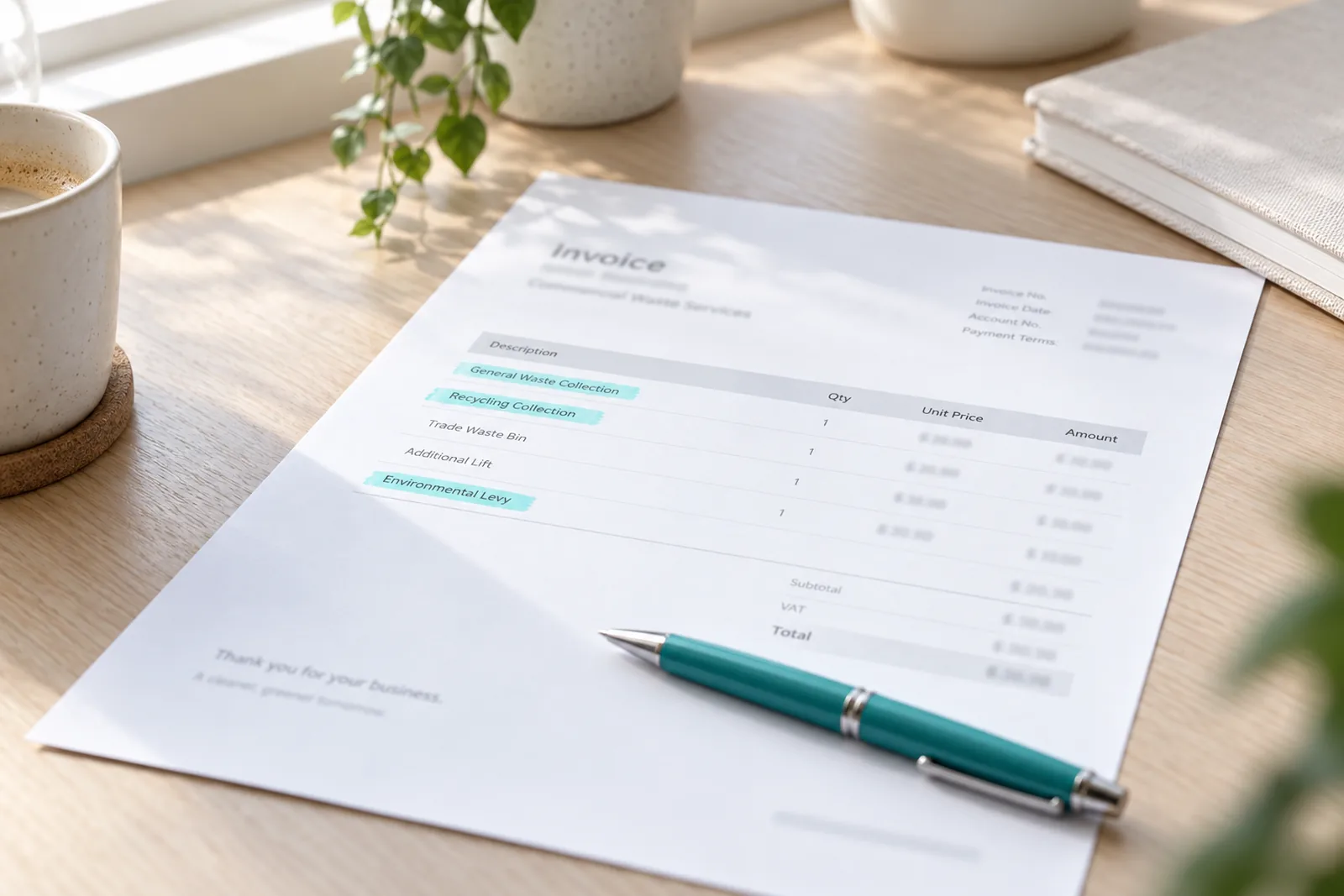
Typical monthly waste management spend for medical & dental clinics businesses is $400-2,500. This covers all waste streams including general waste, recycling, and any specialist disposal. Bundle Waste typically negotiates up to 30% savings for medical & dental clinics clients.
How much does medical clinic waste management cost in Melbourne?+
Medical clinic waste management in Melbourne typically costs $400-2,500 per month depending on practice size and type. A small GP clinic (2-3 doctors) pays $400-700/month, a larger medical centre $700-1,500/month, and specialist clinics (surgical, pathology) $1,000-2,500/month. Clinical waste accounts for $200-800/month, sharps $50-150/month, general waste $100-400/month, recycling $50-150/month, and confidential document destruction $50-100/month.
What is classified as clinical waste in Victoria?+
Under EPA Victoria Publication 1828, clinical waste includes: human tissue and body parts, materials saturated or dripping with blood, laboratory cultures and specimens, sharps (needles, scalpels, broken glass from clinical use), and items contaminated with infectious agents. Importantly, items with small amounts of blood (bandaids, cotton swabs with minor blood) are NOT clinical waste — they're general waste. This distinction matters because clinical waste disposal costs 5-10 times more than general waste.
How should dental amalgam waste be disposed of in Melbourne?+
Dental amalgam contains mercury and must never enter general waste or sewer systems. Amalgam waste must be collected in sealed, labelled containers and disposed of through licensed mercury recyclers. EPA Victoria requires dental clinics to use amalgam separators on suction units (capturing 95%+ of amalgam particles) and to store waste amalgam in designated containers with water or photographic fixer to prevent mercury vapour release. Collection costs $50-150 per pickup, typically quarterly.
How often should sharps containers be collected from medical clinics?+
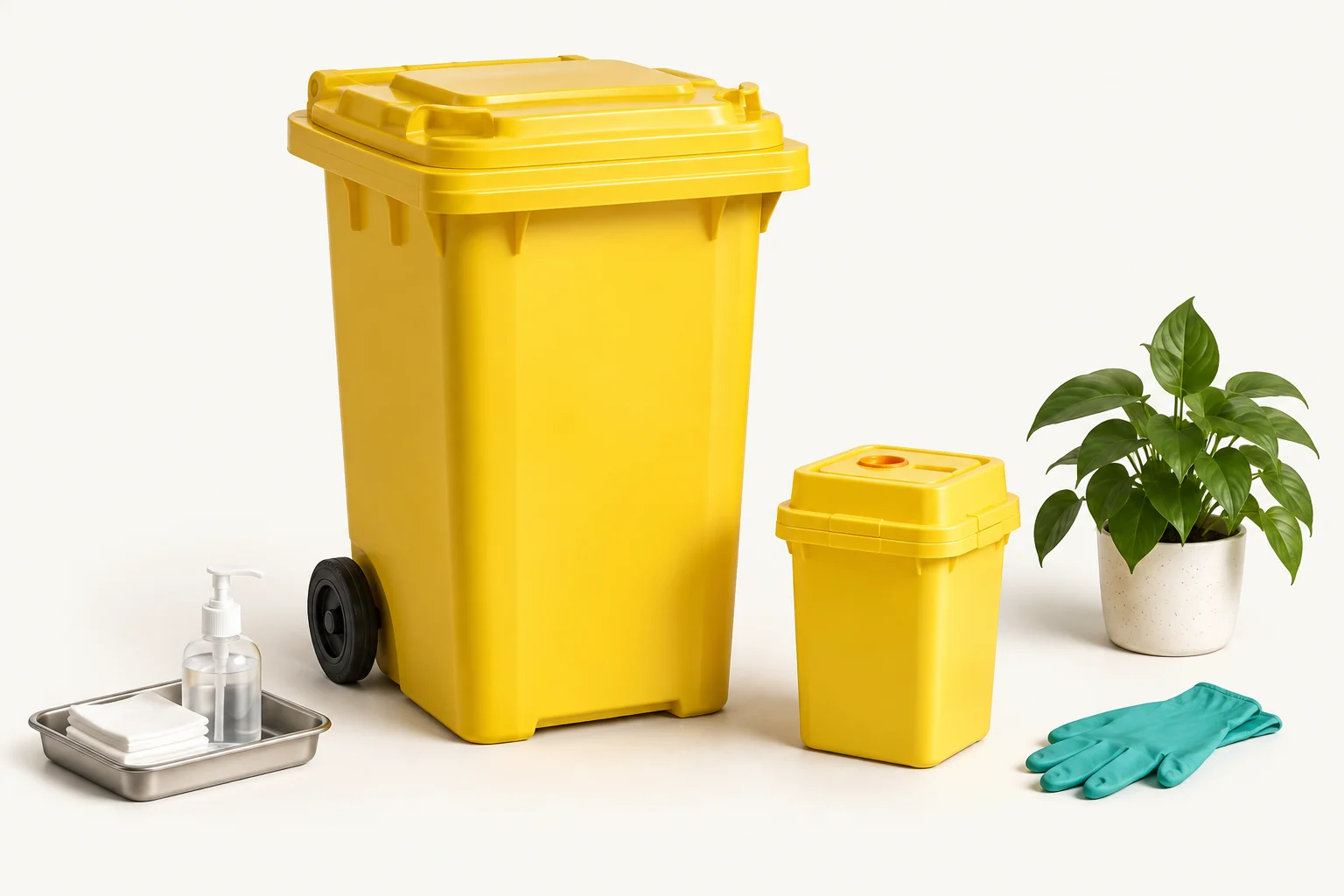
Sharps containers should be replaced when three-quarters full — never overfilled. For a busy GP clinic, this means monthly collection of 5-10L containers. Larger clinics or those performing procedures may need fortnightly collection. Sharps containers must comply with AS/NZS 4031, be yellow with biohazard symbol, puncture-resistant, and sealable. Storage of full containers should not exceed 30 days. Most providers offer exchange services — delivering empty containers when collecting full ones.
Can medical clinics reduce clinical waste costs?+
Yes, the biggest savings come from correct waste segregation. Many clinics put non-clinical items (gloves without blood saturation, paper towels, packaging) into clinical waste bins, paying $800-1,500/tonne instead of $180-250/tonne for general waste. Staff training on what is and isn't clinical waste can cut clinical waste volume by up to 50%. Other savings: right-sizing sharps container volumes, consolidating pharmaceutical waste collections, and benchmarking provider rates through a waste broker.
What are hazardous waste disposal costs in Melbourne?+
Hazardous waste disposal in Melbourne ranges from $2–15/kg depending on waste type. Chemical waste costs $3–8/kg, asbestos removal $50–80/m², and liquid chemical disposal $300–800 per 200L drum. All hazardous waste must be handled by EPA-licensed transporters under the Environment Protection Act 2017.
How much does clinical waste disposal cost in Melbourne?+
Clinical waste disposal in Melbourne costs $0.80–2.50/litre depending on waste category. Sharps containers (5L) cost $8–15 each, cytotoxic waste $4–8/kg, and anatomical waste $5–12/kg. Healthcare facilities typically spend $300–1,200/month. All clinical waste must comply with EPA Victoria Publication 1669.
How much does grease trap servicing cost in Melbourne?+
Grease trap servicing in Melbourne costs $150–400 per service depending on trap size. A standard 1,000L trap costs $150–250, a 2,000L trap $250–400. Most food businesses need monthly or quarterly servicing. Failure to maintain grease traps can breach your trade-waste agreement, leading to penalties or suspension of your discharge consent by your water authority (such as South East Water or Yarra Valley Water).
What is the difference between clinical and general waste in healthcare?+
Clinical waste causes infection or injury (sharps, cytotoxic, anatomical, infectious). General is non-hazardous (paper, food, packaging). Clinical costs $0.80–2.50/L vs $0.15–0.25/L general. A large share of clinical bins typically contain general waste that could be segregated.
How should a Melbourne hospital manage its waste?+
Hospitals generate 5–10kg/bed/day across: general waste (40–50%), clinical waste (15–25%), recycling (10–15%), food waste (10–15%), pharmaceutical waste (5%), and confidential waste (5%). A 300-bed hospital spends $10,000–50,000/month. Clinical waste separation training is critical — misclassification costs $50,000–200,000/year in unnecessary clinical waste charges.
 Bundle Waste