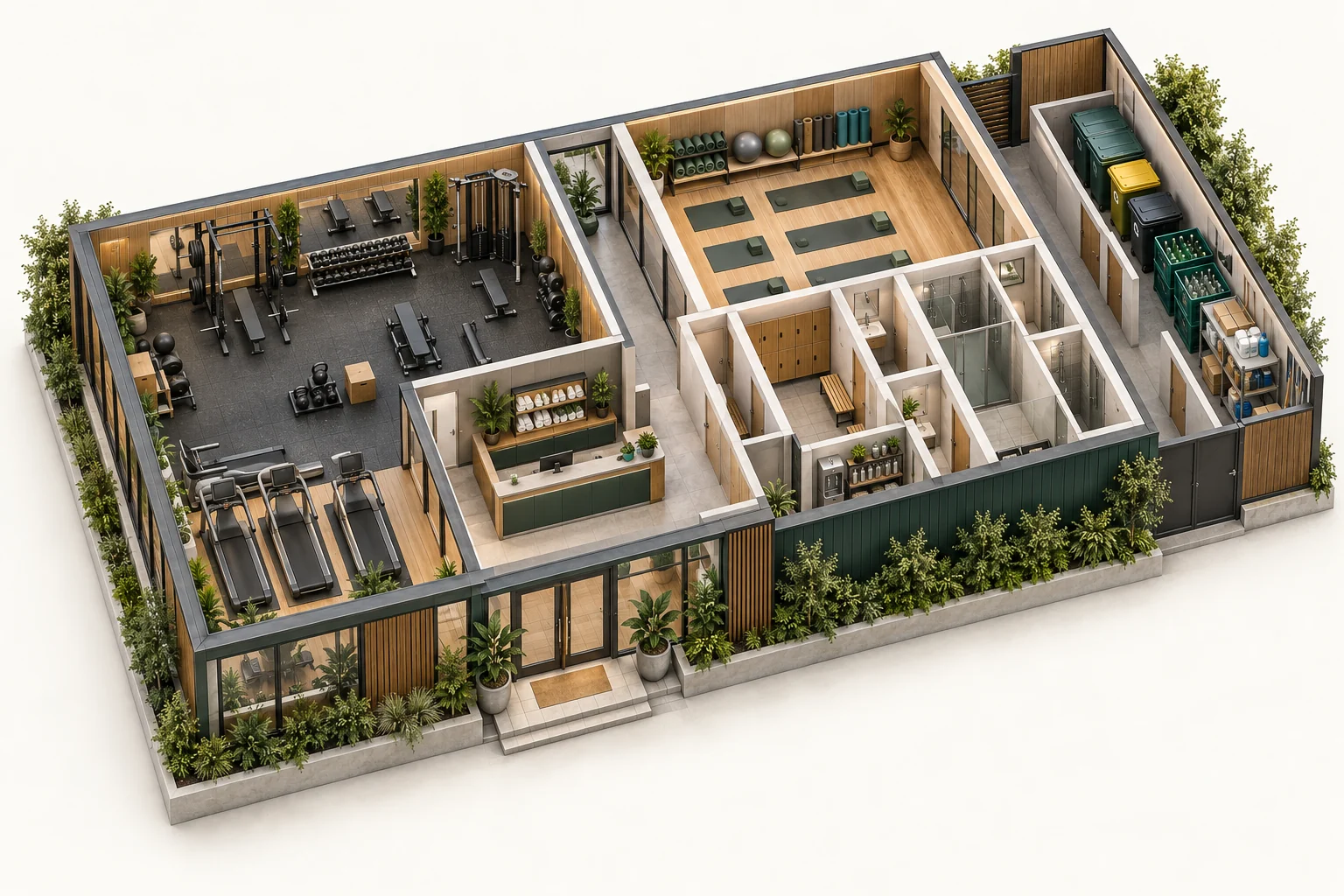
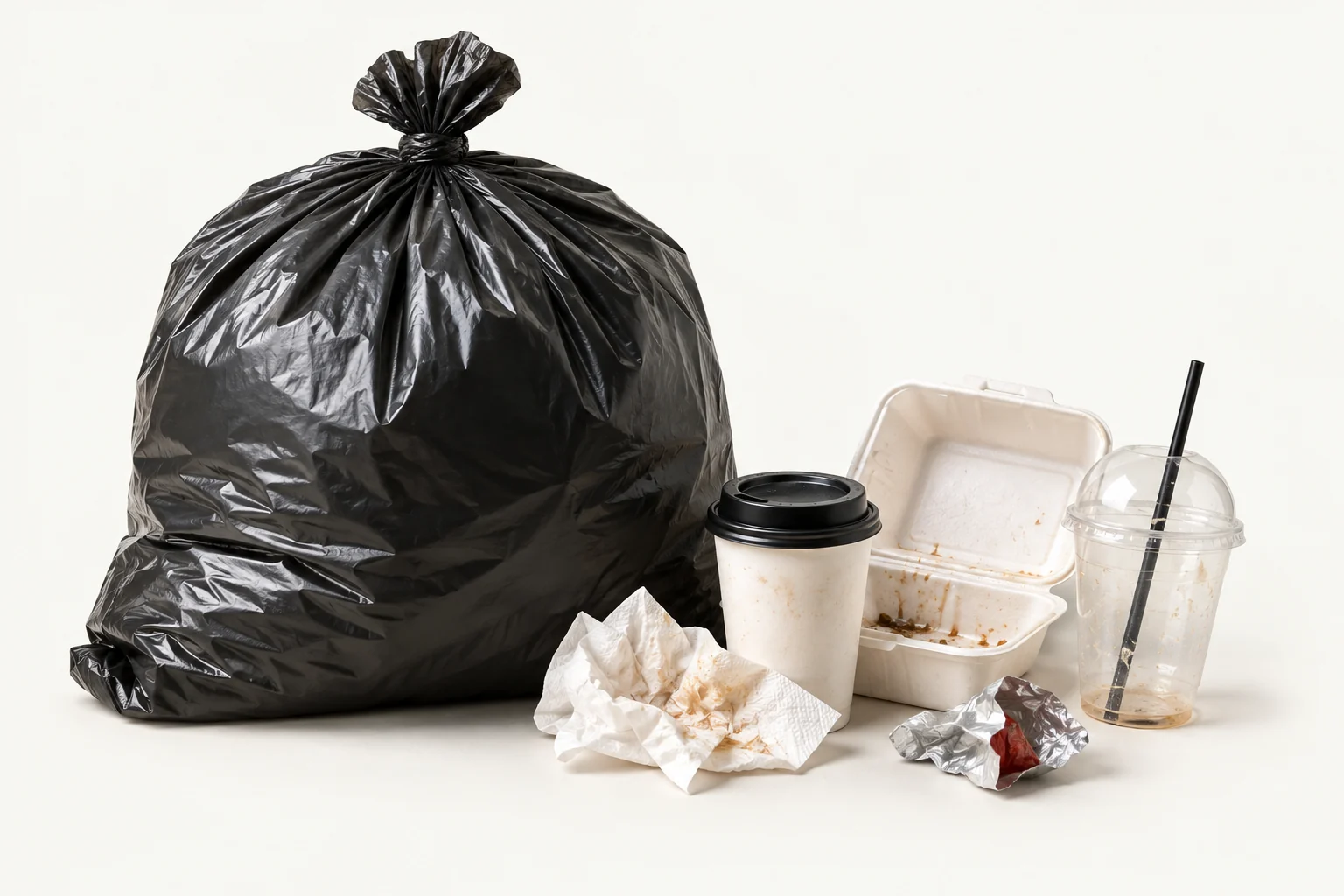
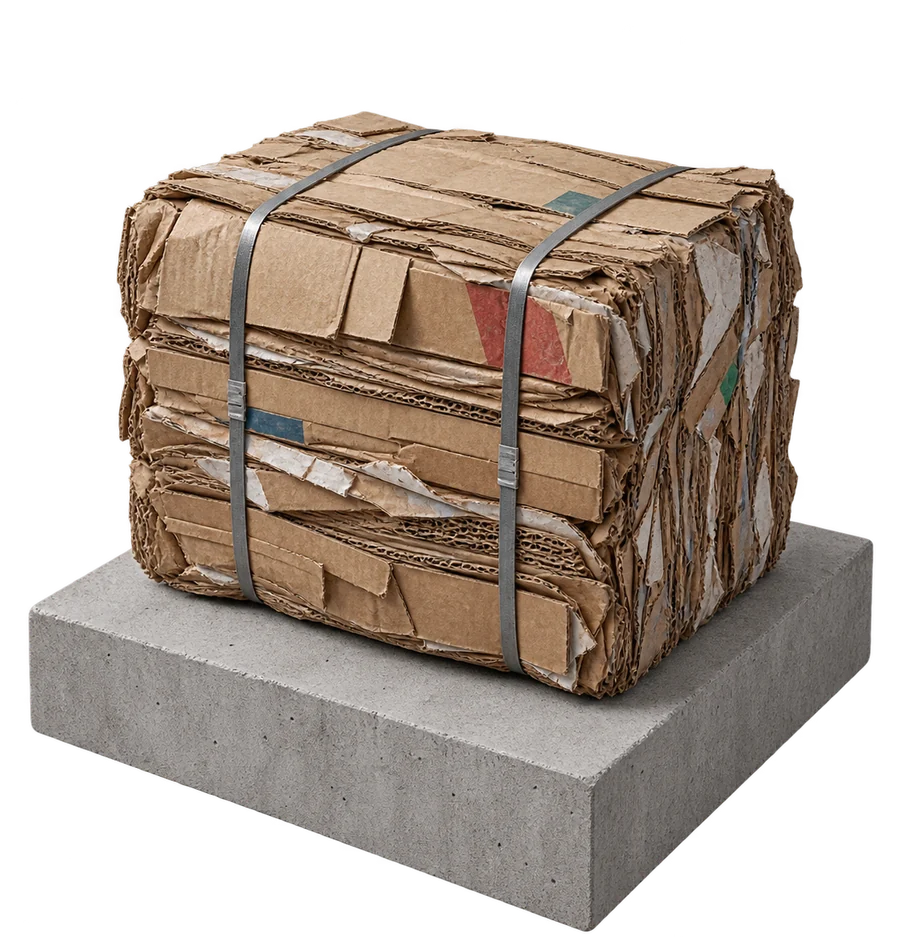
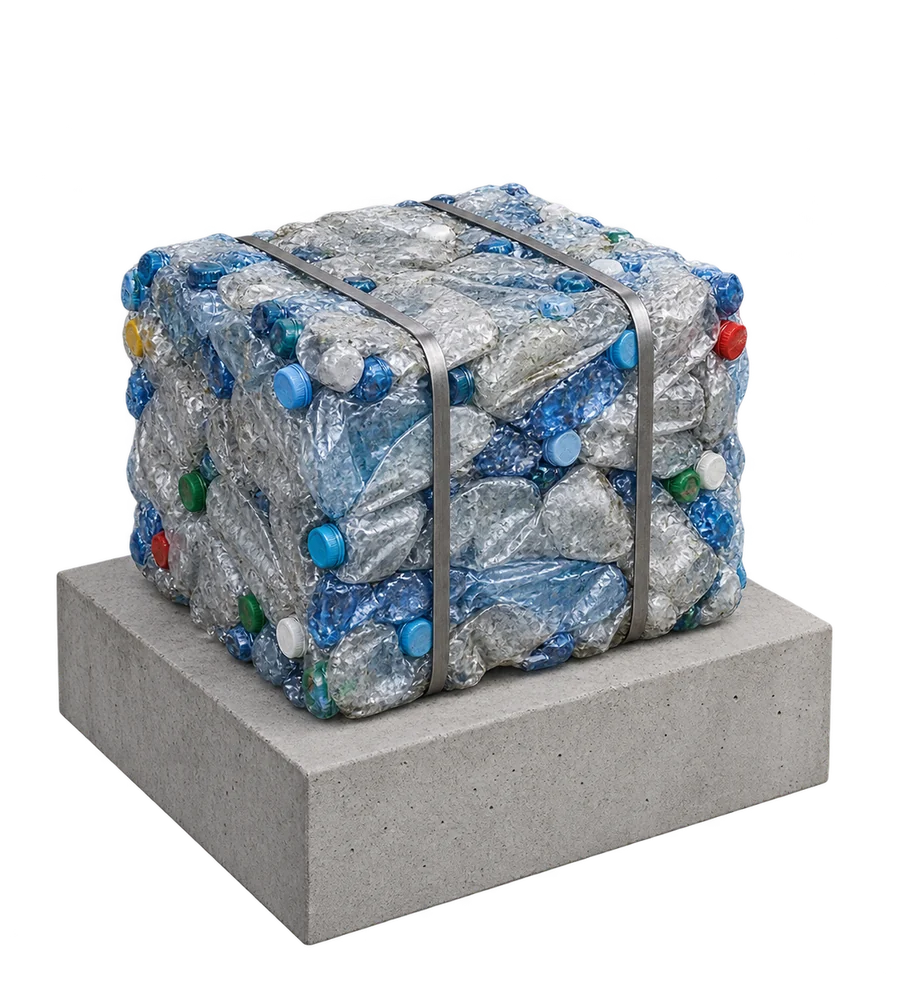
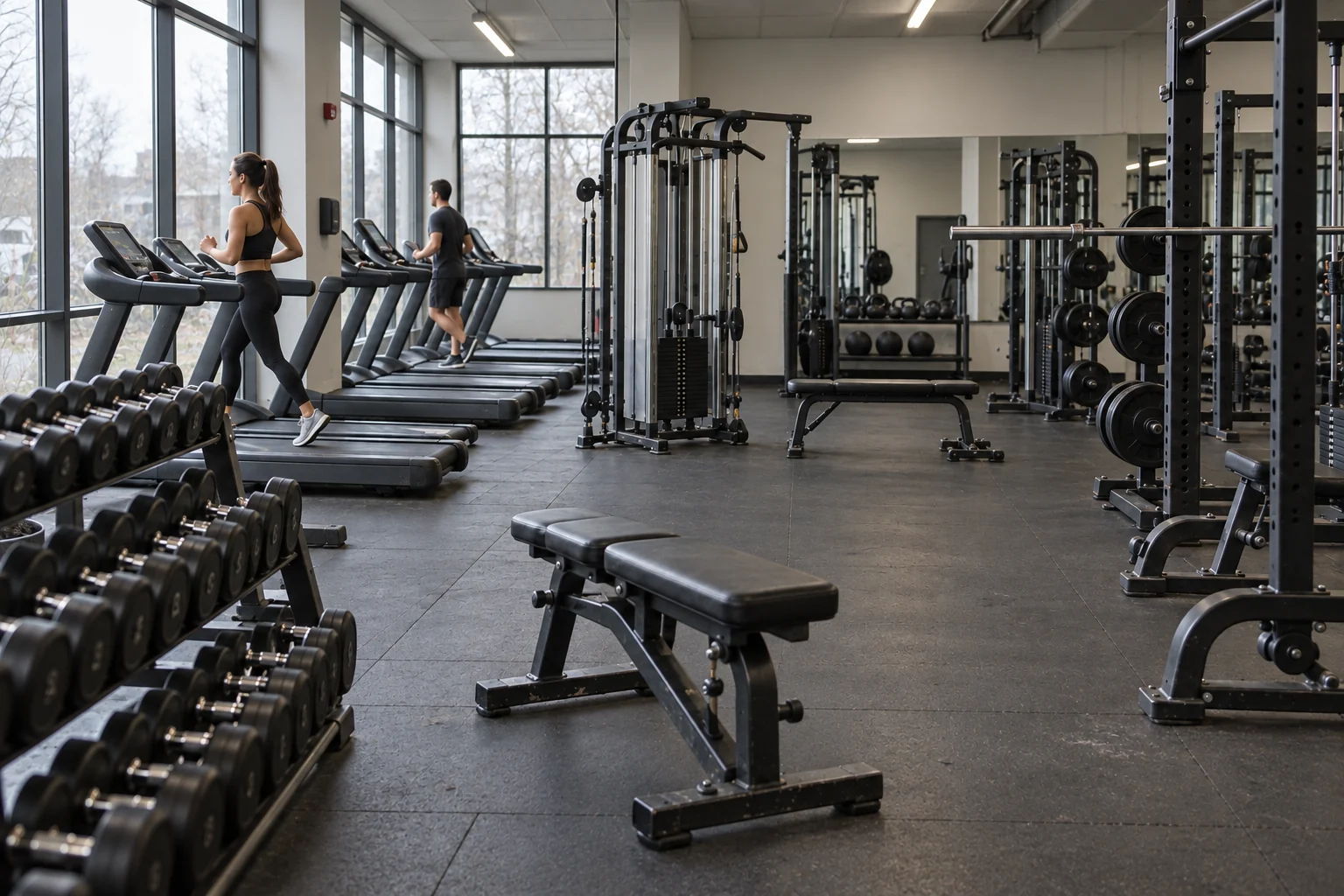
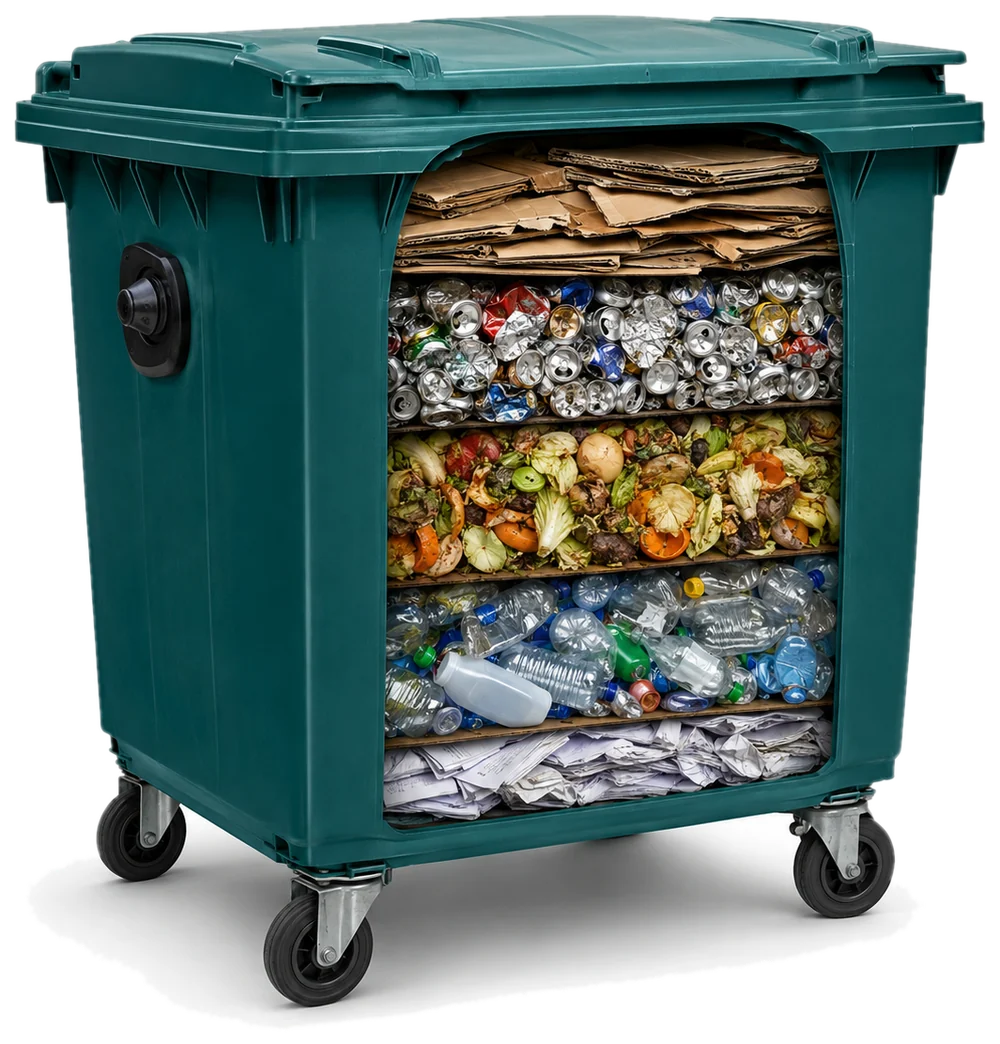
Managing waste in the gyms & fitness centres sector requires understanding specific waste streams, compliance requirements, and cost-effective disposal options. Gyms generate high volumes of single-use waste (towels, wipes, drink containers, protein bar wrappers) with peaks during morning and evening rushes. Sanitary waste and bathroom hygiene in changerooms is essential. Sweat-contaminated towels create odour if not collected frequently. 24-hour gyms have unique challenges with overnight waste accumulation. Recycling contamination from drink bottles mixed with food waste is common. Large franchises need consistent service across multiple sites. Bundle Waste specialises in helping gyms & fitness centres businesses across Melbourne find the best waste management rates.
Gyms generate high volumes of single-use waste (towels, wipes, drink containers, protein bar wrappers) with peaks during morning and evening rushes. Sanitary waste and bathroom hygiene in changerooms is essential. Sweat-contaminated towels create odour if not collected frequently. 24-hour gyms have unique challenges with overnight waste accumulation. Recycling contamination from drink bottles mixed with food waste is common. Large franchises need consistent service across multiple sites.
How much does gym waste management cost in Melbourne?+
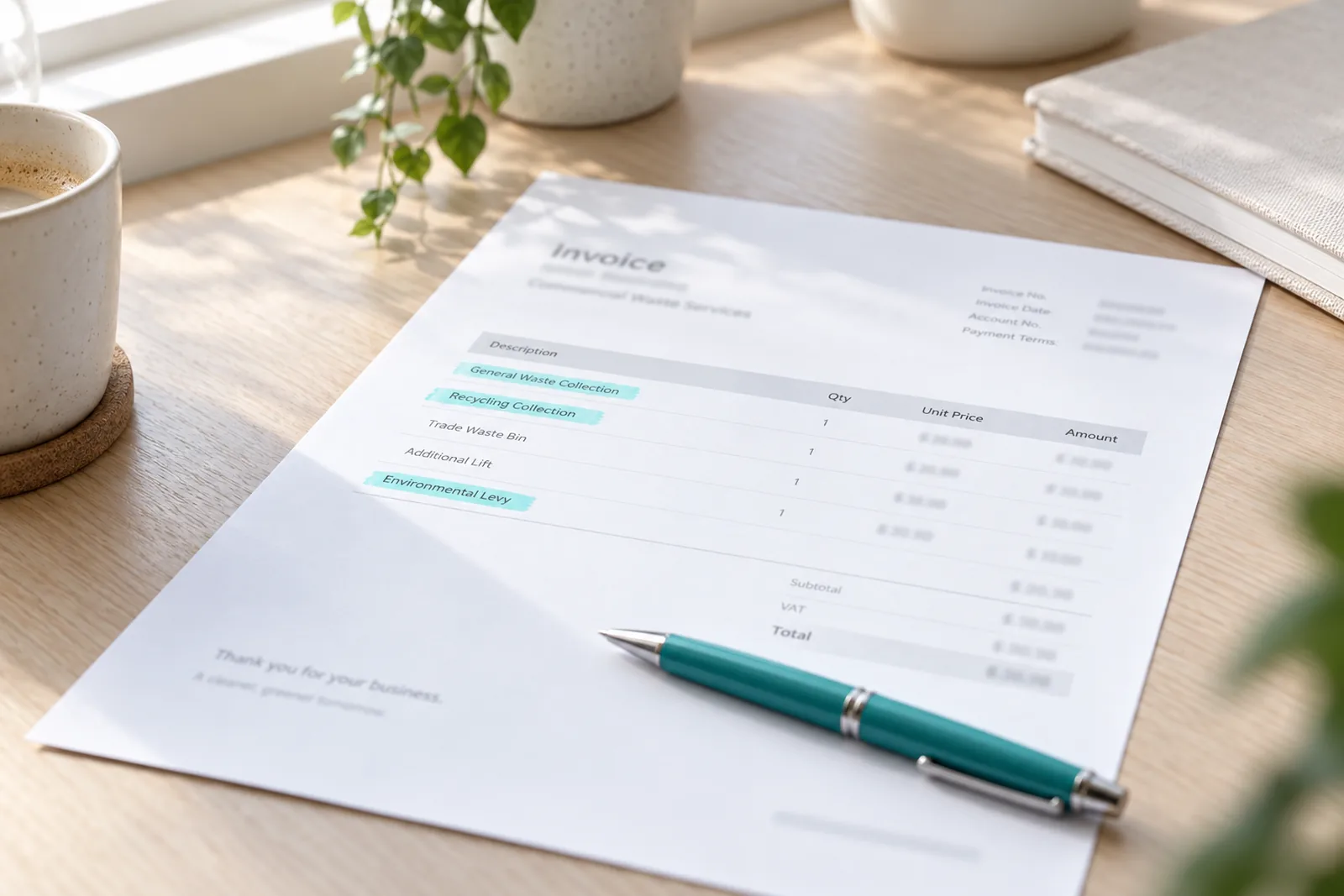
Gym waste management in Melbourne typically costs $300-1,500 per month depending on size and membership numbers. A boutique studio (100-300 members) pays $300-500/month, a mid-size gym (500-1,500 members) pays $500-900/month, and large 24-hour facilities (2,000+ members) pay $900-1,500/month. General waste accounts for $150-500/month, recycling $50-200/month, sanitary/bathroom services $80-200/month, and towel laundry (if applicable) $200-600/month.
What waste bins does a gym need?+
A typical Melbourne gym needs: general waste bins at each workout station cluster (smaller 60L bins), larger 240L bins in changerooms and reception, recycling bins paired with each general waste bin (critical for drink bottles), sanitary bins in all toilet cubicles, a 660L or 1100L general waste bin externally, a 660L recycling bin externally, and bathroom hygiene units in all washrooms. 24-hour gyms may need additional external bin capacity due to overnight accumulation.
How should gyms manage sanitary waste and bathroom hygiene?+
Changeroom hygiene is non-negotiable for member retention. Every toilet cubicle needs a sanitary bin serviced fortnightly or monthly. Bathroom hygiene units (air fresheners, seat sanitisers, hand dryers) should be serviced regularly. Sanitary waste services in Melbourne cost $15-25 per unit per service. Most gyms with 4-8 cubicles pay $80-200/month for full bathroom hygiene programs. These are often bundled with waste management contracts for better rates.
How often should gym waste be collected?+
Collection frequency depends on gym size and membership: boutique studios need general waste 1-2 times per week, mid-size gyms need 2-3 collections per week, and large 24-hour gyms may need daily collection. Recycling typically needs 1-2 collections per week. In summer, more frequent collection prevents odour from sweat-contaminated waste. Internal bins should be emptied by cleaning staff every shift. External bins should never reach more than 80% capacity.
How can gyms improve recycling rates?+
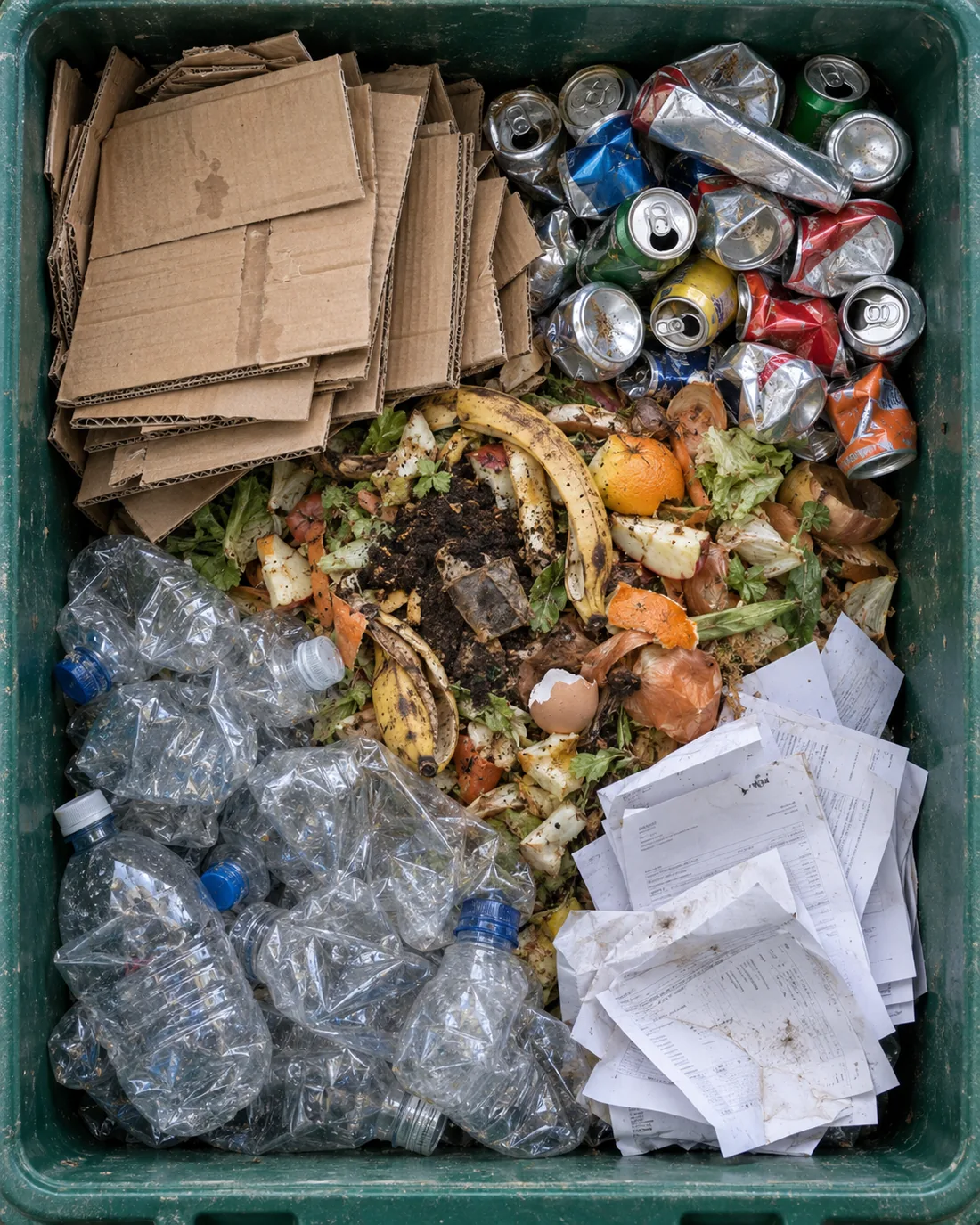
Gyms have excellent recycling potential because drink bottles and cans make up a large proportion of waste. Key strategies: 1) Place recycling bins directly beside every general waste bin (convenience drives compliance), 2) Use clear signage with images showing what goes where, 3) Remove bin lids on recycling bins (people default to general waste if there's a lid), 4) Put a recycling bin at every water fountain, 5) Consider a container deposit scheme collection point. Many gyms achieve 40-50% diversion rates with proper bin placement.
What are hazardous waste disposal costs in Melbourne?+
Hazardous waste disposal in Melbourne ranges from $2–15/kg depending on waste type. Chemical waste costs $3–8/kg, asbestos removal $50–80/m², and liquid chemical disposal $300–800 per 200L drum. All hazardous waste must be handled by EPA-licensed transporters under the Environment Protection Act 2017.
How much does clinical waste disposal cost in Melbourne?+
Clinical waste disposal in Melbourne costs $0.80–2.50/litre depending on waste category. Sharps containers (5L) cost $8–15 each, cytotoxic waste $4–8/kg, and anatomical waste $5–12/kg. Healthcare facilities typically spend $300–1,200/month. All clinical waste must comply with EPA Victoria Publication 1669.
How much does grease trap servicing cost in Melbourne?+
Grease trap servicing in Melbourne costs $150–400 per service depending on trap size. A standard 1,000L trap costs $150–250, a 2,000L trap $250–400. Most food businesses need monthly or quarterly servicing. Failure to maintain grease traps can breach your trade-waste agreement, leading to penalties or suspension of your discharge consent by your water authority (such as South East Water or Yarra Valley Water).
What is the difference between clinical and general waste in healthcare?+
Clinical waste causes infection or injury (sharps, cytotoxic, anatomical, infectious). General is non-hazardous (paper, food, packaging). Clinical costs $0.80–2.50/L vs $0.15–0.25/L general. A large share of clinical bins typically contain general waste that could be segregated.
How should a Melbourne hospital manage its waste?+
Hospitals generate 5–10kg/bed/day across: general waste (40–50%), clinical waste (15–25%), recycling (10–15%), food waste (10–15%), pharmaceutical waste (5%), and confidential waste (5%). A 300-bed hospital spends $10,000–50,000/month. Clinical waste separation training is critical — misclassification costs $50,000–200,000/year in unnecessary clinical waste charges.
 Bundle Waste