 Bundle Waste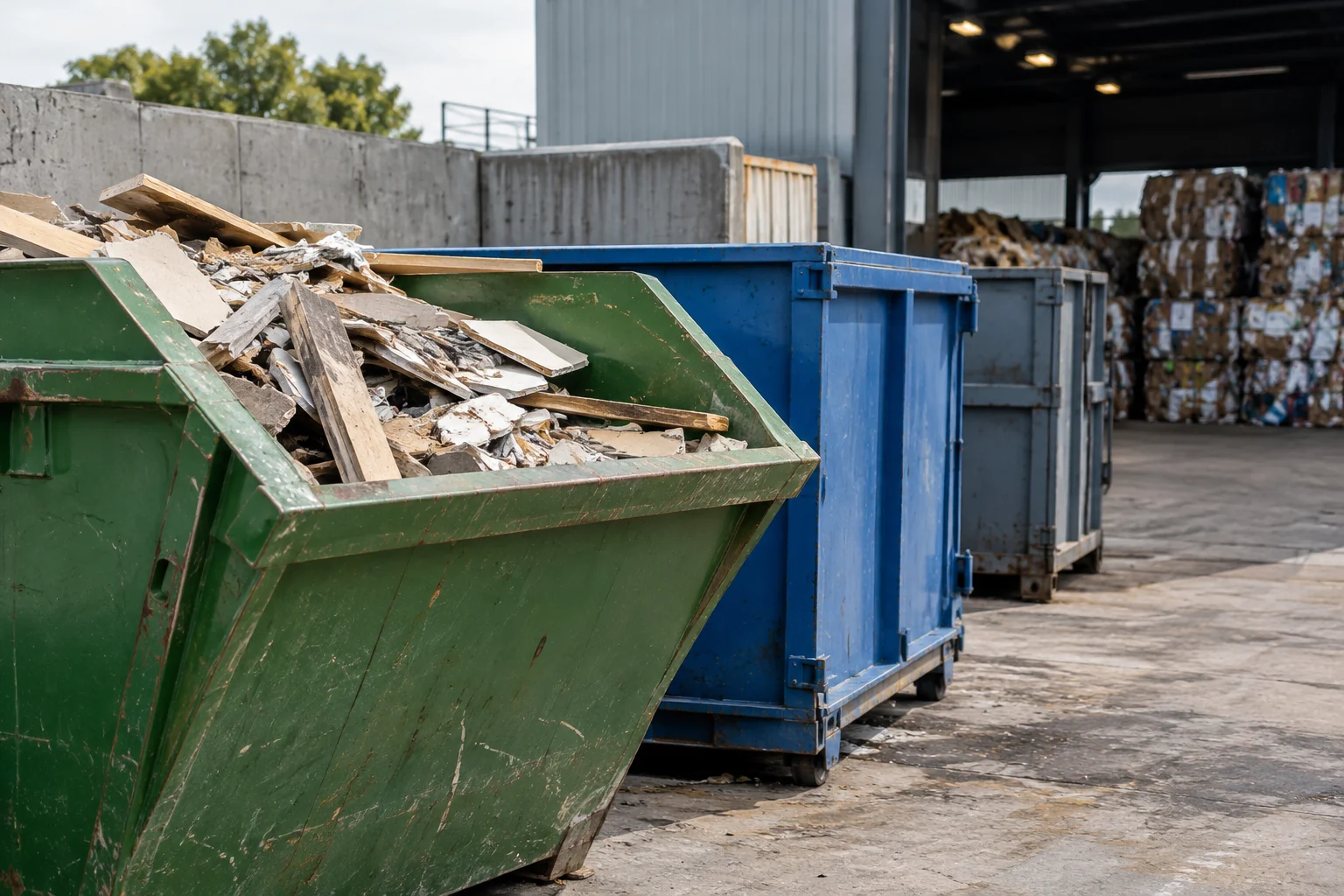
There is no verified Melbourne market-price dataset behind this guide. To assess a business waste quote, compare the actual materials, containers, collections and contract terms with current written offers for the same service. A price above an unsourced online range is not evidence of overcharging.
1. What drives a waste-management quote
Prepare one service brief before requesting prices. Include the postcode, access conditions, waste description, container quantities and capacities, proposed collection pattern and any specialist handling requirements. Separate measured quantities from estimates.
| Component | Ask the bidder to specify |
|---|---|
| Collection | Price per completed service or billing period; minimum commitment and extra-visit charge |
| Containers | Purchase or rental, delivery, maintenance and removal |
| Weight and treatment | Included allowance, measurement method, destination and excess-charge calculation |
| Access and exceptions | Waiting, unsuccessful visits, contamination and out-of-hours charges |
| Contract | Term, renewal, price adjustments, notice requirements and exit costs |
| Tax and validity | AUD price, GST treatment and quote expiry |
For contract-law guidance, consult ACCC: Contracts. Obtain advice on the particular agreement rather than assuming an unwanted clause is automatically invalid.
The charge types behind the total
Most Melbourne waste quotes are built from the same handful of components. Knowing which is which is what lets you tell a genuine cost from a line worth questioning.
- The per-lift or per-service rate. The core charge: what you pay each time the bin is emptied. It is the line most worth comparing across offers, because it varies between providers, between sites and between customers of the same provider.
- Container rental. Usually charged weekly or monthly on top of the lift rate. Ask whether it is included or separate, and what it covers — delivery, maintenance, replacement and removal at the end.
- Collection frequency. More visits cost more, and a schedule set when the service started is often never revisited. Bins collected half empty are paid-for capacity you are not using; bins overflowing are a contamination and access problem.
- Levies and surcharges. The statutory landfill levy is a genuine pass-through. Fuel levies, environmental levies and contamination charges are contractual, so ask for the basis and calculation of each rather than assuming it is fixed.
- Contract terms. Where an agreement carries an annual escalation clause, a long-standing customer can end up paying more than a new one for the same service. Check the formula, the index it names and the renewal notice window. Our contract red flags guide covers the clauses worth finding.
Compare an equivalent period
For a per-service offer, multiply the quoted rate by the services planned for the comparison period, then add the applicable fixed, treatment and one-off charges. For a fixed package, use its stated period price and inclusions. Keep uncertain extras in a separate scenario; do not treat them as zero.
A weekly schedule, a four-weekly schedule and a calendar-month package are different billing arrangements. Ask for the actual annual service count and total, including public holidays and shutdowns. For an existing service, reconcile invoices with completed collections before calculating an effective cost per lift. See the cost-per-bin worksheet.
2. General waste: capacity, access and collection
Record each bin's actual capacity and lifting system rather than identifying the service from litres alone. Give prospective providers the container location, access width, clearance information and collection window, and ask them to confirm compatibility.
Observe fullness safely before scheduled collections over representative trading periods. Include peak days, not just a quiet week. Trial a different schedule only after checking storage, hygiene, access and missed-collection contingencies. Fewer collections represent a changed service; assess whether that service still meets the site's needs.
Skip hire and ongoing collections
For a project skip, compare delivery, collection, hire duration, accepted contents, weight allowance and extension charges. For ongoing bins, compare the full recurring schedule over the same period. Confirm any placement permission with the relevant council before putting equipment on public land. The skip-versus-regular-collection guide sets out the decision questions.
3. Recycling: price the actual accepted stream
Ask the receiving operator to approve the materials you generate, including coatings, food residue, bags and mixed packaging. A product's recycling symbol is not a substitute for the service's written specification. Keep separate cardboard, mixed containers, film and foam decisions visible in the quote brief.
Do not assume a recycling service will always be cheaper or that adding it immediately reduces a fixed general-waste invoice. Compare the added service, handling and equipment cost with the general-waste service you can actually change. Include any rejected-material charges and subtract only confirmed credits.
Ask what records will show: pickup, delivered weight, sorting or completed recycling. Use the business recycling guide and the contamination-charge checklist to prepare questions.
4. Food organics, cooking oil and grease interceptors
Quote food-scrap collection separately from used cooking oil and grease-interceptor maintenance. Specify the materials, internal handling, external storage, access and trading pattern. Ask whether the organics service accepts food only or also garden material, and which liners or packaging are excluded.
South East Water provides trade-waste consent and food-and-oil-interceptor information for its service area. Follow the conditions of the retailer serving your premises; a solid-waste collection contract does not replace that process. South East Water: Trade waste.
Give maintenance bidders the equipment details and applicable conditions. Request an itemised offer covering the proposed scope, quantity basis, access, transport, treatment and documentation. Do not select a universal monthly pump-out interval from an online price table. See the trade-waste agreement checklist.
5. Construction and demolition: classify before pricing
Describe concrete, brick, soil, timber, packaging and mixed project waste separately. Provide material history and available assessment records. Do not call soil clean fill or assume old building material is non-hazardous solely from appearance.
EPA Victoria's classification guidance explains that industrial waste must be classified and that difficult materials may require technical assistance. Classification informs the handling and receiving route; the cheapest advertised skip is not necessarily suitable. EPA Victoria: Classify industrial waste.
Compare the written material acceptance, loading limits, transport, hire duration and authorised destination. Ask what happens if inspection or testing identifies a different material from the one quoted. Keep uncertain or potentially hazardous items separate pending appropriate advice.
6. Specialist streams: define the outcome first
| Stream | Decision before comparing price |
|---|---|
| Confidential records | Records owner's release approval, custody requirements and evidence of the agreed destruction process |
| Sanitary and hygiene waste | Users, unit capacity, service frequency, cleaning responsibilities and applicable site requirements |
| Clinical waste and sharps | Approved classification, container and treatment specification from the responsible lead |
| Chemicals and contaminated materials | Competent assessment, classification and suitable receiving route |
| Textiles and branded goods | Owner's reuse, security or destruction decision and accepted material condition |
Ask for the evidence each service supplies and what it actually proves. A collection receipt is not proof of recycling, secure destruction or regulatory compliance. Use the sharps guide, sanitary service checklist and product-destruction brief for separate specifications.
7. Victorian landfill levy and commercial charges
EPA Victoria's table for 1 July 2026 to 30 June 2027 lists $177.19 per tonne for municipal and industrial waste at prescribed municipal (metro) premises. It lists $88.42 for municipal waste and $155.95 for industrial waste at non-prescribed municipal (rural) premises. Priority-waste categories have separate rates. EPA Victoria: Waste levy, Tables 1 and 3.
Priority-waste categories are listed separately, with Category B at $296.18 per tonne and asbestos-contaminated soil or packaged asbestos waste at $35.58 per tonne on the same table. The 2026–27 metropolitan and provincial figure is up from $169.79 in 2025–26, which is why a levy-linked line can move on 1 July without anything about your service changing.
The levy attaches to waste received at a landfill. Material delivered to a licensed material recovery facility is not carrying a landfill levy, so if a levy-labelled charge appears on a recycling service, ask which statutory charge it refers to and on what basis it was calculated.
These statutory amounts are not a complete commercial collection tariff or a price per bin. Ask which waste category, destination, weight or contractual allocation supports an invoice line. Check whether a combined service price already includes relevant disposal components, and ask how GST is treated.
A label such as environmental levy or fuel surcharge does not establish its legal basis or calculation. Compare it with the signed pricing terms and request an explanation before alleging an overcharge. For the wider category table, see the Victorian levy guide.
8. Build a budget for your operating pattern
Use industry-specific questions rather than an unsupported typical monthly total. Two businesses with the same headcount can have different materials, operating hours, access and service needs.
| Activity | Inputs to include |
|---|---|
| Office | Landlord responsibilities, occupancy pattern, records and IT disposals |
| Hospitality | Trading peaks, food and glass, cooking oil and separate interceptor conditions |
| Retail or warehouse | Delivery packaging, stock returns, seasonal volumes, pallets and loading access |
| Manufacturing or automotive | Process materials, oils, chemical residues and technical classification needs |
| Healthcare or care services | Setting-specific approved streams, containers, storage and collection records |
For a new business, label the initial quantities as estimates and agree a review once normal trading produces usable records. For multiple sites, retain a site-level breakdown even if the proposal offers consolidated billing.
9. Test changes and measure the result
- Establish the baseline. Match invoices, containers and completed services over a representative period.
- Check prevention and accepted separate streams. Confirm a safe receiving route before changing staff sorting instructions.
- Request comparable offers. Give bidders the same brief, cost schedule and reporting requirements.
- Review the agreement. Check renewal notices, price changes, exit charges and any brokerage remuneration.
- Trial and reconcile. Compare actual invoices and service reliability after the change, including transition and additional handling costs.
Keep quoted savings separate from realised savings. Disclose changes in waste quantity, trading activity and service scope so a smaller bill is not misrepresented as a negotiated saving on identical service.
Where the cost usually comes down
Across most sites the same five levers do the work, and most businesses have only ever pulled one of them:
- Compare your rates against current written offers. Not against an online range — against two or three providers quoting the exact service you have, on the same period and GST basis.
- Change the stream mix. Material in general waste costs more than the same material in an accepted separate stream, both in the collection rate and in the landfill levy on what is disposed of. Confirm the receiving route before changing what staff are told to sort.
- Right-size containers and frequency. Match capacity and visits to observed fill rather than to the schedule the service started on. Fewer collections is a changed service, so check storage, hygiene and access before treating it as a saving.
- Time the conversation. The window to renegotiate is before the renewal notice date passes, not after. If you do not know your date, find it in the agreement and work back from it.
- Use an independent negotiator. A broker brings market comparison and provider relationships a single site does not have. Ask how the broker is remunerated, and keep quoted savings separate from realised ones.
Prepare the records with the waste audit checklist, or use the tender process for a structured procurement exercise.
Discuss your waste requirements
Have your current agreement, recent invoices and service details ready for the discussion.
Contact Bundle Waste →Frequently asked questions
How much does commercial waste management cost in Melbourne?
How do I compare a per-lift price with a monthly package?
How much of a Melbourne waste bill is the landfill levy?
Is a recycling service always cheaper than general waste?
Does a cheaper quote mean I am being overcharged now?
Sources
Primary guidance checked 18 September 2026. Commercial prices require current site-specific quotations.
- Australian Competition and Consumer Commission — Contracts. Unfair contract terms; Small business and unfair contract terms.
- South East Water — Trade waste. About trade waste; Apply; Food and Oil Interceptor; Charges.
- EPA Victoria — Classify industrial waste. Classification process; Waste codes; Priority waste categories.
- EPA Victoria — Waste levy. Table 1 and Table 3: 1 July 2026 to 30 June 2027.
