Operations
2 min read
By Pedro Carreira
Updated 25 June 2026
Effective training takes 15 minutes and covers 3 things: (1) Which bin for which item — use real examples from your workplace (show actual packaging, not generic lists), (2) When in doubt, general waste — contamination costs more than losing one recyclable item, (3) The 'empty, clean, dry' rule for recycling — rinse containers, flatten cardboard, no food residue.
Reinforce with posters at bin stations, monthly email reminders with contamination photos, and positive recognition for teams with clean bins.
Key Numbers
- Training session length: 15 minutes
- Core rules to teach: 3
- Recycling standard: empty, clean, dry
- Commingled contamination (Vic): about 12%
What You Need to Know
Most contamination is a training gap, not a sorting one — and it is fixable in a single 15-minute session that pays for itself by keeping recycling loads clean. The trick is to teach with the real packaging your team actually handles, not a generic list they will forget by lunchtime.
- Right bin, real items: hold up the actual coffee cups, wraps and containers from your floor.
- When in doubt, general waste: one lost recyclable is cheaper than a contaminated load.
- Empty, clean, dry: rinse containers, flatten cardboard, no food residue.
- Reinforce it: bin-station posters, monthly photo reminders, recognition for clean teams.
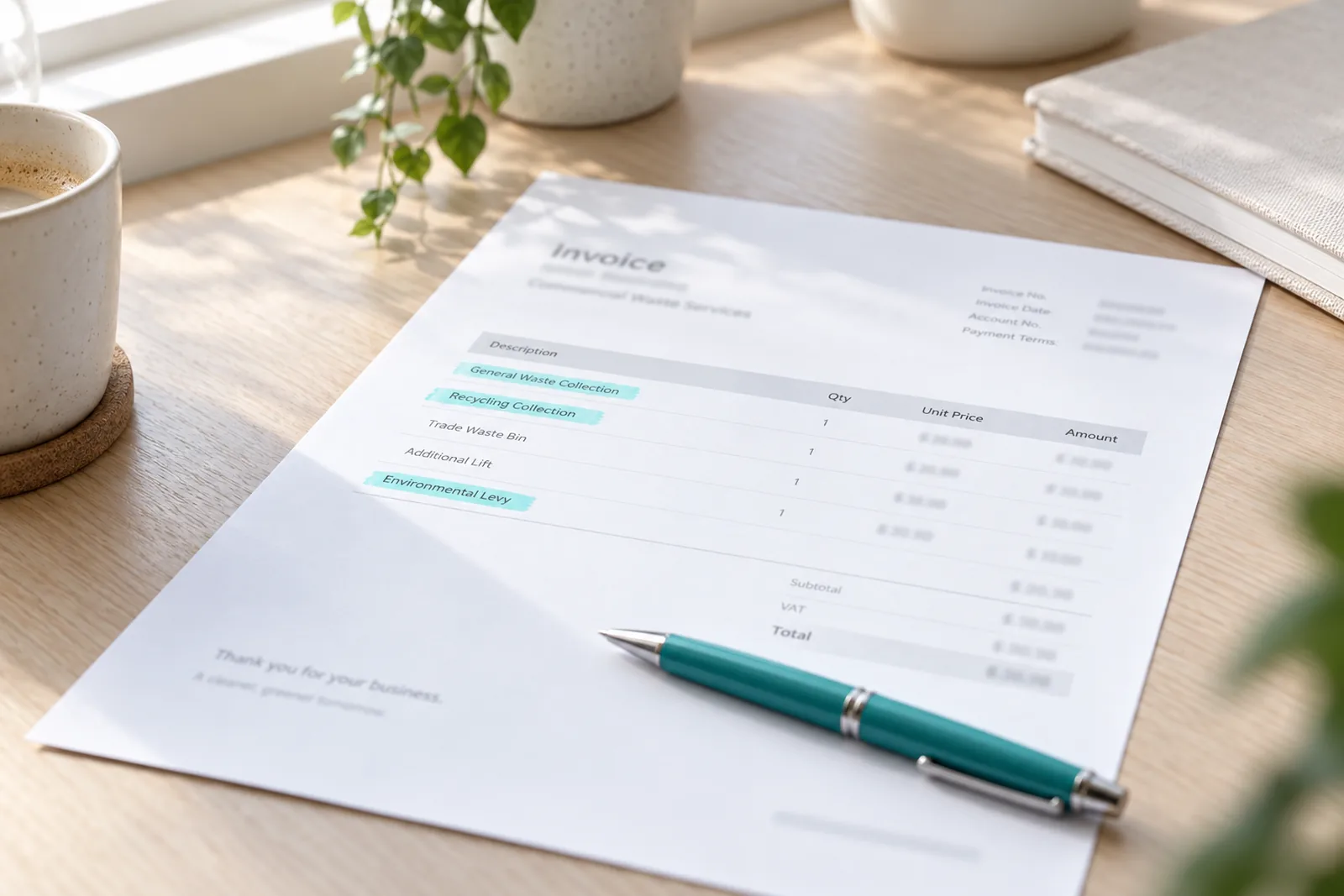
Well-trained sorting underpins your General Environmental Duty (GED) to minimise waste risk so far as reasonably practicable. Bundle Waste backs your training with free signage and an invoice audit that catches the contamination fees slipping through, comparing a network of providers and charging only from the savings we find.
Related Resources
Related Questions
What are contamination penalties and how do I avoid them?+
Contamination penalties ($50-200 per incident) are charged when wrong items enter recycling or organics bins. The top 5 contaminants in Melbourne commercial bins are: (1) soft plastics in recycling, (2) food waste in recycling, (3) coffee cups in recycling (they are not recyclable), (4) nappies in recycling, (5) polystyrene in recycling. Prevention: place A3-size visual guides above every bin showing what goes where, conduct monthly 'bin dips' to check contents, and train new staff within their first week.
What is the cost of contamination in recycling bins?+
Contamination costs Melbourne businesses $50–200 per incident in penalty fees. If contamination exceeds 10–15%, providers may reclassify recycling as general waste, increasing costs 40–100%. Staff training can reduce contamination by up to 70%.
What are the penalties for contaminating recycling?+
Businesses face: service refusal from providers, reclassification as general waste (40–100% cost increase), surcharges of $50–200/incident, and EPA action under the GED. Material Recovery Facilities reject loads with over 10–15% contamination.
How should strata buildings manage waste?+
Strata buildings must provide adequate bin storage per the BCA. Owners Corporations manage waste contracts. Key issues: contamination (25–40% rate), insufficient bins, lack of education. A 50-apartment building spends $500–1,500/month.
What can and cannot go in commercial recycling bins in Victoria?+
YES: rigid plastics 1–5, aluminium cans, steel cans, glass, aerosols, cartons. NO: soft plastics, food waste, nappies, textiles, polystyrene, ceramics, batteries, e-waste, plastics 6–7. Contamination above 10% can send the entire load to landfill.
See exactly what you are overpaying
Bundle Waste reviews your current waste invoices and benchmarks them against a network of Melbourne providers — free, with a written report in 5 business days. You will see what you pay now, where the hidden charges are, and the rate we can negotiate. You only pay from the savings we find: no savings, no fee.
Get my free waste audit →
Updated 25 June 2026