What waste does a Melbourne commercial window cleaning company generate? What waste does a Melbourne commercial window cleaning company generate?

What waste does a Melbourne commercial window cleaning company generate?

Expert answer from Melbourne's waste management specialists

Window cleaners generate: chemical waste from cleaning solutions (small quantities — usually below hazardous thresholds), used squeegee rubbers, microfibre cloths at end-of-life, packaging, and general waste at depot.

Most waste volumes are minimal. Monthly depot waste: $50–100.

Wastewater from window cleaning is usually permitted to stormwater if using biodegradable solutions. Check council requirements for chemical use near sensitive areas.

Key Numbers

  • Monthly depot waste: $50–100
  • EPA max corporate fine (GED breach): about $2.03 million
  • Metro landfill levy (2025–26): $169.79/tonne
  • Saving via an independent broker: up to 30%

What You Need to Know

A commercial window cleaning company is a low-volume waste generator — the real exposure is not bin cost but how cleaning wastewater and chemicals are handled on site. Most depot waste is minor, but discharging the wrong solution near a stormwater drain is where compliance risk concentrates.

  • Cleaning solution residue — usually below hazardous thresholds, but check before disposal.
  • Used squeegee rubbers and end-of-life microfibre cloths — general waste at depot.
  • Packaging — cardboard and film, recycled separately.
  • Wastewater — usually permitted to stormwater only with biodegradable solutions; confirm council rules near sensitive areas.

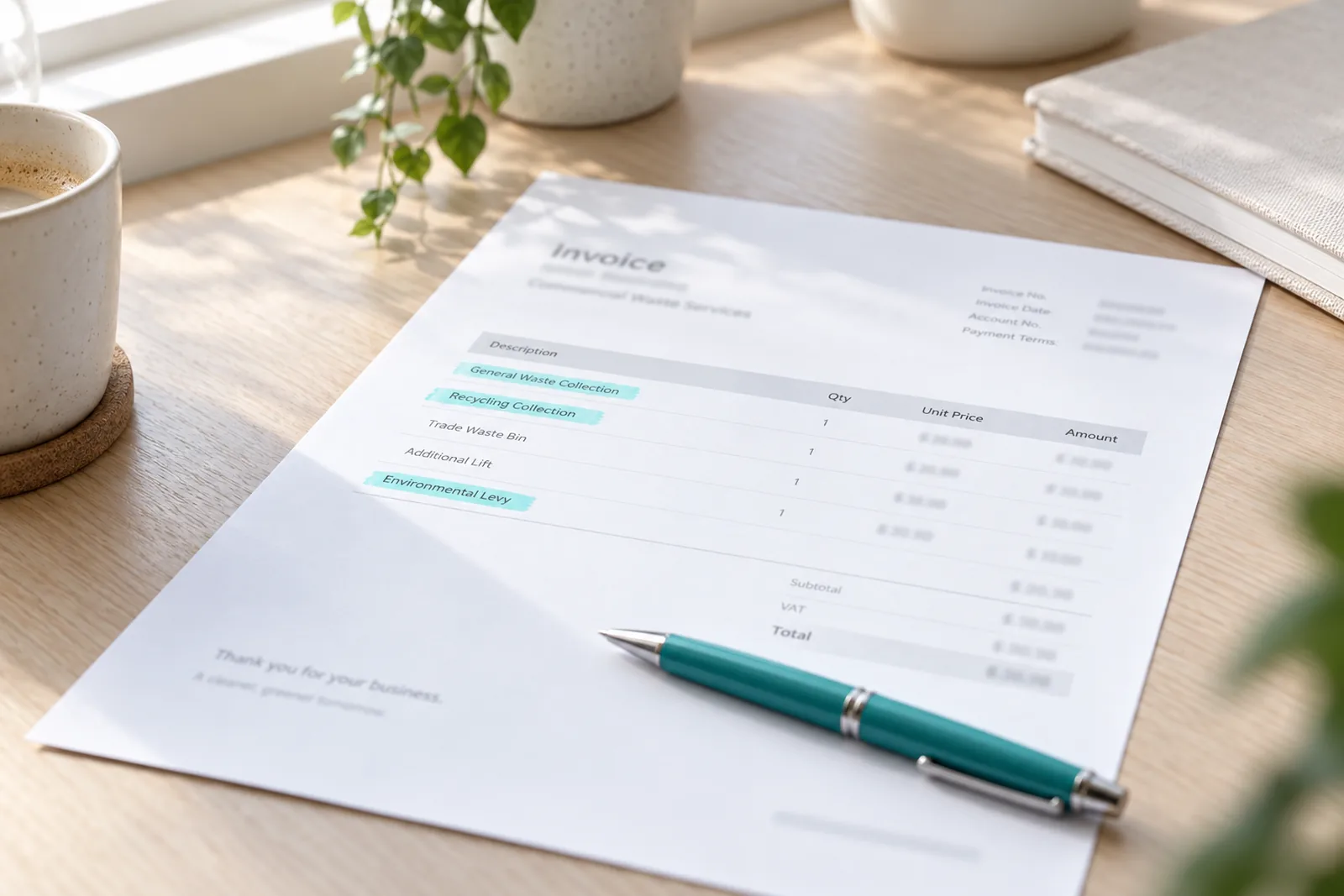
Getting wastewater handling right is squarely a matter of the General Environmental Duty (GED) — an EPA breach can reach about $2.03 million for a corporation. As an independent broker, Bundle Waste reviews your depot invoice for free, compares a network of providers to make sure a small waste stream isn't being overpriced, and is paid only from the savings we find — up to 30%.

Related Resources

Related Questions

What recycling is mandatory for Victorian businesses?+
Under Recycling Victoria, all businesses are transitioning to a four-stream system: general waste, commingled recycling, paper/cardboard, and food organics. Large food businesses generating 50+ kg/week must separate food waste. Contamination of recycling streams can result in fines and service refusal.
What are the penalties for contaminating recycling?+
Businesses face: service refusal from providers, reclassification as general waste (40–100% cost increase), surcharges of $50–200/incident, and EPA action under the GED. Material Recovery Facilities reject loads with over 10–15% contamination.
What waste do mechanic and auto repair shops generate?+
Auto shops generate: used oil (free collection 200L+), oil filters, scrap metal ($50–200/month rebate), tyres ($5–10 each), batteries (free — lead value), chemical waste (PIW). Used oil needs bunded storage with 110% containment. Monthly cost: $200–600.
How should a commercial cleaning company manage its own waste?+
Cleaning companies generate: chemical containers (triple-rinse for recycling), used mop heads and cloths (general waste or textile recycling), vacuum cleaner dust (general waste), and packaging. Chemical concentrate drums may be hazardous if not fully emptied. Return drums to suppliers where possible. Monthly depot waste: $100–300. Train staff to properly dispose of chemicals at client sites.
What waste do commercial farms near Melbourne generate?+
Peri-urban farms near Melbourne generate: organic waste (crop residue, animal waste), chemical containers (pesticides, fertilisers — potentially hazardous), plastic mulch and drip tape, packaging, and machinery waste (oil, tyres, batteries). AgriChemical drumMuster scheme provides free collection of eligible chemical containers. Farm waste is subject to the regional landfill levy of $84.78/tonne.

See exactly what you are overpaying

Bundle Waste reviews your current waste invoices and benchmarks them against a network of Melbourne providers — free, with a written report in 5 business days. You will see what you pay now, where the hidden charges are, and the rate we can negotiate. You only pay from the savings we find: no savings, no fee.

Get my free waste audit →

Updated 25 June 2026