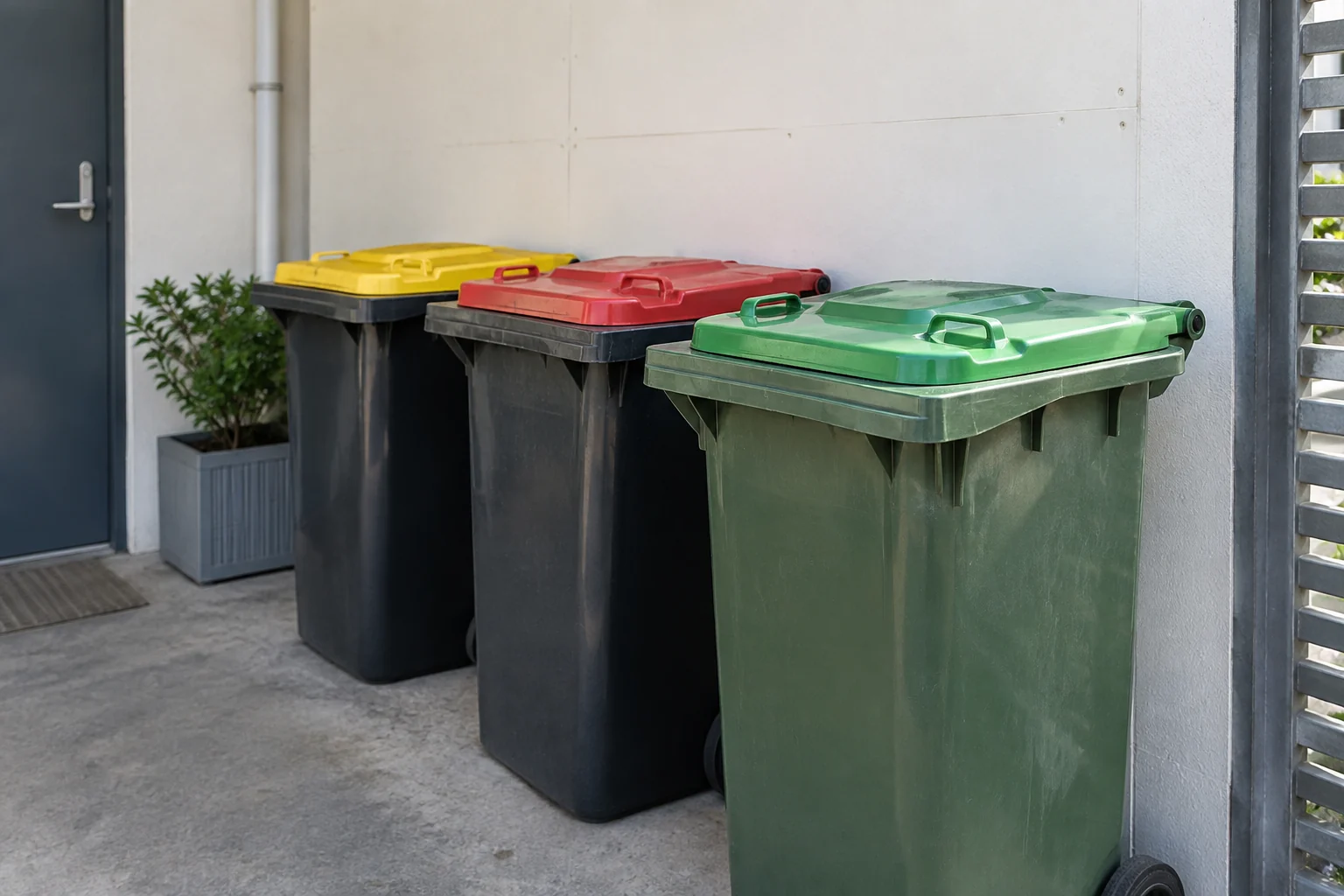
NDIS & Disability Service Provider Waste Management

NDIS & Disability Service Provider Waste Management

Managing clinical, sharps and continence waste across in-home, community and SIL care while meeting the NDIS Practice Standards.

Disability and in-home care providers face a waste problem that does not look like anyone else's. Your "facility" is often a participant's own home, a shared SIL property, or a community hub - and the clinical, sharps and continence waste generated there still has to be classified, contained and disposed of to the same standard EPA Victoria expects of a hospital. This guide explains how NDIS and disability service providers manage that waste safely, where the NDIS Practice Standards apply, and how to stop overpaying for it.

Why NDIS waste is different from aged care

Aged care is largely a single-site problem: one building, predictable bins, scheduled collections. NDIS and disability support is the opposite. The same provider might deliver personal care in twenty private homes across Melbourne on Monday, run a Supported Independent Living (SIL) house in Frankston on Tuesday, and staff a community day programme in the CBD on Wednesday. Waste is generated wherever your support workers are, and most of those locations have no dedicated clinical waste service at all.

That fragmentation is the core challenge. Sharps used for insulin or anticoagulant injections in a participant's home cannot legally go into the household kerbside bin. Continence products from high-support participants pile up fast. Wound care, PEG feeding consumables and catheter bags appear in settings never designed to handle them. Getting this right is both a safety obligation to your workers and participants and a direct requirement of the NDIS Practice Standards. For facility-based operators, our companion guide on aged care waste compliance covers the single-site equivalent.

The waste streams you actually generate

Across in-home, SIL and centre-based supports, disability providers typically deal with five streams. Classifying each one correctly is where the money is - and where the compliance risk sits.

  • Sharps - insulin needles, lancets, auto-injectors. Must go into rigid, AS/NZS 23907:2023-compliant puncture-resistant containers, never filled past the marked line, collected by a licensed carrier.
  • Clinical waste - dressings or pads visibly contaminated with blood or body fluids, catheter and drainage bags, and anything from a participant with a diagnosed communicable infection. Yellow-bagged, treated by an approved facility.
  • Continence waste - routine pads and incontinence products with no blood or infectious contamination. This is general waste in Victoria, not clinical - the single most expensive mistake providers make.
  • Pharmaceutical waste - expired or unused medications. Returned via the Return Unwanted Medicines (RUM) programme or a licensed service, never flushed or binned.
  • General waste and recycling - packaging, PPE that isn't contaminated, food, paper. The bulk of your volume by weight.

Continence waste: the classification that costs you most

Routine used continence products, without visible blood or a known infectious condition, are general waste under EPA Victoria guidelines. Many providers default everything from a participant with continence needs into clinical bins out of caution - and pay clinical rates for material that legally belongs in general waste. The gap is dramatic.

ScenarioClassificationIndicative cost
Routine continence pads (no blood/infection)General waste~$0.15-$0.25 / kg
Same pads sent as clinicalClinical waste~$0.80-$1.50 / kg
Pads contaminated with blood / infectious caseClinical waste (correctly)~$0.80-$1.50 / kg

For a SIL house supporting several high-needs residents, that misclassification can run into thousands of dollars a year per property. Across a multi-site provider it compounds quickly. Our deeper breakdown of clinical and medical waste classification shows exactly where the EPA Victoria line sits between clinical and general.

In-home and community: the hard part

Disposing of clinical waste from a private home is the situation no generic waste contract covers well. A participant's address is not your premises, kerbside bins can't take sharps or clinical waste, and your support workers should not be transporting clinical waste in their own cars between jobs - doing so can breach prescribed industrial waste transport rules and your own insurance.

Practical models that work:

  • Community sharps drop-off for low-volume participants, paired with provider-supplied compliant containers and a documented handling procedure.
  • Scheduled clinical waste pickup from designated SIL houses and hubs, with in-home waste consolidated to those points under a controlled, recorded process - not ad hoc in a worker's boot.
  • A single licensed carrier across all sites so consignment records, volumes and treatment destinations are tracked in one place for audit.

What the NDIS Practice Standards require

Waste management sits inside the NDIS Practice Standards and Quality Indicators - principally around safe environments and the management of waste, infectious and hazardous substances. Registered providers are expected to have documented policies and procedures that protect participants, workers and the public from exposure. In practice, a Commission auditor will look for:

  • A written waste management policy covering each stream and each setting (in-home, SIL, centre)
  • Worker training records for segregation, sharps handling and spill response, with PPE provided
  • Incident reporting and investigation for waste-related events, including needle-stick injuries
  • Evidence of a licensed carrier and treatment pathway for clinical and sharps waste

Alongside the Practice Standards, EPA Victoria's Environment Protection Act 2017 treats clinical waste as prescribed industrial waste - so it must be tracked, transported by licensed carriers and treated at approved facilities. WorkSafe Victoria's OHS duties apply to every worker who handles it. Victorian penalty units sit at $203.51 for 2025-26, and serious environmental breaches carry company penalties into the millions, so this is not a box-ticking exercise.

How NDIS funding treats waste

Here is the point most providers get wrong financially: routine clinical and sanitary waste disposal is generally an operating cost the provider absorbs, not a separately claimable NDIS line item. House cleaning sits under Assistance with Daily Life, but ongoing clinical waste collection is part of your cost of delivering registered supports. That means every dollar you overpay on misclassified waste comes straight out of your margin - it is not passed through to a participant's plan. Tightening waste classification and right-sizing collections is one of the cleaner ways to protect provider viability without touching the quality of support.

Cutting the cost without cutting compliance

Most disability providers we review are overspending for three reasons: continence waste billed as clinical, separate contracts at every site with no volume leverage, and collection frequencies set years ago that no longer match participant numbers. The fixes are straightforward.

  • Audit your clinical bins for two weeks - if routine continence pads dominate, reclassify and save immediately.
  • Consolidate carriers across all sites for volume pricing and single-source audit records.
  • Right-size collections to actual generation, by property and by stream.
  • Benchmark your rates - independent disability operators rarely have the buying power of a large hauler's biggest accounts, but a broker does.

As an independent broker, Bundle Waste is not a hauler - we benchmark a network of providers and renegotiate on your behalf, paid only from the savings we find. We arrange the full disability mix - sharps, clinical, continence, general and document destruction - across single or multi-site operators, including in-home and SIL settings. See our healthcare and clinical waste service, or book a free waste audit and we'll show you the savings before you change anything.

Frequently asked questions

Is clinical or sanitary waste disposal claimable under an NDIS plan?+
Generally no. Routine clinical and sanitary waste collection is treated as an operating cost the registered provider absorbs as part of delivering supports, not as a separately claimable line item in a participant's plan. House cleaning sits under Assistance with Daily Life, but ongoing clinical waste disposal does not. That is why overpaying on waste hits your provider margin directly - it isn't passed through to the plan.
Is continence (incontinence) waste classified as clinical waste in Victoria?+
Usually not. Routine continence pads and products with no visible blood and no known infectious condition are general waste under EPA Victoria guidelines, not clinical. They only become clinical waste when contaminated with blood or generated by a participant with a diagnosed communicable infection. Defaulting all continence waste to clinical bins is the single most common cause of overspend for disability providers.
How do we legally dispose of sharps and clinical waste from a participant's own home?+
Use AS 4031-compliant sharps containers supplied by the provider, never the household kerbside bin, and arrange collection through a licensed clinical waste carrier - either via community drop-off for low volumes or scheduled pickups consolidated at designated SIL houses or hubs. Support workers should not transport clinical waste in personal vehicles, as that can breach prescribed industrial waste transport rules and insurance terms.
What do the NDIS Practice Standards require for waste management?+
Registered providers must have documented policies and procedures to protect participants, workers and the public from exposure to waste and infectious or hazardous substances. Commission auditors look for a written waste policy covering each stream and setting, worker training and PPE records, incident reporting for events like needle-stick injuries, and evidence of a licensed carrier and approved treatment pathway for clinical and sharps waste.
How is NDIS provider waste different from aged care facility waste?+
Aged care is mostly single-site with predictable bins and scheduled collections. Disability supports are dispersed across private homes, SIL houses and community hubs, most of which have no dedicated clinical waste service. The streams are similar - sharps, clinical, continence, general - but the logistics of safely collecting and tracking waste from many locations is the harder, and more expensive, problem to solve.
How much can a disability provider save on waste costs?+
Independent operators we review often save up to 30% with no loss of compliance, mainly by reclassifying continence waste correctly, consolidating carriers across sites for volume pricing, and right-sizing collection frequencies. As an independent broker paid only from the savings, Bundle Waste benchmarks a network of providers and renegotiates on your behalf - you see the projected savings before changing anything.

Related guides

See what you could save

Send us a recent waste invoice. We'll benchmark every charge against a network of Melbourne providers and show you the savings — free, no obligation, no win no fee.

Get Your Free Waste Audit →