Smart Waste Technology for Business: IoT, Sensors & Data

From fill-level sensors to AI-powered sorting — how technology is changing commercial waste management and what's actually worth the investment.

Smart waste technology has moved from concept to reality in Australian commercial waste management. IoT-enabled fill-level sensors, AI-powered contamination detection, automated route optimisation, and cloud-based waste data platforms are now commercially available — and some are delivering genuine cost savings. But the hype around "smart bins" can obscure a simpler truth: technology only adds value when applied to real operational problems. This guide cuts through the marketing to explain what works, what doesn't, and what makes financial sense for different types of businesses.

Fill-Level Sensors

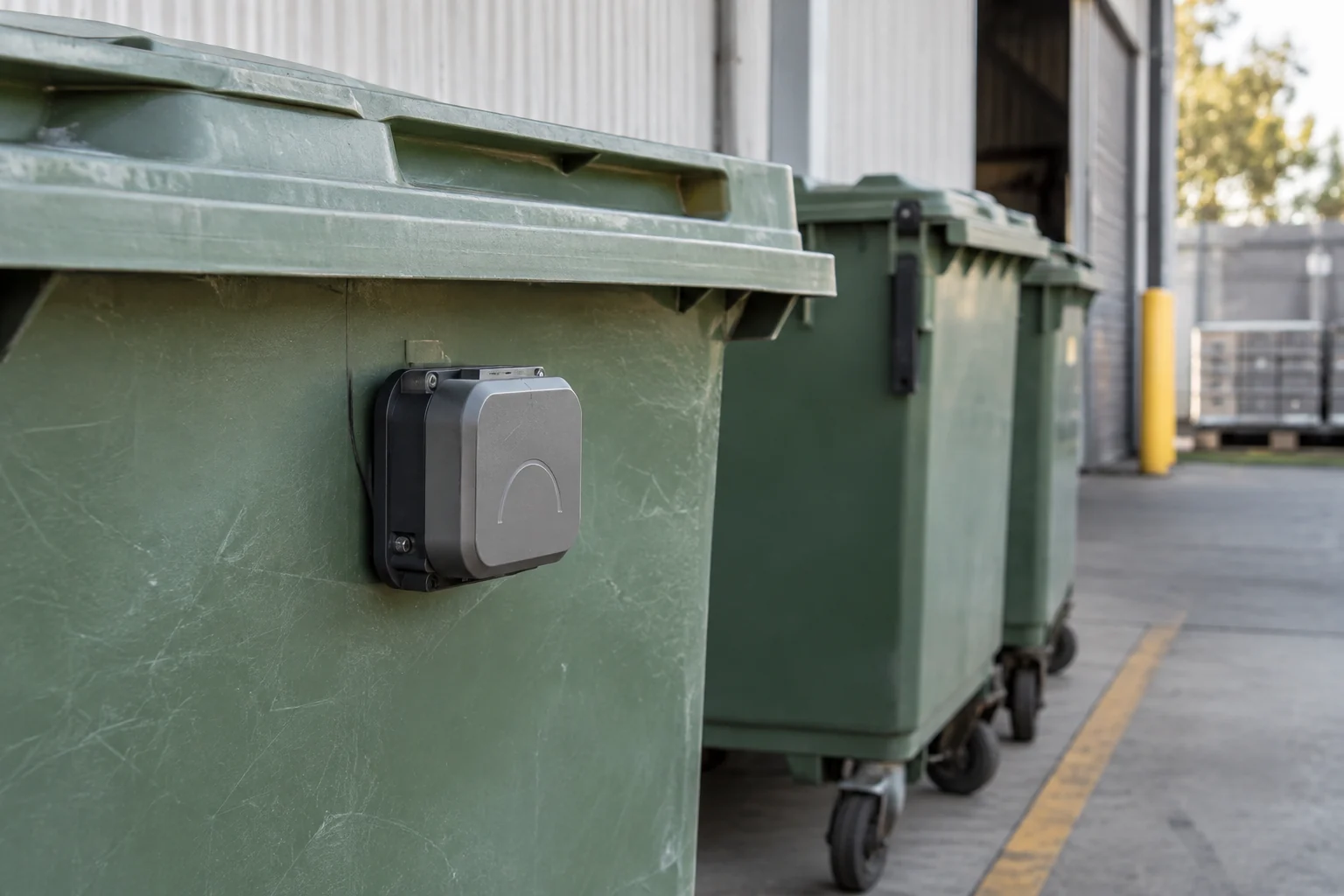
The most mature and widely deployed smart waste technology. Ultrasonic or infrared sensors mounted inside bins measure fill levels and transmit data via cellular or LoRaWAN networks to a cloud dashboard. The value proposition is straightforward: instead of collecting bins on a fixed schedule regardless of whether they are full, you collect based on actual fill levels.

For businesses with variable waste generation — seasonal operations, event venues, multi-tenancy buildings — fill-level monitoring can reduce collection frequency by 20-40%, directly cutting costs. The sensors typically cost $100-$300 per unit plus a monthly data subscription of $5-$15. For businesses with 10+ bins, the ROI can be positive within 6-12 months.

However, for businesses with consistent, predictable waste volumes — a restaurant that fills its bins at roughly the same rate every week — sensors add cost without adding much value. If your current collection schedule already matches your actual need, technology will not improve it.

Route Optimisation

More relevant to waste providers than individual businesses, but worth understanding because it affects your costs. AI-powered route optimisation uses fill-level data, traffic patterns, and vehicle capacity constraints to calculate the most efficient collection routes. Providers using route optimisation can service more customers with fewer trucks, reducing their costs — savings that should flow through to competitive pricing.

If your waste provider is not using any form of route optimisation, they may be operating with higher costs than necessary — costs that are baked into your rates.

Contamination Detection

Camera-based systems that photograph bin contents at the point of collection, using AI to identify contamination. Some systems can flag contaminated loads before they reach the MRF, reducing rejection rates. Others provide contamination reports to businesses, showing exactly what is being mis-sorted and where.

This technology is still relatively new in Australia but is being piloted by several major providers. For businesses struggling with contamination charges, the data these systems provide can be invaluable for targeting staff training and signage improvements.

Waste Data Platforms

Cloud-based dashboards that aggregate data from your waste provider (collection dates, weights, volumes, costs) into a single view. For businesses managing multiple waste streams or multiple sites, these platforms provide visibility that paper invoices and spreadsheets cannot. Key capabilities include trend analysis (is your waste volume increasing or decreasing?), cost benchmarking, diversion rate tracking, and sustainability reporting data.

Some waste providers offer proprietary dashboards included in their service. Third-party platforms like Thinlayer, WastePlace, and Rubicon also operate in the Australian market. The cost ranges from free (provider-included) to $200-$1,000 per month for enterprise platforms.

Compaction Technology

Solar-powered compacting bins (like BigBelly) compress waste inside the bin, increasing capacity by 5-8x and dramatically reducing collection frequency. These make economic sense in high-foot-traffic locations — shopping centres, public spaces, university campuses — where bins fill quickly and collection is expensive or disruptive.

For standard commercial premises, compacting bins are rarely cost-effective — the unit cost ($3,000-$7,000+) is difficult to justify when a simple bin configuration review could achieve the same collection reduction at zero capital cost.

What's Actually Worth Investing In?

For most Melbourne businesses, the best return on investment in waste management is not technology — it is expertise. A waste audit, proper stream separation, right-sized bins, and a competitively tendered contract will deliver more savings than any sensor or platform. Technology should come after these fundamentals are in place, not as a substitute for them.

That said, smart waste technology makes financial sense when:

  • You manage 20+ bins across multiple locations and cannot physically monitor them all
  • Your waste volumes are highly variable (seasonal, event-driven)
  • You have specific sustainability reporting requirements that demand granular waste data
  • You are paying contamination charges and need data to identify the source

How Bundle Waste Can Help

We help businesses cut through smart waste marketing to identify what will actually reduce costs. Often, the answer is simpler than technology — but when sensors or platforms make sense, we can recommend providers and integrate them into your waste management strategy. Contact us for a free assessment.

Smart Waste Technology for Business — FAQ

What are IoT fill-level sensors and how do smart bins work?

Fill-level sensors are ultrasonic or infrared devices mounted inside a bin that measure how full it is and transmit the data via cellular or LoRaWAN networks to a cloud dashboard. Instead of collecting bins on a fixed schedule regardless of need, your provider empties them based on actual fill levels. It is currently the most mature and widely deployed smart waste technology commercially available to Australian businesses.

How much do fill-level sensors cost and when do they pay for themselves?

Sensors typically cost $100 to $300 per unit plus a monthly data subscription of around $5 to $15. For businesses running 10 or more bins, the return can turn positive within 6 to 12 months. They often cut collection frequency by 20 to 40% where waste volumes are variable, but add cost without value if your volumes are already steady and predictable.

Does smart waste technology help my business meet Victorian compliance or sustainability reporting?

It can. Waste data platforms aggregate collection dates, weights, volumes and costs into one view, giving the granular diversion-rate and trend data that sustainability reporting demands. Contamination-detection cameras also help you target staff training. Technology supports reporting, but it does not replace EPA Victoria duties such as the General Environmental Duty or correct priority-waste classification, which still rest on you.

Is smart waste technology actually worth the investment for a small Melbourne business?

Often not. For most Melbourne businesses the best return is expertise, not hardware: a waste audit, proper stream separation, right-sized bins and a competitively tendered contract typically deliver more savings than any sensor or platform. Technology makes sense when you manage 20-plus bins across sites, have highly variable volumes, or are paying contamination charges and need data to find the source.

Can a waste broker help me decide whether smart bins or sensors are worth it?

Yes. As an independent broker, Bundle Waste cuts through smart waste marketing to identify what will genuinely reduce your costs, often something simpler than technology. Where sensors or platforms do make sense, we can recommend providers and integrate them into your strategy. We compare and negotiate provider rates for Melbourne businesses, frequently on a no-win, no-fee basis.

Related Articles

Want smarter waste management?

We combine practical expertise with the right technology to deliver measurable waste cost reductions.

Get Your Free Audit →