Manufacturing
3 min read
By Pedro Carreira
Updated 25 June 2026
Wholesale bakeries generate higher waste volumes than retail bakeries.
Ingredient packaging (flour bags, sugar bags) is the largest stream, followed by cardboard delivery boxes and production waste (dough scraps, burnt product), with smaller volumes of pallet wrap and general waste. A bakery producing 5,000+ items daily spends $500–1,500/month.
Dough waste and burnt product should go to food organics composting. Flour bags are recyclable if clean.
Key Numbers
- Daily production: 5,000+ items
- Monthly waste cost: $500–1,500
- Landfill levy (metro 2025–26): $169.79/tonne
- FOGO statewide: by 2030
- Independent-broker saving: up to 30%
What You Need to Know
A wholesale bakehouse pays twice for the same mistake: every tonne of dough scraps and burnt product sent to landfill carries the $169.79/tonne metro levy, and the bin space it occupies pushes up lift frequency. Right-streaming the organics is the single biggest lever.
| Stream | Best destination |
|---|
| Flour and sugar bags | Recycling if clean and dry |
| Cardboard delivery boxes | Cardboard recycling or compactor |
| Dough scraps, burnt product | Food organics composting |
| Pallet wrap | Soft-plastic or general |
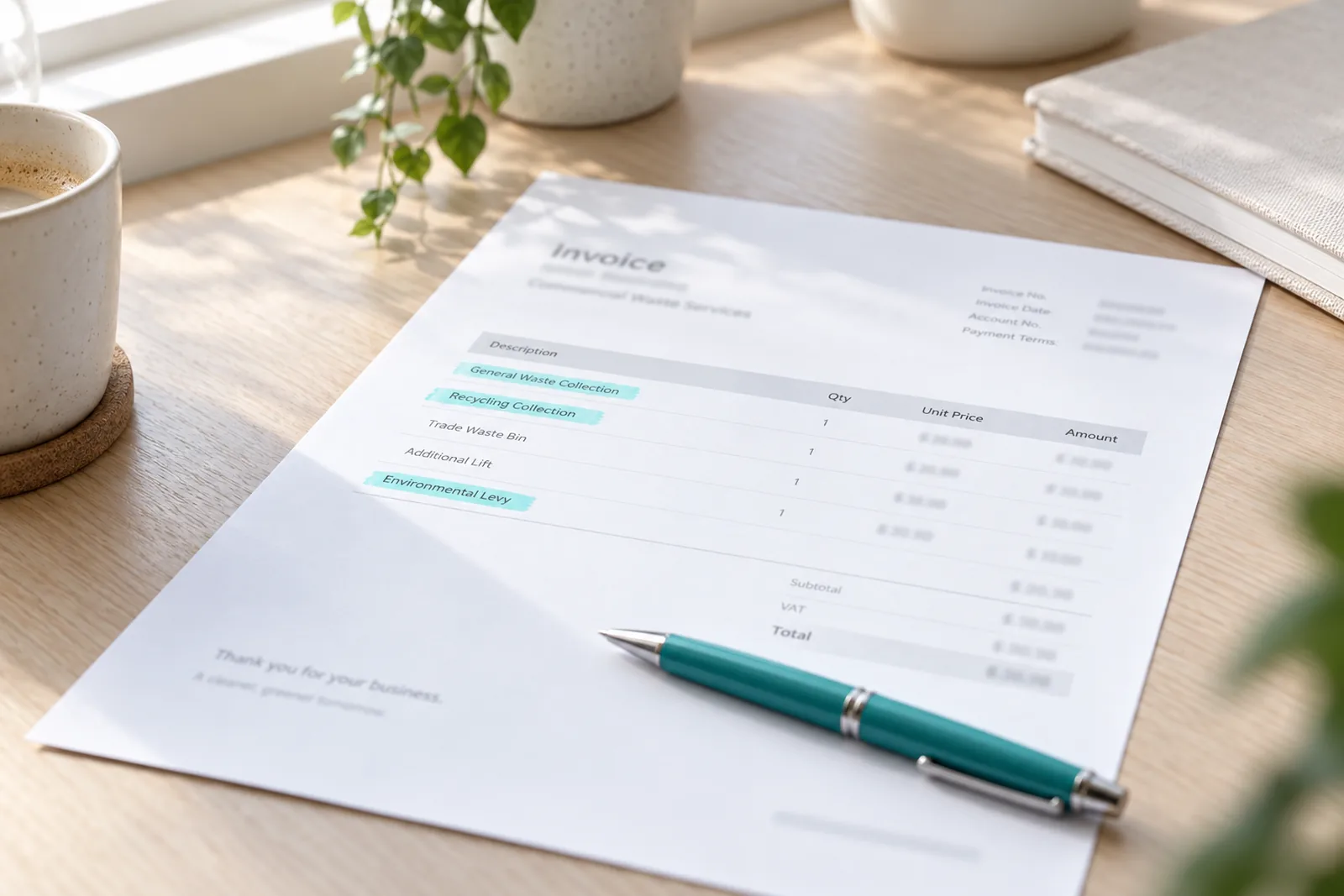
Diverting food waste also gets ahead of the FOGO (Food Organics Garden Organics) Policy, which is rolling out statewide by 2030. As an independent broker, Bundle Waste audits your bakehouse invoice for free, compares a network of providers to right-size the organics and cardboard streams, and is paid only from the savings we find.
Related Resources
Related Questions
What waste does a Melbourne commercial coffee roaster generate?+
Coffee roasters generate: chaff from roasting (5–10% of green bean weight — compostable), defective beans, packaging (jute sacks — reusable/recyclable, cardboard), and general waste. Chaff is excellent compost material. Jute coffee sacks sell for $2–5 each to crafters or can be composted. Monthly waste: $100–400. Trade waste agreement needed if wet processing is involved.
How should a Melbourne chocolate factory manage waste?+
Chocolate manufacturers generate: cocoa shell waste (compostable), off-spec product (donate to food rescue or composting), packaging, foil wrapping waste, and general waste. Cocoa shells make excellent garden mulch — partner with local garden centres. Off-spec chocolate suitable for donation saves both waste costs and provides tax benefits. Monthly waste: $200–600.
How should a Melbourne vertical farm manage waste?+
Vertical farms generate: crop residue (compostable), spent growing media (depending on type — some recyclable), nutrient solution waste, plastic packaging, and equipment waste (LED lights — e-waste). Crop residue volume is high relative to facility size. Nutrient runoff must not enter stormwater. Monthly waste: $200–600. Composting crop residue on-site or partnering with local farms is most cost-effective.
How should a Melbourne commercial honey producer manage waste?+
Honey producers generate: beeswax cappings (valuable — sell or process into candles/wraps at $15–30/kg), damaged frames and boxes (timber recycling), packaging, and general waste. Beeswax is the primary byproduct and should never be treated as waste — it has significant value. Monthly general waste: $50–150. Damaged super boxes can be chipped for biomass. Ensure chemical treatments are disposed of appropriately.
What waste does a Melbourne commercial spice blending company generate?+
Spice blenders generate: packaging waste from raw material bags, product dust from blending (extracted by ventilation — general waste), off-spec product (compostable or donate to animal feed), and general waste. Packaging from raw material bags is the largest stream, followed by extracted product dust and off-spec product. Spice dust is a combustion hazard — proper extraction and disposal is an OHS requirement. Monthly waste: $100–400. Clean ingredient bags (paper/plastic) are recyclable if uncontaminated.
See exactly what you are overpaying
Bundle Waste reviews your current waste invoices and benchmarks them against a network of Melbourne providers — free, with a written report in 5 business days. You will see what you pay now, where the hidden charges are, and the rate we can negotiate. You only pay from the savings we find: no savings, no fee.
Get my free waste audit →
Updated 25 June 2026