Manufacturing
2 min read
By Pedro Carreira
Updated 25 June 2026
Spice blenders generate: packaging waste from raw material bags, product dust from blending (extracted by ventilation — general waste), off-spec product (compostable or donate to animal feed), and general waste.
Packaging from raw material bags is the largest stream, followed by extracted product dust and off-spec product. Spice dust is a combustion hazard — proper extraction and disposal is an OHS requirement.
Monthly waste: $100–400. Clean ingredient bags (paper/plastic) are recyclable if uncontaminated.
Key Numbers
- Monthly waste cost: $100–400
- Largest stream: Raw-material bag packaging
- Spice dust: Combustion hazard (OHS)
- Metro landfill levy 2025–26: $169.79/tonne
What You Need to Know
In a spice-blending operation the waste profile is led by packaging, but the real management priority is the extracted product dust — it is both a cost and a safety issue.
- Raw-material bag packaging — the largest stream; clean paper and plastic bags are recyclable if uncontaminated.
- Product dust from blending — extracted by ventilation; a combustion hazard, so proper extraction and disposal is an OHS requirement, not optional.
- Off-spec product — compostable or donate to animal feed.
- General waste — the residual stream.
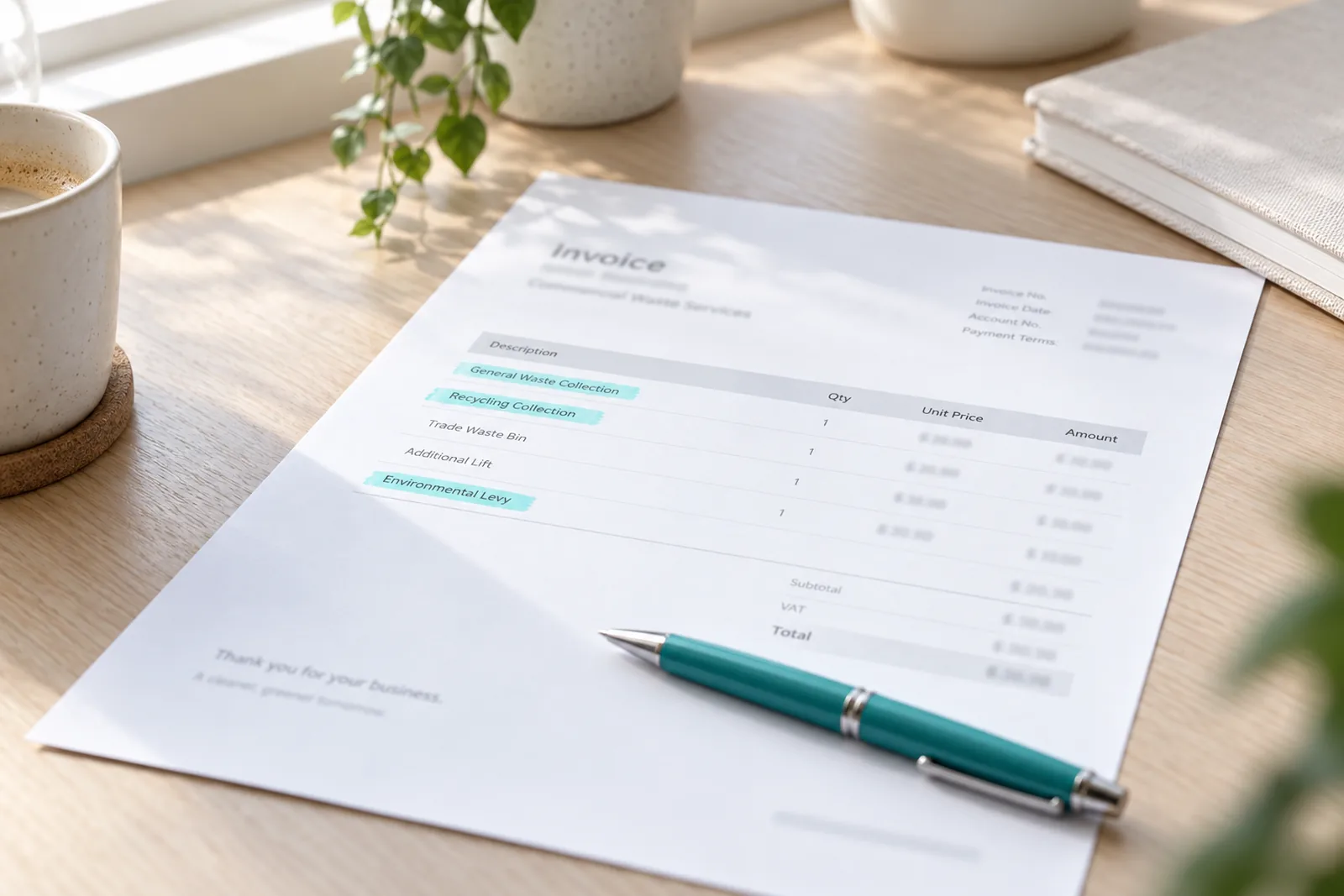
Diverting off-spec product and clean organics from landfill supports Victoria's FOGO (Food Organics Garden Organics) Policy, the statewide push to keep food organics out of landfill. With total waste at $100–400/month and most of it recyclable or compostable, an over-specified general bin is the usual overcharge. As an independent broker, Bundle Waste audits your invoice for free and compares a network of providers to match bins to your real streams, paid only from the savings we find.
Related Resources
Related Questions
How should a Melbourne commercial kombucha brewery manage waste?+
Kombucha breweries generate: SCOBY waste (compostable — can be given to home brewers or composted), spent tea leaves (compostable), fruit pulp from flavouring (compostable), glass breakage, packaging, and trade waste from wash-down. Most waste streams are compostable. Trade waste agreements needed for production wash-down. Monthly waste: $150–500. Partner with local composters for SCOBY and fruit waste.
What waste does a Melbourne commercial pasta maker generate?+
Fresh pasta makers generate: flour and semolina dust (ventilation extracted — general waste), dough scraps and off-cuts (can be reworked or composted), egg shells (compostable), packaging, and general waste. Dough waste that cannot be reworked should go to food organics composting. Monthly waste: $150–400. HACCP requirements mandate pest-proof waste storage. Clean flour bags are recyclable.
How should food manufacturers manage waste?+
Food manufacturers generate: production waste (5–15% of raw materials), packaging, wash-down water (trade waste), expired product. Mid-size manufacturer: $2,000–8,000/month. Key savings: production waste to animal feed/composting, cardboard baling.
How should wineries manage waste?+
Wineries generate: grape marc/pomace, lees, chemical waste, packaging, wastewater (high BOD). Marc can be composted or used as animal feed. Trade waste agreements required. Mid-size winery: $500–2,000/month.
What waste does a Melbourne commercial bakehouse (wholesale) generate?+
Wholesale bakeries generate higher waste volumes than retail bakeries. Ingredient packaging (flour bags, sugar bags) is the largest stream, followed by cardboard delivery boxes and production waste (dough scraps, burnt product), with smaller volumes of pallet wrap and general waste. A bakery producing 5,000+ items daily spends $500–1,500/month. Dough waste and burnt product should go to food organics composting. Flour bags are recyclable if clean.
See exactly what you are overpaying
Bundle Waste reviews your current waste invoices and benchmarks them against a network of Melbourne providers — free, with a written report in 5 business days. You will see what you pay now, where the hidden charges are, and the rate we can negotiate. You only pay from the savings we find: no savings, no fee.
Get my free waste audit →
Updated 25 June 2026