Event & Venue Waste Management in Melbourne

Conferences, weddings, concerts, and corporate events generate enormous waste in concentrated timeframes. Here's how to manage it efficiently.

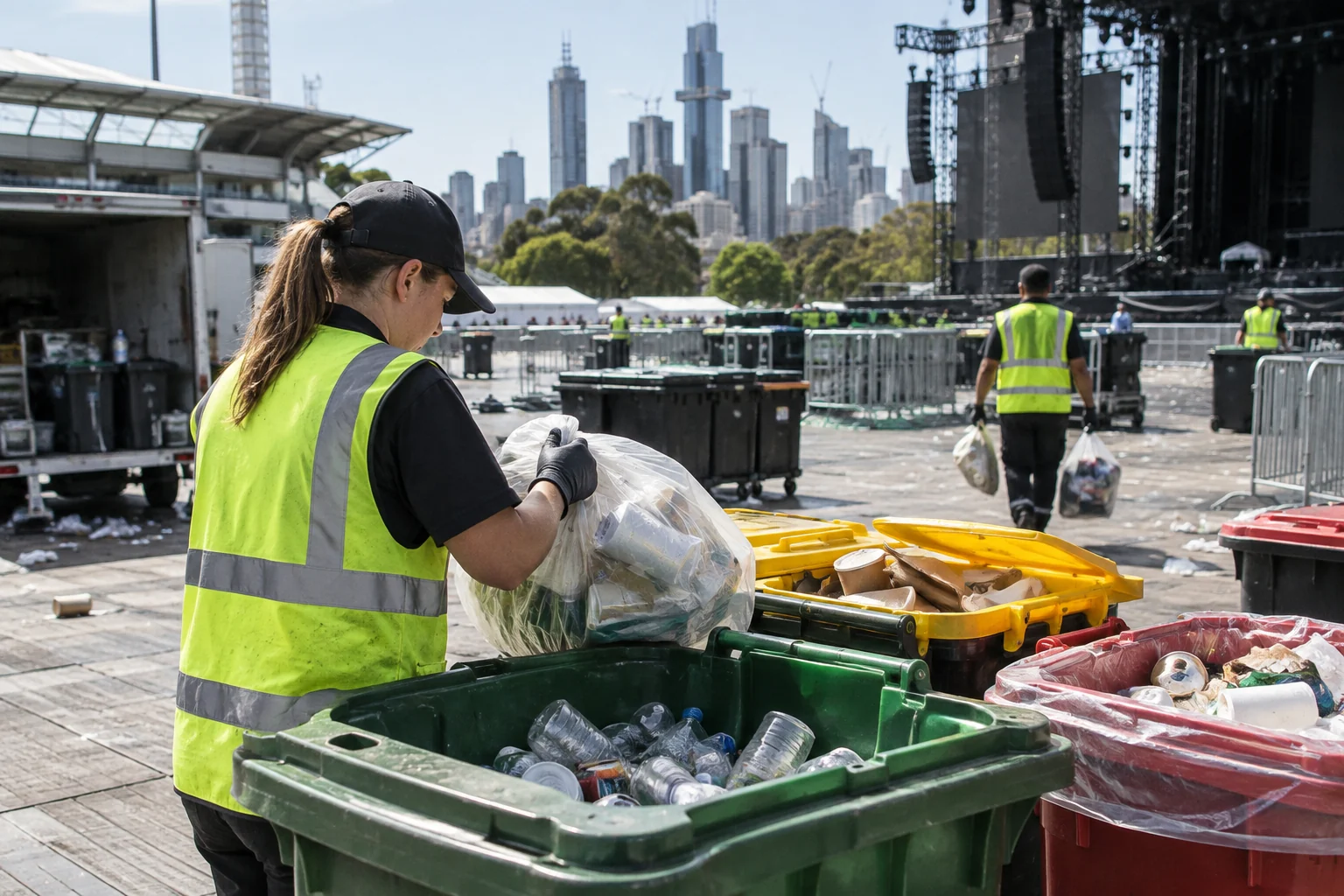
Melbourne is Australia's events capital — from major sporting events at the MCG and Melbourne Park to thousands of conferences, weddings, festivals, and corporate functions held across the city's venues every year. Events generate waste at a scale and speed that normal waste management systems are not designed for. A single 500-person conference can produce 200-400 kilograms of waste in a day. A multi-day music festival can generate tens of tonnes.

For venue operators and event organisers, waste management is simultaneously a cost challenge, a compliance requirement, and increasingly a brand expectation. Attendees notice overflowing bins, and corporate clients increasingly require waste diversion data as part of their event sustainability reporting.

Event Waste Streams

Food and Beverage Waste

The largest waste stream at most events. Plate scrapings, uneaten food, drink cups, bottles, cans, food packaging, and servingware. For catered events, food waste alone can account for 40-60% of total waste by weight. Organic waste collection is essential for high-volume food events.

Single-Use Serviceware

Cups, plates, cutlery, and containers — particularly problematic because they are often a mix of recyclable, compostable, and non-recyclable materials. Switching to compostable serviceware simplifies waste sorting but only works if you have a FOGO or commercial compost collection in place.

Beverage Containers

Bottles and cans are valuable under CDS Vic (10 cents each). A 1,000-person event serving drinks can generate 2,000-5,000 eligible containers — $200-$500 in refunds from a single event.

Setup and Bump-Out Waste

Cardboard, pallet wrap, timber, cable ties, signage, and decor materials generated during setup and pack-down. This waste is often bulkier but less frequent than event-day waste, and is largely recyclable if separated.

Planning Event Waste Management

  1. Estimate volumes: Use a per-person waste factor. For catered events, estimate 0.5-1kg per person per day. For festivals with food vendors, estimate 1-2kg per person per day
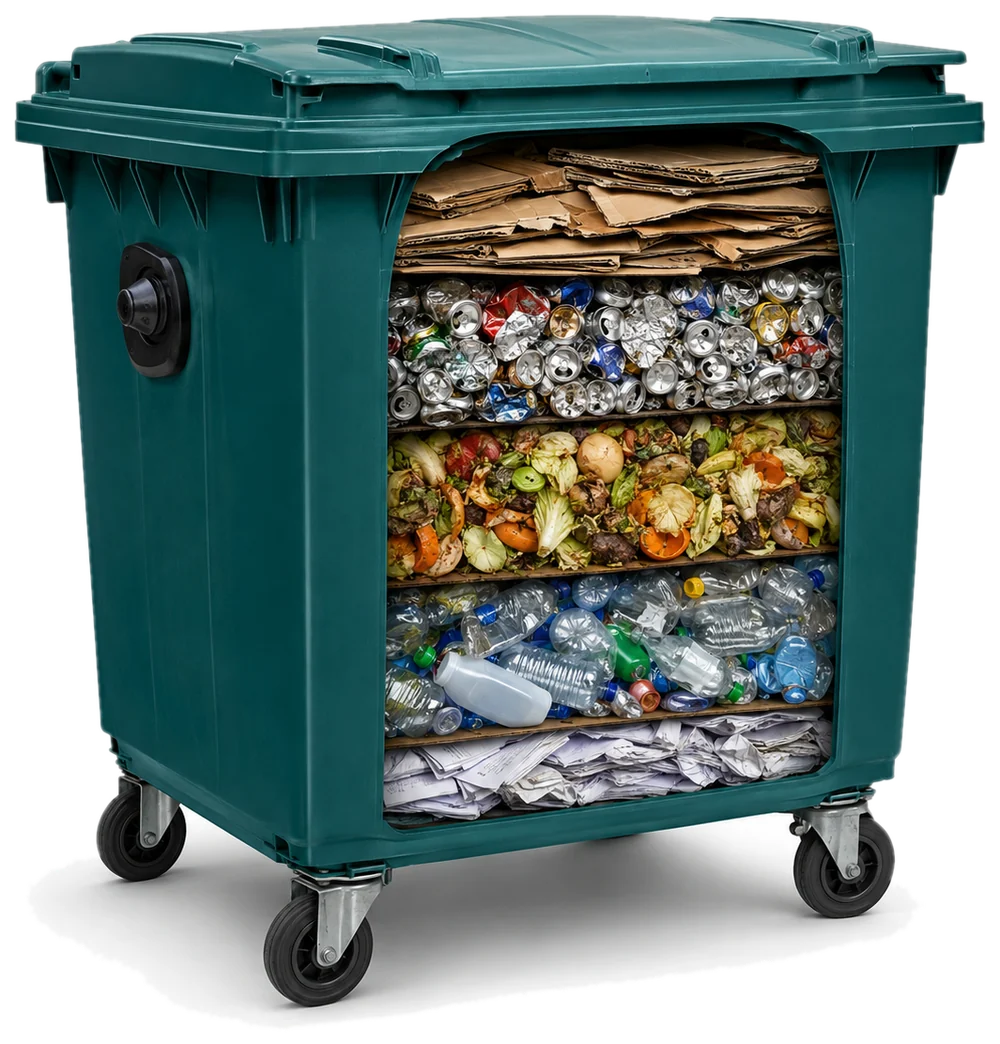
  2. Determine waste streams: At minimum, set up general waste, co-mingled recycling, and glass. Add organics if food waste is significant. Add CDS container collection if beverage volumes justify it
  3. Place bins strategically: Bins at every exit point, every food service area, and every 50 metres in open-air venues. Always pair recycling with general waste — never put one without the other
  4. Use visual signage: At events, attendees make split-second bin decisions. Large, colour-coded, picture-based signs are essential. Text-only signs fail in event settings
  5. Plan for post-event: Arrange post-event collection within 24 hours. Waste left overnight attracts pests and complaints

Reducing Event Waste Costs

Divert from general waste. Every kilogram diverted from general waste to recycling or organics avoids the landfill levy ($169.79/tonne). For a large event generating 2 tonnes of waste, diverting 60% from landfill saves over $200 in levy costs alone — before considering the lower collection rates for recycling and organics.

Capture CDS refunds. Set up dedicated container collection bins and engage a commercial CDS collector. For music festivals and sporting events, CDS refunds can generate thousands of dollars.

Negotiate event-specific rates. If your venue holds regular events, negotiate event waste as part of your overall waste contract rather than paying ad hoc rates for additional bins and collections.

Use a waste partner. A waste partner can coordinate event waste requirements across multiple providers, ensuring you have the right bins, the right collection schedule, and the right pricing.

Sustainability Reporting for Events

Corporate event organisers increasingly require waste diversion data. If you operate a venue, being able to provide waste weight data broken down by stream (general waste, recycling, organics) and calculated diversion rates is a competitive advantage. Ask your waste provider for weight data per collection — not all providers offer this, but the good ones do.

How Bundle Waste Can Help

We help Melbourne venues and event organisers plan and manage event waste — from one-off functions to regular event calendars. We handle bin sizing, collection scheduling, provider coordination, and post-event reporting. Contact us for a free assessment.

Event & Venue Waste Management Melbourne — FAQ

What does event waste management involve for a Melbourne venue?

It means planning for waste generated fast and in concentrated bursts. A 500-person conference can produce 200-400kg in a day, and a multi-day festival tens of tonnes. The job covers estimating volumes, separating streams (general waste, co-mingled recycling, glass, organics, CDS containers), placing and signing bins well, and arranging post-event collection within 24 hours.

How much can diverting event waste from landfill actually save?

Every kilogram kept out of general waste avoids Victoria's metro landfill levy of $169.79 per tonne. For a 2-tonne event, diverting around 60% from landfill typically saves over $200 in levy alone, before the lower collection rates that recycling and organics usually attract. Diversion is where most event waste savings genuinely come from.

Can we make money back from drink containers at our event?

Often yes. Most bottles and cans are eligible under CDS Vic at 10 cents each, though wine and pure-spirit glass are excluded. A 1,000-person event can generate 2,000-5,000 eligible containers, roughly $200-$500 back. For festivals and sporting events, dedicated container bins plus a commercial CDS collector can return thousands of dollars.

What bins and signage should an event set up?

At minimum, set up general waste, co-mingled recycling and glass, adding organics where food waste is significant and CDS container collection where beverage volumes justify it. Always pair recycling with general waste, never one alone. Use large, colour-coded, picture-based signage, as attendees decide in split seconds and text-only signs typically fail at events.

Can a waste broker help coordinate event waste across providers?

Yes. Bundle Waste is an independent broker, not a collector, so we compare and negotiate provider rates on your behalf, often on a no-win, no-fee basis. We handle bin sizing, collection scheduling, multi-provider coordination and post-event reporting, including waste weight data by stream so you can show diversion rates for corporate sustainability reporting.

Related Articles

Managing event waste?

We coordinate waste management for Melbourne venues and events — bins, collection, reporting, all handled.

Get Your Free Audit →