Bundle Waste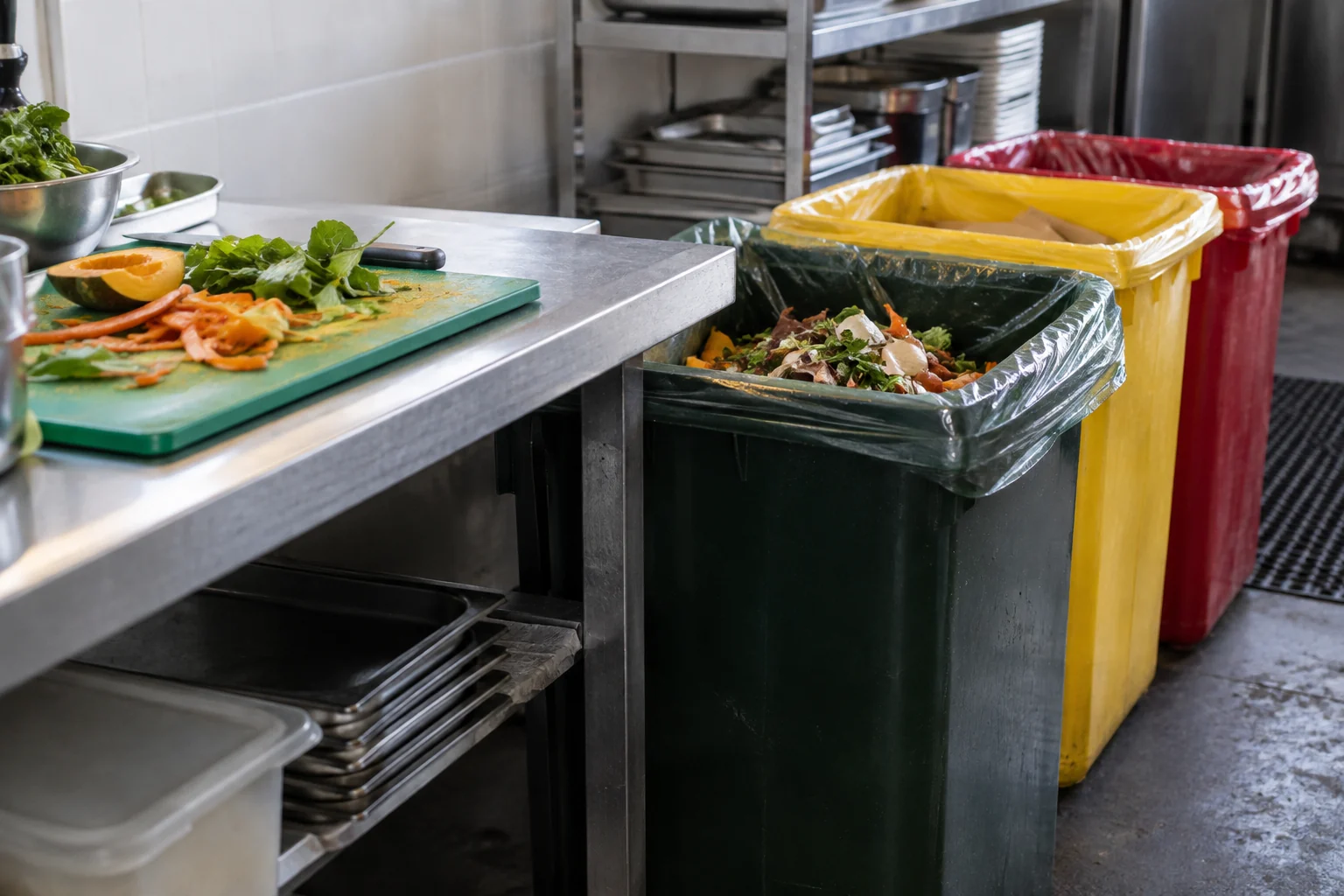
Build a restaurant collection brief around what leaves the kitchen, where it can be stored and when a vehicle can access the site. Separate everyday solid waste from used cooking oil and the liquid waste governed by your water retailer’s conditions.
Map the kitchen’s waste
| Stream | Information to capture |
|---|---|
| Food scraps | Preparation waste, plate waste, spoiled stock, busy periods and available storage. |
| Cardboard | Delivery days, flattening area and whether the material is clean and accepted. |
| Glass and containers | The actual packaging types and the collector’s acceptance/preparation rules. |
| Used cooking oil | Container, collection access, handling instructions and written charges or credits. |
| Grease interceptor | Water-retailer consent, maintenance requirements and pump-out records. |
| Residual rubbish | Materials remaining after approved separation and the collector’s exclusions. |
The main streams, one by one
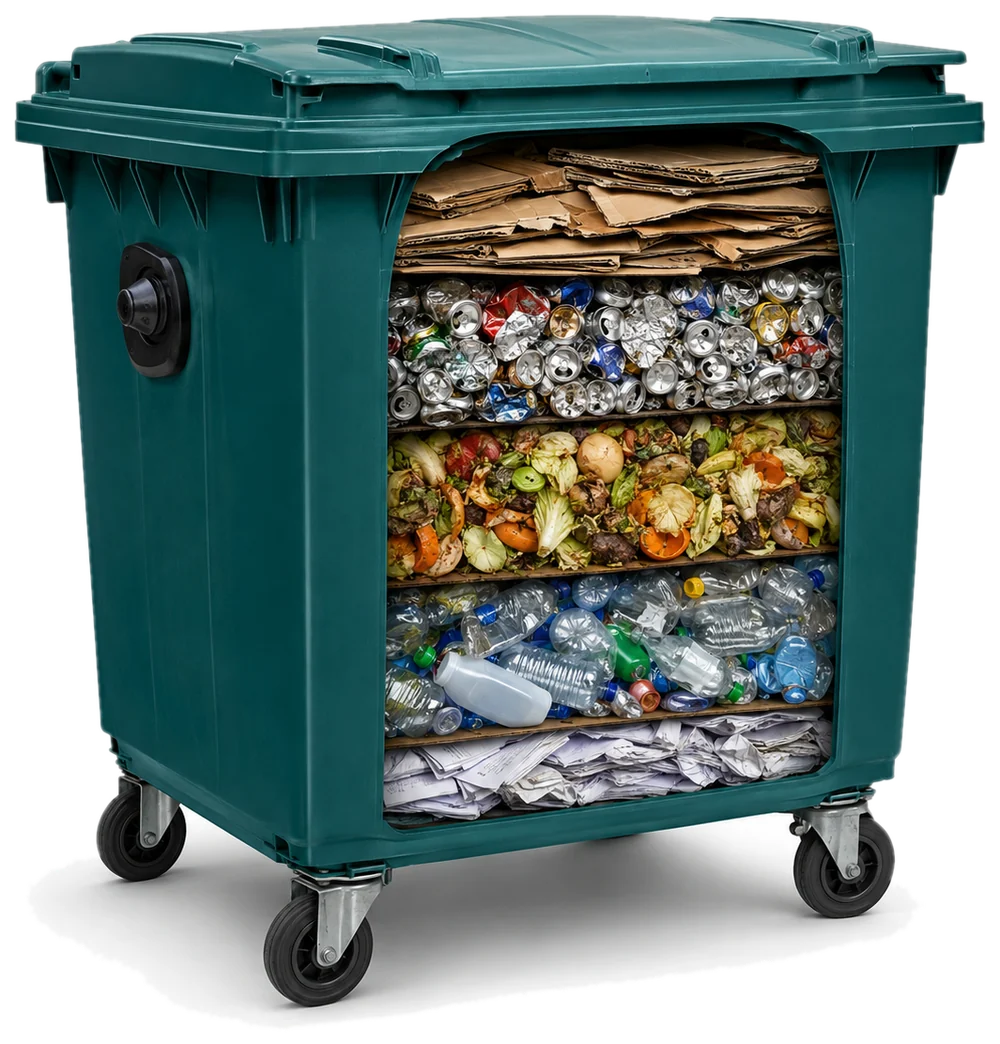
A restaurant does not have a waste problem; it has five or six of them, each with a different destination and a different reason to go wrong.
Food scraps and organics
Usually the heaviest stream, and the one where the destination changes the cost. EPA Victoria charges the waste levy on waste received at a landfill — $177.19 per tonne for municipal and industrial waste at prescribed metropolitan premises in 2026-27 — so food waste accepted by a composting or organics processing facility is not carrying that levy. It carries its own collection and processing charges instead, and acceptance depends on the facility and on how clean the material is. Price the organics service against the change in the general waste service, not on its own. Source: EPA Victoria — Waste levy.
Used cooking oil
Collected separately and stored in its own container. Agree the container, where it sits, how it is accessed, the handling instructions your staff need, and — in writing — whether the arrangement carries a charge or a credit. Do not let it become the one line nobody has a document for.
Grease interceptor and trade waste
A different regime entirely: liquid waste to the sewer is governed by your water retailer, not by the bin contract. It needs its own consent, its own maintenance requirements and its own records. It is covered in the next section.
Cardboard
The bulkiest stream in most kitchens, and the easiest to get wrong. Flattening boxes is not housekeeping — it directly changes how much a container holds and therefore how often it is collected. Check with your collector whether cardboard is accepted separately at your site, what condition it has to be in, and whether wet or food-soiled cardboard is excluded.
Glass and containers
Heavy, and it changes the weight profile of whatever bin it goes in. Ask your collector which containers are accepted and in what condition. As an operator example, Cleanaway describes common recyclable containers as “glass bottles and jars, aluminium cans, steel cans, and hard plastic containers that are empty, clean, and dry” — that is one operator’s list, not a universal one, so get yours in writing. Source: Cleanaway — Commingled services for businesses and councils.
Residual rubbish
What is left once the approved separation is working. It is the stream the others are measured against: if separation is not reducing it, something in the arrangement is not being used.
Keep trade waste separate from the bin contract
South East Water’s trade-waste guidance covers consent, food and oil interceptors and associated charges within its service area. It defines trade waste as “any liquid waste, other than domestic sewage, generated from industrial, commercial, retail food, trade or manufacturing business activities”, and tells businesses that discharge it to “find out which consent you need and apply for it”. Follow the requirements of the retailer responsible for your premises. Source: South East Water — Trade waste.
Do not select a pump-out frequency from a generic restaurant article. Give the contractor your applicable consent and equipment details. Record who books maintenance and how completion is documented — South East Water operates a portal for waste transporters to record customer food and oil interceptor pump-outs, so ask your contractor how your service is recorded.
Trade waste charges are described as covering the cost of transporting, monitoring, treating and administering liquid waste from commercial and industrial businesses. They are separate from your bin invoice and should be compared separately.
What EPA Victoria expects
EPA Victoria states that if you manage or control industrial waste you must classify your industrial waste and meet the duties that apply to that classification, and that waste “must be taken to a place that is authorised to receive it (lawful place)”. Source: EPA Victoria — Understand your waste obligations and duties.
For a restaurant that translates into three practical obligations rather than paperwork for its own sake: know what each stream is, use collectors who can tell you where the material goes, and keep the records that connect a collection to a destination. Where a requirement is disputed, ask EPA or a qualified adviser to identify the current provision rather than relying on a general summary. This guide does not certify a waste classification for your premises.
Setting up a kitchen system that survives service
The best system is the one your kitchen will still use at eight o’clock on a Friday. A sorting rule that only works when the kitchen is quiet is not a system.
- Containers at the point of use. Approved food-scrap containers where prep and plate clearing actually happen, without compromising the kitchen’s safety or hygiene arrangements.
- A marked route out. Map how internal containers reach external storage, and who moves them at which point in the shift.
- A flattening area for cardboard. Somewhere it can be broken down as deliveries arrive, not stacked whole beside the back door.
- External storage that matches the collection. Containers sized to each stream and positioned where the vehicle can reach them during the agreed access window.
- Labels in words as well as colour. Colour alone does not survive agency staff and new starters.
- Induction, not a memo. Include opening, closing and cleaning teams in the procedure and cover it when people start.
Make sorting work during service
Place approved food-scrap containers where prep and plate clearing occur, without compromising the kitchen’s safety or hygiene arrangements. Mark the route from internal containers to external storage. Include opening, closing and cleaning teams in the procedure.
Cleanaway’s commingled guidance lists common accepted containers, but it is an operator example rather than a universal menu of recyclable takeaway packaging. Ask your own provider to approve the items you use. Source: Cleanaway — Commingled services for businesses and councils.
What actually drives the cost
No representative saving percentage has been verified for this guide, and any provider quoting one before seeing your invoices is guessing. What can be listed is where the money actually moves:
- Container size and collection frequency. Most venues are still on the arrangement set when they opened. Containers consistently collected part-full are capacity you are paying for and not using.
- The number of separate services. Each stream adds a container and a collection. Separation can reduce the residual service by more than it adds — or not. It has to be priced both ways.
- Seasonality. Trading volumes move through the year. Ask whether the schedule can be adjusted rather than paying peak frequency in a quiet month.
- Charges that were never quoted. Contamination, bin rental, additional collections, fuel and environmental lines. Check the invoice against the accepted quote and question anything that was not agreed — our guide to hidden fees on waste invoices covers the common ones.
- The disposal component. Where the material goes changes what it costs, and the statutory levy sits inside that line rather than being negotiable.
Measure before changing collections
Observe bins immediately before scheduled collection over representative trading days. Include events and peak services. Record fill level, overflow, odour concerns, contamination notices and access failures. Compare changes in the full service cost, including extra streams, rather than assuming every diverted kilogram produces a cash saving.
Request a comparable proposal
Provide recent invoices, containers, frequency and access windows. Ask for AUD pricing with GST, rental, minimum fees, additional collections and liquid-waste services clearly separated. No representative restaurant cost or saving percentage has been verified for this guide.
Continue with trade waste agreements or the service audit checklist.
How a waste partner fits in
Bundle Waste is an independent broker, not a collector. We arrange and negotiate collection services with providers on your behalf: comparing proposals on the same basis, restructuring containers and frequencies where the measurement supports it, and keeping the liquid-waste arrangements separate from the bin contract where they belong.
What that does not include: we do not own collection vehicles, we do not set the statutory levy, and we do not quote a saving before seeing your invoices. Send recent invoices, your container list, collection frequency and access windows, and we will tell you what a comparable proposal should look like.
Frequently asked questions
How much waste does a typical Melbourne restaurant produce each day?
How much does restaurant waste collection cost in Melbourne?
What does EPA Victoria require from a restaurant for waste?
Do I need a trade waste agreement for a grease trap?
How can a Melbourne restaurant reduce its waste bill?
Can a waste broker arrange and negotiate restaurant waste contracts for me?
Sources
- South East Water — Trade waste. Checked 18 September 2026, rechecked 21 September 2026; About trade waste; Apply; Food and Oil Interceptor; Charges.
- Cleanaway — Commingled services for businesses and councils. Checked 18 September 2026, rechecked 21 September 2026; Common recyclable containers; What do we do with your commingled recycling?.
- EPA Victoria — Waste levy. Checked 21 September 2026; Waste levy rates 2026-27, Tables 1 and 3.
- EPA Victoria — Understand your waste obligations and duties. Checked 21 September 2026; duty to classify; lawful place.