Manufacturing Waste Management: Reduce Costs & Stay Compliant

Australian manufacturers generate complex waste streams. Here's how to manage them cost-effectively while meeting EPA obligations.

Manufacturing accounts for a disproportionate share of Australia's commercial waste — and manufacturing waste costs are equally disproportionate. A mid-sized manufacturing operation in Melbourne can easily spend $100,000-$500,000 per year on waste management, spanning general waste, recyclable materials, production scrap, packaging waste, liquid waste, and potentially hazardous materials. Yet waste is rarely managed strategically in manufacturing — it is typically handled reactively, with bins ordered as needed and contracts renewed without review.

This guide covers the key waste streams in manufacturing, compliance obligations specific to Victorian manufacturers, and practical strategies for reducing costs without compromising operations or compliance.

Common Manufacturing Waste Streams

Production Scrap and Offcuts

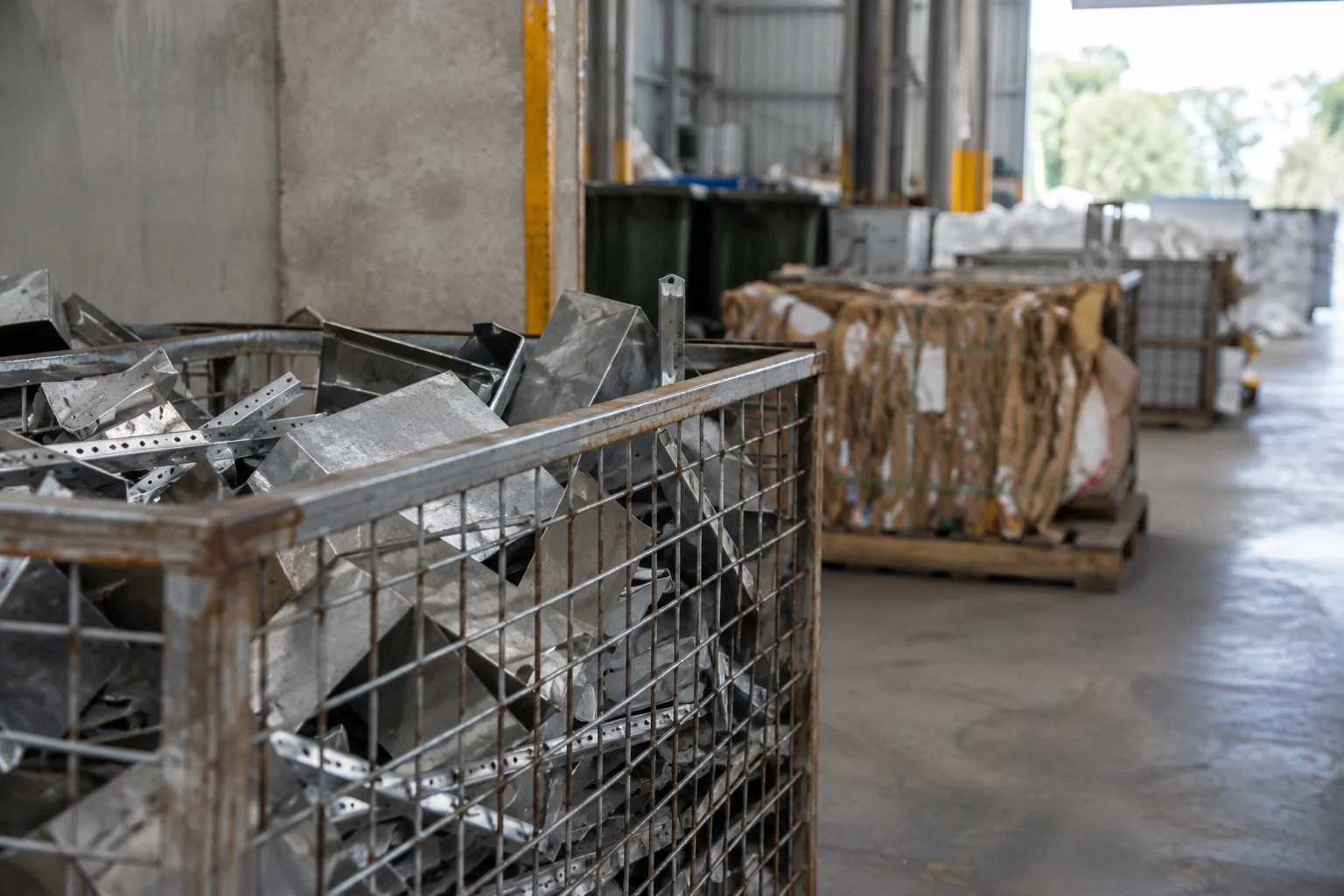
Every manufacturing process generates scrap — metal offcuts, plastic trimmings, fabric waste, timber offcuts, rejected parts. The key question is whether this material has recycling value. Clean, single-material scrap (steel, aluminium, copper, HDPE, PET) often has significant commodity value and should be separated and sold to recyclers rather than sent to landfill. Mixed or contaminated scrap is harder to recycle but may still have value if properly sorted.

Packaging Waste

Raw materials arrive wrapped in plastic film, strapped to pallets, packed in cardboard boxes, and cushioned with foam or paper. Outbound products generate additional packaging waste. For manufacturers receiving regular deliveries, pallet wrap (stretch film) is often the single largest packaging waste stream by volume and is readily recyclable when collected separately.

General Waste

Lunch scraps, office waste, cleaning materials, PPE, and non-recyclable packaging all end up in general waste. In manufacturing, general waste bins often contain significant quantities of recyclable material that has been discarded through convenience rather than intent.

Hazardous and Prescribed Waste

Many manufacturing processes generate prescribed industrial waste — solvents, paint residues, cutting fluids, heavy metal sludges, chemical containers, contaminated rags. These require licensed handling, transport, and disposal, and are subject to EPA Victoria's waste tracking system. Getting hazardous waste management wrong is one of the highest-risk areas for manufacturers — penalties for non-compliance are severe.

Liquid Waste

Coolants, wash water, chemical solutions, and process water all require appropriate management. Depending on composition, these may be covered under your trade waste agreement (if discharged to sewer) or may need to be collected by licensed liquid waste contractors.

Compliance for Victorian Manufacturers

Manufacturing operations in Victoria face specific waste-related compliance obligations:

  • EPA Victoria licensing: Operations above certain thresholds for waste generation, storage, or processing may require an EPA licence or permit
  • Prescribed waste tracking: All prescribed industrial waste must be tracked from generation to disposal using EPA Victoria's waste tracking system
  • Duty of care: Under the Environment Protection Act 2017, businesses have a general environmental duty to minimise risks to human health and the environment from waste
  • Container deposit scheme: Manufacturers of eligible beverages must participate in CDS Vic
  • Product stewardship: Certain products (tyres, batteries, electronics, packaging) are subject to national product stewardship schemes

Cost Reduction Strategies

1. Separate and Sell Recyclable Scrap

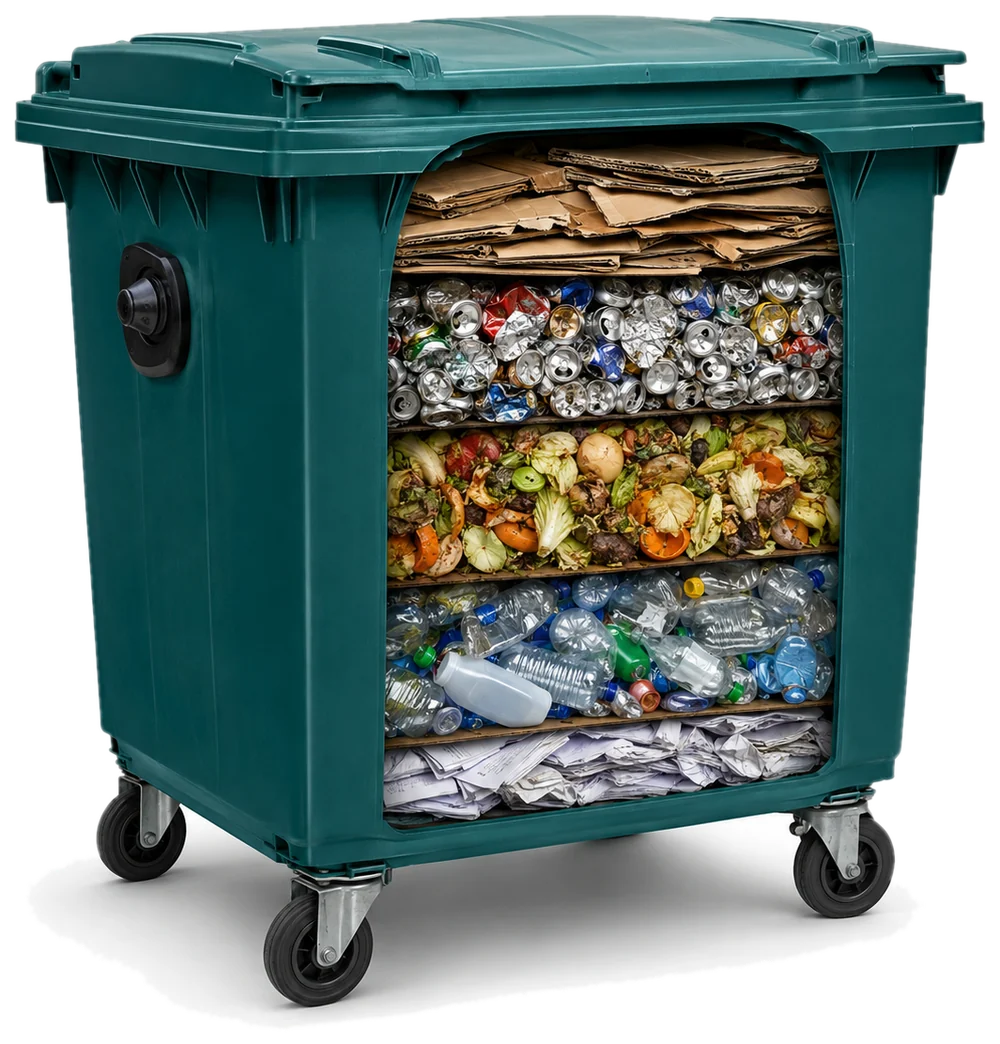
The biggest cost-saving opportunity in manufacturing waste is diverting recyclable material from general waste. Metals, clean plastics, cardboard, and timber that go into general waste cost you twice: you pay to dispose of them, and you lose the commodity value. Setting up dedicated collection points for each recyclable stream, with clear signage and staff training, can transform a cost centre into a revenue stream.

2. Right-Size Your Bins and Frequency

Manufacturing waste volumes fluctuate with production schedules. A bin configuration that made sense at one production level may be completely wrong at another. Regular waste audits — at least annually — ensure your bins and collection frequencies match actual need, avoiding both overflow charges and paying for half-empty bins.

3. Compact and Bale

For manufacturers generating large volumes of cardboard, plastic, or other compactable materials, investing in a baler or compactor can dramatically reduce collection costs. Baled materials take up less space (reducing collection frequency), are easier for recyclers to handle (often attracting better rates), and reduce the risk of contamination from mixed streams.

4. Consolidate Waste Providers

Many manufacturers use multiple waste providers — one for general waste, another for recycling, a third for hazardous waste, a fourth for liquid waste. While specialist providers are sometimes necessary, having too many creates administrative overhead and loses the leverage of consolidated purchasing power. Consolidating where possible simplifies invoicing and can reduce total costs by 15-25%.

5. Review Contracts Regularly

Waste management is a competitive market. If your contract has been rolling over on auto-renewal for more than two years, you are almost certainly paying above market rate. Run a competitive tender every 2-3 years to keep pricing sharp.

The Role of a Waste Partner in Manufacturing

Manufacturing waste is complex — multiple streams, compliance obligations, commodity markets for recyclables, and hazardous waste requirements. A waste partner who understands the manufacturing sector can audit your waste streams, identify cost reduction opportunities, manage tender processes, and ensure compliance across all waste categories.

At Bundle Waste, we work with manufacturers across Melbourne to reduce waste costs and simplify waste management. Contact us for a free waste audit.

Manufacturing Waste Management — FAQ

What counts as manufacturing waste in a Melbourne factory?

It spans several streams: production scrap and offcuts (metal, plastic, fabric, timber), inbound and outbound packaging like pallet wrap and cardboard, general waste, liquid waste such as coolants and wash water, and priority waste (formerly prescribed industrial waste) including solvents, paint residues and chemical containers. Each stream has different handling, recycling value and compliance obligations, so treating them as one bin overspends.

How much does manufacturing waste cost a mid-sized Melbourne operation each year?

A mid-sized Melbourne manufacturer can easily spend $100,000 to $500,000 a year across general waste, recyclables, scrap, packaging, liquid and hazardous streams. Victoria's metropolitan landfill levy of $169.79 per tonne adds up fast when recyclable material is dumped as general waste. Consolidating providers and right-sizing bins often reduces total costs, with many businesses seeing meaningful savings.

What EPA compliance obligations apply to Victorian manufacturers?

Manufacturers carry a general environmental duty under the Environment Protection Act 2017 to minimise harm from waste, with corporate breaches penalised up to roughly $2.03 million. Priority (prescribed industrial) waste must be tracked from generation to disposal via EPA Victoria's system, operations above certain thresholds may need a licence, and e-waste has been banned from Victorian landfill since 1 July 2019.

How can a manufacturer actually reduce its waste disposal costs?

Separate clean single-material scrap like steel, aluminium and HDPE and sell it to recyclers rather than paying landfill levy on it. Right-size bins to match fluctuating production, bale or compact cardboard and plastic to cut collection frequency, consolidate providers (often saving 15 to 25 per cent), and run a competitive tender every two to three years instead of letting contracts auto-renew above market rate.

Can a waste broker help a manufacturer cut costs and stay compliant?

Yes. As an independent waste broker, Bundle Waste compares and negotiates provider rates on your behalf rather than collecting waste itself. We audit each stream, identify recycling value, manage tenders and check compliance across general, liquid and priority waste. Because we typically work on a no-win, no-fee basis, there is usually no upfront cost to see whether your current setup can be improved.

Related Articles

Manufacturing waste costing too much?

We audit manufacturing waste streams, negotiate better rates, and ensure compliance — typically delivering significant savings on total waste costs.

Get Your Free Audit →