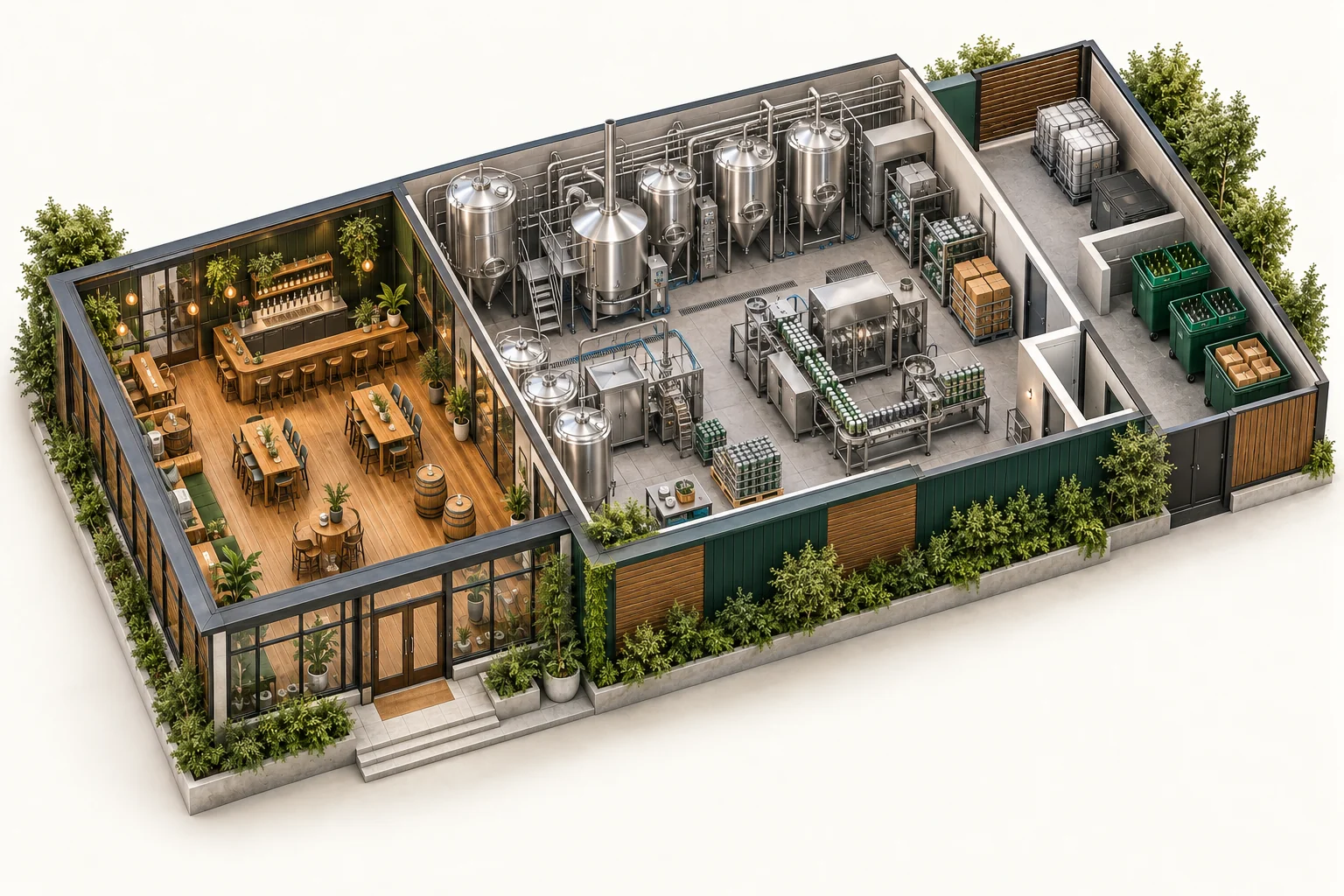
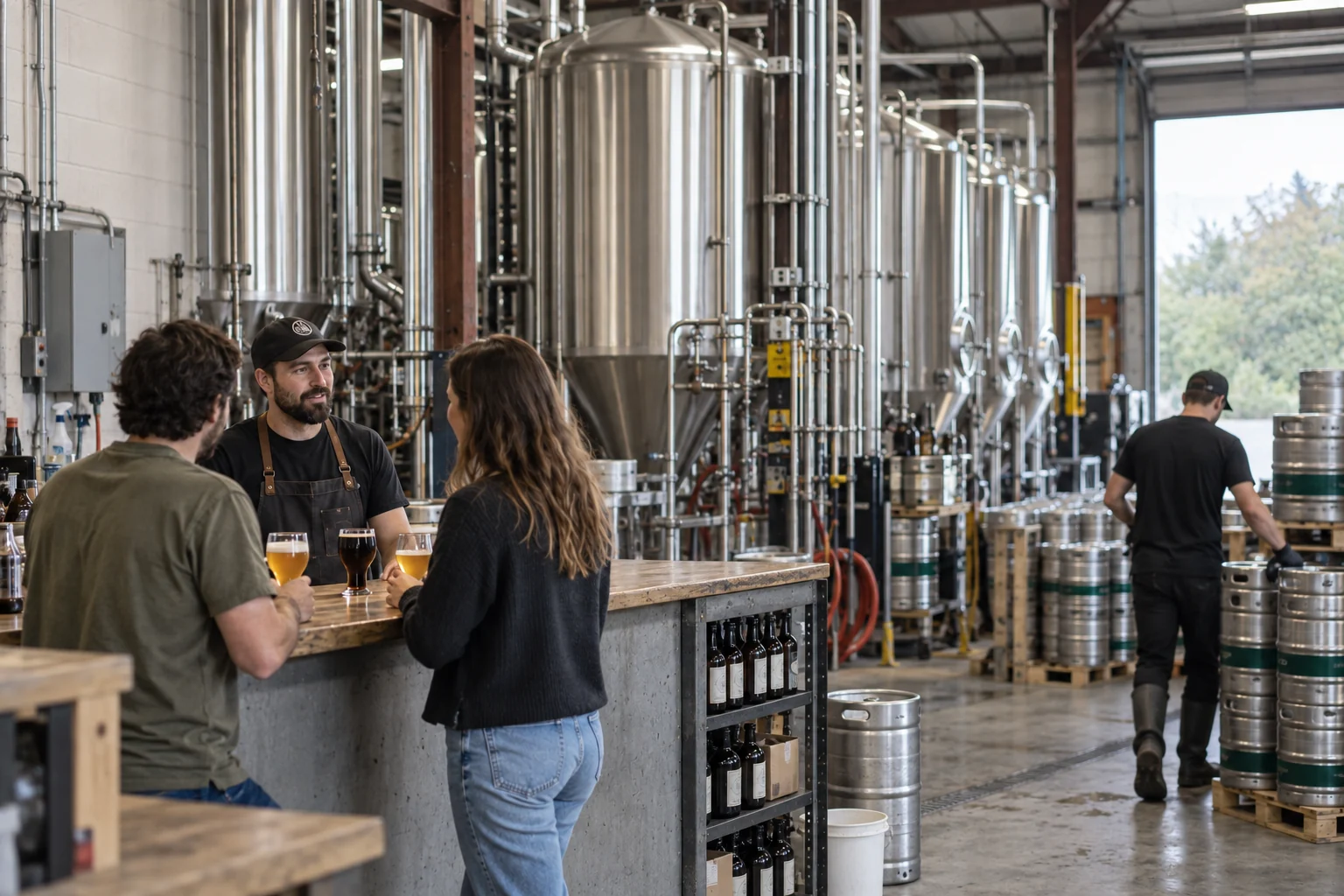
Managing waste in the breweries & distilleries sector requires understanding specific waste streams, compliance requirements, and cost-effective disposal options. Breweries produce large volumes of organic byproducts (spent grain, yeast, trub) that require timely removal to prevent odour and pest issues. Wastewater has high biochemical oxygen demand (BOD) and requires trade waste agreements with strict discharge limits. Glass breakage in bottling lines creates sharp waste. Packaging waste (cardboard, shrink wrap, label backing) is significant. Many craft breweries with taprooms also generate food waste. Spent grain has value as animal feed if collected promptly. Bundle Waste specialises in helping breweries & distilleries businesses across Melbourne find the best waste management rates.
Breweries produce large volumes of organic byproducts (spent grain, yeast, trub) that require timely removal to prevent odour and pest issues. Wastewater has high biochemical oxygen demand (BOD) and requires trade waste agreements with strict discharge limits. Glass breakage in bottling lines creates sharp waste. Packaging waste (cardboard, shrink wrap, label backing) is significant. Many craft breweries with taprooms also generate food waste. Spent grain has value as animal feed if collected promptly.
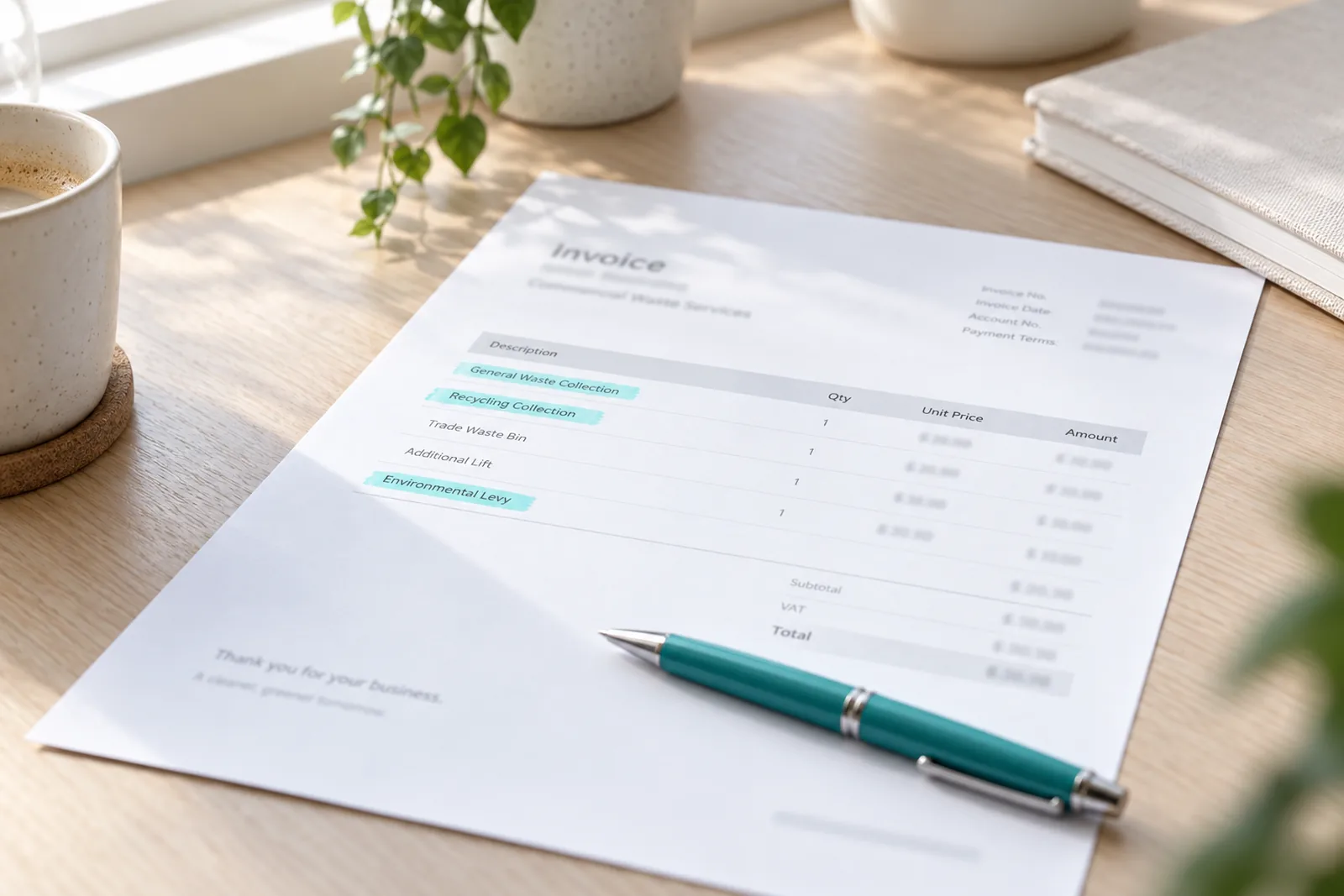
Typical monthly waste management spend for breweries & distilleries businesses is $800-4,000. This covers all waste streams including general waste, recycling, and any specialist disposal. Bundle Waste typically negotiates up to 30% savings for breweries & distilleries clients.
How much does brewery waste management cost in Melbourne?+
Brewery waste management in Melbourne typically costs $800-4,000 per month depending on production volume. A small craft brewery (under 500,000L/year) pays $800-1,500/month, mid-size breweries (500,000-2M litres) pay $1,500-3,000/month, and larger operations pay $3,000-4,000+/month. Costs include: general waste ($200-600/month), recycling and cardboard ($100-300/month), trade waste fees ($200-800/month), and glass disposal ($50-200/month). Spent grain collection is often free if a farmer collects it — otherwise disposal costs $100-300/month.
What can breweries do with spent grain?+
Spent grain is a brewery's largest byproduct by volume — a 1,000L brew produces roughly 250-350kg of spent grain. Options: free collection by local farmers for cattle or pig feed (most common and cost-effective — arrange regular pickups), selling to animal feed companies ($20-40/tonne for consistent quality), supplying to bakeries or food producers using spent grain flour, composting, or anaerobic digestion. The key is prompt collection — spent grain spoils within 24-48 hours in warm weather, creating odour and attracting pests. Have a backup plan if your regular farmer can't collect.
What trade waste requirements apply to breweries in Melbourne?+
Brewery wastewater has high biochemical oxygen demand (BOD), low pH from cleaning chemicals, and elevated suspended solids — all requiring a trade waste agreement with your water authority. Melbourne Water typically sets limits: BOD under 600mg/L, pH 6-10, suspended solids under 600mg/L. Pre-treatment (pH correction tanks, settlement tanks) is usually required. Trade waste fees for breweries range from $2,000-10,000/year based on volume and strength. Non-compliance can trigger fines up to $30,000 and mandatory treatment upgrades.
How should breweries manage glass waste?+
Breweries deal with glass from breakage in bottling lines, returned bottles, and taproom service. Bottling line glass should be collected in heavy-duty drums and sent to glass recyclers (free or low-cost for clean, sorted glass). Taproom glass waste should go in dedicated glass bins separate from general waste. Mixed glass (clear, brown, green) is accepted by most Melbourne recyclers. For breweries with significant breakage, a glass recycling skip ($100-200/month) may be more cost-effective than wheelie bins.
How can breweries reduce packaging waste?+
Packaging waste strategies: 1) Switch to cans (lower breakage, lighter transport, higher recycling rates), 2) Use bulk delivery for kegged beer to reduce packaging per litre, 3) Negotiate packaging take-back with suppliers, 4) Compact cardboard with a baler for recycling revenue, 5) Collect and reuse pallet wrap through dedicated soft plastics recycling, 6) Use label stock with recyclable backing, 7) Explore refillable growler and crowler programs for taproom sales. Many craft breweries achieve 60-70% waste diversion with proper packaging management.
What are hazardous waste disposal costs in Melbourne?+
Hazardous waste disposal in Melbourne ranges from $2–15/kg depending on waste type. Chemical waste costs $3–8/kg, asbestos removal $50–80/m², and liquid chemical disposal $300–800 per 200L drum. All hazardous waste must be handled by EPA-licensed transporters under the Environment Protection Act 2017.
How much does clinical waste disposal cost in Melbourne?+
Clinical waste disposal in Melbourne costs $0.80–2.50/litre depending on waste category. Sharps containers (5L) cost $8–15 each, cytotoxic waste $4–8/kg, and anatomical waste $5–12/kg. Healthcare facilities typically spend $300–1,200/month. All clinical waste must comply with EPA Victoria Publication 1669.
How much does grease trap servicing cost in Melbourne?+
Grease trap servicing in Melbourne costs $150–400 per service depending on trap size. A standard 1,000L trap costs $150–250, a 2,000L trap $250–400. Most food businesses need monthly or quarterly servicing. Failure to maintain grease traps can breach your trade-waste agreement, leading to penalties or suspension of your discharge consent by your water authority (such as South East Water or Yarra Valley Water).
What is the difference between clinical and general waste in healthcare?+
Clinical waste causes infection or injury (sharps, cytotoxic, anatomical, infectious). General is non-hazardous (paper, food, packaging). Clinical costs $0.80–2.50/L vs $0.15–0.25/L general. A large share of clinical bins typically contain general waste that could be segregated.
How should a Melbourne hospital manage its waste?+
Hospitals generate 5–10kg/bed/day across: general waste (40–50%), clinical waste (15–25%), recycling (10–15%), food waste (10–15%), pharmaceutical waste (5%), and confidential waste (5%). A 300-bed hospital spends $10,000–50,000/month. Clinical waste separation training is critical — misclassification costs $50,000–200,000/year in unnecessary clinical waste charges.
 Bundle Waste