Managing waste in the catering companies sector requires understanding specific waste streams, compliance requirements, and cost-effective disposal options. Catering companies generate waste at two locations — their commissary kitchen (predictable, controllable) and event venues (variable, often with limited waste infrastructure). Single-use packaging from events is a major waste stream. Food waste includes both prep waste at the kitchen and uneaten food at events. Cooking oil and grease trap management applies to the commissary. Sustainable event catering is increasingly demanded by corporate clients. Transport of waste from venues back to the commissary for disposal is a logistical consideration. Bundle Waste specialises in helping catering companies businesses across Melbourne find the best waste management rates.
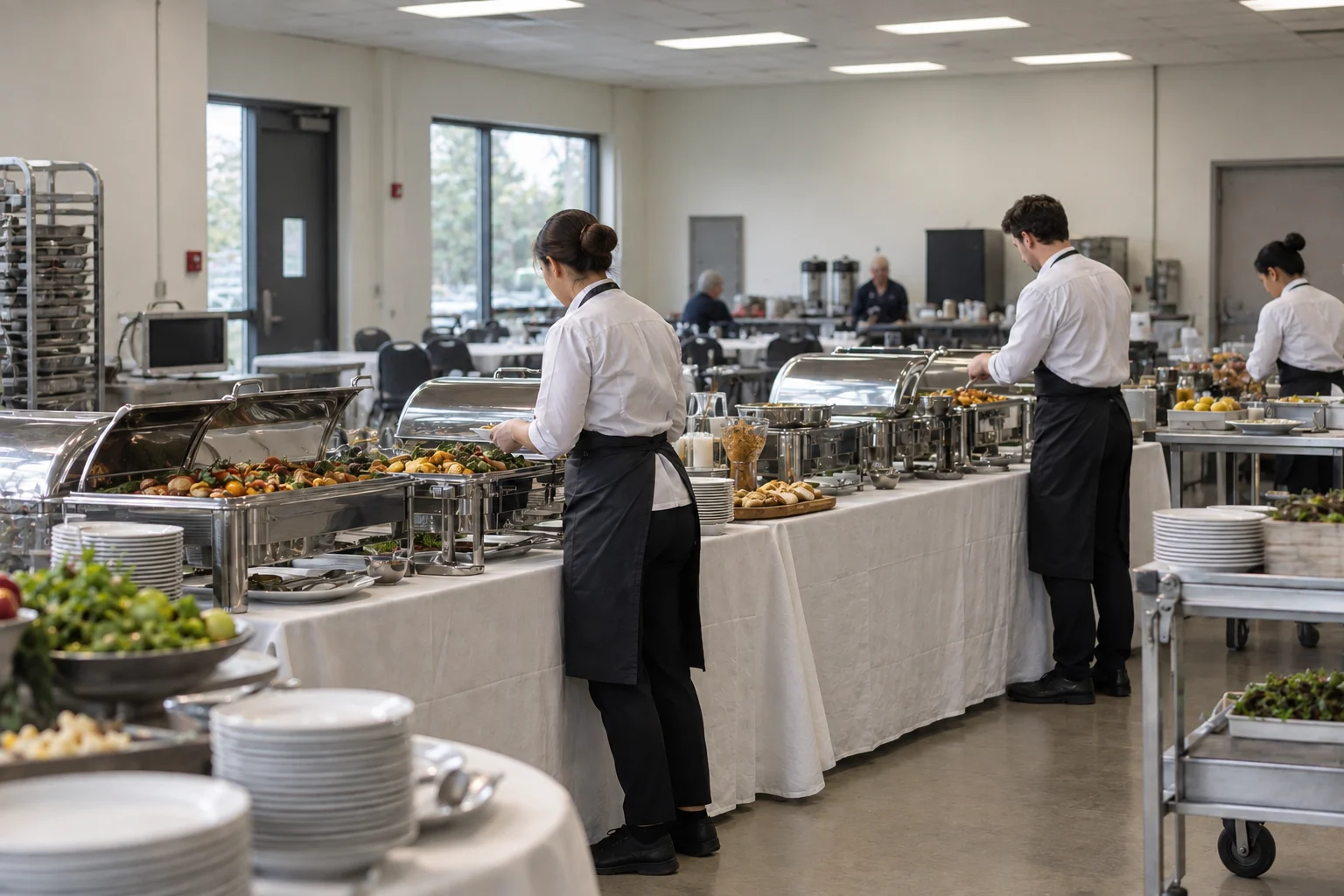
Catering companies generate waste at two locations — their commissary kitchen (predictable, controllable) and event venues (variable, often with limited waste infrastructure). Single-use packaging from events is a major waste stream. Food waste includes both prep waste at the kitchen and uneaten food at events. Cooking oil and grease trap management applies to the commissary. Sustainable event catering is increasingly demanded by corporate clients. Transport of waste from venues back to the commissary for disposal is a logistical consideration.
How much does catering company waste management cost in Melbourne?+
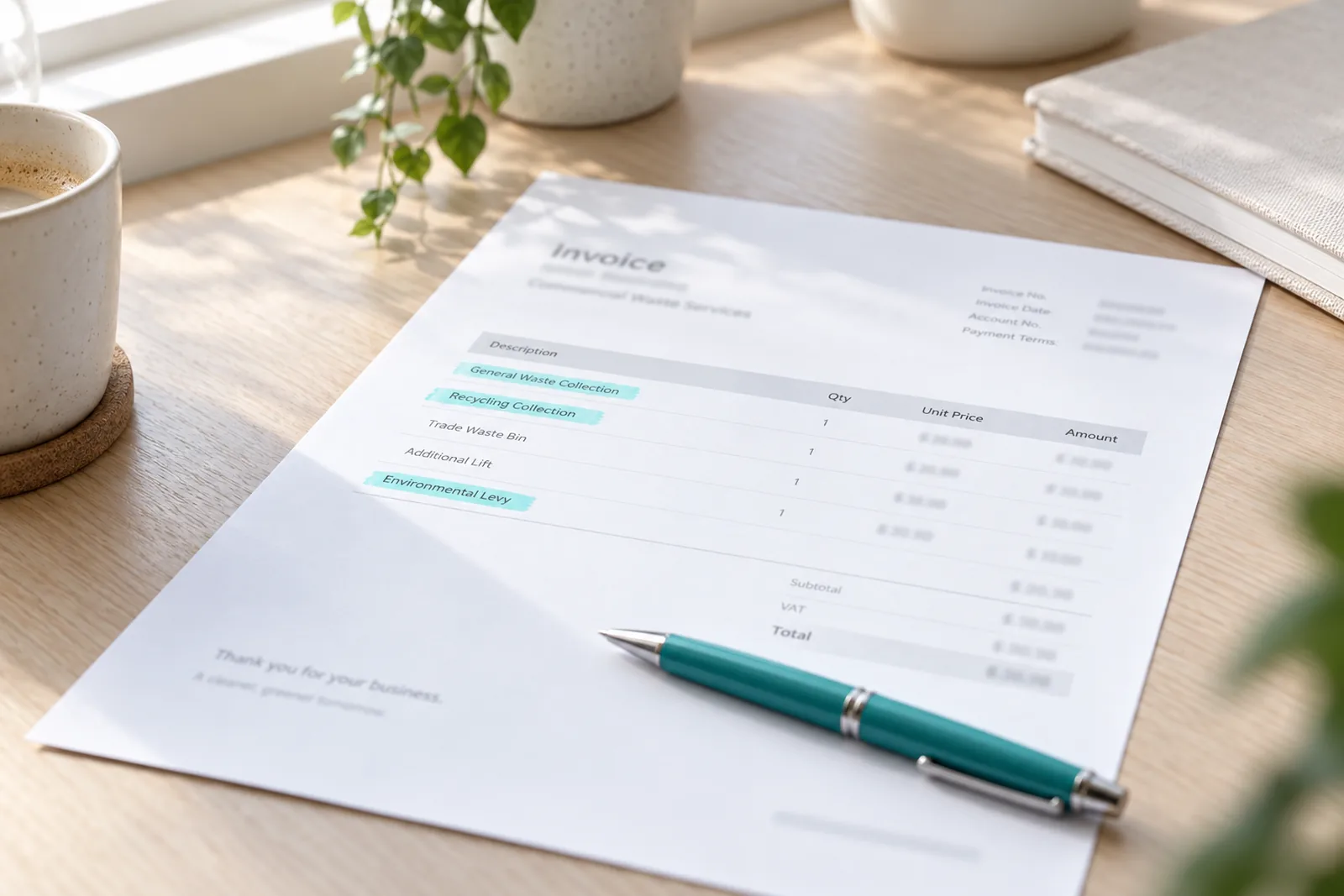
Catering company waste management in Melbourne typically costs $400-2,500 per month depending on event volume and kitchen size. A small catering operation (5-10 events/month) pays $400-800/month, a mid-size caterer (15-30 events) pays $800-1,500/month, and a large catering company (40+ events) pays $1,500-2,500/month. Commissary kitchen waste accounts for $300-1,000/month (general, organics, oil, grease trap), while event-related waste disposal adds $100-500 per event depending on guest count and venue arrangements.
How should caterers manage food waste at events?+
Event food waste management requires planning: 1) Pre-event: calculate portions accurately to minimise overproduction, 2) During service: keep hot food at temperature to extend safe serving time, 3) Post-event: separate food waste from packaging and serviceware, 4) Donate surplus safe food to food rescue organisations (OzHarvest provides event pickup in Melbourne), 5) Compost remaining food waste or transport back to commissary for organic waste collection. For events with 200+ guests, arrange a dedicated food organics bin at the venue. Corporate clients increasingly require caterers to report food waste metrics.
How can caterers reduce single-use packaging waste?+
Single-use packaging is catering's biggest environmental concern. Strategies: 1) Switch to reusable serviceware for seated events (invest in or rent crockery, cutlery, glassware), 2) Use compostable packaging for finger food and casual events (AS4736 certified), 3) Eliminate unnecessary garnish packaging, 4) Offer bulk condiment stations instead of individual sachets, 5) Use reusable transport containers instead of disposable catering trays, 6) Choose suppliers with minimal product packaging. Caterers switching to reusable serviceware reduce waste by up to 80% per event and often improve presentation quality.
What commissary kitchen waste management do caterers need?+
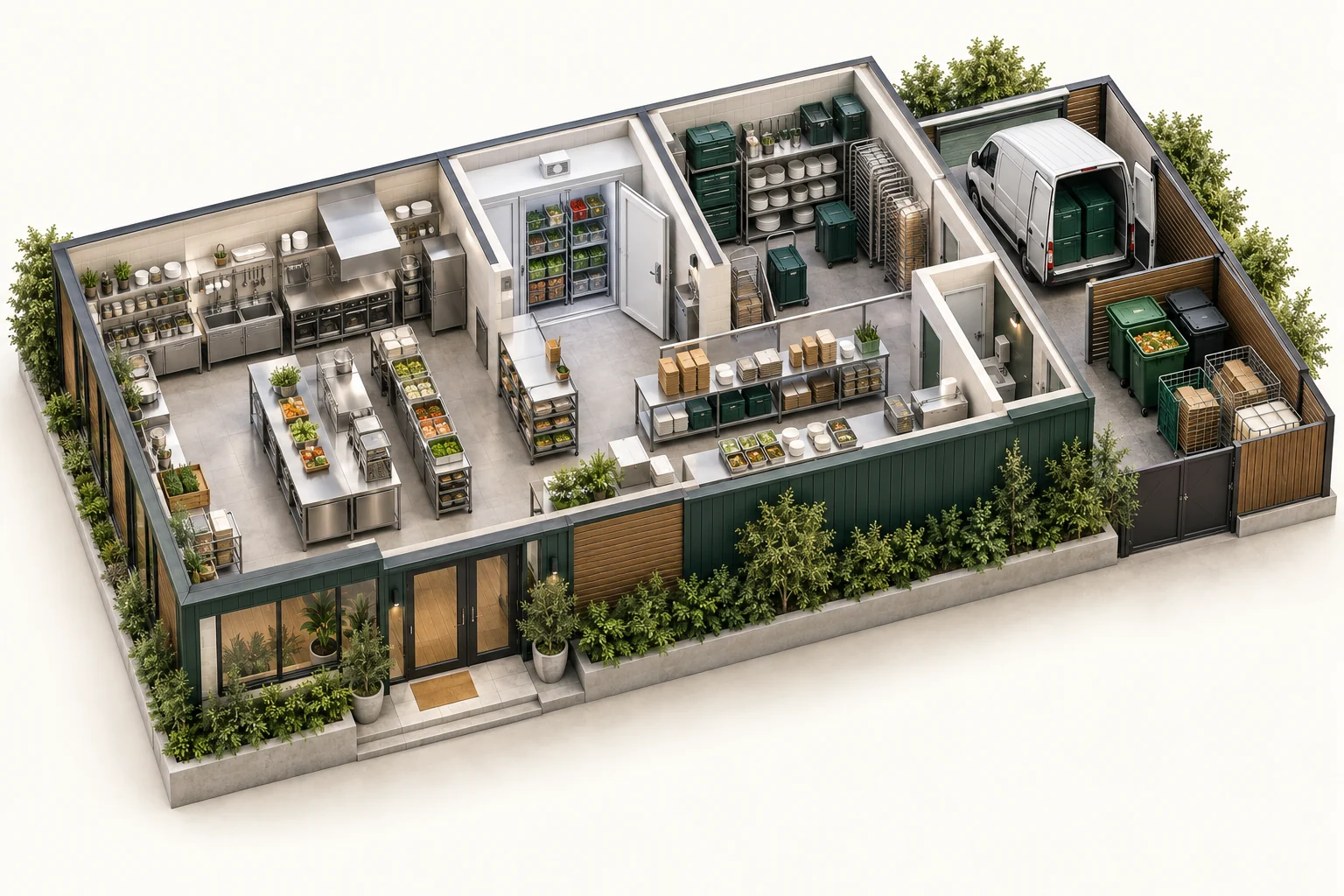
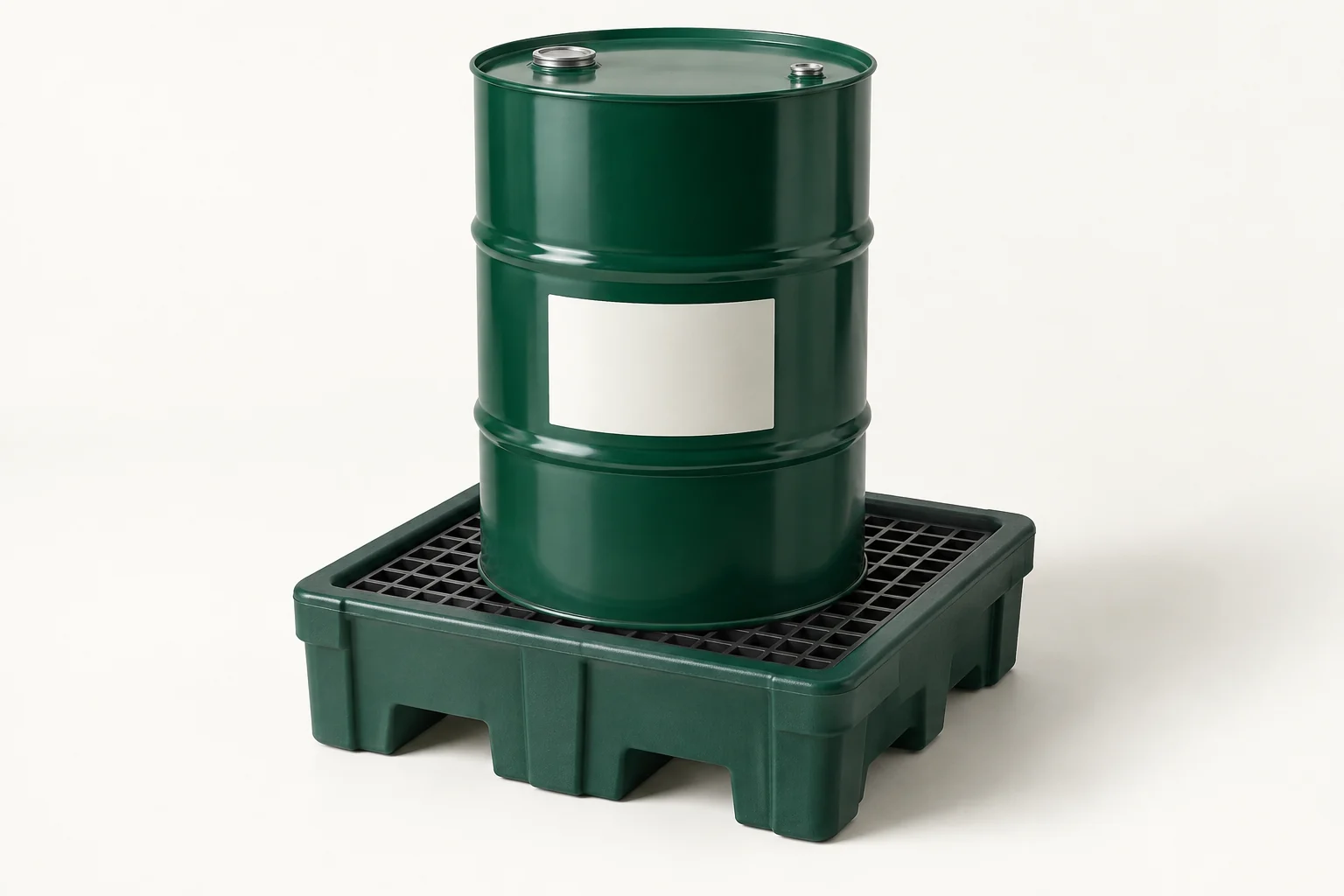
A catering commissary kitchen needs the same waste infrastructure as a commercial kitchen: food organics bins for prep waste (120L-240L, collected 2-3 times per week), general waste bins (240L-660L, collected 2-3 times per week), recycling for packaging (240L-660L, weekly), cooking oil drums for collection, a correctly sized grease trap with regular pump-outs, and cardboard recycling for supplier deliveries. Waste volumes fluctuate with event schedule — a busy week may generate 3-5x normal waste. Flexible collection scheduling is essential.
How should caterers handle waste at venue events?+
Venue waste management approaches: 1) Use venue's waste infrastructure (most common — negotiate waste costs in venue hire), 2) Bring your own waste setup (portable bins, clear signage) and transport waste back to commissary, 3) Hybrid approach — use venue bins for general waste, transport food waste back for organics collection. For outdoor events and marquees, you must supply all waste infrastructure. Budget for waste management in event pricing — typically $2-5 per guest for waste-inclusive events. Post-event cleanup crew should separate recyclables.
What are hazardous waste disposal costs in Melbourne?+
Hazardous waste disposal in Melbourne ranges from $2–15/kg depending on waste type. Chemical waste costs $3–8/kg, asbestos removal $50–80/m², and liquid chemical disposal $300–800 per 200L drum. All hazardous waste must be handled by EPA-licensed transporters under the Environment Protection Act 2017.
How much does clinical waste disposal cost in Melbourne?+
Clinical waste disposal in Melbourne costs $0.80–2.50/litre depending on waste category. Sharps containers (5L) cost $8–15 each, cytotoxic waste $4–8/kg, and anatomical waste $5–12/kg. Healthcare facilities typically spend $300–1,200/month. All clinical waste must comply with EPA Victoria Publication 1669.
How much does grease trap servicing cost in Melbourne?+
Grease trap servicing in Melbourne costs $150–400 per service depending on trap size. A standard 1,000L trap costs $150–250, a 2,000L trap $250–400. Most food businesses need monthly or quarterly servicing. Failure to maintain grease traps can breach your trade-waste agreement, leading to penalties or suspension of your discharge consent by your water authority (such as South East Water or Yarra Valley Water).
What is the difference between clinical and general waste in healthcare?+
Clinical waste causes infection or injury (sharps, cytotoxic, anatomical, infectious). General is non-hazardous (paper, food, packaging). Clinical costs $0.80–2.50/L vs $0.15–0.25/L general. A large share of clinical bins typically contain general waste that could be segregated.
How should a Melbourne hospital manage its waste?+
Hospitals generate 5–10kg/bed/day across: general waste (40–50%), clinical waste (15–25%), recycling (10–15%), food waste (10–15%), pharmaceutical waste (5%), and confidential waste (5%). A 300-bed hospital spends $10,000–50,000/month. Clinical waste separation training is critical — misclassification costs $50,000–200,000/year in unnecessary clinical waste charges.
 Bundle Waste