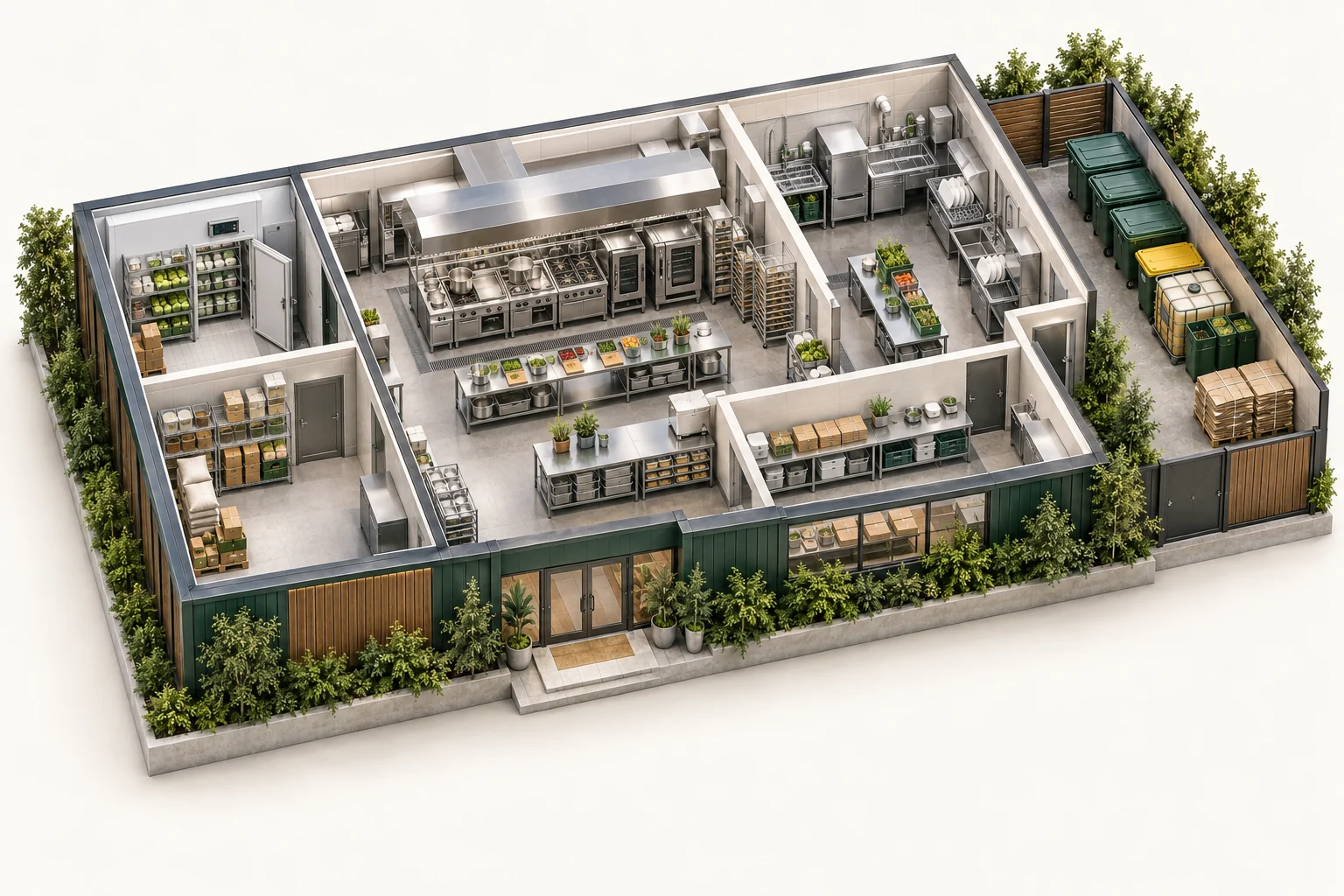
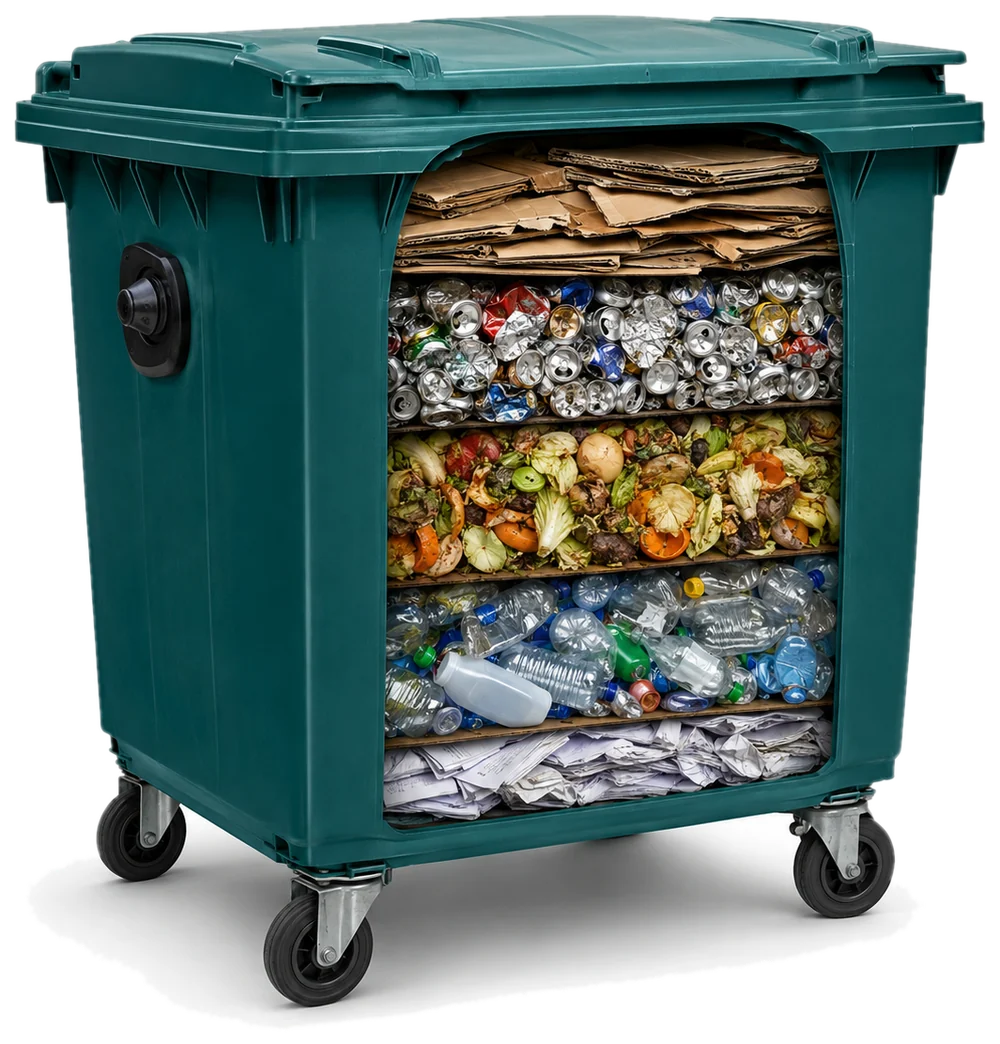
Managing waste in the commercial kitchens sector requires understanding specific waste streams, compliance requirements, and cost-effective disposal options. Commercial kitchens — including ghost kitchens, catering prep kitchens, and shared kitchen spaces — generate high-intensity food waste in concentrated areas. Grease trap management is critical and costly. Cooking oil disposal requires specialist collection. Food prep generates significant organic waste volumes suitable for diversion. Shared commercial kitchen spaces face challenges with waste attribution between tenants. Ghost kitchens operating from delivery-only premises may lack adequate waste infrastructure. Bundle Waste specialises in helping commercial kitchens businesses across Melbourne find the best waste management rates.
Commercial kitchens — including ghost kitchens, catering prep kitchens, and shared kitchen spaces — generate high-intensity food waste in concentrated areas. Grease trap management is critical and costly. Cooking oil disposal requires specialist collection. Food prep generates significant organic waste volumes suitable for diversion. Shared commercial kitchen spaces face challenges with waste attribution between tenants. Ghost kitchens operating from delivery-only premises may lack adequate waste infrastructure.
How much does commercial kitchen waste management cost in Melbourne?+
Commercial kitchen waste management in Melbourne typically costs $500-3,000 per month depending on kitchen type and throughput. A small prep kitchen or ghost kitchen pays $500-900/month, a medium production kitchen $900-1,500/month, and a large-scale commissary or catering kitchen $1,500-3,000/month. Food organics ($200-800/month), general waste ($200-600/month), grease trap pump-outs ($150-400/quarter), cooking oil collection (often free or rebated), and recycling ($100-300/month) are the main cost components.
How often do commercial kitchen grease traps need pumping?+
Grease trap pump-out frequency depends on kitchen output and trap size: high-volume kitchens (fast food, Asian cuisine, fish and chips) need fortnightly to monthly, medium-output kitchens need monthly to bimonthly, and lower-output prep kitchens need quarterly. Your trade waste agreement will specify minimum maintenance frequency. Costs range from $150-400 per pump-out. Neglecting grease traps causes sewer blockages, resulting in fines up to $30,000 from Melbourne Water, plus cleanup costs. Keep all maintenance records.
What waste challenges do ghost kitchens face?+
Ghost kitchens (delivery-only premises) often occupy converted spaces not designed for commercial kitchen waste volumes: limited bin storage, inadequate grease trap sizing for output, shared loading areas with other tenants, no public-facing waste separation (all waste is back-of-house), and rapid scaling when adding delivery brands increases waste without infrastructure upgrades. Solutions: right-size grease traps before operations begin, negotiate dedicated bin areas in lease, and plan waste infrastructure as carefully as kitchen equipment. A waste audit at 3 months prevents costly problems.
How should commercial kitchens manage cooking oil?+
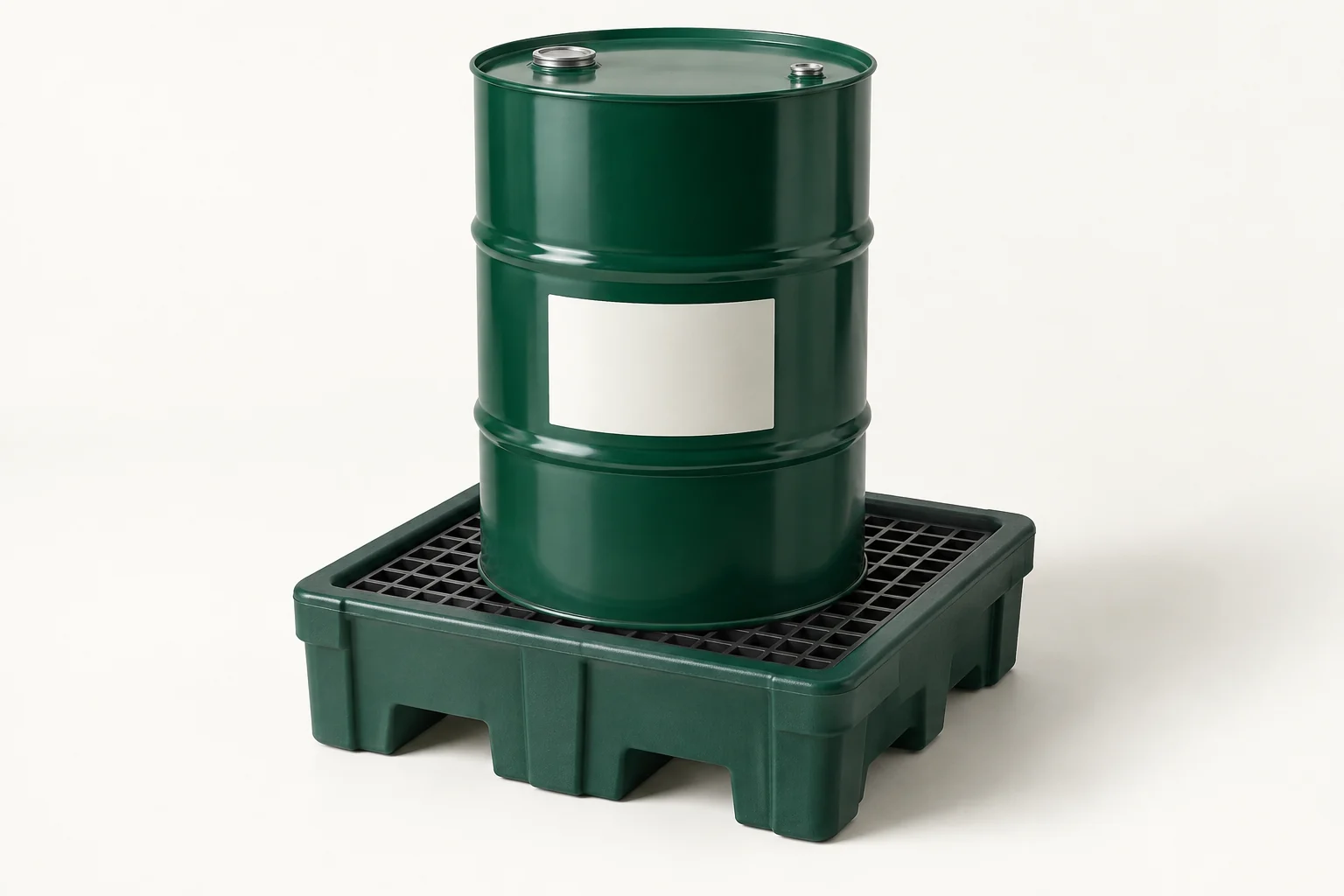
Used cooking oil should be stored in sealed drums or dedicated containers, away from heat and drains. Licensed oil recyclers collect for free and may pay a rebate ($0.10-0.30/litre for clean, uncontaminated oil). Oil should be strained before storage to remove food particles (cleaner oil gets better rebates). Never mix different oil types, and never pour oil down drains — it solidifies in sewer pipes and causes blockages. A busy commercial kitchen using 40-100L of oil weekly should arrange weekly or fortnightly collection.
Can commercial kitchens significantly reduce waste costs through organics diversion?+
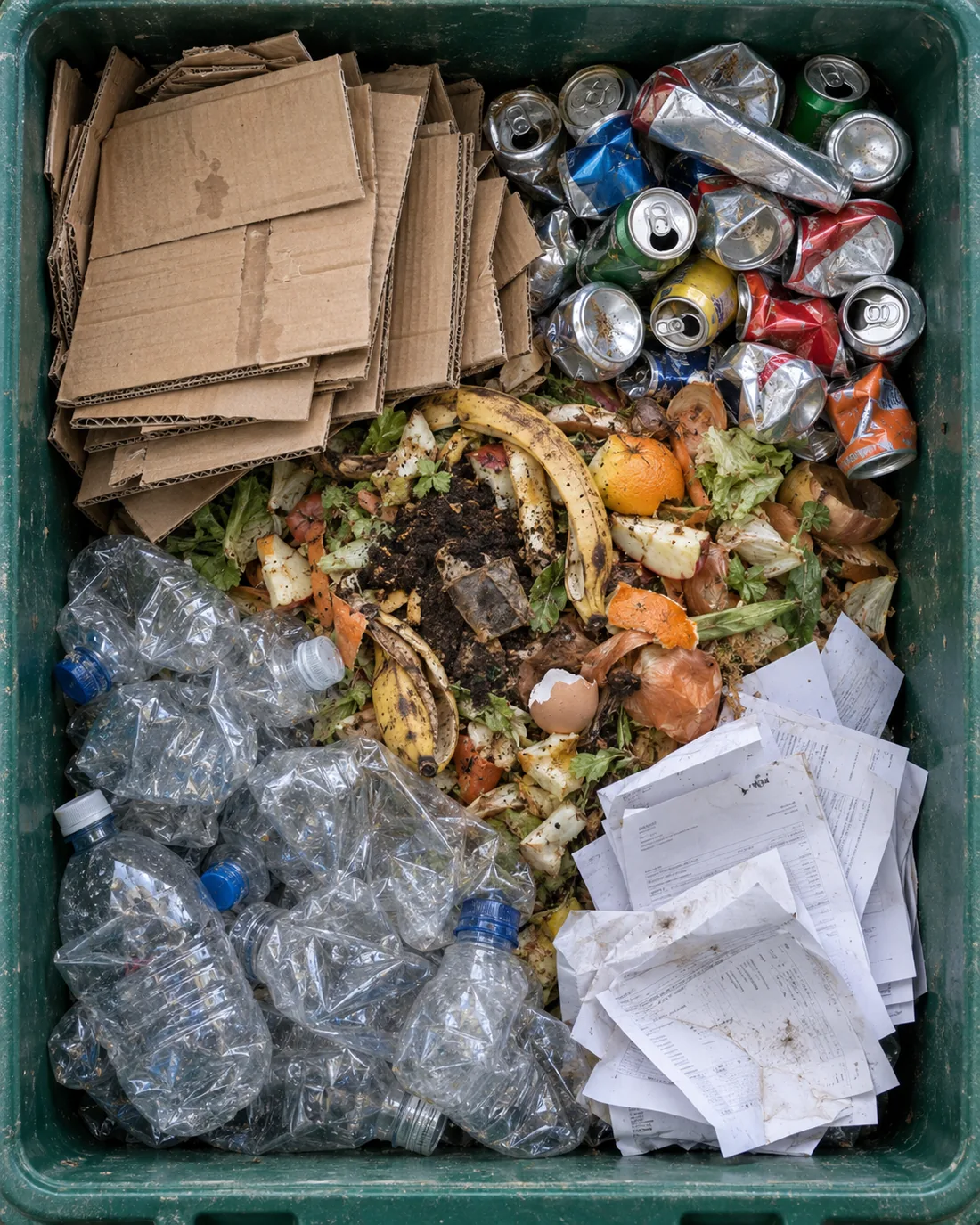
Yes — food organics diversion is the single biggest cost-saving opportunity for commercial kitchens. General waste with food costs $180-250/tonne (including landfill levy), while food organics processing costs $60-80/tonne — a saving of $100-170 per tonne. A kitchen generating 500-1,000kg of food waste weekly saves $200-700/month by diverting to organics. Setup requires: a dedicated food organics bin in the kitchen, staff training on what qualifies (all food, coffee, compostable packaging), and 2-3 collections per week.
What are hazardous waste disposal costs in Melbourne?+
Hazardous waste disposal in Melbourne ranges from $2–15/kg depending on waste type. Chemical waste costs $3–8/kg, asbestos removal $50–80/m², and liquid chemical disposal $300–800 per 200L drum. All hazardous waste must be handled by EPA-licensed transporters under the Environment Protection Act 2017.
How much does clinical waste disposal cost in Melbourne?+
Clinical waste disposal in Melbourne costs $0.80–2.50/litre depending on waste category. Sharps containers (5L) cost $8–15 each, cytotoxic waste $4–8/kg, and anatomical waste $5–12/kg. Healthcare facilities typically spend $300–1,200/month. All clinical waste must comply with EPA Victoria Publication 1669.
How much does grease trap servicing cost in Melbourne?+
Grease trap servicing in Melbourne costs $150–400 per service depending on trap size. A standard 1,000L trap costs $150–250, a 2,000L trap $250–400. Most food businesses need monthly or quarterly servicing. Failure to maintain grease traps can breach your trade-waste agreement, leading to penalties or suspension of your discharge consent by your water authority (such as South East Water or Yarra Valley Water).
What is the difference between clinical and general waste in healthcare?+
Clinical waste causes infection or injury (sharps, cytotoxic, anatomical, infectious). General is non-hazardous (paper, food, packaging). Clinical costs $0.80–2.50/L vs $0.15–0.25/L general. A large share of clinical bins typically contain general waste that could be segregated.
How should a Melbourne hospital manage its waste?+
Hospitals generate 5–10kg/bed/day across: general waste (40–50%), clinical waste (15–25%), recycling (10–15%), food waste (10–15%), pharmaceutical waste (5%), and confidential waste (5%). A 300-bed hospital spends $10,000–50,000/month. Clinical waste separation training is critical — misclassification costs $50,000–200,000/year in unnecessary clinical waste charges.
 Bundle Waste