Managing waste in the funeral homes sector requires understanding specific waste streams, compliance requirements, and cost-effective disposal options. Funeral homes handle sensitive clinical waste from mortuary and embalming operations. Embalming fluids (formaldehyde-based) are hazardous and require specialist disposal. The nature of the business demands discreet waste management — visible waste operations near chapel areas or public entrances are inappropriate. Floral tribute waste creates seasonal peaks. Coffin and casket packaging generates bulky cardboard. Many funeral homes are in residential areas with collection time restrictions. Bundle Waste specialises in helping funeral homes businesses across Melbourne find the best waste management rates.
Funeral homes handle sensitive clinical waste from mortuary and embalming operations. Embalming fluids (formaldehyde-based) are hazardous and require specialist disposal. The nature of the business demands discreet waste management — visible waste operations near chapel areas or public entrances are inappropriate. Floral tribute waste creates seasonal peaks. Coffin and casket packaging generates bulky cardboard. Many funeral homes are in residential areas with collection time restrictions.
How much does funeral home waste management cost in Melbourne?+
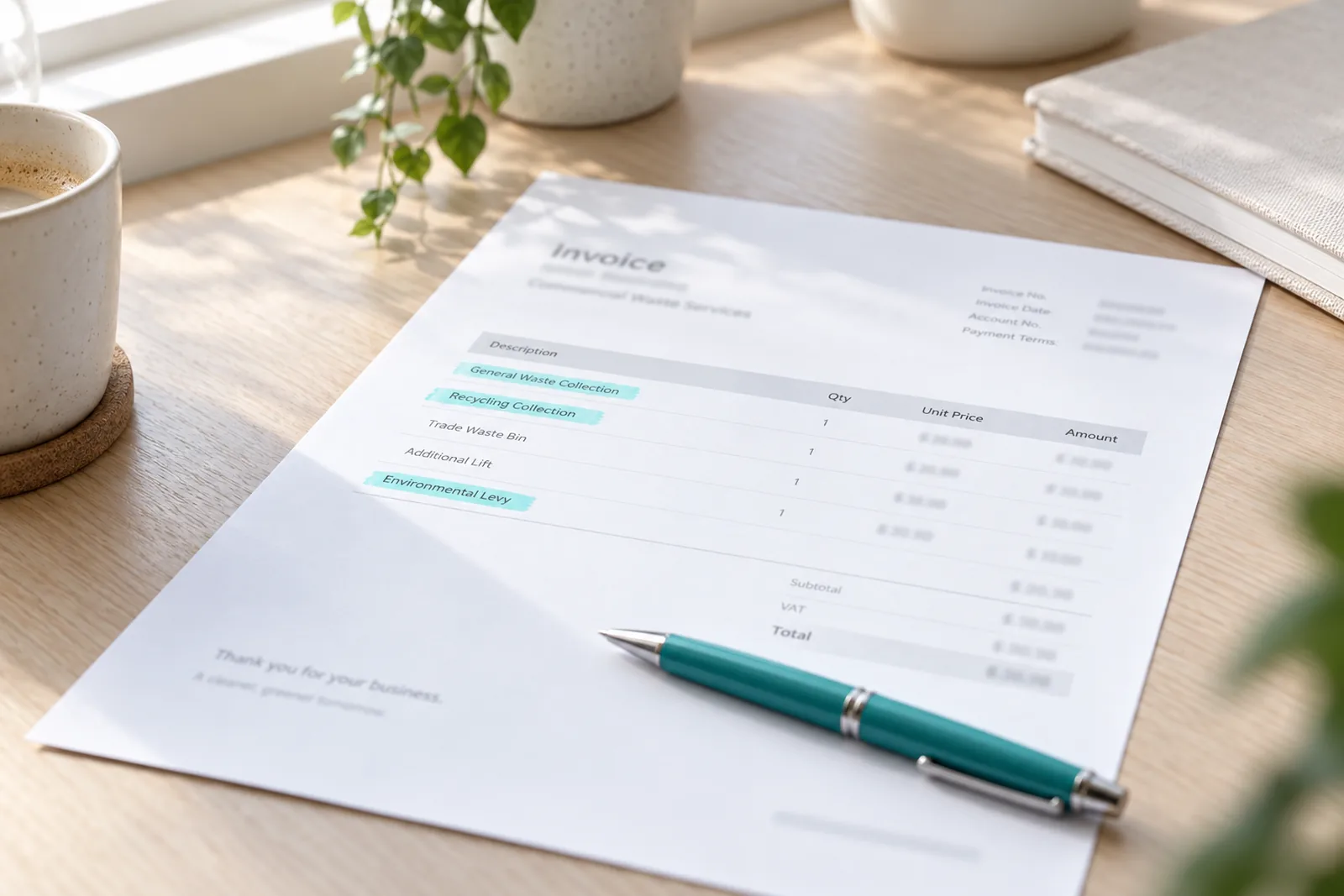
Funeral home waste management in Melbourne typically costs $400-1,500 per month depending on facility size and service volume. A small funeral home (handling 50-100 funerals/year) pays $400-700/month, a mid-size operation (100-200 funerals) pays $700-1,000/month, and large funeral groups with mortuary facilities pay $1,000-1,500/month per location. Clinical waste accounts for $200-500/month, embalming chemical disposal $100-200/quarter, general waste $100-300/month, and recycling $50-100/month.
How should embalming chemicals be disposed of?+
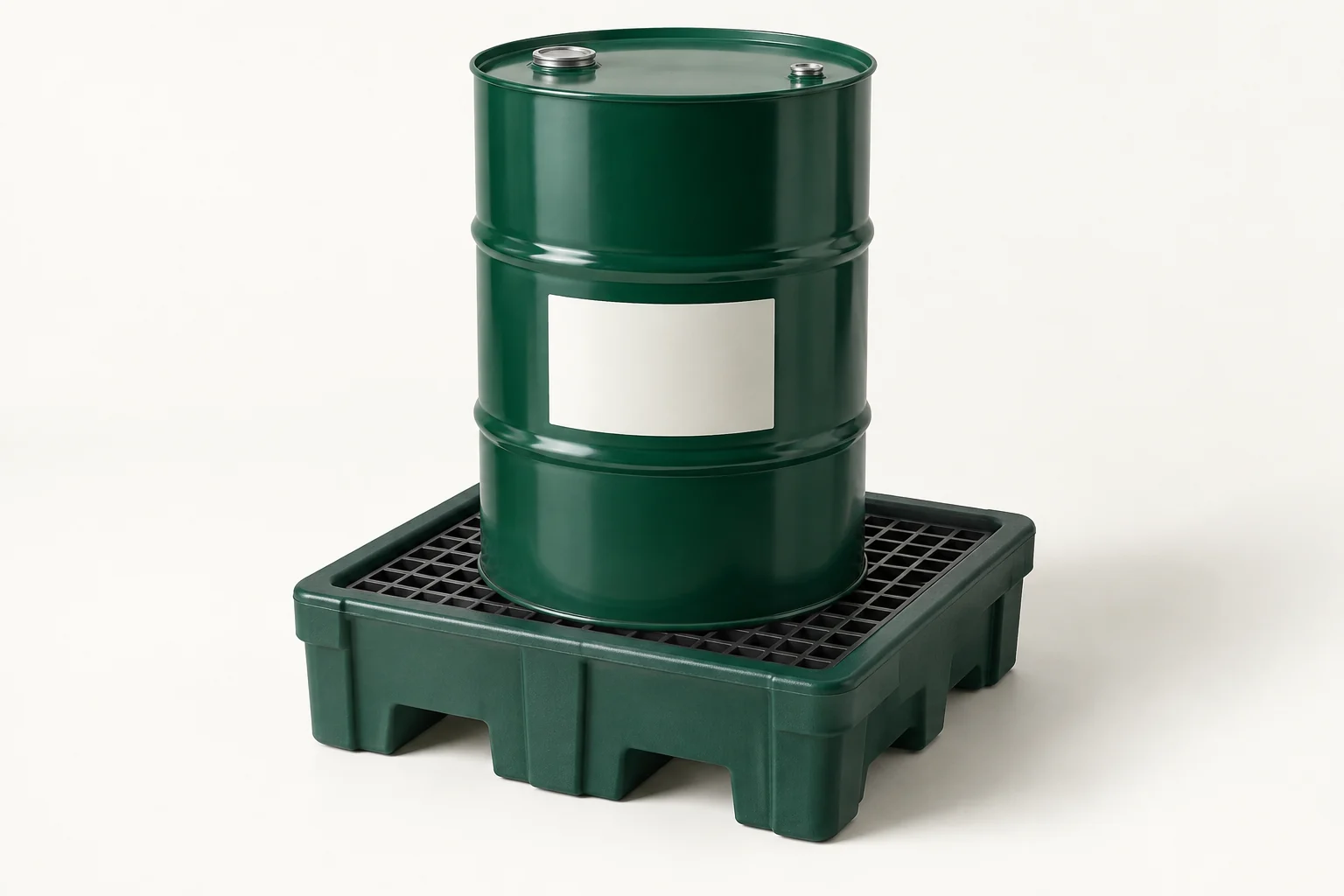
Embalming fluids containing formaldehyde are classified as prescribed industrial waste (PIW) in Victoria. They must be stored in sealed, labelled containers in bunded areas, collected by EPA-licensed transporters, and tracked with transport certificates retained for 3 years. Never pour embalming chemicals down drains — formaldehyde exceeds all trade waste discharge limits. Disposal costs $200-500 per collection, typically quarterly. Used embalming solutions, blood, and body fluids that aren't discharged to sewer must follow the same PIW disposal pathway.
What clinical waste does a funeral home generate?+
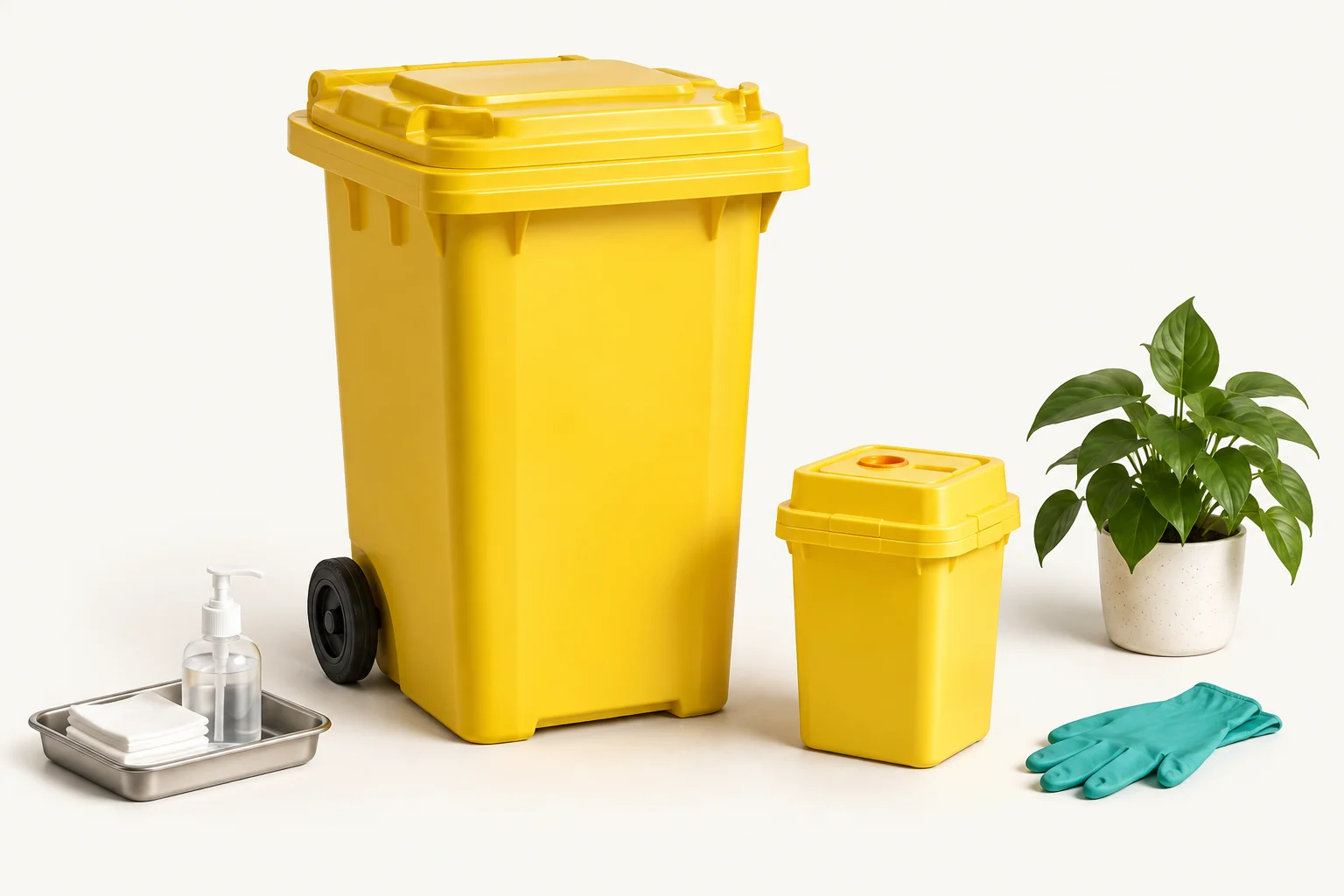
Funeral home clinical waste includes: blood and body fluid-saturated materials from mortuary preparation, sharps from embalming procedures (trocar needles, suture needles), PPE contaminated during embalming, mortuary preparation waste (cotton, gauze, absorbent materials), and in some cases, items removed during body preparation. This waste must be segregated into yellow clinical waste bags/bins, collected by licensed clinical waste transporters, and documented with transport certificates. Clinical waste is typically 30-40% of a funeral home's total waste volume.
How should funeral homes manage floral tribute waste?+
Floral waste from funeral tributes creates significant organic waste — a busy funeral home may handle 50-100+ arrangements weekly. Options: green waste collection for composting (the most sustainable and often cheapest option), general waste disposal (more expensive due to landfill levy), or offering floral donation to hospitals, aged care facilities, or community groups after services. Floral foam (oasis) is not compostable and must go in general waste. Remove foam from arrangements before composting flowers. A dedicated green waste bin ($80-150/month) handles most floral waste.
What are the discretion requirements for funeral home waste management?+
Funeral homes require discreet waste management operations. Best practices: locate waste storage and collection points well away from chapel entrances and public areas, schedule collections during non-service hours (early morning before viewing hours), use enclosed bin storage rather than exposed skips, ensure clinical waste transport vehicles are unmarked or discretely labelled, maintain clean and odour-free waste areas, and brief waste providers on the sensitivity of the environment. A waste broker can coordinate collection timing with funeral schedules.
What are hazardous waste disposal costs in Melbourne?+
Hazardous waste disposal in Melbourne ranges from $2–15/kg depending on waste type. Chemical waste costs $3–8/kg, asbestos removal $50–80/m², and liquid chemical disposal $300–800 per 200L drum. All hazardous waste must be handled by EPA-licensed transporters under the Environment Protection Act 2017.
How much does clinical waste disposal cost in Melbourne?+
Clinical waste disposal in Melbourne costs $0.80–2.50/litre depending on waste category. Sharps containers (5L) cost $8–15 each, cytotoxic waste $4–8/kg, and anatomical waste $5–12/kg. Healthcare facilities typically spend $300–1,200/month. All clinical waste must comply with EPA Victoria Publication 1669.
How much does grease trap servicing cost in Melbourne?+
Grease trap servicing in Melbourne costs $150–400 per service depending on trap size. A standard 1,000L trap costs $150–250, a 2,000L trap $250–400. Most food businesses need monthly or quarterly servicing. Failure to maintain grease traps can breach your trade-waste agreement, leading to penalties or suspension of your discharge consent by your water authority (such as South East Water or Yarra Valley Water).
What is the difference between clinical and general waste in healthcare?+
Clinical waste causes infection or injury (sharps, cytotoxic, anatomical, infectious). General is non-hazardous (paper, food, packaging). Clinical costs $0.80–2.50/L vs $0.15–0.25/L general. A large share of clinical bins typically contain general waste that could be segregated.
How should a Melbourne hospital manage its waste?+
Hospitals generate 5–10kg/bed/day across: general waste (40–50%), clinical waste (15–25%), recycling (10–15%), food waste (10–15%), pharmaceutical waste (5%), and confidential waste (5%). A 300-bed hospital spends $10,000–50,000/month. Clinical waste separation training is critical — misclassification costs $50,000–200,000/year in unnecessary clinical waste charges.
 Bundle Waste