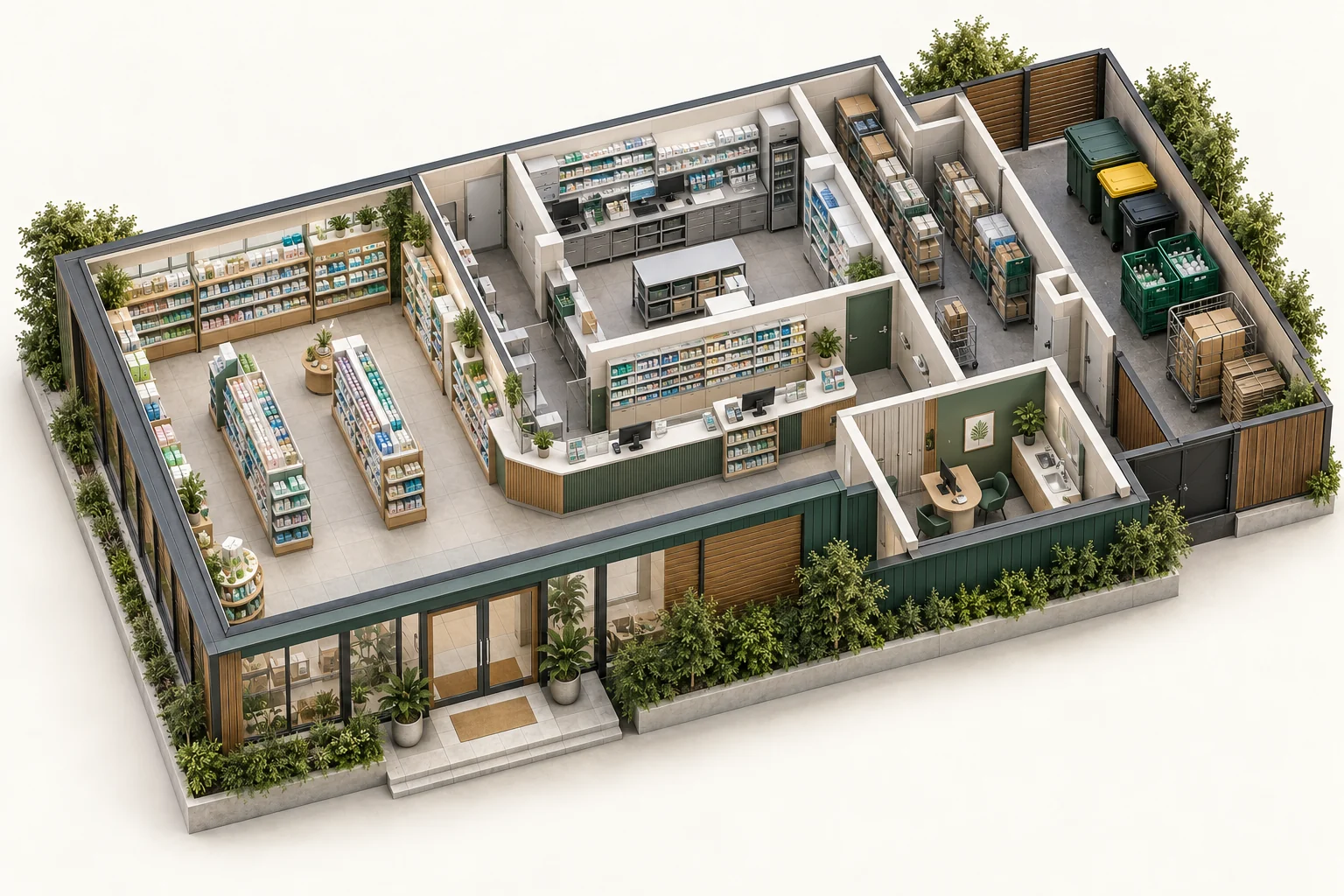
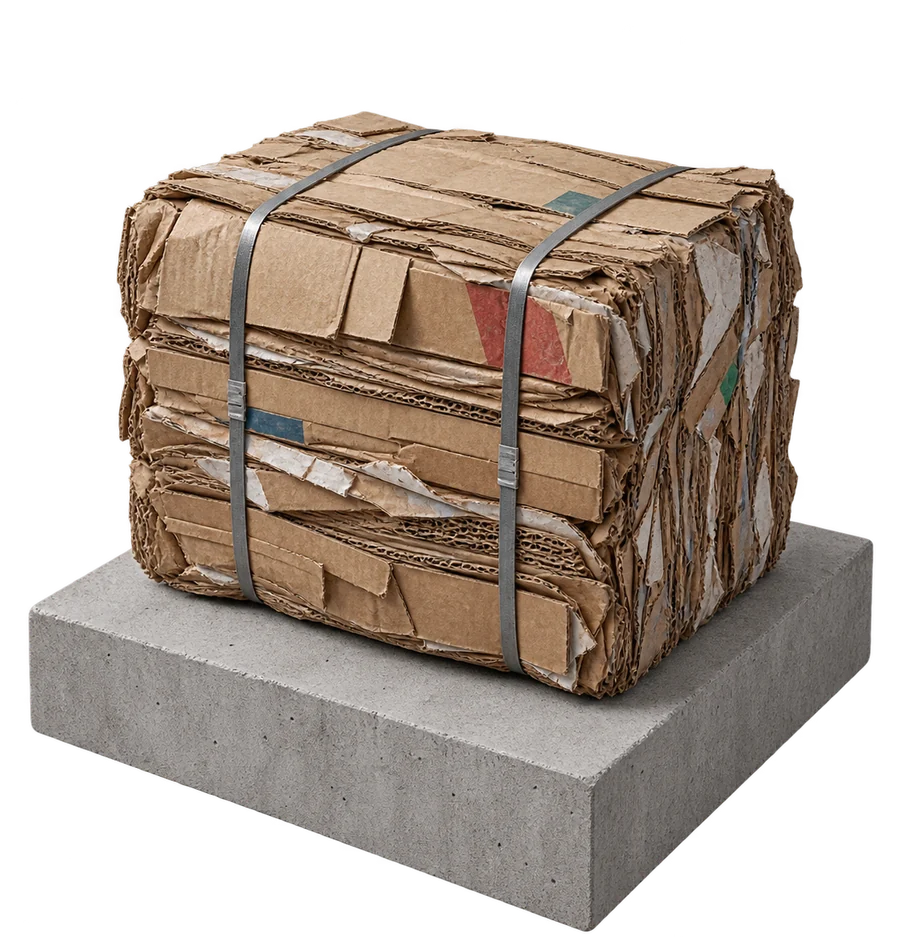
Managing waste in the pharmacies sector requires understanding specific waste streams, compliance requirements, and cost-effective disposal options. Pharmacies are the frontline of pharmaceutical waste management — receiving customer-returned medications through the RUM Project, handling Schedule 8 (controlled substance) destruction, managing customer-returned sharps, and dealing with expired pharmacy stock. Confidential patient information requires secure destruction. Despite relatively small premises, pharmacies deal with complex regulated waste streams. High cardboard volumes from pharmaceutical deliveries are often overlooked as a recycling opportunity. Bundle Waste specialises in helping pharmacies businesses across Melbourne find the best waste management rates.
Pharmacies are the frontline of pharmaceutical waste management — receiving customer-returned medications through the RUM Project, handling Schedule 8 (controlled substance) destruction, managing customer-returned sharps, and dealing with expired pharmacy stock. Confidential patient information requires secure destruction. Despite relatively small premises, pharmacies deal with complex regulated waste streams. High cardboard volumes from pharmaceutical deliveries are often overlooked as a recycling opportunity.
How much does pharmacy waste management cost in Melbourne?+
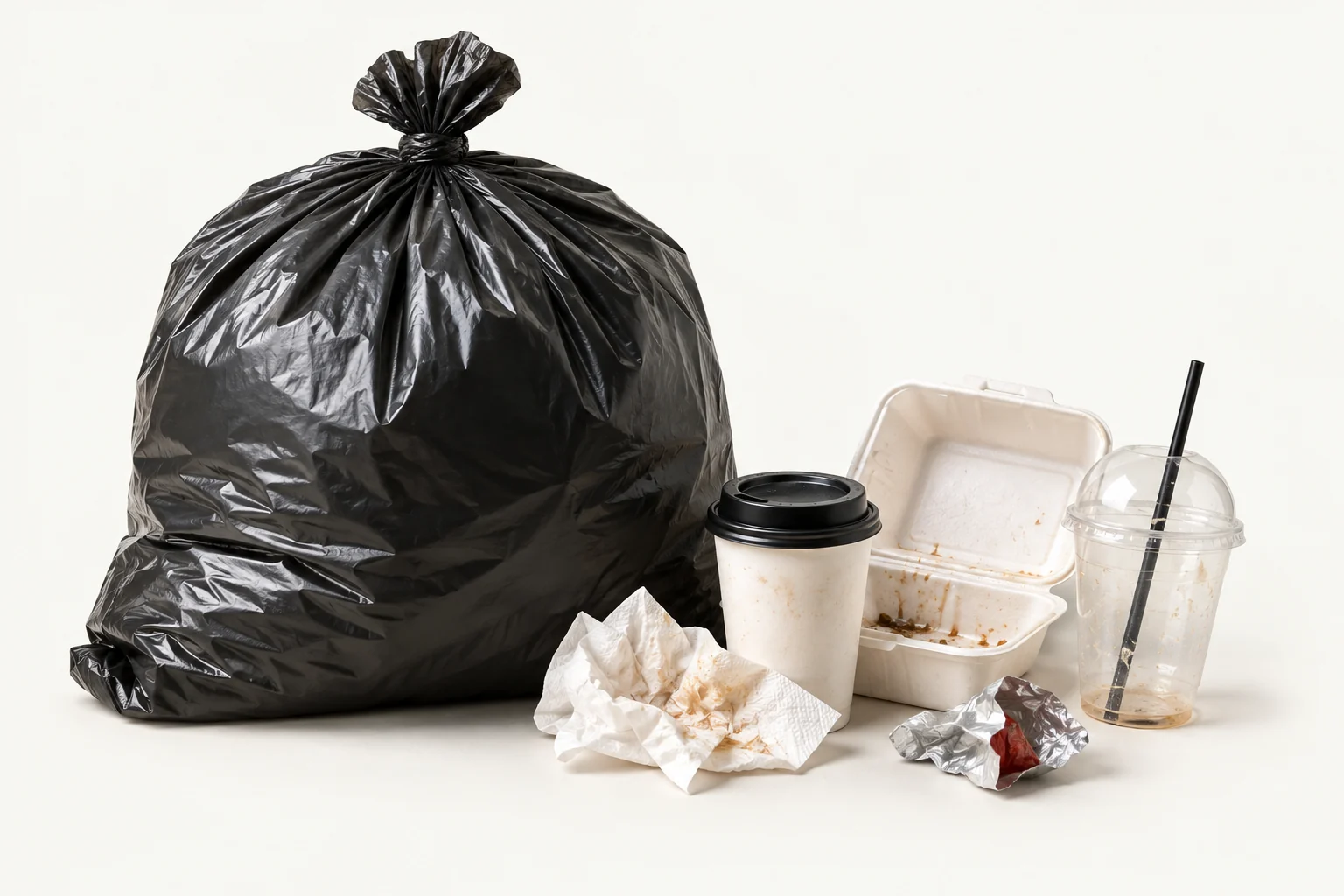
Pharmacy waste management in Melbourne typically costs $300-1,000 per month depending on prescription volume and services offered. A small community pharmacy pays $300-500/month, a busy discount pharmacy $500-700/month, and a pharmacy with compounding or aged care packing $700-1,000/month. General waste accounts for $100-250/month, pharmaceutical waste disposal $50-200/month, recycling $50-100/month, confidential document destruction $30-60/month, and sharps management $30-80/month.
How does the Return Unwanted Medicines (RUM) Project work?+
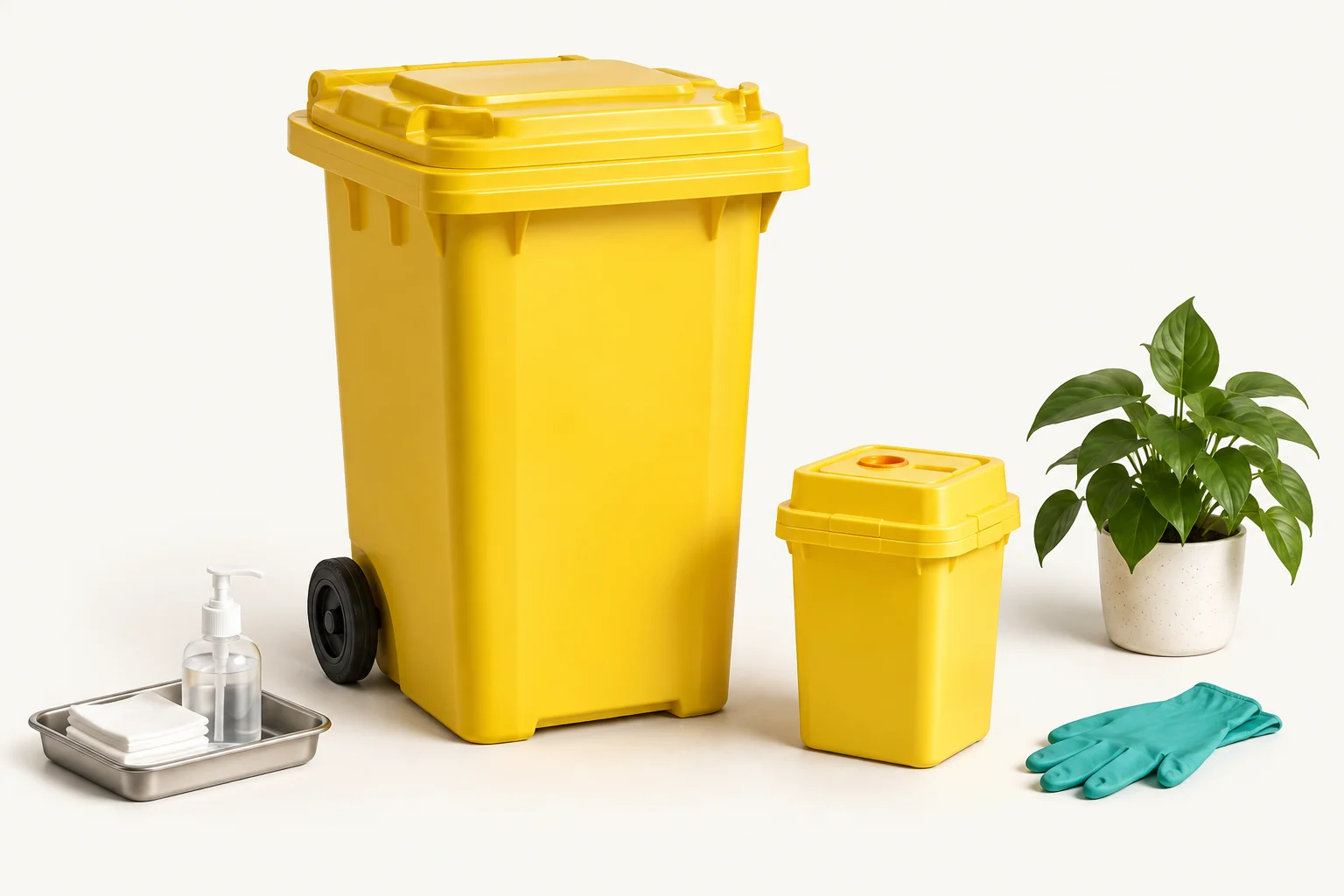
The RUM Project is a free national program funded by pharmaceutical manufacturers. Pharmacies provide a RUM bin for customers to return unwanted or expired medications. When full, the pharmacy seals the bin and it's collected for incineration at no cost to the pharmacy. Key points: RUM bins must be placed in the dispensary (not customer-accessible), customers should remove blister packs from outer boxes (boxes go in recycling), and Schedule 8 drugs should NOT go in RUM bins — they require separate witnessed destruction. Register at returnmed.com.au for free bins and collection.
How should pharmacies handle Schedule 8 drug destruction?+
Schedule 8 controlled substances (opioids, benzodiazepines, stimulants) must be destroyed under witnessed conditions per the Drugs, Poisons and Controlled Substances Act 1981 (Vic). Requirements: destruction must be witnessed by a pharmacist and one other authorised person, documented in the Schedule 8 register with date, quantity, method, and witnesses, and the physical destruction must render the drug irrecoverable (typically by pharmaceutical waste incineration). Many pharmacies arrange quarterly pharmaceutical waste collections that include witnessed S8 destruction. Keep records for minimum 3 years.
How should pharmacies manage customer-returned sharps?+
Under the National Sharps Strategy, pharmacies are encouraged (and in some jurisdictions required) to accept customer-returned sharps in approved containers. Provide compliant sharps containers (AS/NZS 4031) for exchange — customers return full containers and receive empty ones. Full containers go in the pharmaceutical waste stream for incineration. Costs: $50-100/month depending on volume. Never place sharps in general waste or recycling. Train all staff on safe sharps handling. Display signage about your sharps return service.
What are the confidential waste requirements for pharmacies?+
Pharmacies handle extensive personal health information protected by the Privacy Act 1988 and Health Records Act 2001 (Vic). Secure destruction is required for: prescriptions (after retention period), patient records, dispensing labels, delivery dockets with patient details, and any documents containing personal health information. Options: secure console bins ($30-60/month per console) collected by licensed destruction providers, or on-site shredding ($80-150 per visit). Certificates of destruction should be retained. Most pharmacies need 1-2 secure consoles.
What are hazardous waste disposal costs in Melbourne?+
Hazardous waste disposal in Melbourne ranges from $2–15/kg depending on waste type. Chemical waste costs $3–8/kg, asbestos removal $50–80/m², and liquid chemical disposal $300–800 per 200L drum. All hazardous waste must be handled by EPA-licensed transporters under the Environment Protection Act 2017.
How much does clinical waste disposal cost in Melbourne?+
Clinical waste disposal in Melbourne costs $0.80–2.50/litre depending on waste category. Sharps containers (5L) cost $8–15 each, cytotoxic waste $4–8/kg, and anatomical waste $5–12/kg. Healthcare facilities typically spend $300–1,200/month. All clinical waste must comply with EPA Victoria Publication 1669.
How much does grease trap servicing cost in Melbourne?+
Grease trap servicing in Melbourne costs $150–400 per service depending on trap size. A standard 1,000L trap costs $150–250, a 2,000L trap $250–400. Most food businesses need monthly or quarterly servicing. Failure to maintain grease traps can breach your trade-waste agreement, leading to penalties or suspension of your discharge consent by your water authority (such as South East Water or Yarra Valley Water).
What is the difference between clinical and general waste in healthcare?+
Clinical waste causes infection or injury (sharps, cytotoxic, anatomical, infectious). General is non-hazardous (paper, food, packaging). Clinical costs $0.80–2.50/L vs $0.15–0.25/L general. A large share of clinical bins typically contain general waste that could be segregated.
How should a Melbourne hospital manage its waste?+
Hospitals generate 5–10kg/bed/day across: general waste (40–50%), clinical waste (15–25%), recycling (10–15%), food waste (10–15%), pharmaceutical waste (5%), and confidential waste (5%). A 300-bed hospital spends $10,000–50,000/month. Clinical waste separation training is critical — misclassification costs $50,000–200,000/year in unnecessary clinical waste charges.
 Bundle Waste