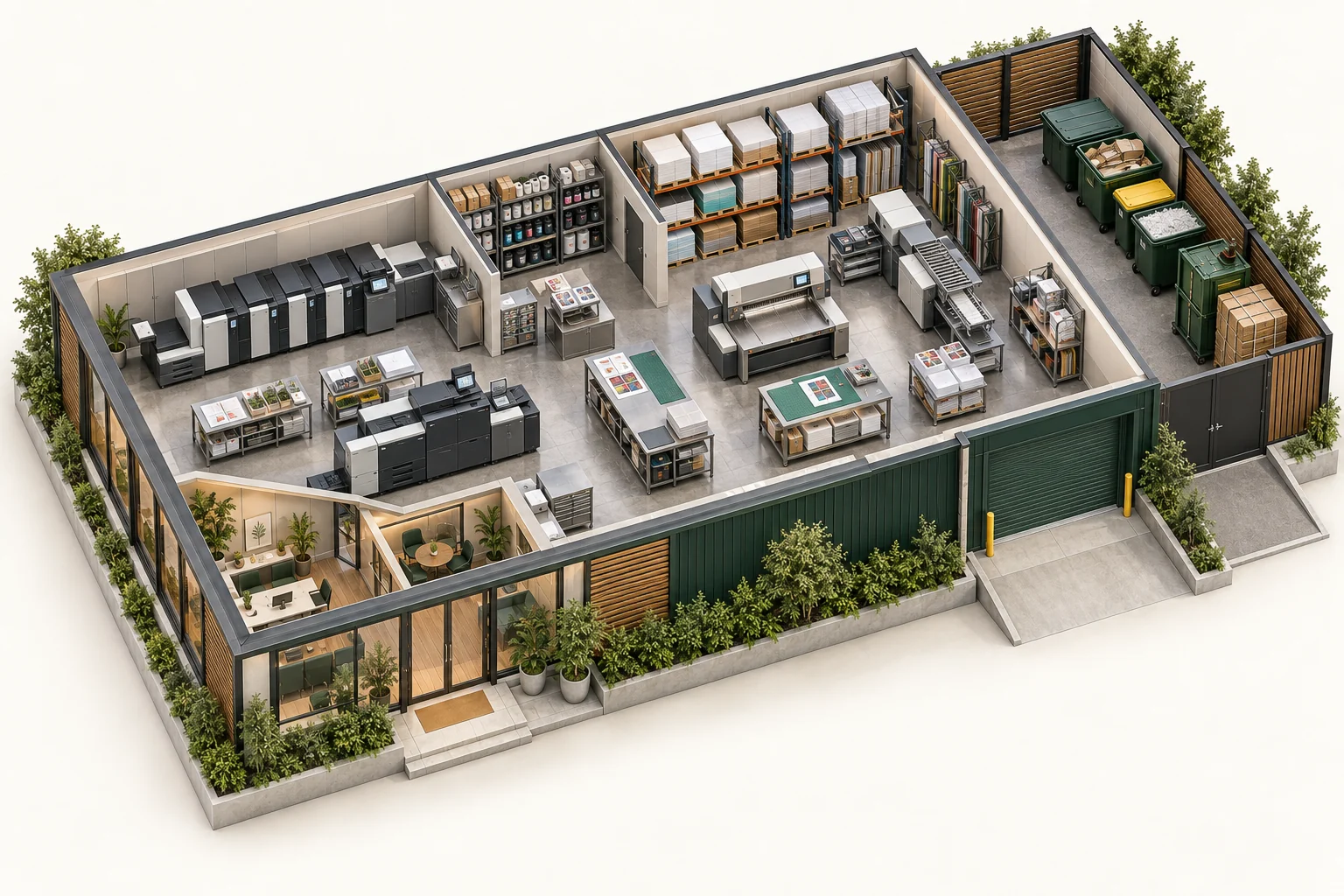
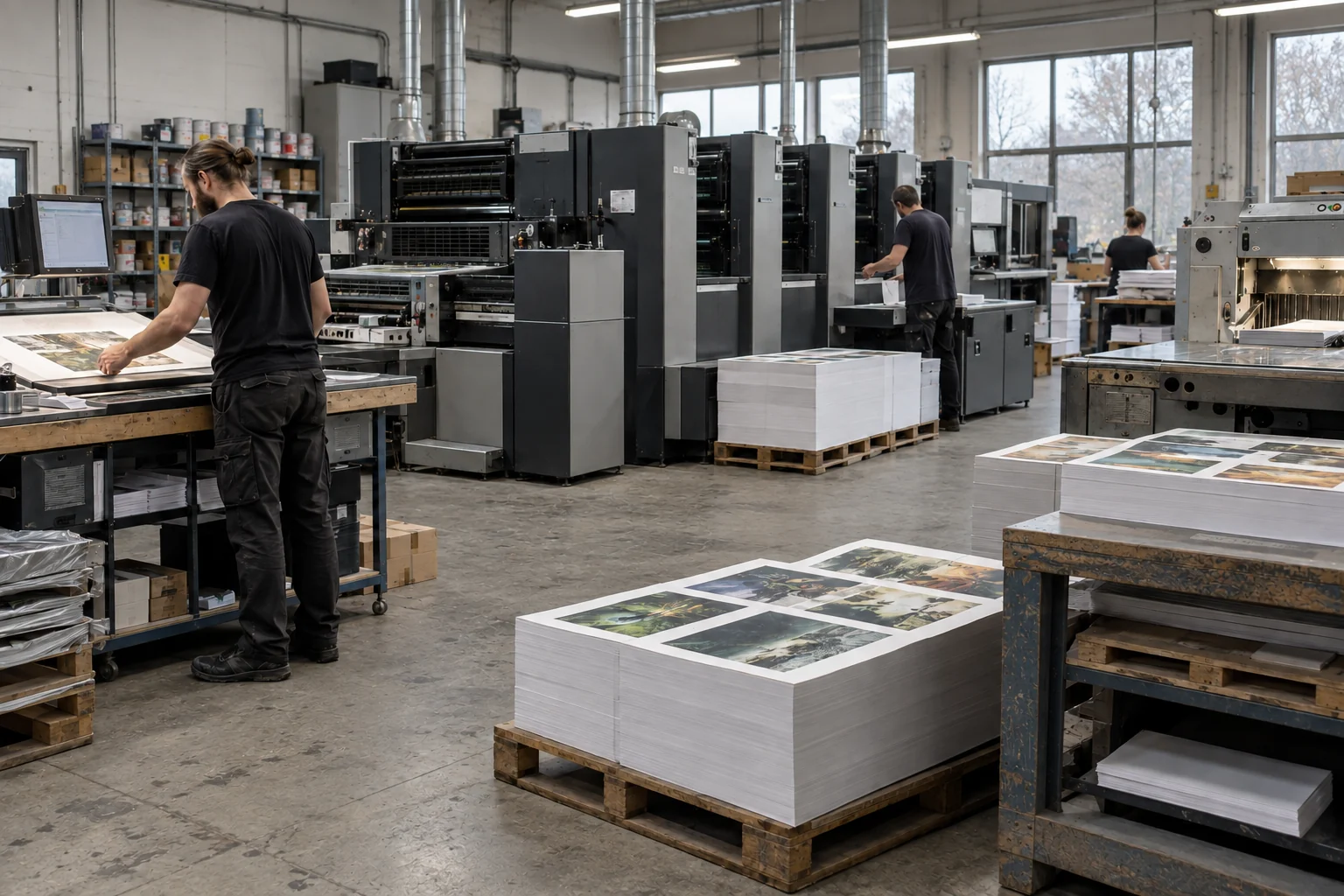
Managing waste in the printing companies sector requires understanding specific waste streams, compliance requirements, and cost-effective disposal options. Printing companies generate large volumes of paper waste (setup sheets, misprints, trim waste) alongside hazardous ink and solvent waste requiring specialist disposal. Plate processing chemicals are prescribed industrial waste. Clean paper waste has recycling value but contaminated (inked) paper may not. Solvent-based inks create VOC emission concerns. Offset, digital, and screen printing each produce different waste streams. Ink containers, solvent drums, and chemical waste add complexity. Paper recycling markets fluctuate. Bundle Waste specialises in helping printing companies businesses across Melbourne find the best waste management rates.
Printing companies generate large volumes of paper waste (setup sheets, misprints, trim waste) alongside hazardous ink and solvent waste requiring specialist disposal. Plate processing chemicals are prescribed industrial waste. Clean paper waste has recycling value but contaminated (inked) paper may not. Solvent-based inks create VOC emission concerns. Offset, digital, and screen printing each produce different waste streams. Ink containers, solvent drums, and chemical waste add complexity. Paper recycling markets fluctuate.
How much does printing company waste management cost in Melbourne?+
Printing company waste management in Melbourne typically costs $500-3,000 per month depending on print volume and type. A small digital print shop pays $500-800/month, a medium offset printer pays $800-1,500/month, and a large commercial printer pays $1,500-3,000+/month. Paper waste recycling (often generates revenue of $50-200/month), ink and solvent disposal ($200-600/month), general waste ($200-400/month), and plate waste ($50-150/month). Clean paper recycling revenue can offset up to 20% of total waste costs.
How should printing companies manage ink waste?+
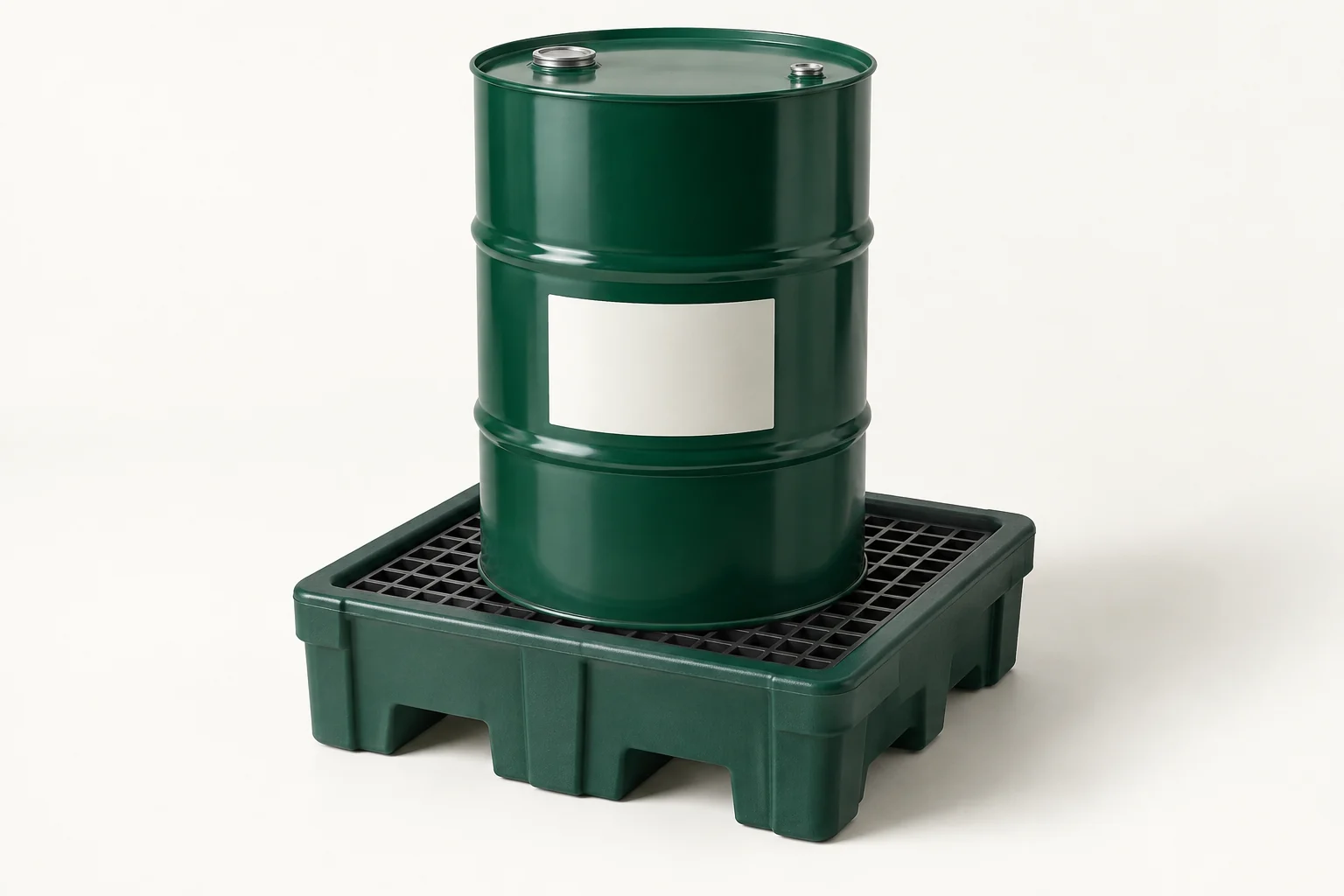
Ink waste management depends on ink type: solvent-based inks are prescribed industrial waste (PIW) requiring licensed transport and disposal ($300-800 per collection), UV-curable ink waste requires specialist disposal due to photochemical reactivity, water-based ink waste may be discharged to sewer with trade waste agreement (if diluted below limits), and dried ink residue may be classified as general waste. Store ink waste in sealed, labelled containers in bunded areas. Never pour ink waste down drains. Keep different ink types separated for disposal.
Can printing companies recycle paper waste?+
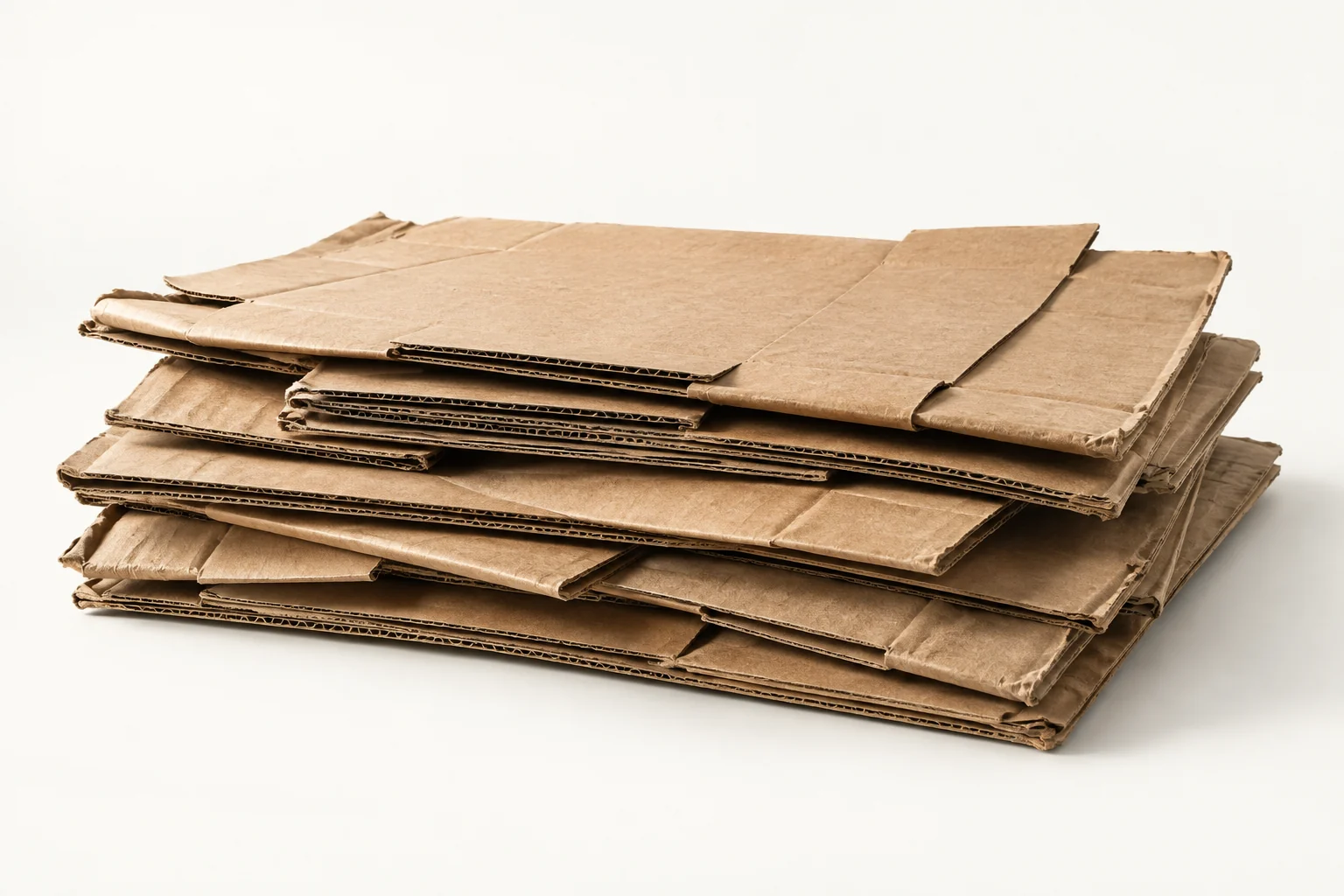
Yes, and it should generate revenue. Clean paper waste (setup sheets, trim, unprinted offcuts) is worth $80-150/tonne to paper recyclers. Printed waste paper is worth less ($40-80/tonne) but still recyclable. However, paper contaminated with heavy UV ink coatings, lamination, or adhesive labels may not be recyclable. Segregation is key: keep clean paper, printed paper, and contaminated paper in separate bins. A baler ($3,000-6,000) compresses paper waste into dense bales with better per-tonne value. Most medium printers generate 1-5 tonnes of paper waste monthly.
What are the solvent waste requirements for printers in Victoria?+
Solvents used in press cleaning, blanket wash, and roller wash are prescribed industrial waste under EPA Victoria regulations. Requirements: store in sealed, labelled containers in bunded areas, collect via EPA-licensed transporters, track with transport certificates (retain 3 years), and monitor workplace exposure limits (WorkSafe Victoria). Solvent recycling is available — distilled solvents can be reused, reducing both disposal costs and new solvent purchases. Costs: $400-1,000 per collection depending on volume. Some suppliers offer take-back programs for spent solvents.
How should printing plate waste be managed?+
Aluminium offset plates are valuable recycling material ($500-1,500/tonne depending on market). Used plates should be stacked and sold to metal recyclers rather than discarded. Plate processing chemicals (developer, gum, fountain solution) are prescribed industrial waste requiring specialist disposal. Digital plates may have different disposal requirements depending on composition. A medium-size offset printer generates enough plate waste to earn $50-150/month in recycling credit. Never put plates in general waste — they're worth more than the disposal would cost.
What are hazardous waste disposal costs in Melbourne?+
Hazardous waste disposal in Melbourne ranges from $2–15/kg depending on waste type. Chemical waste costs $3–8/kg, asbestos removal $50–80/m², and liquid chemical disposal $300–800 per 200L drum. All hazardous waste must be handled by EPA-licensed transporters under the Environment Protection Act 2017.
How much does clinical waste disposal cost in Melbourne?+
Clinical waste disposal in Melbourne costs $0.80–2.50/litre depending on waste category. Sharps containers (5L) cost $8–15 each, cytotoxic waste $4–8/kg, and anatomical waste $5–12/kg. Healthcare facilities typically spend $300–1,200/month. All clinical waste must comply with EPA Victoria Publication 1669.
How much does grease trap servicing cost in Melbourne?+
Grease trap servicing in Melbourne costs $150–400 per service depending on trap size. A standard 1,000L trap costs $150–250, a 2,000L trap $250–400. Most food businesses need monthly or quarterly servicing. Failure to maintain grease traps can breach your trade-waste agreement, leading to penalties or suspension of your discharge consent by your water authority (such as South East Water or Yarra Valley Water).
What is the difference between clinical and general waste in healthcare?+
Clinical waste causes infection or injury (sharps, cytotoxic, anatomical, infectious). General is non-hazardous (paper, food, packaging). Clinical costs $0.80–2.50/L vs $0.15–0.25/L general. A large share of clinical bins typically contain general waste that could be segregated.
How should a Melbourne hospital manage its waste?+
Hospitals generate 5–10kg/bed/day across: general waste (40–50%), clinical waste (15–25%), recycling (10–15%), food waste (10–15%), pharmaceutical waste (5%), and confidential waste (5%). A 300-bed hospital spends $10,000–50,000/month. Clinical waste separation training is critical — misclassification costs $50,000–200,000/year in unnecessary clinical waste charges.
 Bundle Waste