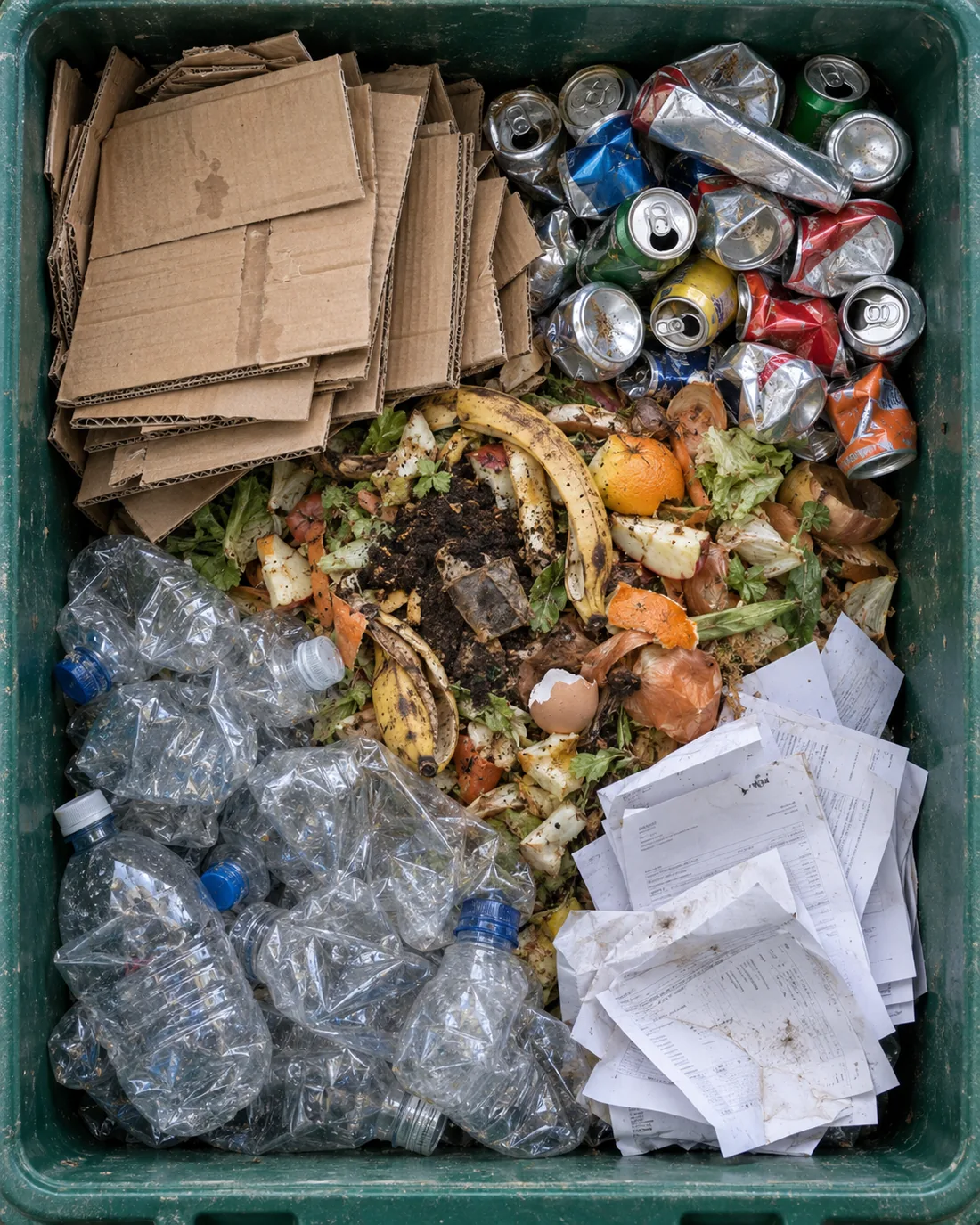
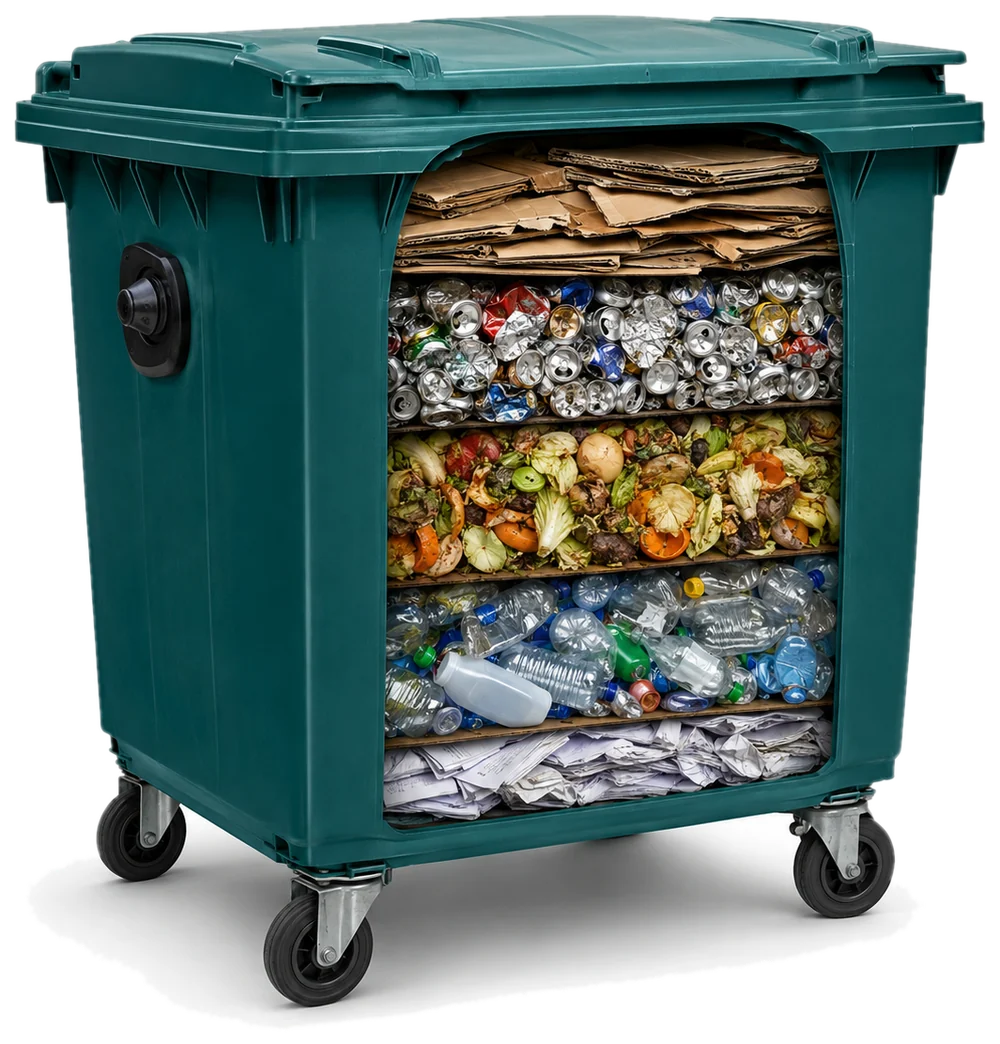
Start with the materials your business produces. We look at separation, storage and collection options for the way your site works.
Food waste
Understand what is produced and where it can be kept separate.
Glass
Plan where bottles and jars are stored between collections.
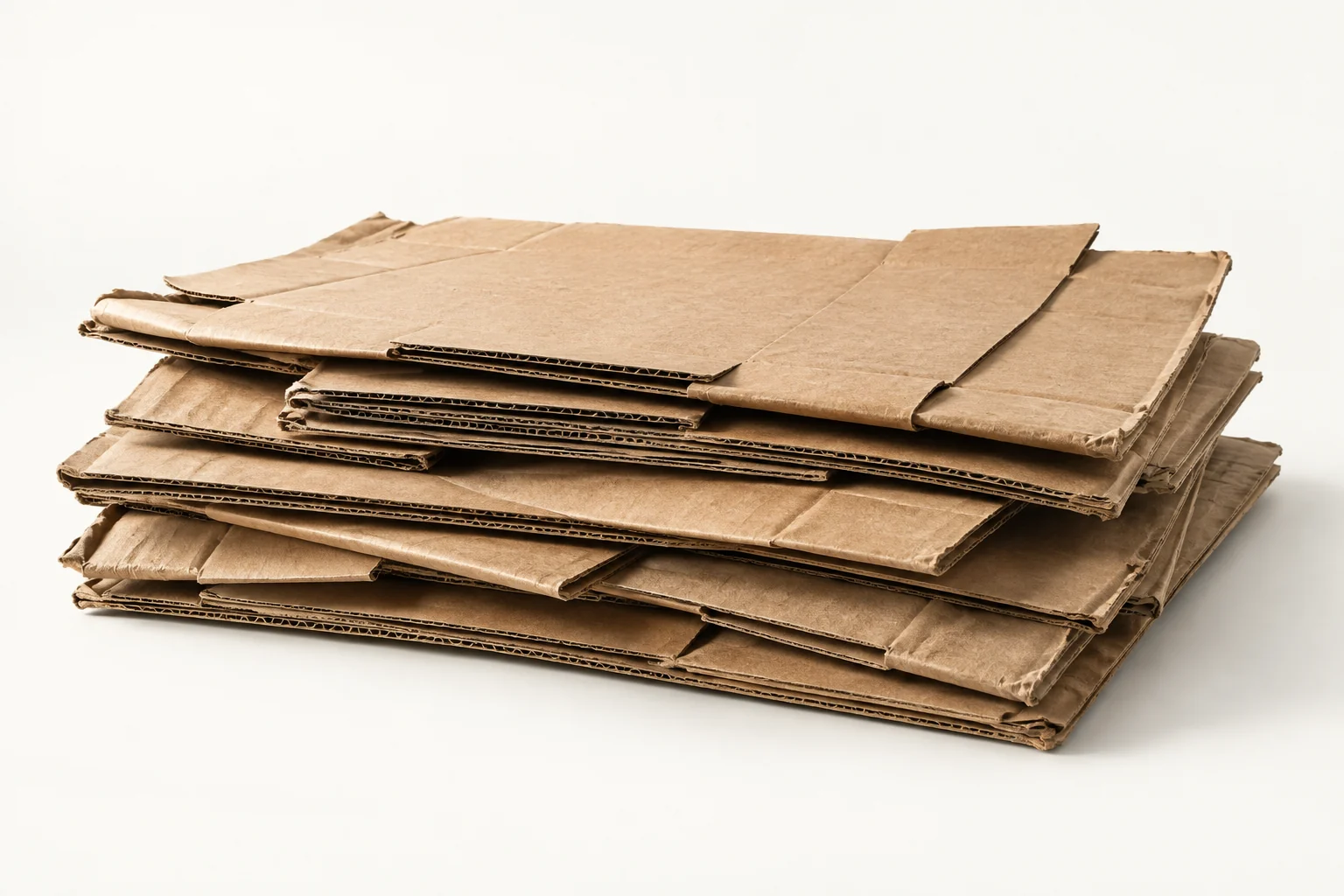
Cardboard
Keep the material separate and discuss storage and collection volumes.
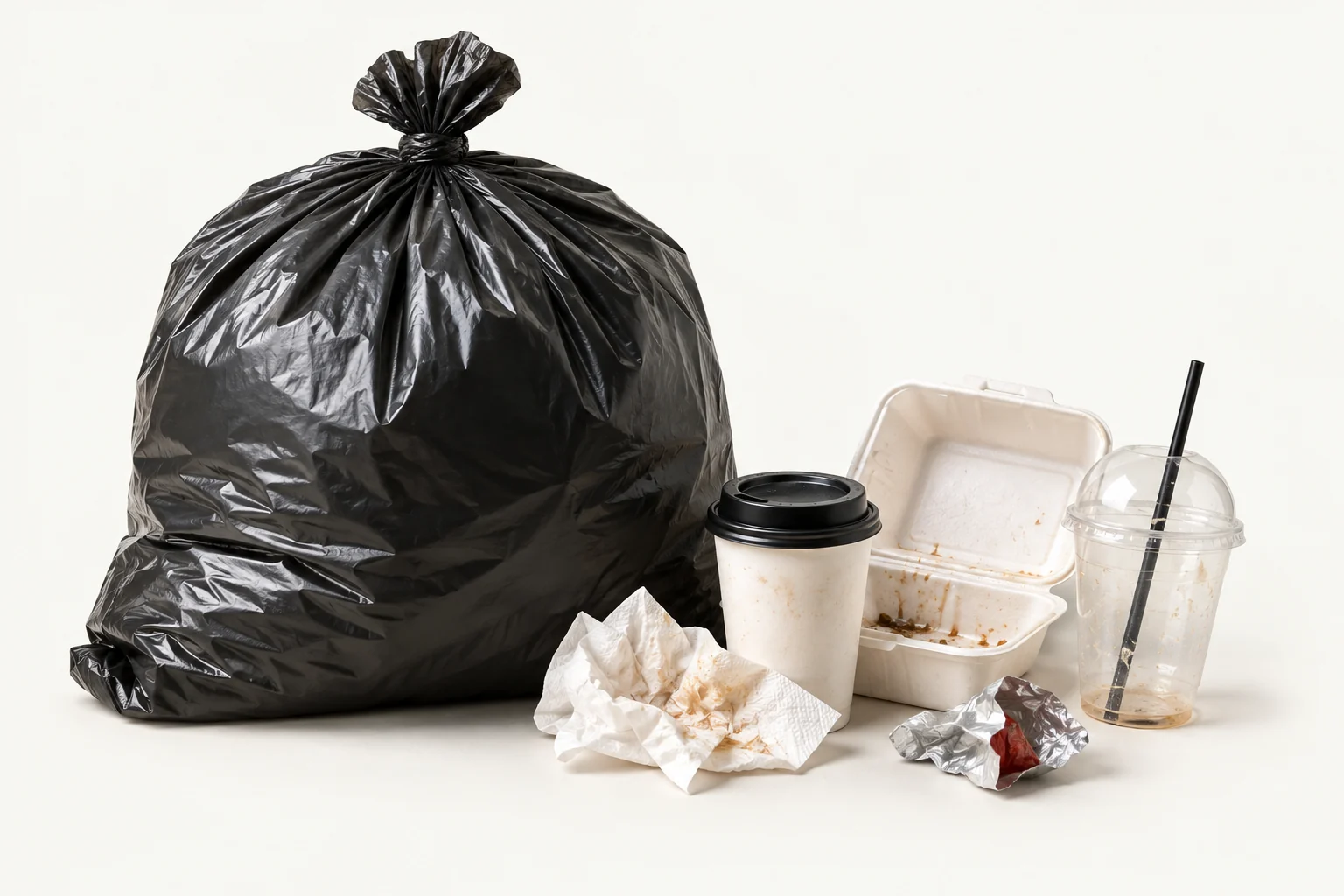
General waste
Match the collection arrangement to the material your site produces.
Operations
Plan the collection around your site.
Every operation is different. Start with where materials arise, where bins fit and how a collection vehicle reaches them.
Identify usable bin space, separation points and a practical route from each work area.
01Prep
02Service
03Close
04Collection
Storage & separation
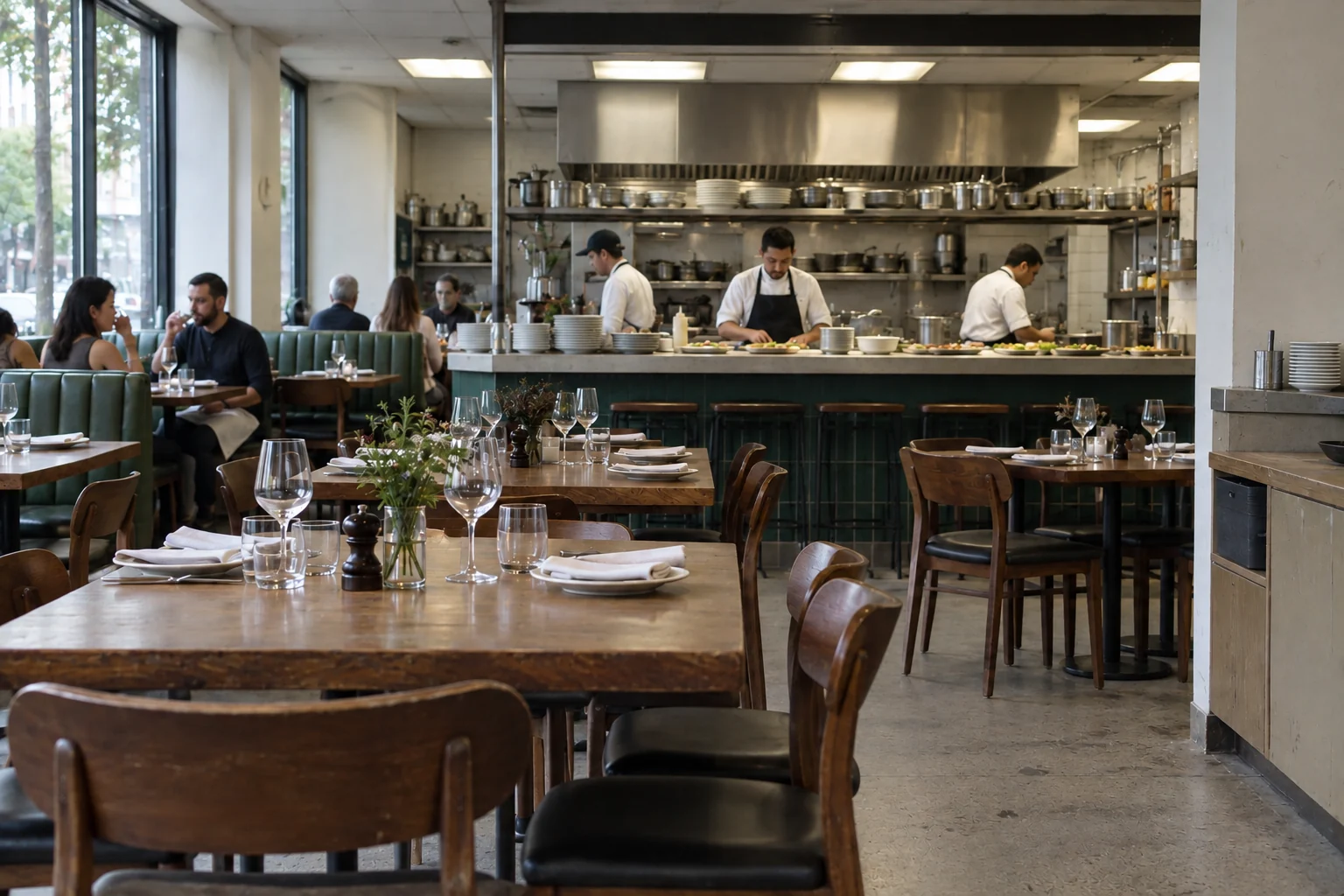
Illustrative business setting · your actual site is assessed individually
Build the brief
What we need to understand your operation.
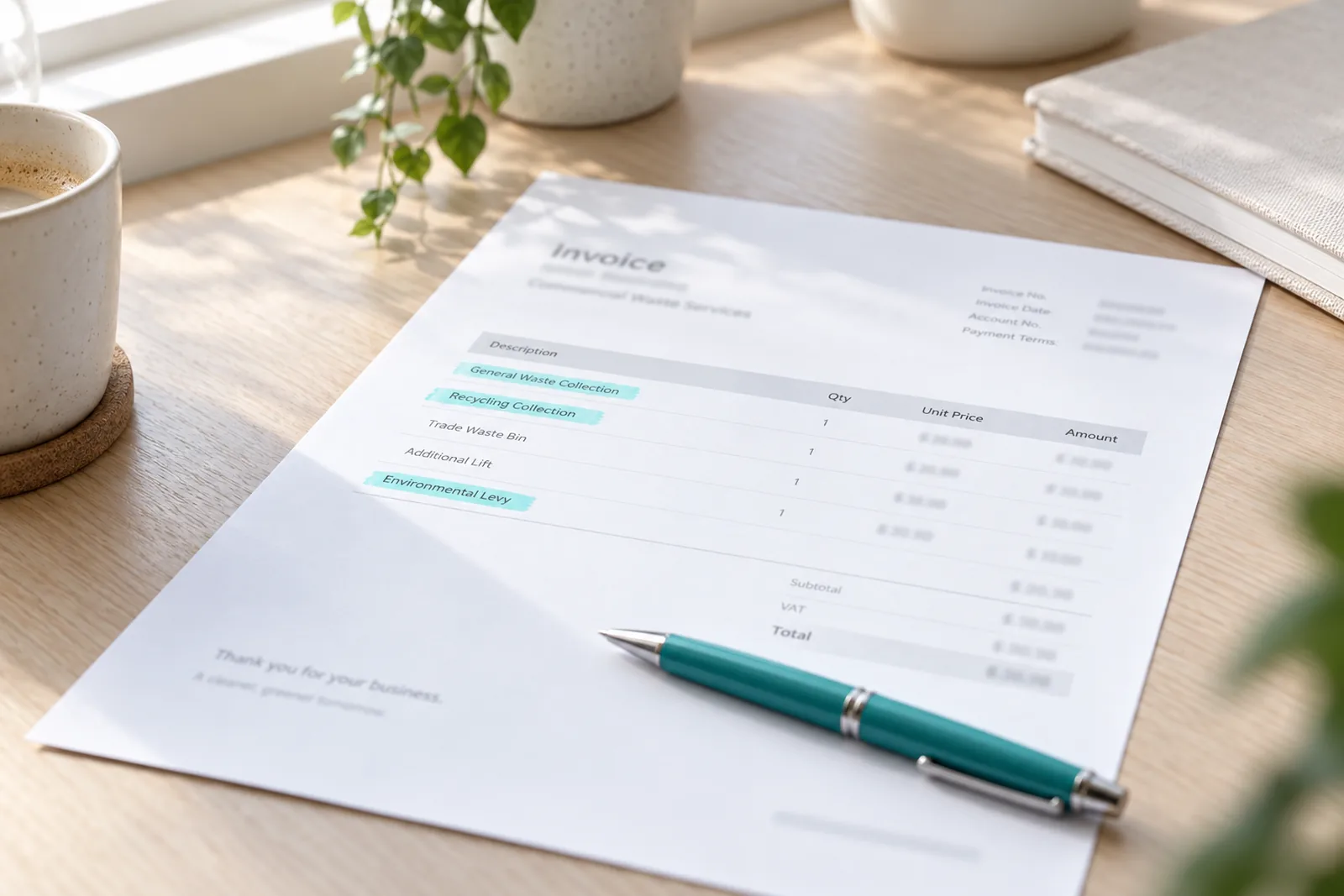
Your invoice
Current services, charges and contract information.
Your materials
The streams you produce and how they are separated.
Access & storage
Available bin space and vehicle access.
Collection windows
Opening hours and preferred collection times.
Restaurants & Dining7 min readBy Pedro CarreiraUpdated 3 September 2026
$500-2,500
Typical Monthly Spend
Melbourne CBD
Service Area
up to 30%
Typical Savings
Restaurants & Dining businesses in Melbourne CBD have specific waste management requirements. From food waste to cooking oil disposal, Bundle Waste works with a network of providers to find the most cost-effective waste solution for your restaurants & dining business.
Restaurants & Dining in Melbourne CBD
The restaurants & dining sector in Melbourne CBD presents specific waste management needs. Melbourne's central business district is the commercial heart of Victoria, home to corporate headquarters, major retail precincts, hospitality venues, and high-rise office towers. The area generates significant volumes of commercial waste from restaurants, hotels, and office buildings concentrated within a compact urban footprint. With strict City of Melbourne waste collection windows and limited loading dock access, businesses here need efficient, well-timed waste management solutions. Businesses in this sector typically generate food waste, cooking oil, glass bottles waste streams.
Common Waste Streams
food waste
cooking oil
glass bottles
cardboard
general waste
grease trap waste
recycling
Local Regulations and Compliance
Businesses in the restaurants & dining sector must comply with Victorian waste regulations including the Environment Protection Act 2017 and general environmental duty obligations.
Trade waste agreement with Melbourne Water or relevant water authority
Grease trap maintenance records and pump-out schedule
Food safety waste disposal under Food Act 1984
EPA Victoria commercial waste regulations
Local council noise restrictions on collection times
Waste Management Costs for Restaurants & Dining in Melbourne CBD
Typical monthly waste management spend for restaurants & dining businesses in Melbourne CBD is $500-2,500. Bundle Waste negotiates savings of up to 30% for our restaurants & dining clients in Melbourne CBD.
How much does restaurant waste management cost in Melbourne CBD?+
Restaurant waste management in Melbourne CBD typically costs $500-2,500 per month depending on size and cuisine type. This includes general waste ($100-400/month), food organics ($80-300/month), recycling ($50-150/month), glass ($50-150/month), cardboard ($50-100/month), grease trap pump-outs ($150-400/quarter), and cooking oil collection (often free or rebated). CBD restaurants pay 10-20% more due to access constraints and parking levies. A waste broker can typically reduce these costs by up to 30%.
How often should restaurant grease traps be pumped out?+
Grease trap pump-out frequency depends on size and kitchen output: small cafe-style restaurants need quarterly pump-outs, busy full-service restaurants need monthly, and high-volume kitchens (fast food, Asian cuisine with high oil use) may need fortnightly. Melbourne CBD Water mandates regular maintenance as part of trade waste agreements. Costs range from $150-400 per pump-out depending on trap size. Missing scheduled pump-outs can cause sewer blockages, resulting in fines up to $30,000 and cleanup costs.
What are the trade waste agreement requirements for restaurants in Melbourne CBD?+
Any restaurant discharging kitchen wastewater to sewer needs a trade waste agreement with Melbourne CBD Water (or South East Water, Yarra Valley Water, or Western Water depending on location). Requirements include: an approved grease trap or grease interceptor, regular maintenance records, compliance with discharge quality limits (fats/oils/grease under 100mg/L), and payment of trade waste fees ($300-1,500/year plus volumetric charges). Applications take 4-8 weeks. Operating without an agreement can result in fines exceeding $30,000.
What is the cost of waste management for restaurants in Melbourne?+
Melbourne restaurants typically spend $400–1,200/month on waste management: general waste $150–350, food organics $80–200, recycling $60–150, cooking oil $40–80, and grease trap servicing $150–400/quarter. High-volume venues (300+ covers/day) can exceed $1,500/month. Bundle Waste restaurant audits typically save up to 30%.
What are typical waste costs in Melbourne CBD vs outer suburbs?+
Melbourne CBD waste costs are 10–25% higher than outer suburbs due to restricted collection hours (typically before 7am or after 7pm), narrow lane access requiring smaller vehicles, and council permit requirements. A 1100L general waste bin costs $100–200/month in the CBD vs $80–160 in outer suburbs.
How much does grease trap servicing cost in Melbourne?+
Grease trap servicing in Melbourne costs $150–400 per service depending on trap size. A standard 1,000L trap costs $150–250, a 2,000L trap $250–400. Most food businesses need monthly or quarterly servicing. Failure to maintain grease traps can breach your trade-waste agreement, leading to penalties or suspension of your discharge consent by your water authority (such as South East Water or Yarra Valley Water).
How much more does after-hours waste collection cost?+
After-hours collection (before 6am or after 6pm) costs up to 30% more than standard hours. CBD businesses collecting outside peak hours should factor $20–50 extra per lift. Weekend collections attract 20–40% surcharge. Night collections (10pm–5am) carry 30–50% premium.
Free Waste Audit for Restaurants & Dining in Melbourne CBD
We specialise in Restaurants & Dining waste management across Melbourne CBD. Get a free audit and find out how much you could save.
 Bundle Waste