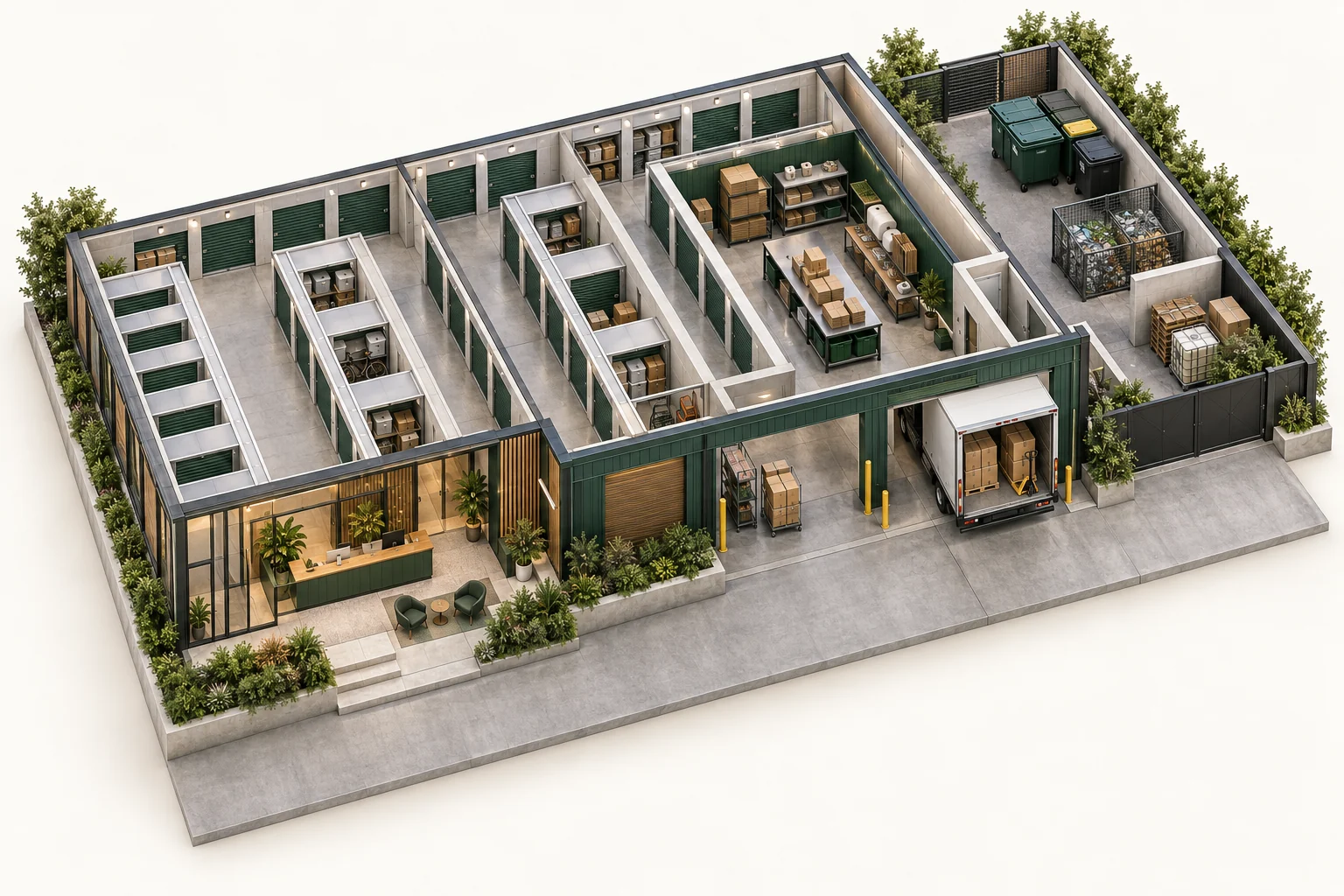
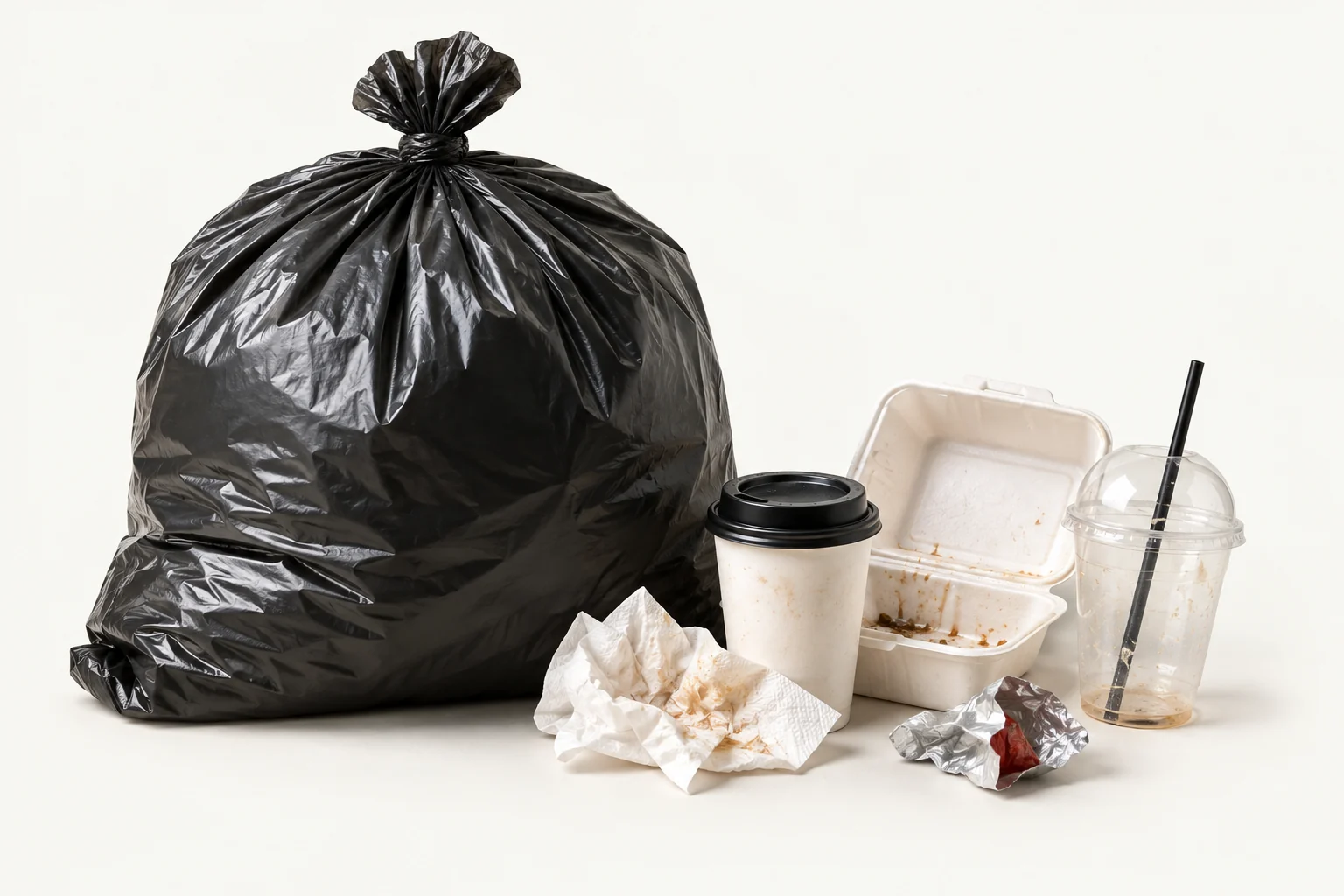
Managing waste in the self-storage facilities sector requires understanding specific waste streams, compliance requirements, and cost-effective disposal options. Self-storage facilities deal with the waste consequences of people clearing out their lives — tenants frequently abandon unwanted items, illegally dump in common areas, and leave waste in vacated units. Hard waste (furniture, mattresses, appliances) is the dominant challenge. E-waste from stored electronics accumulates. Hazardous items (paint, chemicals, gas bottles) are sometimes abandoned despite rules. Managing tenant waste behaviour through clear policies and enforcement is key to controlling costs. Bundle Waste specialises in helping self-storage facilities businesses across Melbourne find the best waste management rates.
Self-storage facilities deal with the waste consequences of people clearing out their lives — tenants frequently abandon unwanted items, illegally dump in common areas, and leave waste in vacated units. Hard waste (furniture, mattresses, appliances) is the dominant challenge. E-waste from stored electronics accumulates. Hazardous items (paint, chemicals, gas bottles) are sometimes abandoned despite rules. Managing tenant waste behaviour through clear policies and enforcement is key to controlling costs.
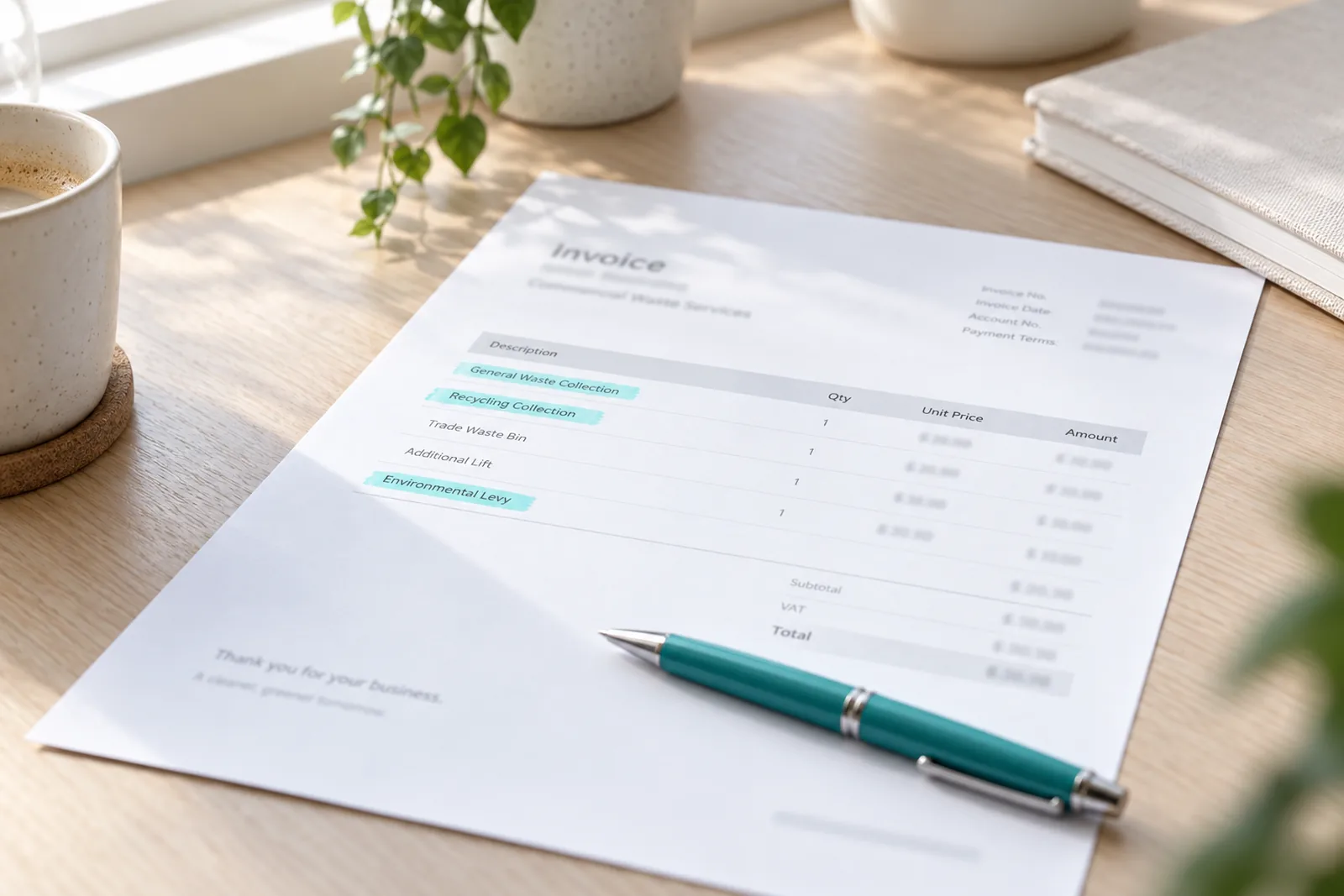
Typical monthly waste management spend for self-storage facilities businesses is $500-2,000. This covers all waste streams including general waste, recycling, and any specialist disposal. Bundle Waste typically negotiates up to 30% savings for self-storage facilities clients.
How much does self-storage facility waste management cost in Melbourne?+
Self-storage facility waste management in Melbourne typically costs $500-2,000 per month depending on facility size and tenant turnover. A small facility (100-200 units) pays $500-800/month, a mid-size facility (300-500 units) pays $800-1,300/month, and a large facility (500+ units) pays $1,300-2,000/month. General waste accounts for $200-500/month, hard waste removal $200-500/month (variable), recycling $50-150/month, and periodic skip bin hires for cleanouts $300-600 each. Abandoned unit cleanouts are additional.
How should self-storage facilities handle abandoned unit contents?+
When tenants default and abandon unit contents, facilities must follow the Storage Liens Act 1986 (Vic) before disposal. After required notice periods and lien procedures: salvageable items can be sold to recoup unpaid rent, remaining items need disposal. Options: skip bin hire for general clearout ($300-600 per 3-6m³ skip), donation of usable furniture/goods to charities (reduces disposal costs and provides tax deduction), e-waste collection for electronics, and mattress recycling programs ($15-30 per mattress, cheaper than landfill for large volumes). Budget $200-500 per abandoned unit for waste disposal.
What are the illegal dumping challenges at self-storage facilities?+
Tenants commonly dump unwanted items in driveways, near bins, and in corridors rather than disposing of them properly. This costs $200-500+ monthly in unplanned waste removal. Deterrence strategies: CCTV at bin areas and common spaces, clear signage stating dumping penalties, bin area access restricted to facility hours, locked skip bins accessible only by management, tenant waste disposal guides at sign-up, and lease clauses allowing cost recovery for illegal dumping. Some facilities charge a small waste levy (included in rent) to fund disposal of inevitably abandoned items.
How should self-storage facilities manage e-waste?+
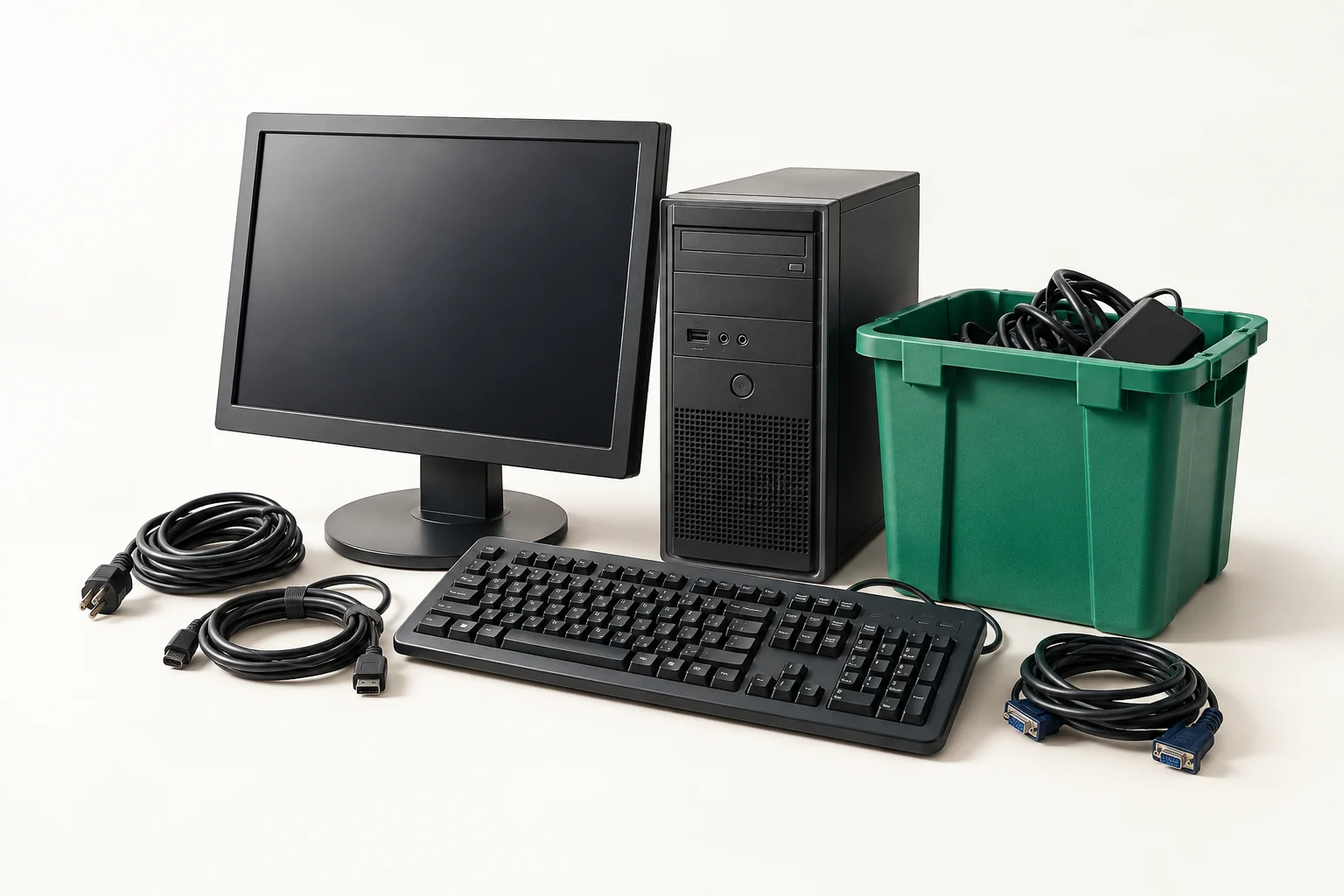
Abandoned electronics (TVs, computers, appliances) are common in self-storage. Under Victoria's e-waste ban (since 2019), these cannot go to landfill. Options: accumulate e-waste and arrange bulk collection by licensed e-waste recyclers (often free for 20+ items), establish a permanent e-waste collection cage, partner with e-waste recyclers for ongoing pickup, or direct tenants to council e-waste drop-off points. E-waste should be stored under cover and separated from other waste. Budget for at least quarterly e-waste collection.
What fire safety requirements apply to self-storage waste areas?+
Waste storage at self-storage facilities poses fire risks — particularly combustible items like mattresses, furniture, and cardboard. Requirements: waste must not be stored against unit doors or in corridors, skip bins should be 3+ metres from buildings, waste areas need fire extinguisher access, combustible waste volume limits should be set and enforced, regular waste area inspections (weekly minimum), and compliance with CFA/MFB fire safety regulations. Insurance companies increasingly scrutinise waste management practices during audits.
What are hazardous waste disposal costs in Melbourne?+
Hazardous waste disposal in Melbourne ranges from $2–15/kg depending on waste type. Chemical waste costs $3–8/kg, asbestos removal $50–80/m², and liquid chemical disposal $300–800 per 200L drum. All hazardous waste must be handled by EPA-licensed transporters under the Environment Protection Act 2017.
How much does clinical waste disposal cost in Melbourne?+
Clinical waste disposal in Melbourne costs $0.80–2.50/litre depending on waste category. Sharps containers (5L) cost $8–15 each, cytotoxic waste $4–8/kg, and anatomical waste $5–12/kg. Healthcare facilities typically spend $300–1,200/month. All clinical waste must comply with EPA Victoria Publication 1669.
How much does grease trap servicing cost in Melbourne?+
Grease trap servicing in Melbourne costs $150–400 per service depending on trap size. A standard 1,000L trap costs $150–250, a 2,000L trap $250–400. Most food businesses need monthly or quarterly servicing. Failure to maintain grease traps can breach your trade-waste agreement, leading to penalties or suspension of your discharge consent by your water authority (such as South East Water or Yarra Valley Water).
What is the difference between clinical and general waste in healthcare?+
Clinical waste causes infection or injury (sharps, cytotoxic, anatomical, infectious). General is non-hazardous (paper, food, packaging). Clinical costs $0.80–2.50/L vs $0.15–0.25/L general. A large share of clinical bins typically contain general waste that could be segregated.
How should a Melbourne hospital manage its waste?+
Hospitals generate 5–10kg/bed/day across: general waste (40–50%), clinical waste (15–25%), recycling (10–15%), food waste (10–15%), pharmaceutical waste (5%), and confidential waste (5%). A 300-bed hospital spends $10,000–50,000/month. Clinical waste separation training is critical — misclassification costs $50,000–200,000/year in unnecessary clinical waste charges.
 Bundle Waste