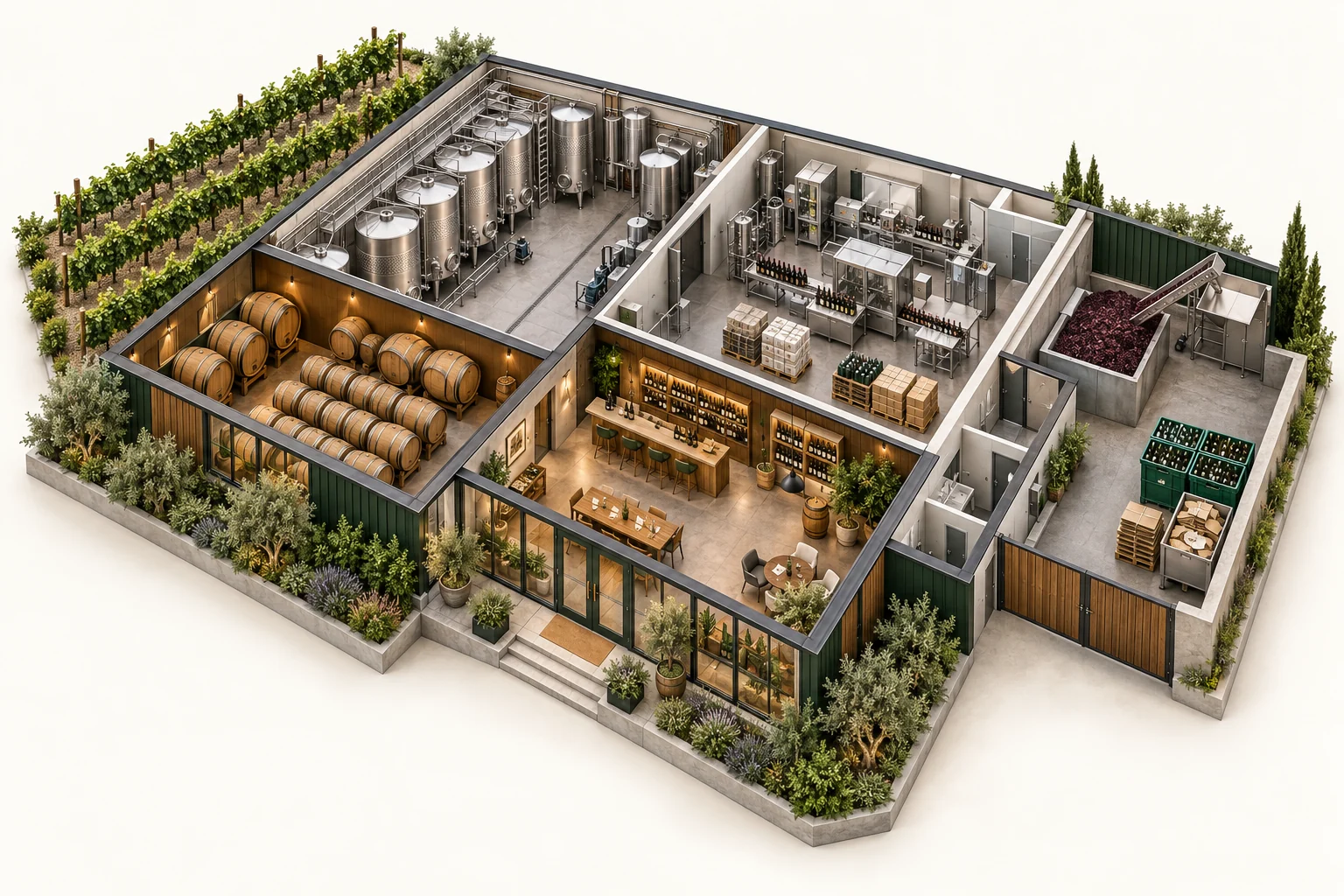
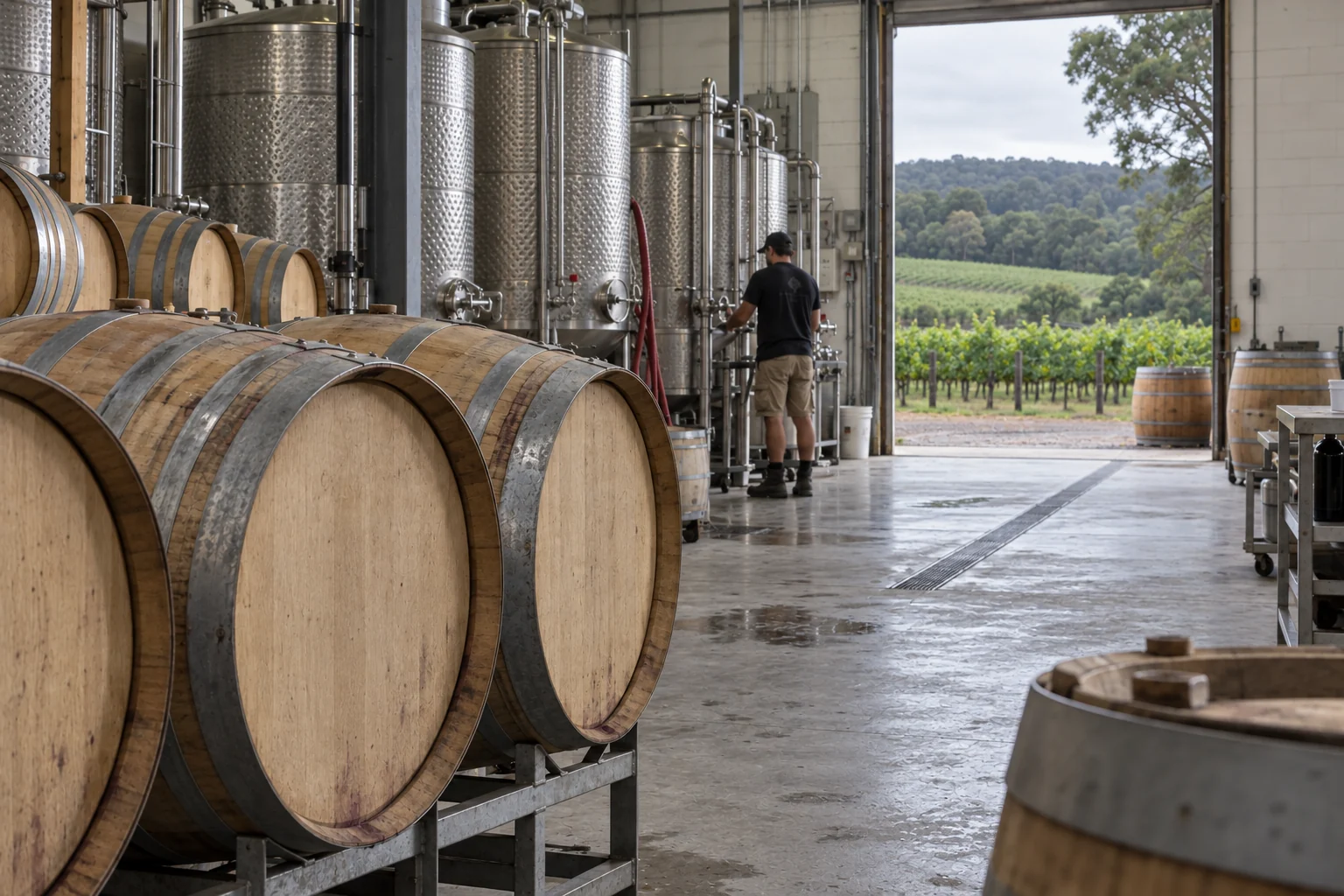
Managing waste in the wineries sector requires understanding specific waste streams, compliance requirements, and cost-effective disposal options. Wineries generate large volumes of organic byproducts (grape marc, stems, lees) seasonally concentrated during vintage. Winery wastewater has extremely high biochemical oxygen demand (BOD) and low pH requiring careful management. Glass breakage in bottling operations creates waste. Packaging waste (cardboard, shrink wrap) is significant for bottling and dispatch. Many Yarra Valley and Mornington Peninsula wineries are in environmentally sensitive areas with strict EPA oversight. Vintage period creates a 6-8 week waste surge requiring flexible services. Bundle Waste specialises in helping wineries businesses across Melbourne find the best waste management rates.
Wineries generate large volumes of organic byproducts (grape marc, stems, lees) seasonally concentrated during vintage. Winery wastewater has extremely high biochemical oxygen demand (BOD) and low pH requiring careful management. Glass breakage in bottling operations creates waste. Packaging waste (cardboard, shrink wrap) is significant for bottling and dispatch. Many Yarra Valley and Mornington Peninsula wineries are in environmentally sensitive areas with strict EPA oversight. Vintage period creates a 6-8 week waste surge requiring flexible services.
How much does winery waste management cost in Victoria?+
Winery waste management in Victoria typically costs $500-3,000 per month depending on production volume, with significant seasonal variation. A small boutique winery (under 100 tonnes crush) pays $500-1,000/month on average, a mid-size winery (100-500 tonnes) pays $1,000-2,000/month, and larger wineries pay $2,000-3,000+/month. Costs spike during vintage (February-April): marc disposal ($50-100/tonne), wastewater management ($300-800/month during vintage), general waste ($200-500/month), and packaging recycling ($100-300/month).
How should wineries manage grape marc and stems?+
Grape marc (pressed skins, seeds, and stems) is a winery's largest solid waste stream — roughly 15-20% of crushed fruit weight. Options: composting on-site (cheapest if land is available, produces vineyard mulch), supply to distilleries for grappa/grape spirit production, animal feed supplement for cattle, commercial composting or anaerobic digestion ($50-100/tonne for collection), or marc oil extraction. Some distillers collect marc for free during vintage. Planning marc disposal before vintage avoids rushed, expensive solutions. Never stockpile marc near waterways — runoff is highly acidic.
What wastewater management is required for Victorian wineries?+
Winery wastewater has extremely high BOD (up to 20,000mg/L during vintage) and low pH — it cannot be discharged to waterways or stormwater. Options: irrigation to land (requires EPA Works Approval for volumes over 5,000L/day), municipal sewer (requires trade waste agreement and typically pre-treatment), on-site treatment lagoons or constructed wetlands, or tankering to licensed treatment facilities. EPA Victoria is strict on Yarra Valley and Mornington Peninsula wineries due to catchment sensitivity. Vintage wastewater volumes can be 5-10x non-vintage periods.
How should wineries manage glass waste from bottling?+
Bottling line breakage, reject bottles, and damaged stock create glass waste. Best practices: separate glass by colour if practical (higher recycling value for sorted glass), use a glass recycling skip for high-volume bottling days, collect fragments in heavy-duty drums to prevent injury, and arrange recycling collection coordinated with bottling schedules. Glass recycling is typically free or low-cost for clean, sorted glass. For wineries with on-site cellar doors, front-of-house glass bins service tasting and food operations.
What packaging waste do wineries generate?+
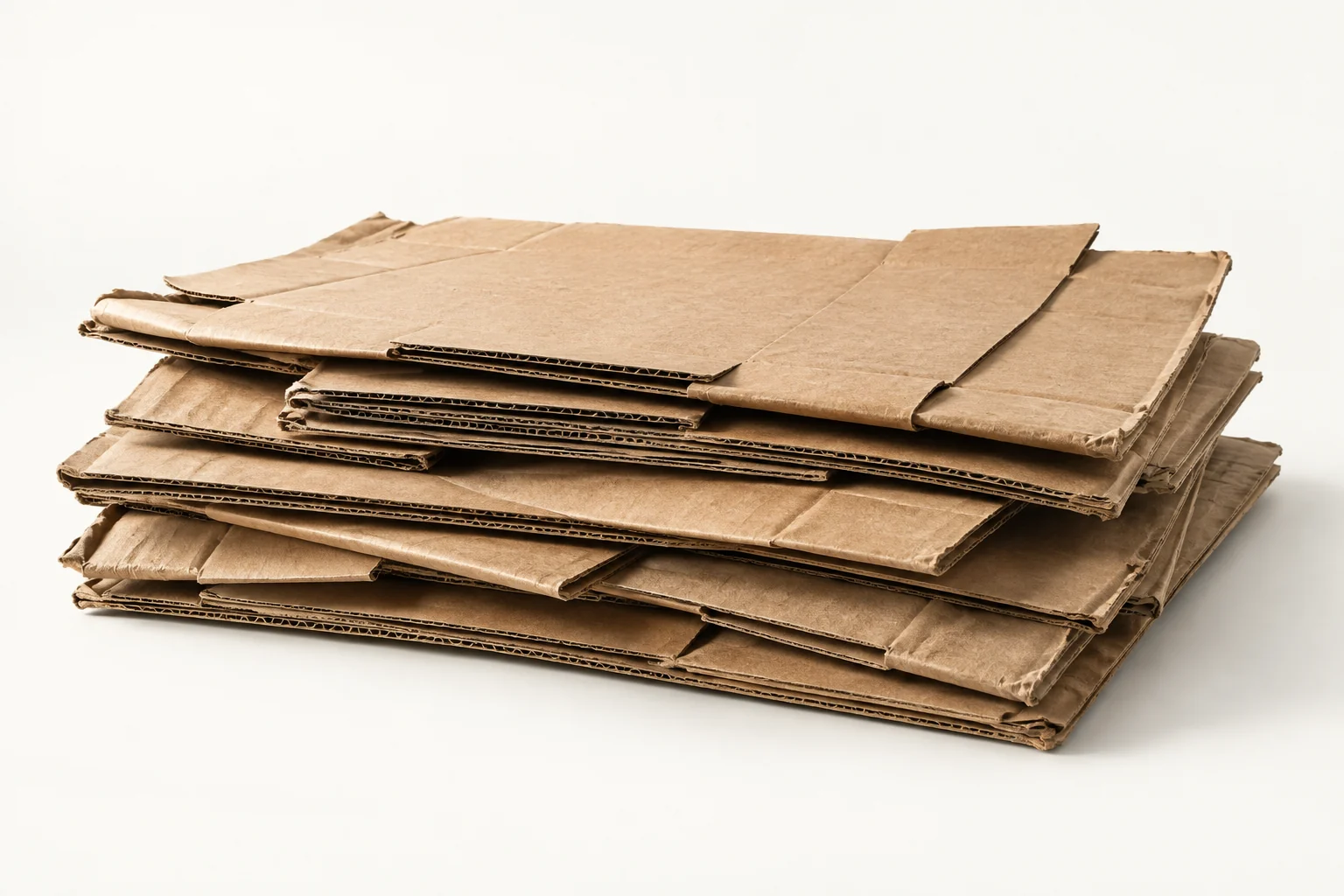
Winery packaging waste includes: cardboard cartons from supplies (bottles, closures, labels, capsules), shrink wrap from pallet deliveries, carton dividers, label backing paper, bottle capsule waste, and excess packaging from finished wine dispatch. Cardboard is the largest stream and should be baled or compacted for recycling revenue ($50-100/tonne for clean cardboard). Shrink wrap can be collected for LDPE recycling if separated. Large bottling runs generate waste spikes that may need temporary additional bins.
What are hazardous waste disposal costs in Melbourne?+
Hazardous waste disposal in Melbourne ranges from $2–15/kg depending on waste type. Chemical waste costs $3–8/kg, asbestos removal $50–80/m², and liquid chemical disposal $300–800 per 200L drum. All hazardous waste must be handled by EPA-licensed transporters under the Environment Protection Act 2017.
How much does clinical waste disposal cost in Melbourne?+
Clinical waste disposal in Melbourne costs $0.80–2.50/litre depending on waste category. Sharps containers (5L) cost $8–15 each, cytotoxic waste $4–8/kg, and anatomical waste $5–12/kg. Healthcare facilities typically spend $300–1,200/month. All clinical waste must comply with EPA Victoria Publication 1669.
How much does grease trap servicing cost in Melbourne?+
Grease trap servicing in Melbourne costs $150–400 per service depending on trap size. A standard 1,000L trap costs $150–250, a 2,000L trap $250–400. Most food businesses need monthly or quarterly servicing. Failure to maintain grease traps can breach your trade-waste agreement, leading to penalties or suspension of your discharge consent by your water authority (such as South East Water or Yarra Valley Water).
What is the difference between clinical and general waste in healthcare?+
Clinical waste causes infection or injury (sharps, cytotoxic, anatomical, infectious). General is non-hazardous (paper, food, packaging). Clinical costs $0.80–2.50/L vs $0.15–0.25/L general. A large share of clinical bins typically contain general waste that could be segregated.
How should a Melbourne hospital manage its waste?+
Hospitals generate 5–10kg/bed/day across: general waste (40–50%), clinical waste (15–25%), recycling (10–15%), food waste (10–15%), pharmaceutical waste (5%), and confidential waste (5%). A 300-bed hospital spends $10,000–50,000/month. Clinical waste separation training is critical — misclassification costs $50,000–200,000/year in unnecessary clinical waste charges.
 Bundle Waste