Managing waste in the veterinary clinics sector requires understanding specific waste streams, compliance requirements, and cost-effective disposal options. Veterinary clinics generate clinical waste similar to human medical facilities but with additional streams — animal carcasses, bedding from kennels, and veterinary pharmaceuticals. Sharps from injections and surgery require compliant containers. Animal tissue and deceased animals need specialist cremation or disposal. Many small clinics over-classify waste as clinical, dramatically increasing costs. Large animal hospitals generate significantly higher volumes across all streams. Bundle Waste specialises in helping veterinary clinics businesses across Melbourne find the best waste management rates.
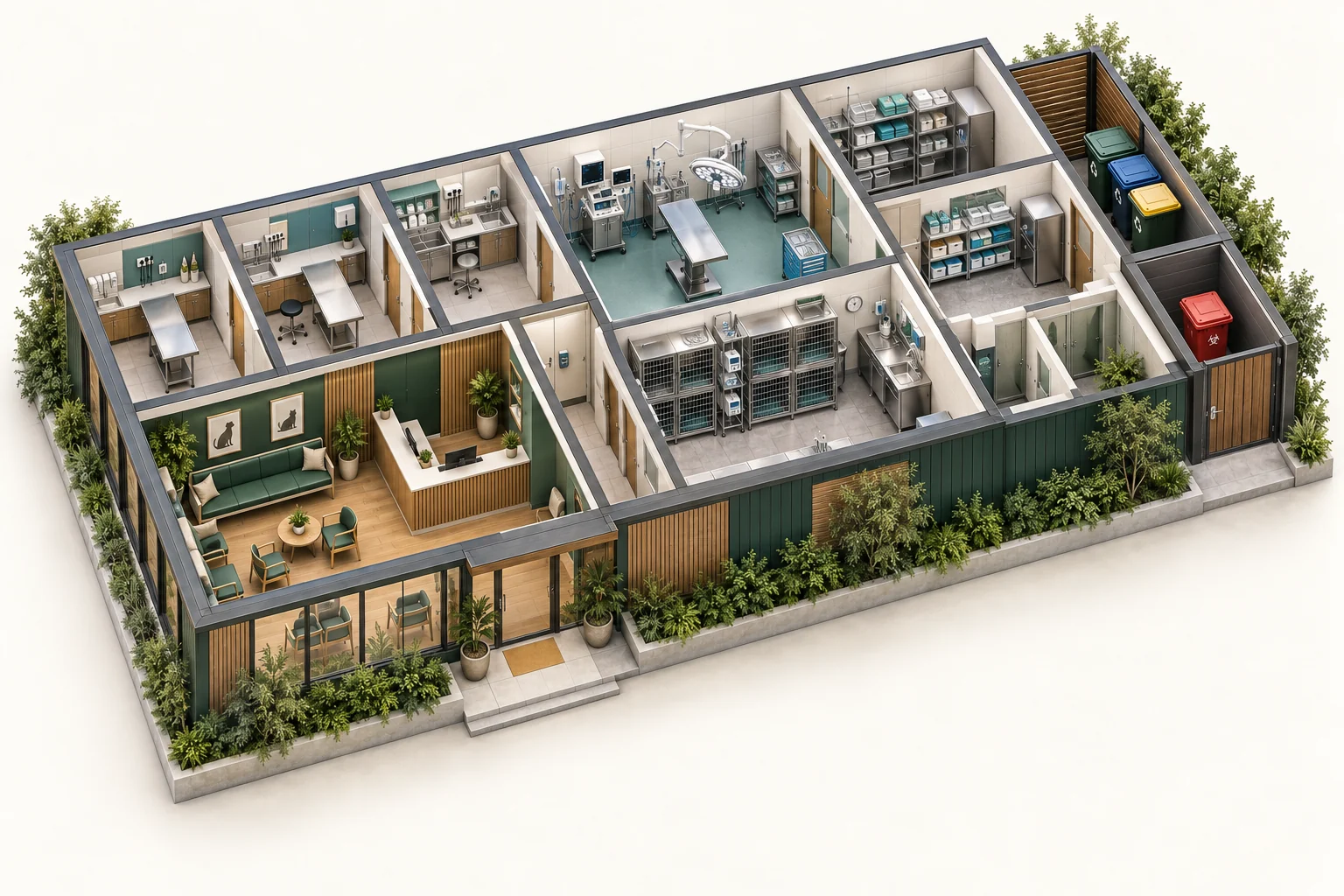
Veterinary clinics generate clinical waste similar to human medical facilities but with additional streams — animal carcasses, bedding from kennels, and veterinary pharmaceuticals. Sharps from injections and surgery require compliant containers. Animal tissue and deceased animals need specialist cremation or disposal. Many small clinics over-classify waste as clinical, dramatically increasing costs. Large animal hospitals generate significantly higher volumes across all streams.
How much does veterinary clinic waste management cost in Melbourne?+
Veterinary clinic waste management in Melbourne typically costs $500-2,000 per month depending on practice size. A small companion animal clinic (2-3 vets) pays $500-800/month, a mid-size clinic with surgery $800-1,300/month, and a large animal hospital or emergency centre $1,300-2,000+/month. Clinical waste accounts for $200-600/month, sharps $50-150/month, general waste $100-400/month, recycling $50-150/month, and animal cremation services are additional ($50-200 per animal for individual cremation).
How should veterinary clinics dispose of animal tissue and carcasses?+
Animal tissue from surgery and deceased animals must be managed appropriately. Options: cremation through licensed pet cremation services (individual cremation $50-300 depending on animal size; communal cremation $20-80), collection by licensed clinical waste providers for incineration, or for large animals and farm settings, rendering or deep burial (subject to EPA and local council regulations). Animal tissue is classified as clinical waste and must not go in general waste. Many vet clinics offer pet owners the choice of individual cremation with ashes returned.
What clinical waste requirements apply to veterinary clinics in Victoria?+
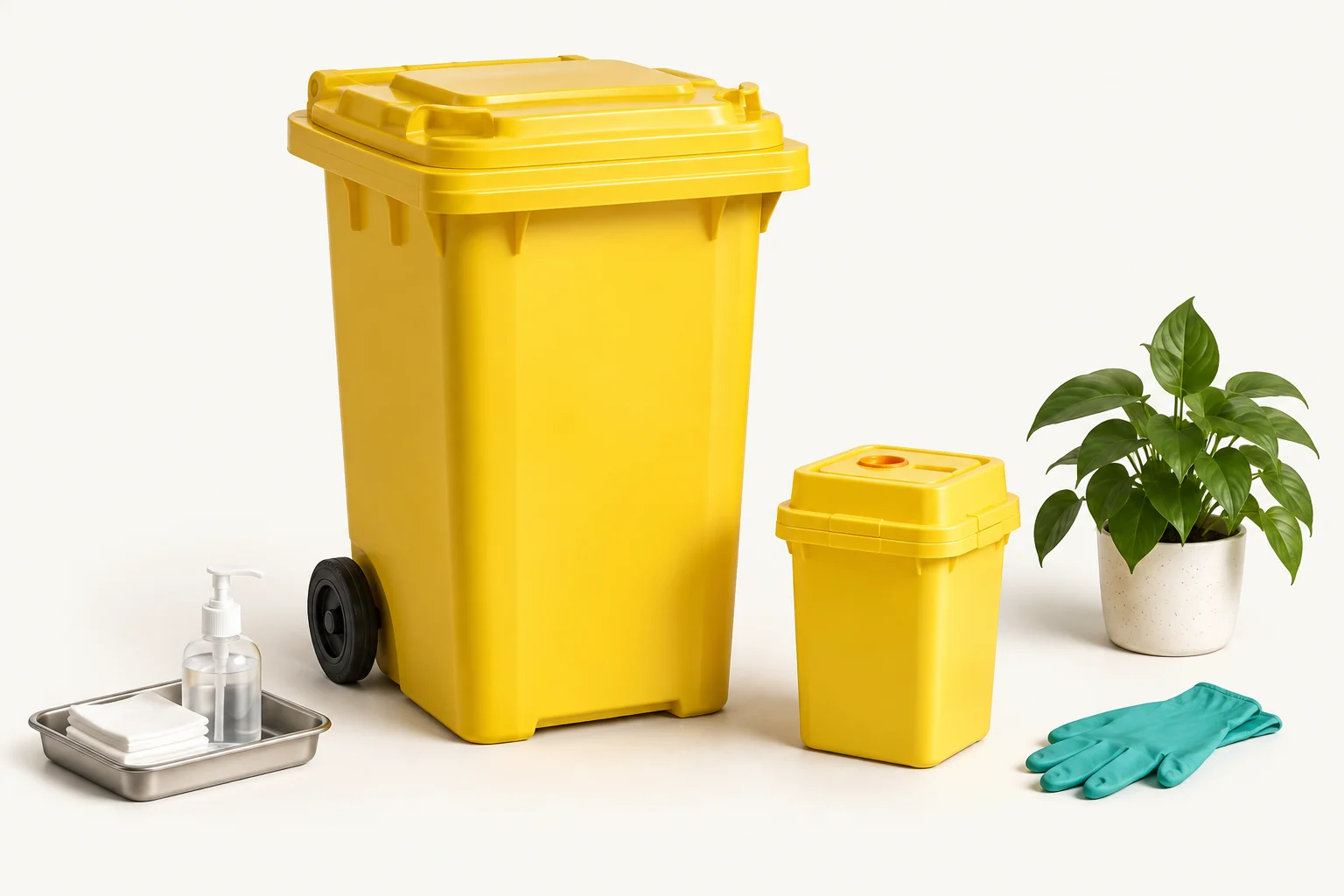
Veterinary clinics must comply with EPA Publication 1828 for clinical waste. All blood-saturated materials, surgical waste, sharps, and pathological specimens must be segregated into yellow clinical waste bags/bins, collected by licensed transporters, and tracked with transport certificates (retained for 3 years). Sharps containers must comply with AS/NZS 4031. Non-clinical items (clean gloves, paper towels, packaging) should go in general waste — misclassification into clinical waste costs 5-10x more and is the most common expense avoidable in vet clinics.
How should veterinary pharmaceuticals be disposed of?+
Veterinary pharmaceuticals, including expired medications and controlled substances, require specialist disposal. Schedule 8 drugs (ketamine, morphine, opioids) need witnessed destruction with documentation under Veterinary Practice Regulations. General pharmaceuticals go to licensed pharmaceutical waste processors. Cytotoxic drugs (some chemotherapy agents used in veterinary oncology) require incineration. Never dispose of pharmaceuticals in general waste or down drains. Collection costs $100-250 per pickup, typically quarterly. Keep destruction records for regulatory audits.
What bins does a veterinary clinic need?+
A typical Melbourne vet clinic needs: clinical waste bins (yellow, 60-120L) in treatment and surgery rooms, sharps containers (various sizes) at each injection/procedure point, general waste bins in reception, offices, and non-clinical areas, recycling bins paired with general waste, pharmaceutical waste containers in dispensary, animal tissue storage (sealed, refrigerated for deceased animals awaiting cremation), and kennel/ward waste bins. Separate bins for bedding and kennel waste keep clinical waste volumes down.
What are hazardous waste disposal costs in Melbourne?+
Hazardous waste disposal in Melbourne ranges from $2–15/kg depending on waste type. Chemical waste costs $3–8/kg, asbestos removal $50–80/m², and liquid chemical disposal $300–800 per 200L drum. All hazardous waste must be handled by EPA-licensed transporters under the Environment Protection Act 2017.
How much does clinical waste disposal cost in Melbourne?+
Clinical waste disposal in Melbourne costs $0.80–2.50/litre depending on waste category. Sharps containers (5L) cost $8–15 each, cytotoxic waste $4–8/kg, and anatomical waste $5–12/kg. Healthcare facilities typically spend $300–1,200/month. All clinical waste must comply with EPA Victoria Publication 1669.
How much does grease trap servicing cost in Melbourne?+
Grease trap servicing in Melbourne costs $150–400 per service depending on trap size. A standard 1,000L trap costs $150–250, a 2,000L trap $250–400. Most food businesses need monthly or quarterly servicing. Failure to maintain grease traps can breach your trade-waste agreement, leading to penalties or suspension of your discharge consent by your water authority (such as South East Water or Yarra Valley Water).
What is the difference between clinical and general waste in healthcare?+
Clinical waste causes infection or injury (sharps, cytotoxic, anatomical, infectious). General is non-hazardous (paper, food, packaging). Clinical costs $0.80–2.50/L vs $0.15–0.25/L general. A large share of clinical bins typically contain general waste that could be segregated.
How should a Melbourne hospital manage its waste?+
Hospitals generate 5–10kg/bed/day across: general waste (40–50%), clinical waste (15–25%), recycling (10–15%), food waste (10–15%), pharmaceutical waste (5%), and confidential waste (5%). A 300-bed hospital spends $10,000–50,000/month. Clinical waste separation training is critical — misclassification costs $50,000–200,000/year in unnecessary clinical waste charges.
 Bundle Waste