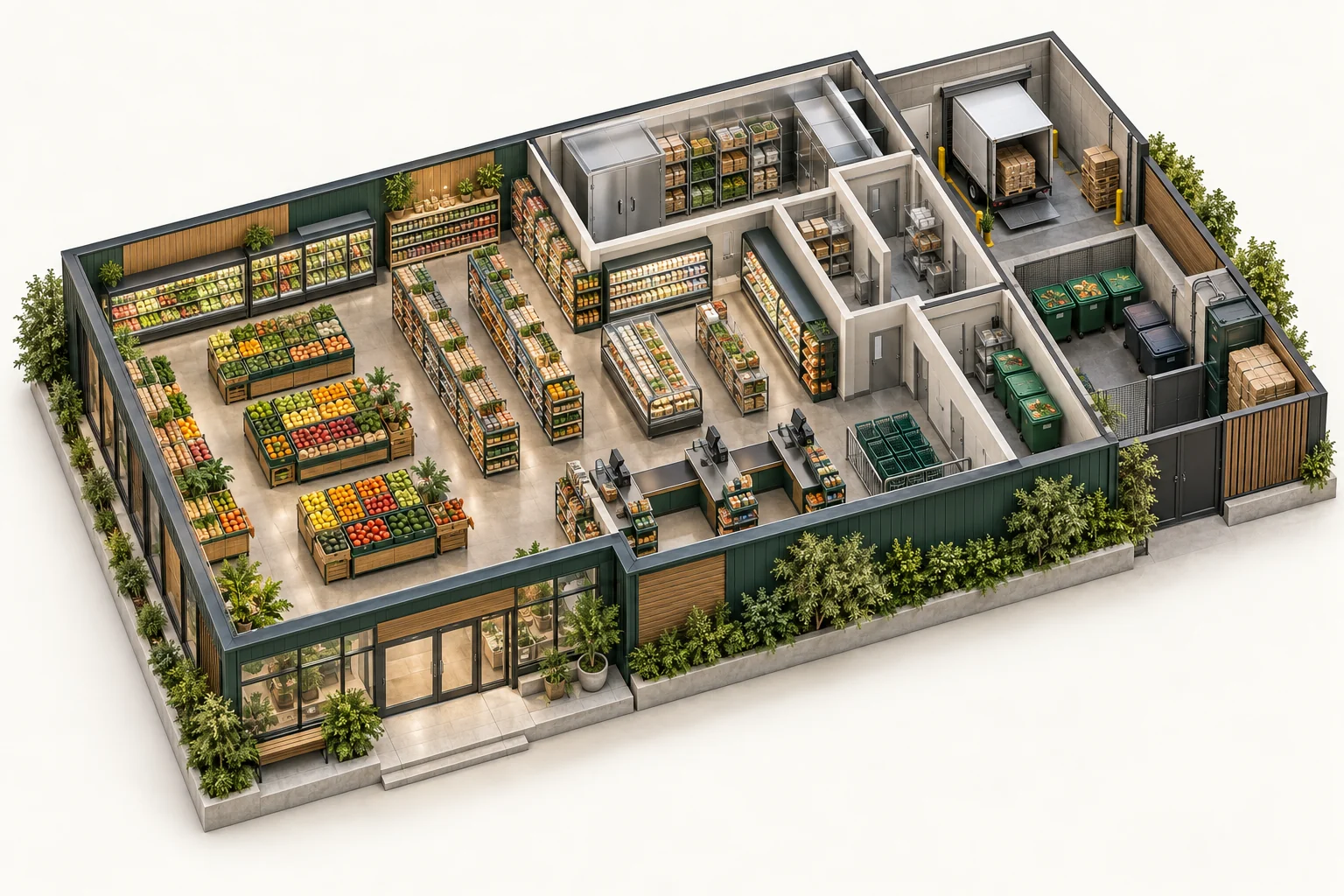
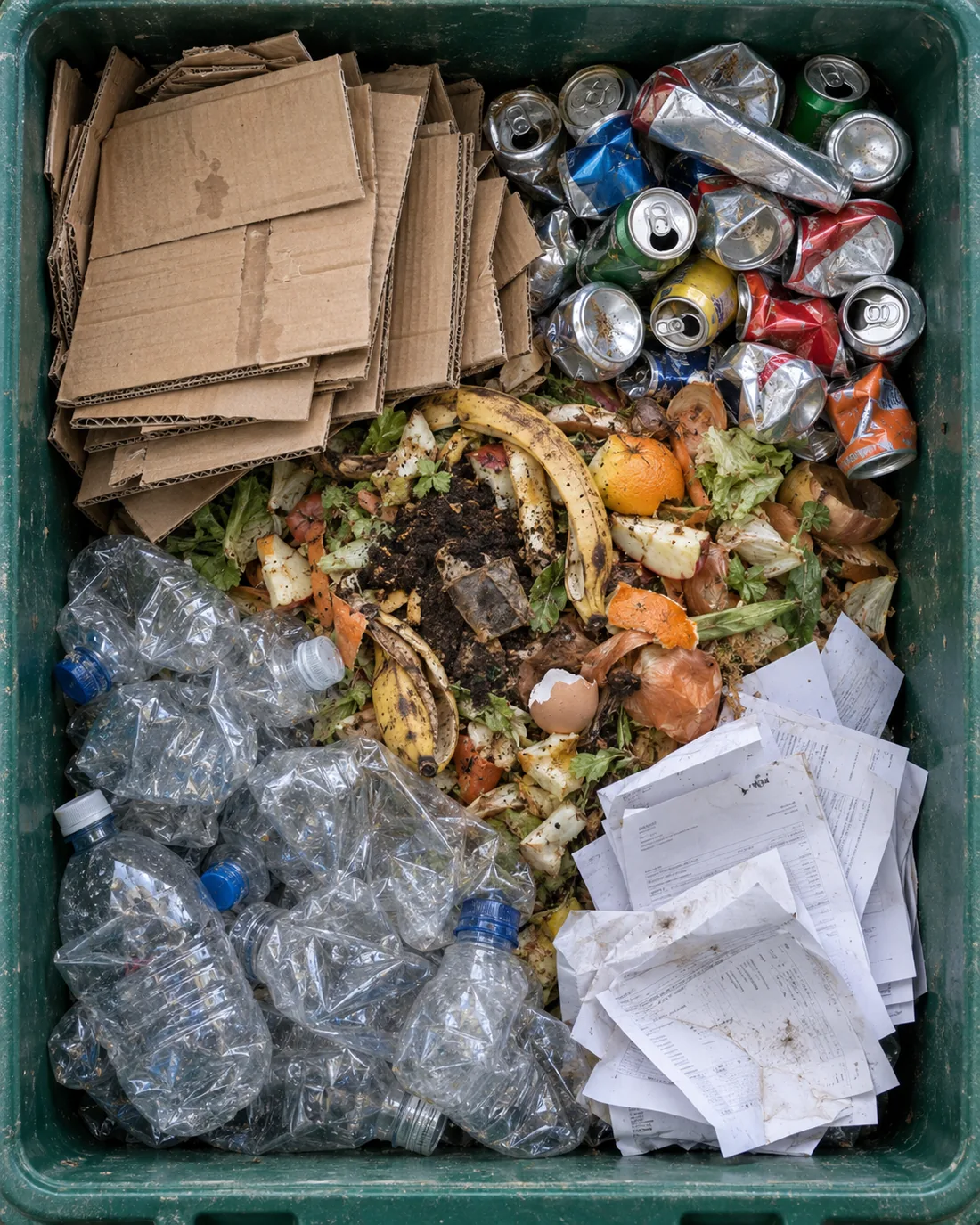
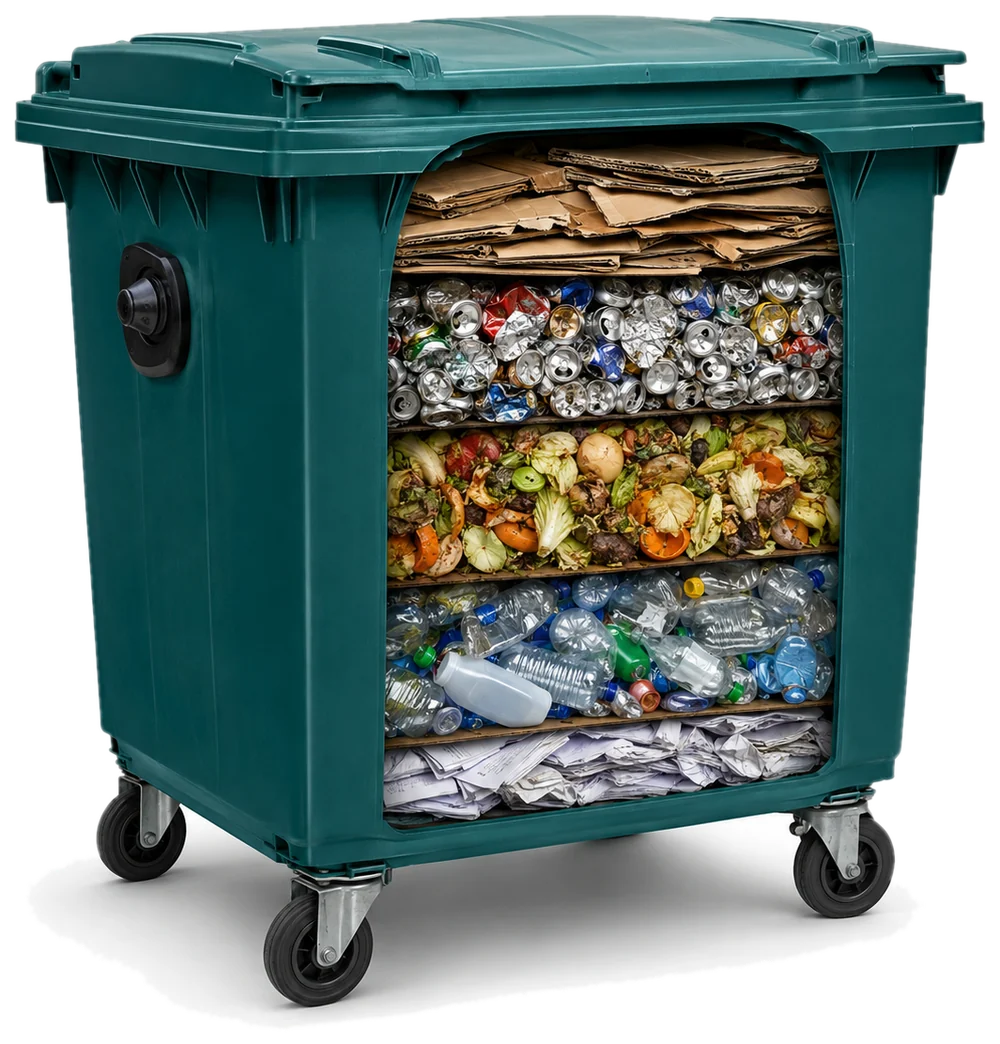
Managing waste in the supermarkets & grocery sector requires understanding specific waste streams, compliance requirements, and cost-effective disposal options. Supermarkets generate enormous food waste volumes from expired, damaged, and unsold perishables. Cardboard from product deliveries is the largest recyclable stream. Soft plastics management is complex since REDcycle's collapse. Meat and deli departments produce organic waste requiring frequent collection. Polystyrene from produce trays creates volume but is difficult to recycle. Multi-department waste streams need different handling. Food donation programs require cold chain management. Container deposit schemes change beverage container handling. Bundle Waste specialises in helping supermarkets & grocery businesses across Melbourne find the best waste management rates.
Supermarkets generate enormous food waste volumes from expired, damaged, and unsold perishables. Cardboard from product deliveries is the largest recyclable stream. Soft plastics management is complex since REDcycle's collapse. Meat and deli departments produce organic waste requiring frequent collection. Polystyrene from produce trays creates volume but is difficult to recycle. Multi-department waste streams need different handling. Food donation programs require cold chain management. Container deposit schemes change beverage container handling.
How much does supermarket waste management cost in Melbourne?+
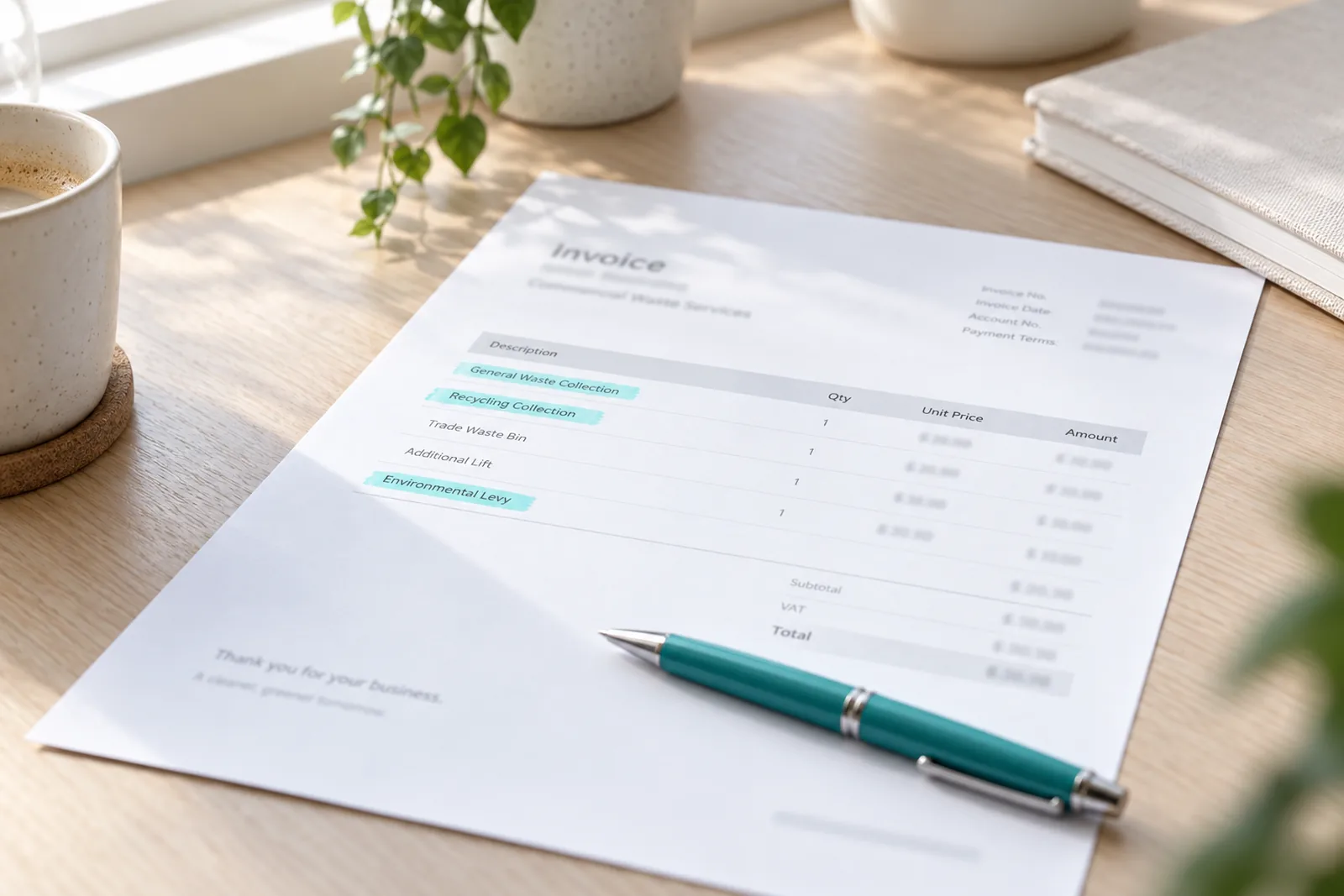
Supermarket waste management in Melbourne typically costs $2,000-8,000 per month depending on store size. A small independent grocer pays $2,000-3,000/month, a mid-size supermarket $3,000-5,000/month, and a large full-line supermarket $5,000-8,000/month. Food organics ($600-2,000/month), general waste ($500-1,500/month), cardboard recycling (often free or rebated for high volume), polystyrene disposal ($100-300/month), and meat waste ($200-500/month). Cardboard recycling revenue can offset up to 15% of total waste costs.
How should supermarkets manage expired food waste?+
A tiered approach maximises value: 1) Discount approaching-expiry items (yellow sticker programs), 2) Donate unsold but safe food to food rescue organisations like OzHarvest, SecondBite, or Foodbank (tax deductible, reduces disposal costs), 3) Divert remaining food waste to commercial organics processing ($60-80/tonne vs $180-250/tonne for landfill), 4) Separate meat and deli waste for specialist organic processing. Well-managed supermarkets divert up to 80% of food waste from landfill through this hierarchy.
How can supermarkets maximise cardboard recycling revenue?+
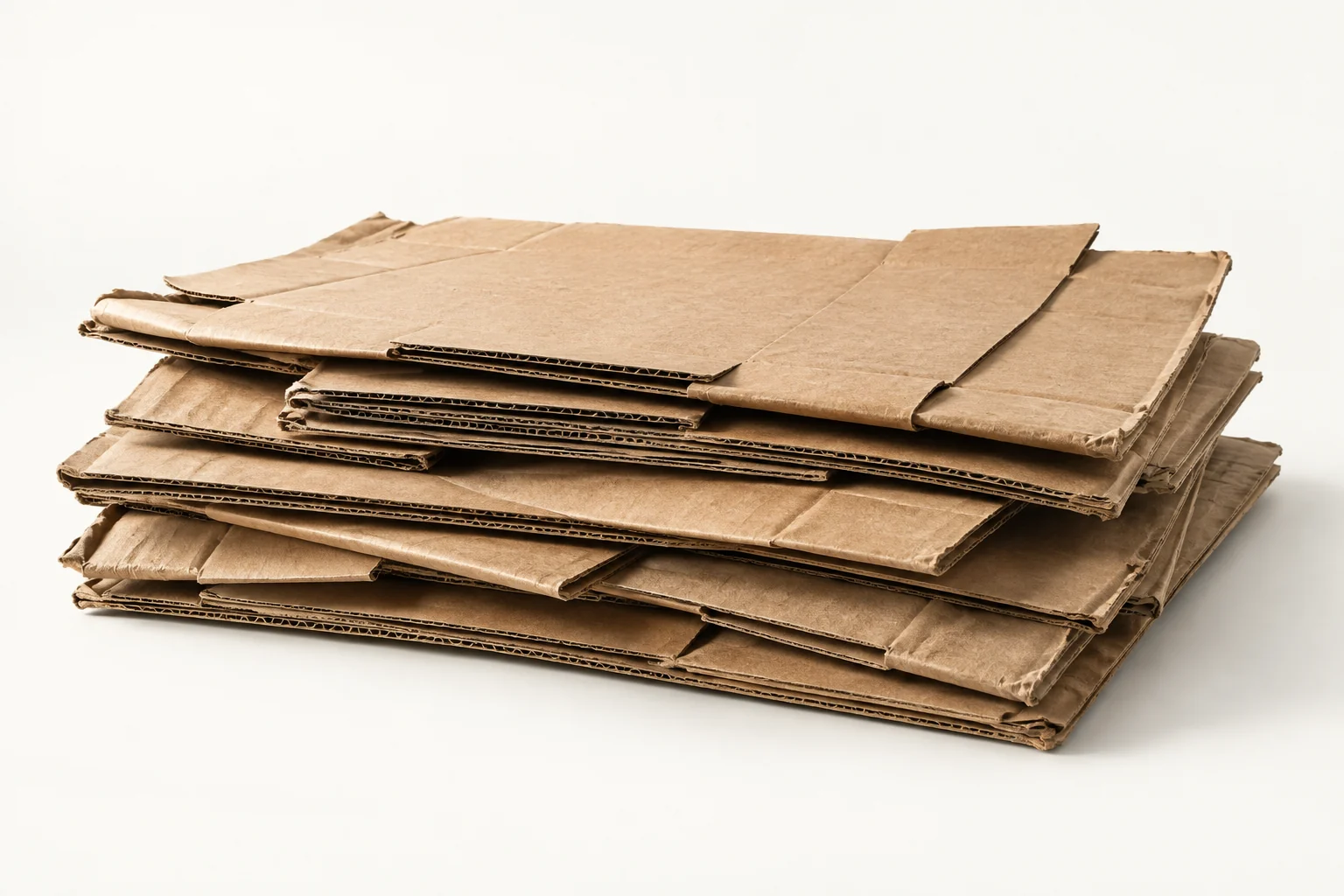
Supermarkets receive massive cardboard volumes daily. To maximise revenue: compact with a baler ($5,000-12,000, pays for itself in 6-12 months), keep cardboard dry and clean, separate from other recyclables, negotiate per-tonne pricing (large supermarkets should receive $50-120/tonne for baled cardboard), and ensure staff flatten all boxes before baling. A supermarket generating 2-5 tonnes of cardboard weekly can earn $100-600/month from recycling. If your provider charges for cardboard collection, you're leaving money on the table.
What are the soft plastics options for supermarkets since REDcycle collapsed?+
Since REDcycle's 2022 collapse, soft plastics management is challenging. Current options: Coles and Woolworths have resumed limited in-store collection, commercial soft plastics collection through specialist recyclers (Replas, Close the Loop — minimum volumes apply, $300-500/tonne), waste-to-energy processing, and reducing soft plastics at source by switching to cardboard trays. Independent supermarkets should contact their waste broker about commercial soft plastics collection programs. The Victorian Government is developing extended producer responsibility schemes.
How should supermarkets handle meat department waste?+
Meat trimmings, bones, and expired meat products need frequent collection due to rapid decomposition and odour. Options: dedicated organic waste bins with daily or twice-daily internal collection, rendering services that convert meat waste to tallow and bone meal (sometimes at no cost for sufficient volumes), or commercial food organics processing. Meat waste must be stored in sealed, refrigerated containers if collection isn't daily. Many Melbourne rendering services offer free collection for supermarkets generating 200kg+/week of clean meat waste.
What are hazardous waste disposal costs in Melbourne?+
Hazardous waste disposal in Melbourne ranges from $2–15/kg depending on waste type. Chemical waste costs $3–8/kg, asbestos removal $50–80/m², and liquid chemical disposal $300–800 per 200L drum. All hazardous waste must be handled by EPA-licensed transporters under the Environment Protection Act 2017.
How much does clinical waste disposal cost in Melbourne?+
Clinical waste disposal in Melbourne costs $0.80–2.50/litre depending on waste category. Sharps containers (5L) cost $8–15 each, cytotoxic waste $4–8/kg, and anatomical waste $5–12/kg. Healthcare facilities typically spend $300–1,200/month. All clinical waste must comply with EPA Victoria Publication 1669.
How much does grease trap servicing cost in Melbourne?+
Grease trap servicing in Melbourne costs $150–400 per service depending on trap size. A standard 1,000L trap costs $150–250, a 2,000L trap $250–400. Most food businesses need monthly or quarterly servicing. Failure to maintain grease traps can breach your trade-waste agreement, leading to penalties or suspension of your discharge consent by your water authority (such as South East Water or Yarra Valley Water).
What is the difference between clinical and general waste in healthcare?+
Clinical waste causes infection or injury (sharps, cytotoxic, anatomical, infectious). General is non-hazardous (paper, food, packaging). Clinical costs $0.80–2.50/L vs $0.15–0.25/L general. A large share of clinical bins typically contain general waste that could be segregated.
How should a Melbourne hospital manage its waste?+
Hospitals generate 5–10kg/bed/day across: general waste (40–50%), clinical waste (15–25%), recycling (10–15%), food waste (10–15%), pharmaceutical waste (5%), and confidential waste (5%). A 300-bed hospital spends $10,000–50,000/month. Clinical waste separation training is critical — misclassification costs $50,000–200,000/year in unnecessary clinical waste charges.
 Bundle Waste