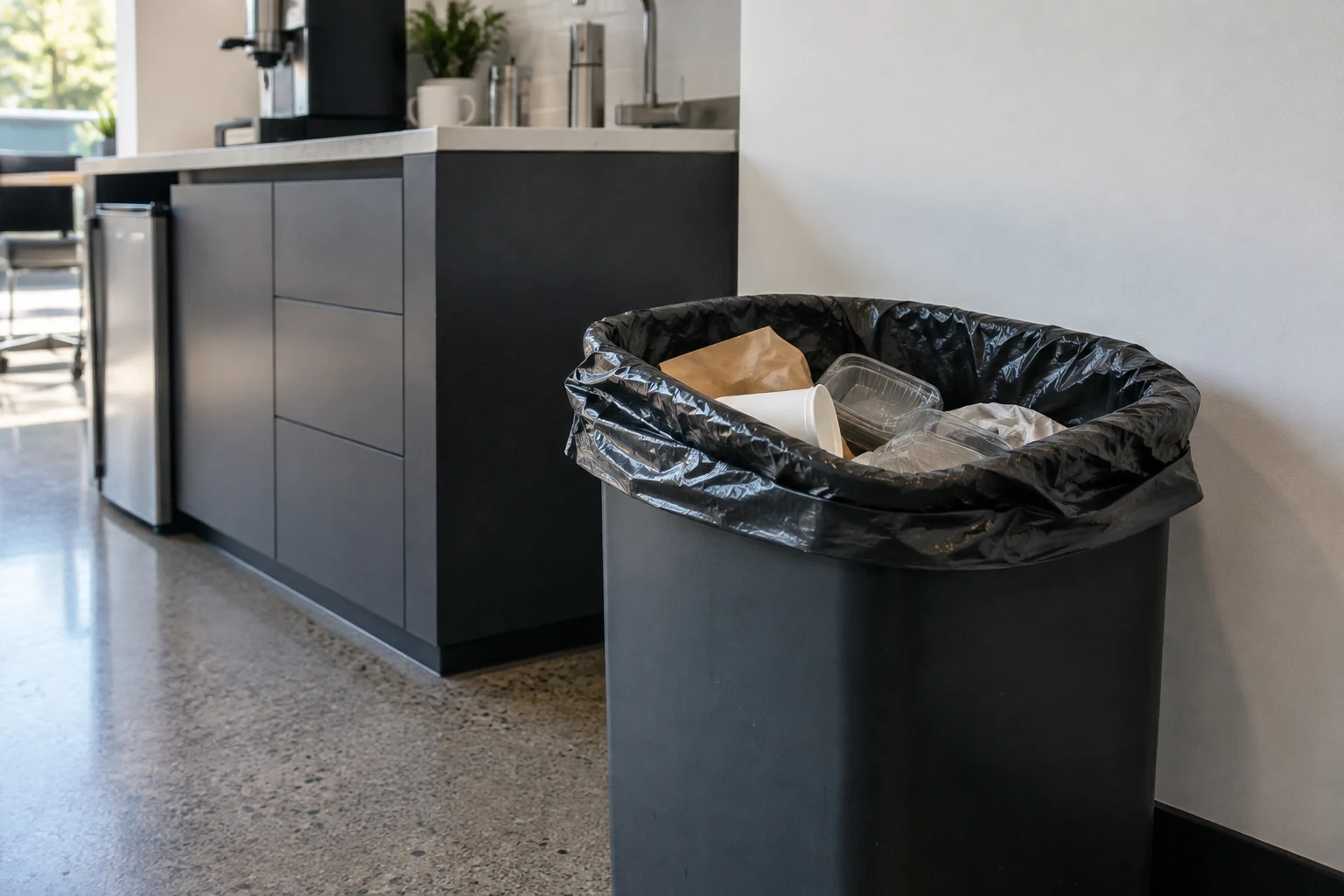
The general waste bin is the most expensive bin on your site, because everything in it ends up in landfill and attracts a per-tonne levy. Most Victorian businesses treat it as a catch-all for anything they cannot be bothered sorting, which is exactly why their disposal costs creep up year after year. Here is a plain-English guide to what can legally go in a general waste bin, what is banned, and what you should be diverting to cut the bill.
What general waste actually is
General waste, sometimes called landfill waste, residual waste or mixed waste, is the material left over once everything recoverable has been removed. It is destined for landfill, not recycling or recovery, so it is the stream you should be working hardest to shrink. The cleaner your recycling and organics bins are, the less you should be sending to general waste, and the smaller your bill becomes.
What can go in a general waste bin
A general waste bin is for non-recyclable, non-hazardous, non-organic items that genuinely have nowhere else to go. For a typical Australian business that includes:
- Soft plastics that your provider does not collect for the new soft plastics scheme (films, wrappers, bubble wrap)
- Polystyrene and foam packaging
- Broken crockery, ceramics and non-container glass (drinking glasses, window glass)
- Disposable coffee cups with plastic lining, and used paper towel
- Heavily soiled or food-contaminated packaging that cannot be cleaned
- Nappies, sanitary items and other non-recyclable hygiene waste
- General sweepings, dust and small mixed rubbish that cannot be separated
The rule of thumb: if it cannot be recycled, composted, recovered or classed as hazardous, then general waste is the right bin. Almost everything else has a cheaper home.
What is banned from general waste in Victoria
Some materials are legally prohibited from landfill, and putting them in your general waste bin can expose your business to EPA penalties as well as higher charges. The big ones for Victorian businesses:
| Item | Why it is banned / restricted | Where it should go |
|---|---|---|
| E-waste (anything with a plug, battery or cord) | Banned from Victorian landfill since 1 July 2019 | Dedicated e-waste collection |
| Batteries and globes | Classed as e-waste; fire and contamination risk | Battery / e-waste recycling |
| Hazardous and chemical waste | Regulated as priority waste under EPA rules | Licensed hazardous collection |
| Liquids, oils and grease trap waste | Liquid waste cannot go to landfill | Liquid waste / trade waste collection |
| Asbestos and construction hazards | Strictly regulated, separate disposal required | Licensed disposal facility |
E-waste is the one businesses get wrong most often. Old monitors, kettles, power tools, phone chargers and even cabling are all e-waste, and they have been banned from landfill across the state for several years. For the full picture, see our guide to e-waste disposal for business.
What should be diverted (and why it cuts your bill)
This is where the real money is. Every tonne sent to landfill in metropolitan Victoria attracts a landfill levy of $169.79 per tonne in 2025-26, up sharply from $129.27 the year before. That levy is built into the per-lift or per-tonne price your hauler charges on the general waste bin, so the heavier and fuller that bin, the more you pay.
Materials that should almost never be in general waste, because cheaper streams exist:
- Clean recyclables — cardboard, paper, rigid plastics, metals and eligible containers. These usually cost less to collect than landfill and some carry rebates. See our business recycling guide.
- Food and organic waste — kitchen scraps, food prep waste and garden organics. Diverting these to a food organics service avoids the levy entirely; Victoria is rolling out a standardised four-bin household system (councils must provide FOGO and glass collection by 1 July 2027), and commercial requirements may follow.
- E-waste — as above, legally required and often collected for little or no cost.
- Soft plastics — set to become recoverable under the new ACCC-authorised SPSA stewardship scheme as it rolls out rather than defaulting to landfill.
Pulling these streams out does two things at once: it removes weight and volume from the most expensive bin, and it keeps your cheaper recycling streams clean. A site that diverts organics and cardboard can often drop a general waste bin size or collection frequency outright.
The contamination trap
The flip side of diverting is contamination. Putting general waste into a recycling or organics bin is just as costly as the reverse, because a contaminated load can be rejected, charged at a contamination rate, or downgraded to landfill pricing for the entire bin. One greasy pizza box or a bag of mixed rubbish can turn a low-cost recycling lift into a premium landfill charge. We break the numbers down in how waste contamination is costing your business money.
Clear signage, correctly sized bins and quick staff training fix most contamination. The goal is simple: each bin has one job, and general waste only receives what truly cannot go anywhere else.
How this affects what you pay
Because the general waste bin carries the landfill levy, it is the single biggest lever on a typical Melbourne waste invoice. Reducing it is usually faster and more reliable than chasing a cheaper per-lift rate. Most businesses we benchmark are paying for general waste capacity they no longer need once organics and recyclables are properly separated. As an independent broker we benchmark your bins against a network of providers and renegotiate on your behalf, paid only from the savings we find. If you want a clean read on your current spend, our general waste cost guide for Melbourne is the place to start, or send us your latest invoice.
Frequently asked questions
What can go in a general waste bin in Australia?
Can I put electronics or batteries in a general waste bin in Victoria?
Why does what goes in the general waste bin affect my bill?
What is banned from general waste and landfill in Victoria?
What should I divert from general waste to save money?
What happens if I put general waste in the recycling or organics bin?
Related guides
See what you could save
Send us a recent waste invoice. We'll benchmark every charge against a network of Melbourne providers and show you the savings — free, no obligation, no win no fee.
Get Your Free Waste Audit →