Bundle Waste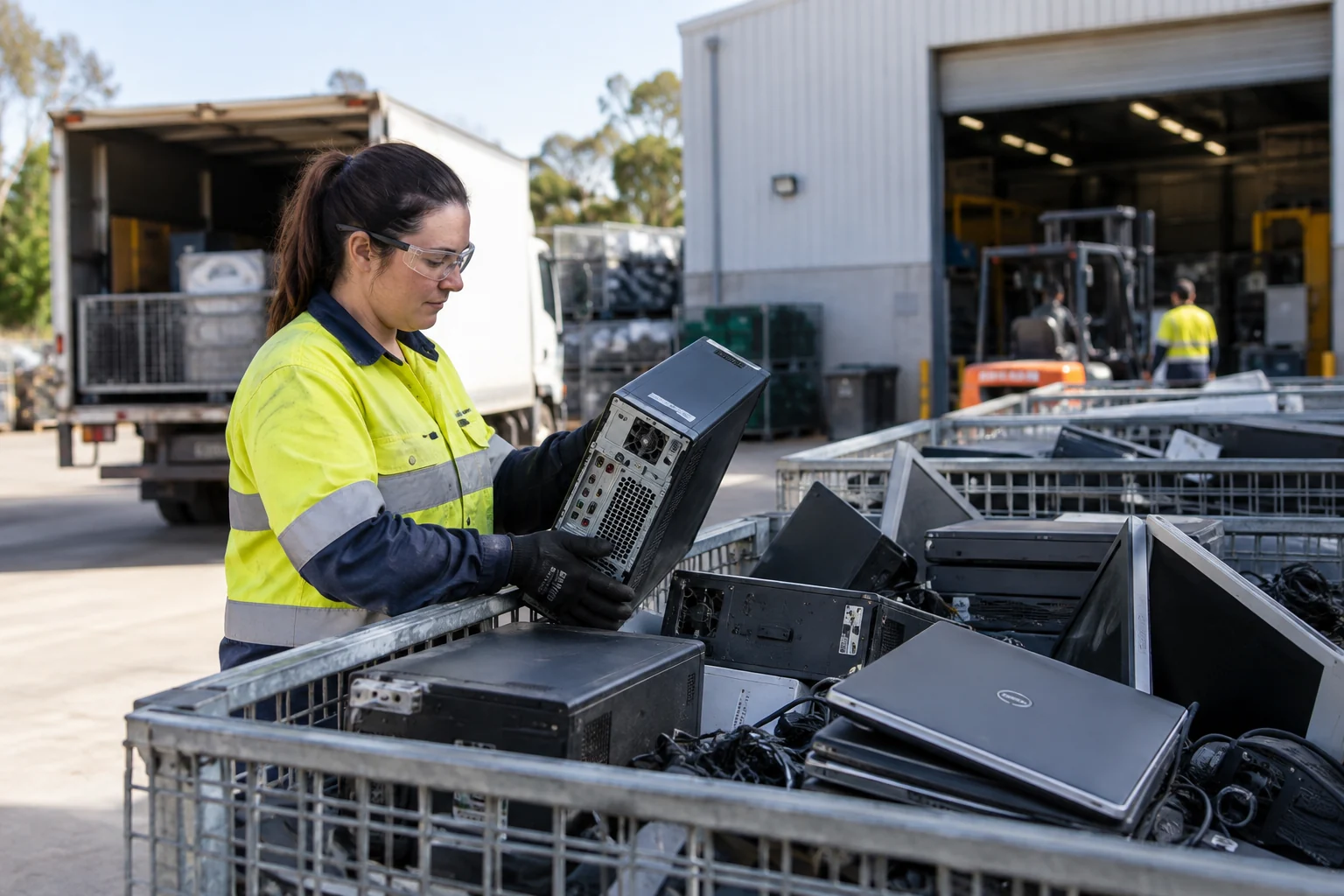
Plan business e-waste disposal as both a waste-handling and information-security task. Record the equipment, resolve data retention and sanitisation, then confirm the collector accepts the exact items and condition.
Build an equipment disposal list
List devices by type and asset identifier, including batteries, accessories and any damaged equipment. Establish ownership and authorisation to dispose. Separate equipment that might be reused from material needing recycling or specialist assessment.
Apply the rules for your location
EPA Victoria states that Victorian landfills cannot receive e-waste. The page also explains classifications and battery exceptions. This Victorian framework should not be presented as identical law throughout Australia; confirm requirements for the site and transport route.
Resolve data before release
Have your IT/security lead select and verify an appropriate sanitisation or destruction method for each storage medium. Use the current NIST media sanitisation guidance as a reference. Do not assume repeated overwriting, drilling or magnetic erasure is suitable for every device.
Keep the asset list, authorised method and verification record together. Confirm how a contractor manages custody, subcontractors and failed sanitisation before handing over data-bearing equipment.
Check battery condition and acceptance
Tell the collector about embedded, damaged or swollen batteries before booking. Do not remove or dismantle a battery unless the responsible specialist confirms the safe procedure. Use an approved route for the specific item rather than an ordinary mixed-recycling service.
Obtain a complete collection quote
Ask which items are accepted, any quantity restrictions, packaging requirements and charges for collection, treatment and secure data work. A household drop-off offer does not prove free acceptance of every commercial load.
Reconcile the records
Match collected asset identifiers and quantities with destruction or recovery records and invoices. Define the reporting you need in advance and verify any certification’s scope. Keep statutory, contractual and business retention requirements distinct rather than assuming one universal retention period.
Related guides
Sources
Checked 18 September 2026. Apply sources within their stated jurisdiction and service scope.
- EPA Victoria — Electronic waste. E-waste and the law; Standards and codes.
- NIST — SP 800-88 Rev. 2: Guidelines for Media Sanitization. Final publication, September 2025.
- Office of the Australian Information Commissioner — Chapter 11: APP 11 Security of personal information. Destroying or de-identifying personal information, retention exceptions.