Bundle Waste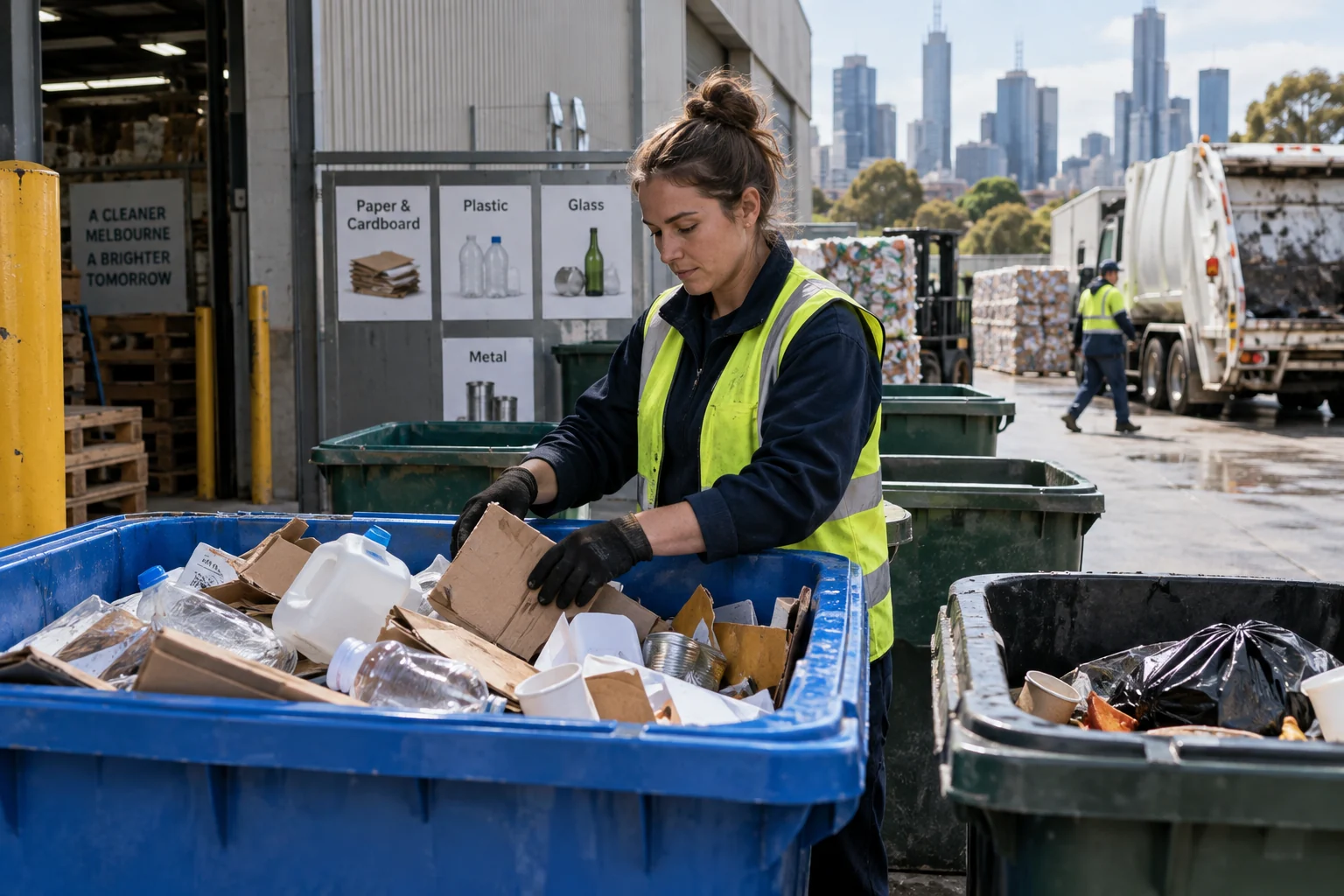
A useful business recycling programme starts with the materials leaving your site and the written acceptance rules for each collection. Do not copy a household bin sticker or another business's service specification without checking that it matches your receiver.
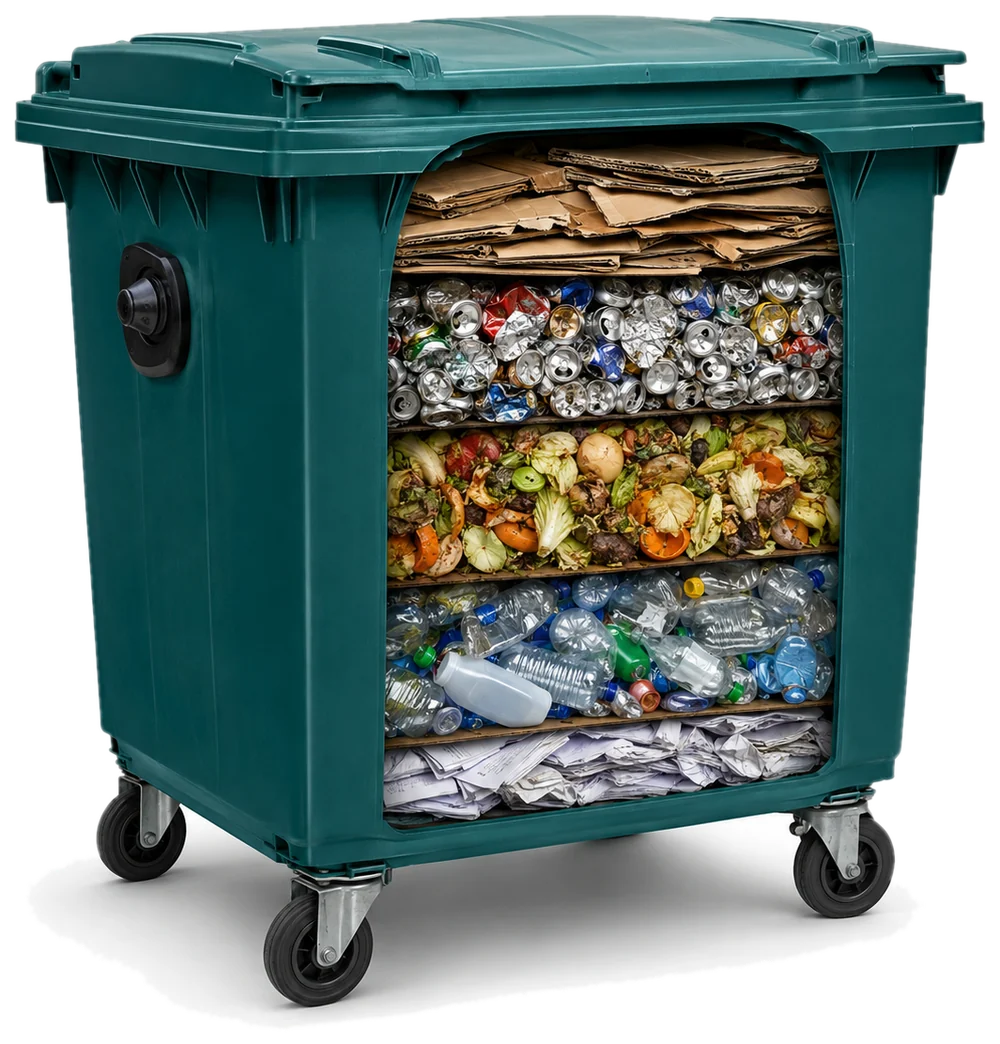
Choose the streams
| Material group | Question for the collector |
|---|---|
| Paper and cardboard | Which grades, coatings, sizes and contamination levels are accepted? |
| Mixed containers | Which glass, metal and rigid plastic containers are accepted, and how should they be prepared? |
| Food and garden material | Does this service accept food only or also garden material? Which liners and packaging are excluded? |
| Plastic film and EPS | Is a separate service available for the actual material and quantity? |
| Electronics, batteries and chemicals | Which specialist collection and storage instructions apply? |
As one operator example, Cleanaway describes commingled collection of accepted containers followed by sorting at a material recovery facility. Your signed service specification remains the relevant acceptance list. Cleanaway: Commingled services for businesses and councils.
Start with a measured problem
Record containers, collection frequency, fill observations, invoices and rejected loads. NSW EPA publishes waste-assessment tools and recycling resources for businesses. NSW Environment Protection Authority: Business and government waste reduction and recovery.
Use your findings to choose a manageable first change: perhaps a cardboard point at the loading dock or a confirmed food-scrap service. Compare the added service cost with the general-waste service you can actually reduce; diversion does not automatically change a fixed invoice.
Make sorting practical
- Put labelled stations where material is generated.
- Show actual accepted items rather than relying on colour alone.
- Provide an approved route for items excluded from recycling.
- Include cleaners, casual staff and night shifts in the instructions.
- Check the first collections and correct specific sorting problems.
Confirm the outcome
Ask for the receiving facility, measurement method and any contamination deductions. Record material sent for recycling separately from confirmed recovered output. Do not claim a recycling percentage from the number of yellow bins emptied.
Our recycling-bin checklist helps turn the specification into signage. The contamination guide explains how to review charges without assuming an industry-standard penalty.
Sources
- Cleanaway — Commingled services for businesses and councils. Checked 18 September 2026; Common recyclable containers; What do we do with your commingled recycling?.
- NSW Environment Protection Authority — Business and government waste reduction and recovery. Checked 18 September 2026; Business recycling; Bin Trim.