What Can Go in a Business Recycling Bin (and What Wrecks the Load)

What Can Go in a Business Recycling Bin (and What Wrecks the Load)

The accepted-materials list, the contaminants that get whole loads rejected, and how contamination fees quietly inflate your Melbourne waste bill.

Your commingled (mixed) recycling bin is the cheapest bin on your contract — until it is contaminated. One bagged-up batch of soft plastics or a half-full takeaway container can downgrade an entire load to general waste, and your provider passes that cost straight back to you. Here is exactly what belongs in a business recycling bin in Australia, the handful of items that ruin it, and how contamination quietly inflates your Melbourne or Victorian waste bill.

What a commingled recycling bin actually accepts

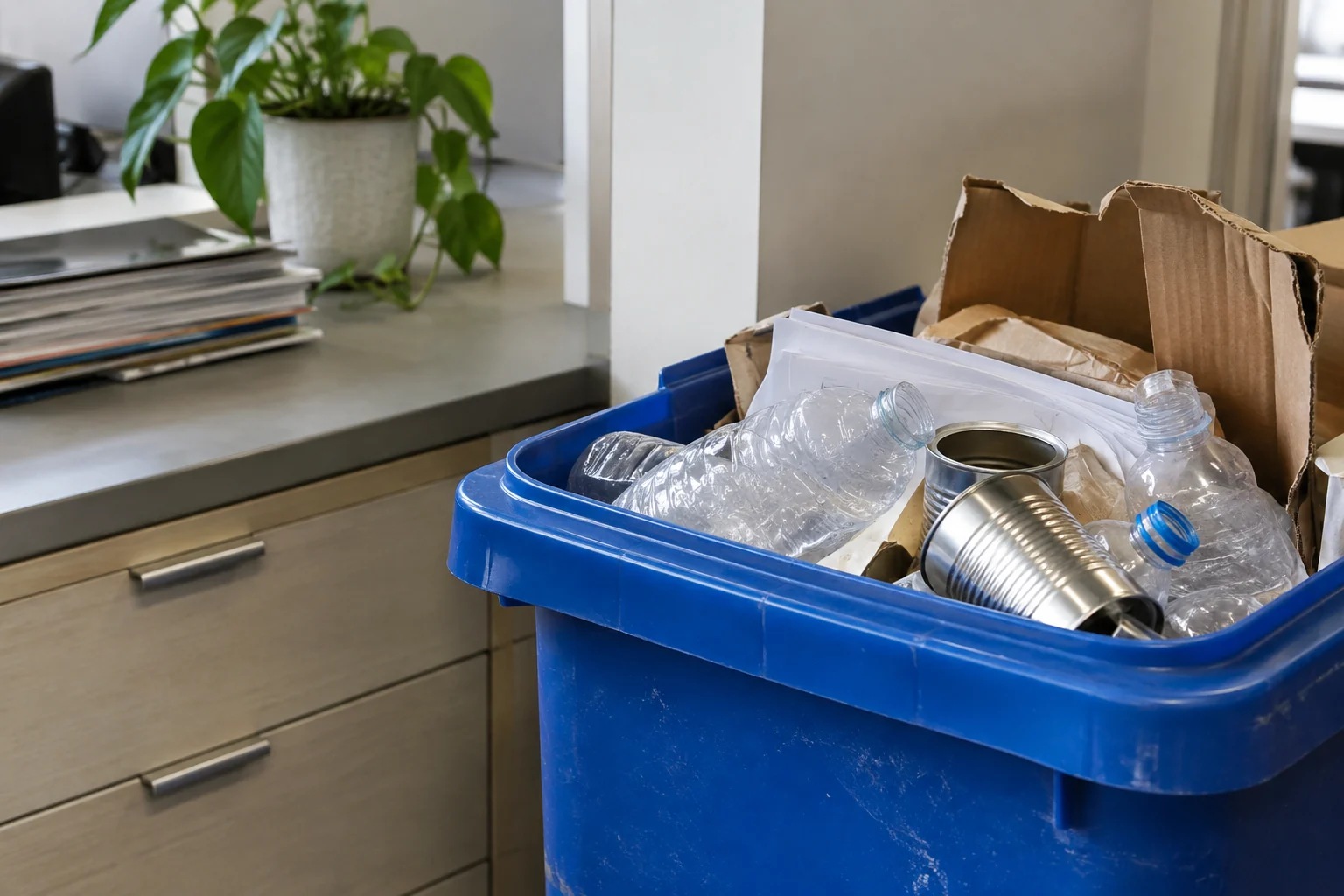
A commingled bin (usually the yellow-lidded one) is for clean, dry, loose recyclables mixed together and sorted later at a Materials Recovery Facility (MRF). Lists vary slightly between providers and councils, but for almost every Australian business the accepted materials are consistent:

  • Paper and cardboard — office paper, newspaper, flattened boxes, paper bags. Keep it dry and grease-free.
  • Rigid plastic containers — bottles, tubs and trays (typically codes 1, 2 and 5). Empty and lightly rinsed.
  • Glass bottles and jars — empty, lids off. (Note: under the Container Deposit Scheme, eligible drink containers can earn 10c each — wine and pure-spirit glass are excluded from CDS Vic but still recyclable.)
  • Aluminium and steel cans — drink cans, food tins, clean foil scrunched into a ball.
  • Liquid paperboard cartons — milk and juice cartons, where your provider accepts them.

The golden rule: empty, clean, dry and loose. If it would leave food, liquid or grease behind, it is not ready for the recycling bin.

The five contaminants that wreck a load

Contamination is the single biggest reason recycling costs businesses money. These are the repeat offenders we see on Melbourne waste audits:

  • Soft plastics — bags, bread bags, cling film, chip packets, satchels and wrappers. They tangle MRF sorting machinery and are the number-one commingled contaminant. (REDcycle paused in November 2022; a new ACCC-approved Soft Plastics Stewardship scheme was approved in November 2025, but soft plastics still do not belong in your commingled bin.)
  • Bagged recycling — even correct items become contamination when tied up in a plastic bag. Sorters cannot open bags safely, so the whole bag is pulled to landfill. Always tip items in loose.
  • Food and liquid — half-eaten lunches, coffee dregs, sauce-coated containers. Food organics belong in a FOGO or food-organics stream, not commingled recycling.
  • General rubbish and "wishcycling" — coffee cups (plastic-lined), polystyrene, nappies, PPE, broken crockery, garden hose. Putting it in "hoping" it recycles makes things worse.
  • Batteries and e-waste — both banned from the bin. Lithium batteries spark fires in trucks and MRFs; e-waste has been banned from Victorian landfill since 1 July 2019 and needs a dedicated e-waste pathway.

Why one bad item can reject the whole bin

Recycling is graded on contamination percentage. When a load arrives at the MRF, a visual or sampled assessment decides whether it can be processed. If contamination is over the facility's threshold — or a hazard like a gas canister or battery is spotted — the operator can reject the entire truckload to landfill. That means clean cardboard from twelve businesses can be sent to landfill because one bin in the run was full of soft plastics or food.

For your business specifically, a contaminated collection can trigger a "contamination charge" or be re-billed at the general-waste rate. In Victoria that gap is significant: clean recycling avoids the landfill levy entirely, while general waste to metro landfill carries a 2025-26 levy of $169.79 per tonne on top of haulage and gate fees. Contamination is the mechanism that moves your tonnes from the cheap column to the expensive one.

What contamination actually costs

Charges are not standardised — they depend on your contract, your provider and how the load is graded — so treat the figures below as typical ranges, not quotes.

ScenarioWhat typically happensTypical cost impact
Clean commingled binRecycled, no landfill levyLowest per-lift rate on your contract
Minor contaminationSorted with extra labour or warning issuedOften absorbed first time; flagged for repeats
Bin over contamination thresholdRe-billed at general-waste rate + possible contamination feePer-lift cost can jump well above the recycling rate
Hazard present (battery, gas, sharps)Whole load may be rejected to landfillHighest — full load re-graded + levy + admin fee

The trap is that these charges often appear as opaque line items — "contamination levy", "rejection fee", "reweigh" — that few businesses query. They are one of the hidden costs that inflate a Melbourne waste bill.

How to keep your recycling clean (and cheap)

  • Label bins with pictures, not just words — clear signage at the bin is the cheapest contamination fix there is.
  • Set up the right streams — if you generate food, soft plastics or cardboard in volume, give each its own bin so they stop landing in commingled. Our recycling service matches streams to what you actually produce.
  • Brief casual and night staff — most contamination happens after hours when nobody is checking the bin.
  • Audit your bins — a quick look at what's actually inside usually reveals one or two repeat offenders driving most of your cost.

If you are unsure whether your provider is charging fairly for contamination — or whether you are even on the right bin mix — Bundle Waste benchmarks a network of providers and renegotiates on your behalf, paid only from the savings we find. Send us a recent invoice and we will tell you where the recycling is costing you more than it should. For the wider materials list, see our full business recycling guide.

Frequently asked questions

What can go in a commingled recycling bin for an Australian business?+
Clean, dry, loose paper and cardboard, rigid plastic containers (typically codes 1, 2 and 5), glass bottles and jars, aluminium and steel cans, and liquid paperboard cartons where your provider accepts them. The rule is empty, clean, dry and loose — never bagged.
Can I put soft plastics in the recycling bin?+
No. Soft plastics — bags, cling film, chip packets and wrappers — are the number-one commingled contaminant and tangle MRF sorting machinery. REDcycle paused in November 2022; a new ACCC-approved Soft Plastics Stewardship scheme was approved in November 2025, but soft plastics still do not belong in your yellow-lidded bin.
Why do I need to tip recycling in loose instead of in a bag?+
Sorters cannot safely open bags, so even correct recyclables tied up in a plastic bag are pulled out and sent to landfill as contamination. Always tip items in loose, never bagged.
Can one wrong item really get my whole recycling load rejected?+
Yes. Loads are graded on contamination percentage at the MRF. If contamination exceeds the facility's threshold — or a hazard like a battery or gas canister is found — the operator can reject the entire truckload to landfill, even if most of it was clean.
What does recycling contamination cost a Melbourne business?+
It varies by contract and how the load is graded, but a contaminated collection is often re-billed at the general-waste rate plus a possible contamination fee. In Victoria, general waste to metro landfill carries a 2025-26 levy of $169.79 per tonne, so contamination effectively moves your tonnes from the cheap column to the expensive one.
Do batteries and e-waste go in the recycling bin?+
No. Lithium batteries can spark fires in trucks and recycling facilities, and e-waste has been banned from Victorian landfill since 1 July 2019. Both need a dedicated collection pathway rather than your commingled or general bin.

Related guides

See what you could save

Send us a recent waste invoice. We'll benchmark every charge against a network of Melbourne providers and show you the savings — free, no obligation, no win no fee.

Get Your Free Waste Audit →