 Bundle Waste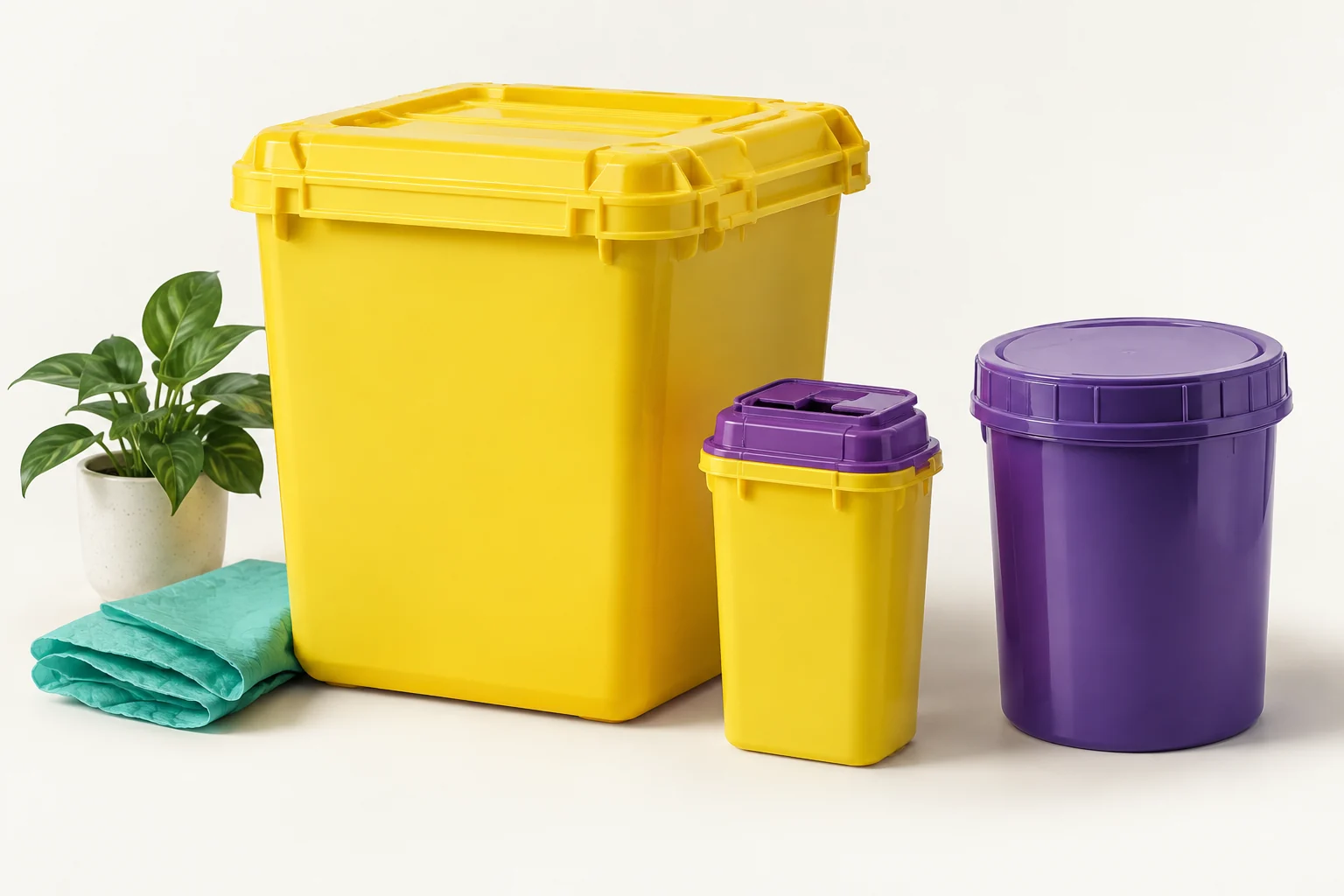
Sources checked 21 September 2026. Scope: Victoria, with Australian schemes identified where relevant.
Clinical waste needs a treatment-specific collection arrangement. Identify the waste before selecting containers: sharps, cytotoxic material, pharmaceuticals and other clinical waste are not interchangeable streams. Source: EPA Victoria — Manage clinical and related industrial waste.
What applies
EPA guidance calls for segregation, packaging and labelling that match treatment. It distinguishes yellow clinical containers, incineration-only labelling and purple cytotoxic containers. Cover storage bins; plastic liners should not be stored directly on the floor. Off-site transport also brings waste duties. Source: EPA Victoria — Manage clinical and related industrial waste.
The framework sits under the Environment Protection Act 2017 and the Environment Protection Regulations 2021. The Act's general environmental duty applies to every business, not only to licensed sites: you must minimise risks of harm to human health and the environment so far as reasonably practicable. The businesses that typically generate these streams are hospitals, medical and dental practices, veterinary clinics, pathology and research laboratories, aged care, pharmacies and body-art studios — but what decides your obligations is the material you actually produce, not the label on your business.
The categories EPA distinguishes
The first decision is which stream a given item belongs to, because the container, the treatment and the collection arrangement all follow from it. EPA's guidance separates:
- Sharps — needles, syringes and similar.
- Clinical waste — the general category that more than one treatment technology can handle.
- Human tissue.
- Recognisable anatomical body parts.
- Cytotoxic waste — from chemotherapy and similar treatments.
- Pharmaceutical waste.
These are not interchangeable. Chemical waste is listed as incompatible with the clinical treatment technologies, which is the clearest signal that putting a chemical into a clinical container is not a cautious choice but a wrong one. Where you are unsure, have the clinical lead classify it rather than the person holding the bag.
Containers, colours and labelling
EPA's guidance sets out how each stream is packaged and marked:
| Stream | Container | Marking |
|---|---|---|
| Clinical waste treatable by more than one technology | Yellow | "Clinical waste" on at least two sides, with the black biological hazard symbol |
| Incineration-only clinical waste | Yellow body with an orange lid | "Clinical waste" on at least two sides, with the black biological hazard symbol |
| Cytotoxic waste | Purple, puncture-resistant and leak-proof | "Cytotoxic waste" on at least two sides, with the cell-in-telophase symbol in white |
EPA also notes that specific Australian Standards requirements apply and directs you to ask your waste contractor for the specific requirements for your streams. Do that before ordering containers, not after.
Storing it on site
EPA's guidance describes acceptable storage as covered 120 or 240 litre wheelie bins, or containers standing on trays with sides that will contain a spill, also covered. It states plainly that clinical and related industrial waste must not be stored in plastic liners placed directly on the floor — a liner on the floor is not storage, it is a spill waiting for someone to move it.
Beyond that, storage duration and conditions depend on the material and the treatment pathway. Do not apply a blanket time limit taken from a general website; have the clinical lead and the contractor confirm the conditions for the specific material you hold.
When the waste leaves your premises
Off-site movement brings its own duties, and EPA's guidance names four that apply to clinical and related industrial waste:
- The duty of persons involved in transporting industrial waste.
- The duties of persons receiving industrial waste.
- The duty to notify EPA of reportable priority waste transactions.
- The duty of persons transporting reportable priority waste.
EPA's own framing is to make sure you understand how to meet your legal duties when transporting, or allowing the transport of, clinical or related industrial waste. "Allowing" is the operative word for a generator: handing the material to a contractor does not hand over the duty. Establish before service starts who records each movement, what the destination is for each stream, and what happens when a collection is missed or a container is damaged.
Practical checks for your business
These suggested planning steps help organise site information; they are not an exhaustive legal compliance checklist.
- List streams where they are generated and have the clinical lead check the list.
- Ask the contractor to confirm containers, treatment, storage conditions, collection frequency and destination for each stream.
- Document tracking responsibilities and escalation for a missed collection or damaged container before service starts.
Confirm the requirement for your site
For a disputed requirement or enforcement issue, ask the relevant authority or qualified adviser to identify the current provision and how it applies. Do not rely on an old penalty amount or general website summary. Victorian penalties are expressed in penalty units whose value is indexed each financial year, so a dollar figure republished from an older page is wrong by design; and a great deal of material still online describes the superseded "prescribed industrial waste" framework rather than the priority waste and reportable priority waste classifications now in use.
Keep a usable decision record
Keep assessments, acceptance conditions, responsible contacts and supporting records together. Note what needs confirmation before changing the service or starting work.
Frequently asked questions
What are the main waste laws in Victoria?
What is the general environmental duty?
Is clinical waste still called prescribed industrial waste?
Do I need an EPA licence to manage clinical waste?
What are the penalties for getting clinical waste disposal wrong?
How is clinical waste tracked when it leaves site?
Related waste services
Related guidance
Discuss your collection requirements
Contact Bundle Waste with the waste type, site and collection requirements. Keep specialist legal, environmental or safety assessment separate from the collection request.
Sources
Primary guidance checked 21 September 2026. Review due 21 October 2026, or sooner if requirements change.
- EPA Victoria — Manage clinical and related industrial waste. Identify, segregate, label and package; Store; Transport. Checked 21 September 2026.