 Bundle Waste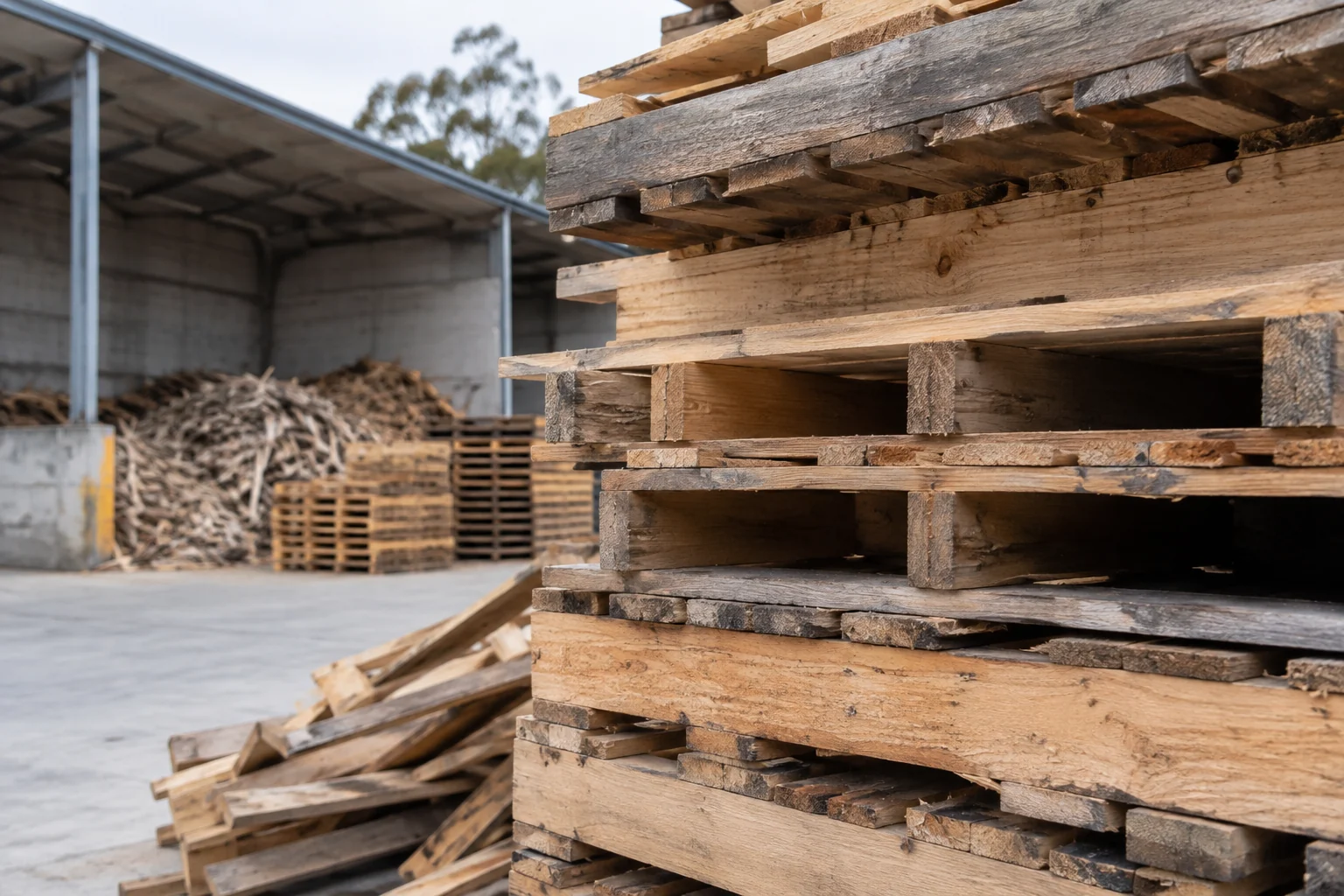
Manage pallets as an ownership and reuse question before treating them as timber waste. For material that is genuinely waste, record its treatment and contamination before choosing a collection route. A pile of mixed wood is not a useful recycling specification.
Reuse before recycling
First check whether pallets belong to a hire pool or supplier. Confirm whether your business can reuse them safely or whether a specialist will purchase or repair them. A sound appearance alone does not establish load capacity, ownership or resale value.
For items offered to a recycler, provide photos, dimensions, approximate quantities and information about paint, preservatives, spills and fixings. Request written acceptance before arranging transport.
Clean timber and treated timber are different
EPA Victoria's guidance identifies timber treated with hazardous substances as priority waste and excludes heat-only treatment from that description. It restricts land application as mulch or sawdust to untreated timber. Timber with oil-borne preservatives needs further assessment to determine a suitable landfill. EPA Victoria: Manage and dispose of treated timber.
Keep unknown timber separate until it is assessed. Do not identify treatment purely from colour, and do not describe all pallets as suitable for mulch, animal bedding or fuel.
Compare the available pathways
| Pathway | Evidence to request |
|---|---|
| Return to owner | Ownership and return instructions, including collection responsibility. |
| Reuse or purchase | Accepted condition, dimensions and written price or credit. |
| Repair | Assessment, repair scope, ownership after repair and charges. |
| Recycling | Accepted timber specification, receiver and intended use. |
| Disposal | Classification, authorised destination and complete collection/disposal charge. |
Design a workable timber area
Label separate areas for owner-return pallets, reusable stock and waste awaiting collection. Keep contamination and unrelated packaging out. Agree stacking and access arrangements with the site safety lead and collector rather than adopting a generic height or collection interval.
Track outgoing quantities and actual destination records. A pickup receipt proves collection; it does not by itself prove recycling. Price the complete service in AUD with GST, transport, loading, container and minimum charges stated.
The pallet cost checklist explains how to compare proposals without assuming free pickup or a buy-back payment. The warehouse guide connects pallets with cardboard and wrapping streams.
Sources
- EPA Victoria — Manage and dispose of treated timber. Checked 18 September 2026; Classify timber; Reuse as sawdust or mulch; Oil-borne preservatives.