 Bundle Waste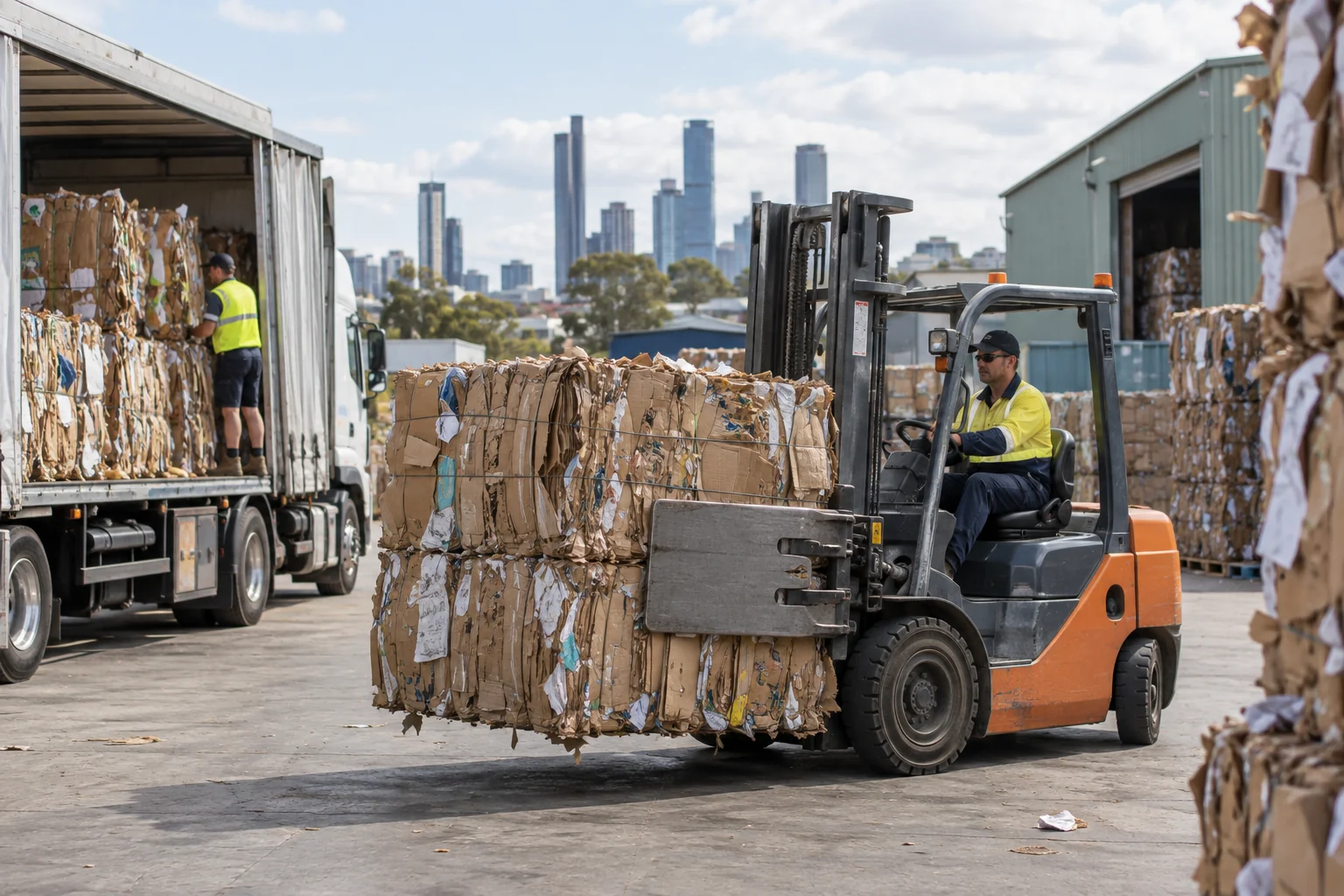
A cardboard bale is worth what a buyer will pay for its accepted material and measured weight, less the costs of preparing and collecting it. There is no verified Australia-wide rebate in this guide. Obtain a dated written offer before treating cardboard as income or buying a baler.
Ask the buyer for an acceptance specification
Describe the cardboard your business produces and send representative photographs. Ask about coatings, food residue, moisture, other paper grades, tape, straps and packaging mixed into the material. Confirm how rejected or downgraded bales are handled and who pays for them.
Request minimum bale dimensions, density, binding method and collection quantity. A machine that fits your premises may still produce a bale a particular buyer does not accept.
Convert the offer using measured weight
If the offer is in dollars per tonne, divide the recorded kilograms by 1,000 and multiply by the quoted rate. Deduct collection, handling or other agreed charges separately. Do not infer bale weight from its dimensions or a photograph.
Ask which scale establishes the payable weight and whether you receive a weight ticket. Keep that record with the collection docket and credit note so you can reconcile each load.
Compare baling with loose collection
Obtain a loose-cardboard collection quote alongside the baled option. Include baler purchase or rental, installation, servicing, electricity, staff time, training, binding materials and storage. Allow for downtime and the space needed to accumulate an accepted collection quantity.
Compare both options over the same period and waste volume. There is no universal monthly tonnage at which a baler pays for itself; use your measured output and the offers available to your address.
Test the downside before buying equipment
Run the comparison again with a lower rebate, a rejected load and a lower production volume. These are scenarios, not forecasts. An option that only works at the best offered rate deserves a closer review before you commit.
Put payment and review terms in writing
Record the rate period, how changes are notified, payment timing, minimum loads and cancellation terms. Refer to the ACCC contracts guidance for the contractual context. Avoid treating a temporary offer as a guaranteed annual return.
Prepare your next step
Sources
Checked 18 September 2026. These sources support the specific regulatory or contractual points identified above; the comparison checklists are practical guidance, not market-price research.
- Australian Competition and Consumer Commission — Contracts. Unfair contract terms; Next steps if there is a problem with a contract.