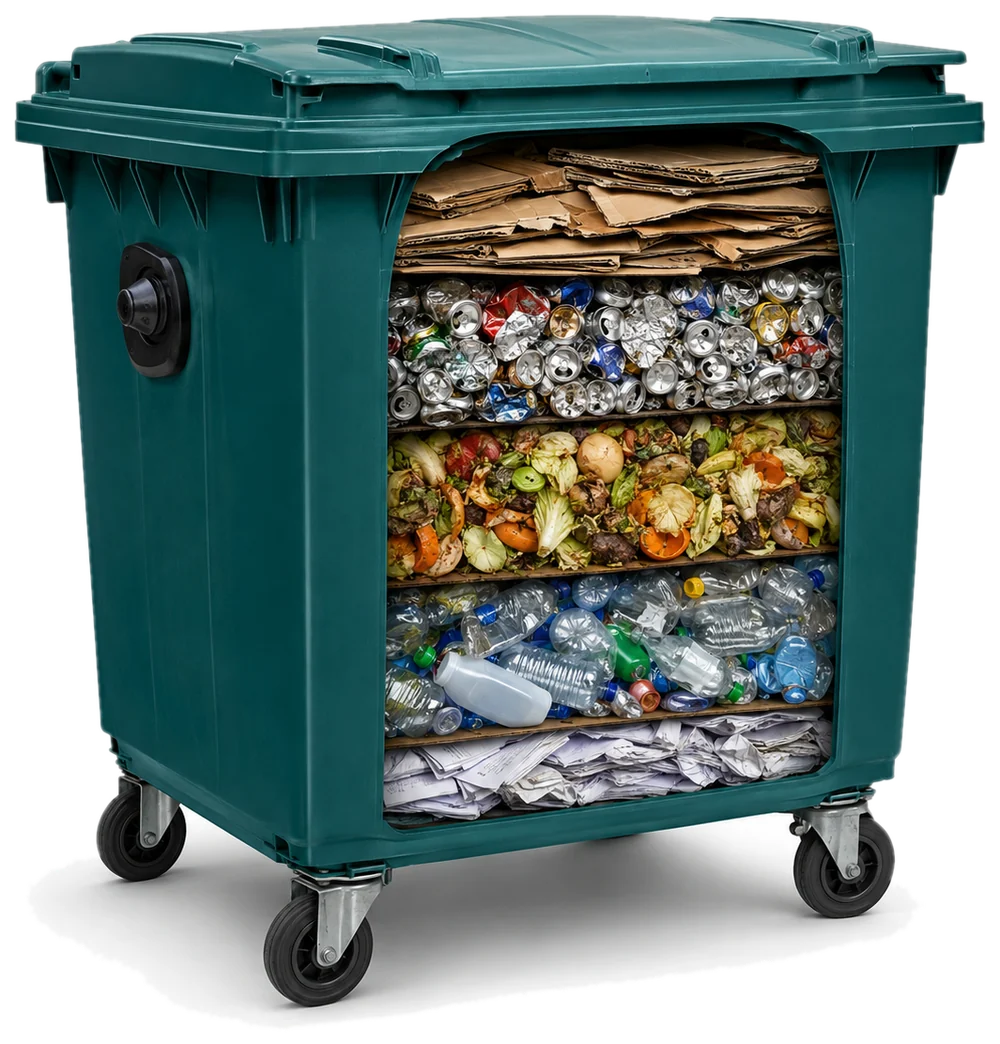
Bundle Waste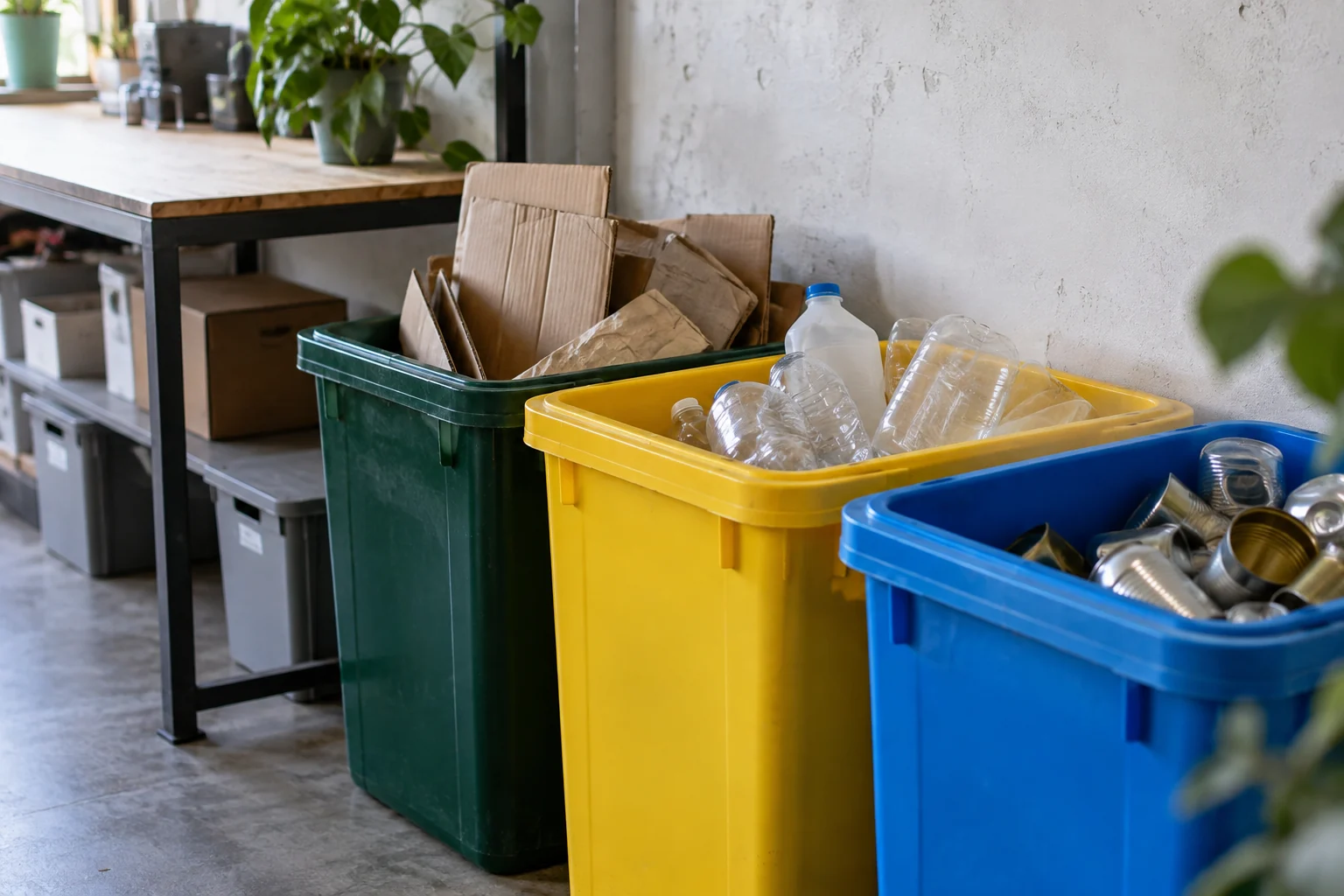
A waste reduction plan should state what will change, who owns the action and how its effect will be measured. Keep prevention, reuse, recycling and disposal as separate outcomes. Do not promise a percentage reduction before establishing the baseline.
1. Define the boundary and baseline
Choose the sites, activity and period covered. Gather purchasing, waste-service and measured quantity records. Label estimated figures and note changes in occupancy or production. Use safe observations; physical sorting requires suitable planning and controls.
2. Identify avoidable material
Ask where waste is created: ordering, storage, preparation, damage, packaging or end-of-use. Investigate supplier returns and reuse before adding a collection stream. Confirm that proposed changes preserve product, food, hygiene and workplace safety requirements relevant to the activity.
3. Set a measurable target
Use a measure suited to the operation, such as kilograms of a defined waste stream per unit produced, alongside total kilograms. Explain the denominator and reporting period. A fall in total waste caused only by reduced trading is not proof of improved efficiency.
4. Assign actions
| Action field | What to write |
|---|---|
| Problem | The observed material loss or service issue |
| Change | A specific process, purchasing or collection proposal |
| Owner | Person responsible for implementation and records |
| Resources | Quoted cost, staff time, equipment and training |
| Measure | Baseline, target, data source and review date |
5. Trial and train
Test the change in a defined area or period. Confirm a receiving route before separating a new stream. Give cleaners, contractors and shift staff consistent instructions based on actual service acceptance. Record problems rather than expanding a trial that is not working.
6. Review results and adjust
Compare equivalent periods and activity levels. Check actual invoices, quantities and destinations. Report costs as well as benefits, including any extra handling or rejected material. Keep hypothetical savings separate from realised results.
NSW EPA lists Bin Trim among its business waste assessment tools. Use the relevant tool and local program eligibility information rather than assuming national grant coverage. NSW Environment Protection Authority: Business and government waste reduction and recovery
See the audit checklist and reporting evidence guide for supporting records.
Sources
- NSW Environment Protection Authority — Business and government waste reduction and recovery. Checked 18 September 2026; Business recycling; Bin Trim.