Bundle Waste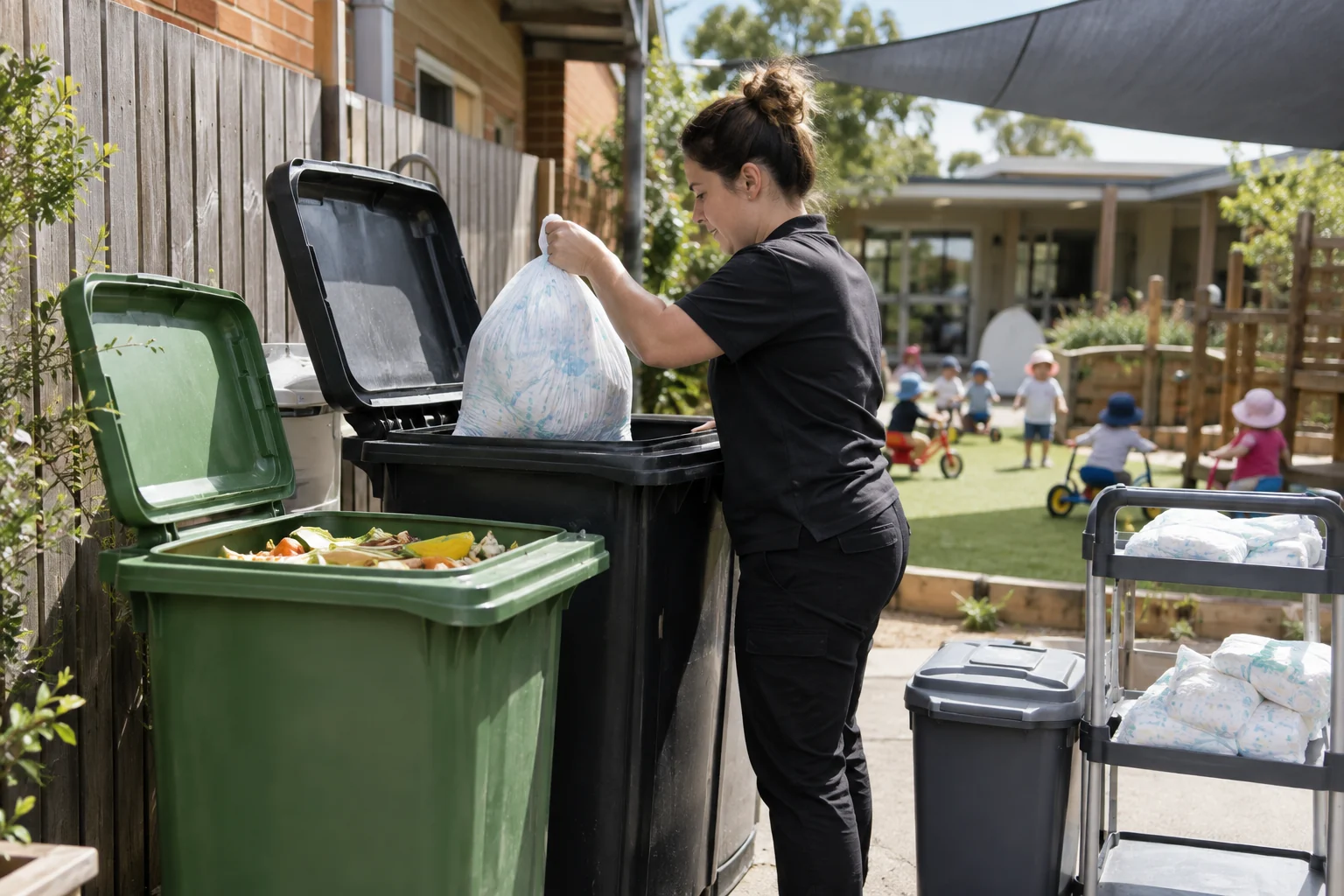
Plan childcare waste around hygiene, safe storage and actual daily routines before adjusting bin sizes or collection frequency. Use measured centre activity rather than an assumed waste amount per child.
The waste streams a childcare centre actually produces
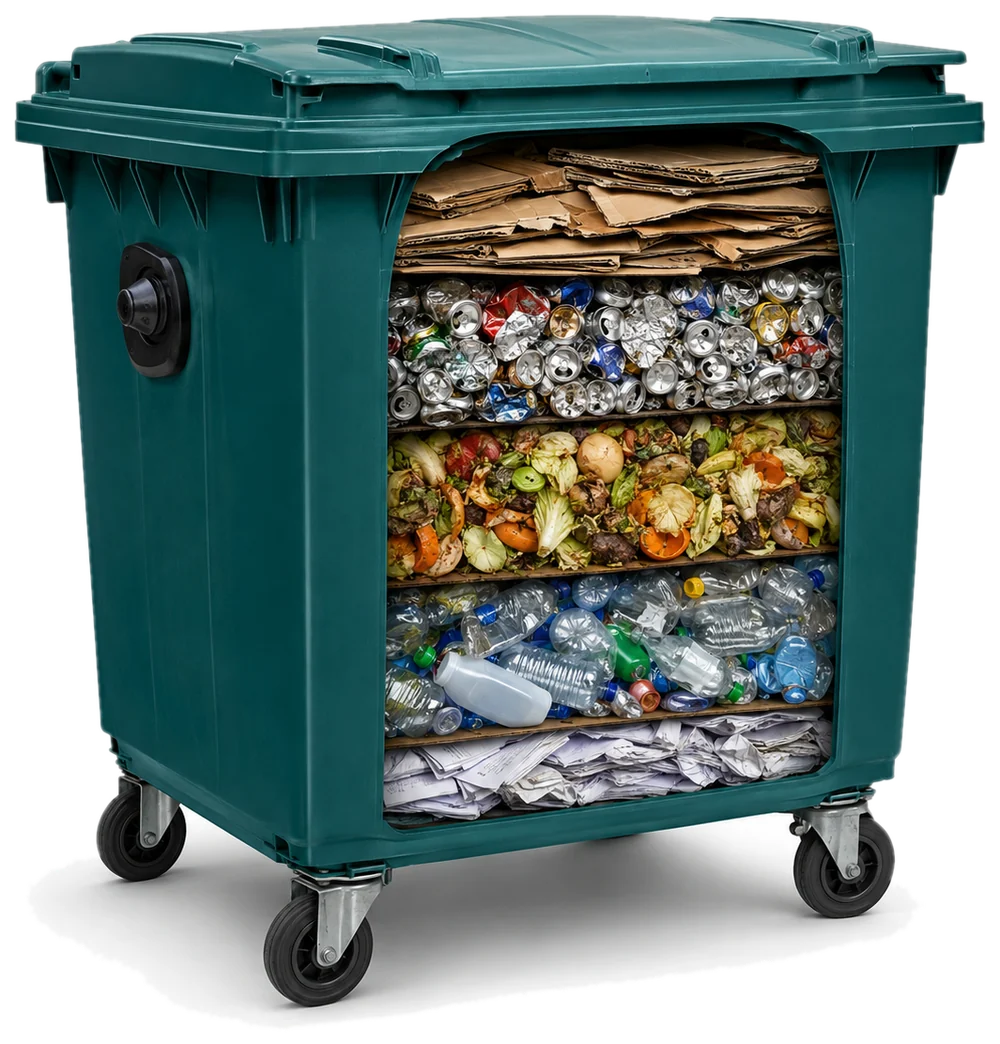
A centre's waste profile is unlike an office or a shop, and the difference is what makes a generic bin configuration a poor fit. Four streams dominate.
Nappy and hygiene waste
In most centres this is the heaviest stream, and weight is what matters on a service where disposal is charged by the tonne at the landfill gate. Soiled nappies are dense, they are not recyclable, and they go to general waste. They also drive the collection schedule rather than the other way round: odour and hygiene, not fill level, are what determine how often a hygiene bin has to be emptied, and in warmer months that can mean daily.
Specify the disposal equipment from your own service's approved infection-control procedure and recognised guidance rather than from a waste supplier's default. ACECQA — Toileting and nappy changing principles and practices links nappy-changing practice to health, hygiene, safety and supervision; it does not establish a universal bin specification, and neither does this page.
Kitchen and food waste
Centres that prepare meals on site generate preparation waste, plate scrapings and expired ingredients every day. It is wet, heavy and the strongest candidate for a separate organics collection, because material genuinely diverted to a licensed composting or anaerobic digestion facility does not attract the landfill levy (EPA Victoria — Waste levy). Ask the organics provider for a written acceptance list before assuming what can go in.
Recyclables and packaging
Food packaging, milk cartons, delivery cardboard and art-supply boxes arrive steadily. Most centres already separate them, but contamination tends to be high for an obvious reason: educators are supervising children, and sorting waste correctly is competing with that. The fix is usually environmental rather than motivational — fewer, clearer bin stations with unambiguous signage at the point where the waste is generated.
Art and craft materials
Paint containers, glue bottles, fabric scraps, paper offcuts and used craft supplies are mostly non-recyclable and belong in general waste. Containers with chemical residue should not be assumed acceptable in ordinary recycling; check the acceptance list. Reusable and washable materials, and natural materials from outdoor play, reduce both the waste and the purchasing that created it.
Review nappy and hygiene procedures
Use the service's approved infection-control procedures and recognised guidance when specifying disposal equipment and handling. ACECQA — Toileting and nappy changing principles and practices links procedures to health, hygiene, safety and supervision. It does not justify an invented universal bin specification.
The regulatory context
Two frameworks sit over childcare waste in Victoria, and they do different jobs.
- The National Quality Framework and the Education and Care Services National Regulations require a safe and hygienic environment. They do not prescribe a waste contract, but they are what governs how waste is stored, handled and moved inside the centre — which in practice decides bin type, bin location and how often a hygiene bin is emptied.
- The Environment Protection Act 2017 places a general environmental duty on Victorian businesses to eliminate or minimise risks of harm from waste so far as reasonably practicable. That sits behind how waste leaves the site: who takes it, where it goes and what it is classified as.
Where a centre handles sharps around medication, that material follows the clinical stream and its own container and collection requirements, not the general waste bin (EPA Victoria — Manage clinical and related industrial waste). For anything disputed, ask the regulator or a qualified adviser to identify the current provision — do not rely on a summary, including this one.
Map the collection route
Record where waste is generated, who moves it, where it waits and how the collector reaches it. Have the centre safety lead assess access by children, staff movement and cleaning arrangements. Keep routine collection changes consistent with the approved hygiene procedure.
Separate food and packaging by actual acceptance
Ask the organics and recycling providers for written acceptance lists. Review kitchen preparation waste, meal leftovers, cardboard and delivery packaging individually. Do not assume art materials or containers with chemical residues belong in ordinary recycling.
Measure before resizing
Track bin use over representative attendance and meal-service periods. Include closures, peak occupancy and changes in age groups. Discuss the observations with the service provider; a smaller bin is only suitable if the full storage and hygiene requirements still work.
Compare quotes consistently
Specify equipment, accepted waste, collections, access windows, rental, extra charges and GST treatment. For several centres, retain a site-specific schedule even if purchasing is coordinated. A shared contract does not remove differences in safe handling or opening hours.
Groups running several centres
Coordinating waste purchasing across a group is usually worth doing: one point of contact, one invoice, and a standard specification that a new centre inherits instead of negotiating from scratch under opening-week pressure. What should not be standardised is the service itself. Centres differ in kitchen arrangements, storage, access, opening hours and the age groups they take, so each site keeps its own schedule and its own bin configuration under the group agreement. Compare the group proposal site by site before signing it.
Include waste practices in staff induction
Show educators and relief staff the approved disposal arrangements and escalation contact. Check whether records and signage match the current provider. Sustainability activities involving children should be reviewed for age-appropriate hygiene and safety rather than copied from a commercial waste guide.
Frequently asked questions
How much does childcare centre waste management cost?
Is nappy waste classified as clinical waste?
What waste rules apply to childcare centres in Victoria?
How can a childcare centre reduce its waste costs?
Related guides
Sources
Checked 21 September 2026. Apply sources within their stated jurisdiction and service scope.
- ACECQA — Toileting and nappy changing principles and practices. Practices and procedures; Health and hygiene.
- EPA Victoria — Manage clinical and related industrial waste. Identify, segregate, label and package. Checked 21 September 2026.
- EPA Victoria — Waste levy. How the waste levy is calculated. Checked 21 September 2026.